第 4 章
Radical Honesty: Accepting Reality Without Illusion
Society discourages accepting responsibility-we expect warning signs everywhere and blame others for our inattention. The Ego compounds this by protecting our self-image, transferring responsibility for poor performances to external factors. While we might accept responsibility for minor mistakes like hangovers or broken plates, we struggle with complex or personally threatening situations.
Accepting responsibility means clearly grasping the reality of a challenging situation without wishing it were different. When you blame poor performance on weak forearms rather than inadequate preparation, you surrender power to change. When you wish holds were bigger instead of figuring out how to use the holds that exist, you waste energy in fantasy that could be directed toward problem-solving.
The warrior views responsibility not as moral obligation but as pragmatic power-by accepting maximum responsibility, you maximize your ability to respond effectively. This requires radical honesty about three aspects of any climbing challenge:
First, assess the route objectively. What initially appears as a blank wall reveals itself upon inspection: small edges, sidepulls, and subtle features become potentially usable. Your goal isn't to envision sequences yet but to destroy the illusion of blankness, making major inroads into the unknown and diminishing phantom fears.
Second, evaluate fall consequences with precision. Calculate how far you'd fall from different positions and what you might hit. Most climbers find themselves calmed by understanding exactly what they're facing-knowledge is power against the unknown. This assessment doesn't mean you're willing to take these falls-that decision comes later-but clarity reduces anxiety.
Third, honestly assess your own capabilities relative to the challenge. Different climbs require different skills-sport climbs might need endurance and face-climbing techniques, while trad climbs might demand crack-climbing skills. Avoid both overconfidence and underestimation.
By accepting responsibility for as many factors as possible, you maximize your field of influence and minimize power lost to factors beyond your control. You stop wishing holds were better or blaming poor performances on weak forearms. You accept a great truth: life is difficult. Once you fully accept difficulty as natural, you cease to be daunted when encountering struggles.
第 5 章
The Power of Giving: From Entitlement to Contribution
Our society encourages achievement orientation but not the effort leading to achievement. We're socialized to have a receiving mindset, thinking we'll be happy when we obtain something: stronger forearms, more free time, the redpoint on our project. This entitlement thinking is passive and separates us from reality.
The warrior rejects entitlement and embraces gratitude for what they already have, which makes them feel empowered and ready to give their best. Instead of asking "What can I get from this climb?" ask "What can I give to this effort?" This shift transforms your relationship with challenges from passive consumption to active contribution.
Many climbers focus on what they don't have-skills they don't possess-what Wayne Dyer calls "deficiency motivation." Rather than thinking "I don't know how to squeeze my hand in thin cracks," build on existing skills: "I know how to jam hand-size cracks, let me modify that process." When Ilgner was stuck on Steepopolis (5.12a), he shifted from impossibility thinking ("I don't see how to climb this crux") to possibility thinking ("If there is a possibility for pro, where would it be?"). This shift from statements to questions helped retrieve attention from passivity and apply it to finding solutions.
Climbing progresses through possibility thinkers who challenge conventional limits. John Gill transformed bouldering from mere practice into a worthy pursuit by applying his full focus to difficult moves on small rocks. Reinhold Messner revolutionized Himalayan climbing by applying Alpine-style techniques to 8000-meter peaks, defying "experts" who claimed climbing Everest without oxygen was impossible. These breakthroughs came through radical, creative thinking that cast off established limitations.
The Giving mindset focuses on process rather than outcome-not about climbing cracks smoothly but learning to climb them smoothly. Power increases through continuously enriching skills by venturing into the unknown. The warrior's goal is power, which comes not from merely possessing skills but from the ongoing process of improving them.
第 6 章
Decisive Commitment: The Art of Choosing
Climbing presents unique moments of truth where, unlike sports driven by gravity's momentum, we face extended periods of choice. We can waste power through tentative, ambivalent decisions or second-guessing well-made choices. Though we naturally seek comfort, paradoxically, taking risks increases our safety by expanding our comfort zones through temporary discomfort.
People naturally seek security and comfort, even within "dangerous" sports like climbing. We resist leaving secure handholds or bombproof protection where no learning occurs. Security isn't an objective state but a subjective feeling that comes through expanding our comfort zones by venturing into the risk zone. We can't directly attain comfort; we must pursue it indirectly through temporary discomfort that builds capability.
Choices aren't simply right or wrong, good or bad-they're tests of knowledge providing opportunities for learning. Even "bad" choices with serious consequences may prevent worse outcomes later when similar situations arise. The warrior foregoes "good" and "bad" designations, recognizing these as Ego constructions focused on immediate comfort rather than long-term growth.
Falling deserves special attention in choice-making because of its dynamic, counterintuitive nature. Fear of falling often persists even when protection is solid, representing phantom fear about losing control rather than actual danger. The Choices process requires fully accepting all possible outcomes, including falling. Todd Skinner and Paul Piana demonstrated this during their first free ascent of the Salathe Wall, where they began each day by taking progressively longer practice falls (up to forty feet) to eliminate distracting fear and focus their attention on climbing.
Choosing what to commit to requires precise definition. Without clarity, you'll either define goals too rigidly (eliminating options) or too vaguely (inviting fear and second-guessing). For each decision point, only two outcomes are possible: climbing through or falling. You must absolutely accept either outcome to take the risk effectively.
When action time arrives, decisiveness is essential. Many climbers use ineffective approaches to risk: either edging in without conscious commitment until they're suddenly in over their heads, or rushing before anxiety has time to register. Both distract attention and increase danger. The warrior's approach directs full attention either into the risk or toward a definitive escape.
Directing attention into a choice creates intention-a powerful force beyond merely shifting focus. It's a dramatic, cathartic event where you commit with your entire being. This means 100-percent commitment, fiercely moving forward while remaining flexible in specific moves. When you fully commit, as W.H. Murray wrote, "Providence moves too"-unseen forces (your unlimited subconscious potential) emerge to help carry you through the risk.
第 7 章
Intuitive Flow: Listening to the Body's Wisdom
When committed to action, you enter a state of opportunity and exhilaration where calculations end and intense learning begins. The challenge is to remain receptive without being distracted by "comfort thoughts" that pull you away from the present moment. The body takes over from the conscious mind, and like a dancer, you stop thinking and simply move.
When committing to climbing action, rigid expectations about techniques ruin spontaneity. Constantly revising plans makes climbing choppy rather than fluid. Ilgner illustrates this with dihedral climbing-stubbornly sticking to laybacks when stemming or jamming would work better wastes energy. Instead of setting rigid expectations about technique or difficulty, maintain one expectation: to learn and trust yourself.
Intuition is crucial for warriors despite being derided by modern analytical thinking. Unlike inner dialogue (which manifests as ambiguous, thought-intensive messages from the Ego), true intuition comes from the subconscious as clear, specific feelings. To develop receptivity to intuition while climbing: observe yourself from the Witness position, breathe continuously, remain open and curious, keep your center of gravity balanced, be nonjudgmental, speak in questions, and follow your eyes (which naturally direct movement toward balance).
There's a critical difference between being in control and being controlling in climbing. Being in control means working efficiently through risk with mastery over mind and body. Being controlling means trying to control uncontrollable elements by clinging to security within risk. Signs of being controlling include climbing too slowly or statically, dreading falls even when safe, overgripping, holding breath, grabbing protection, excessive downclimbing, and placing more protection than needed.
Trust bridges the gap between risk assessment and rising to challenges. In the risk zone, the conscious mind often revolts by generating deceptive comfort thoughts. Observe these thoughts from the Witness position without engaging them. Instead of arguing with your mind, redirect focus to breathing and continuous movement. This creates momentum that overwhelms thoughts, allowing intuitive information to flow.
Ilgner shares experiences where disengaging his conscious mind's "quitting thoughts" allowed him to complete difficult climbs. On Superman, his conscious mind insisted finger jams were too tenuous to hold, but by trusting and pulling on them anyway, he discovered they would hold. He gained valuable knowledge about what kinds of jams work only by continuing when his mind said he couldn't.
第 8 章
Embracing the Journey: Finding Meaning in Process
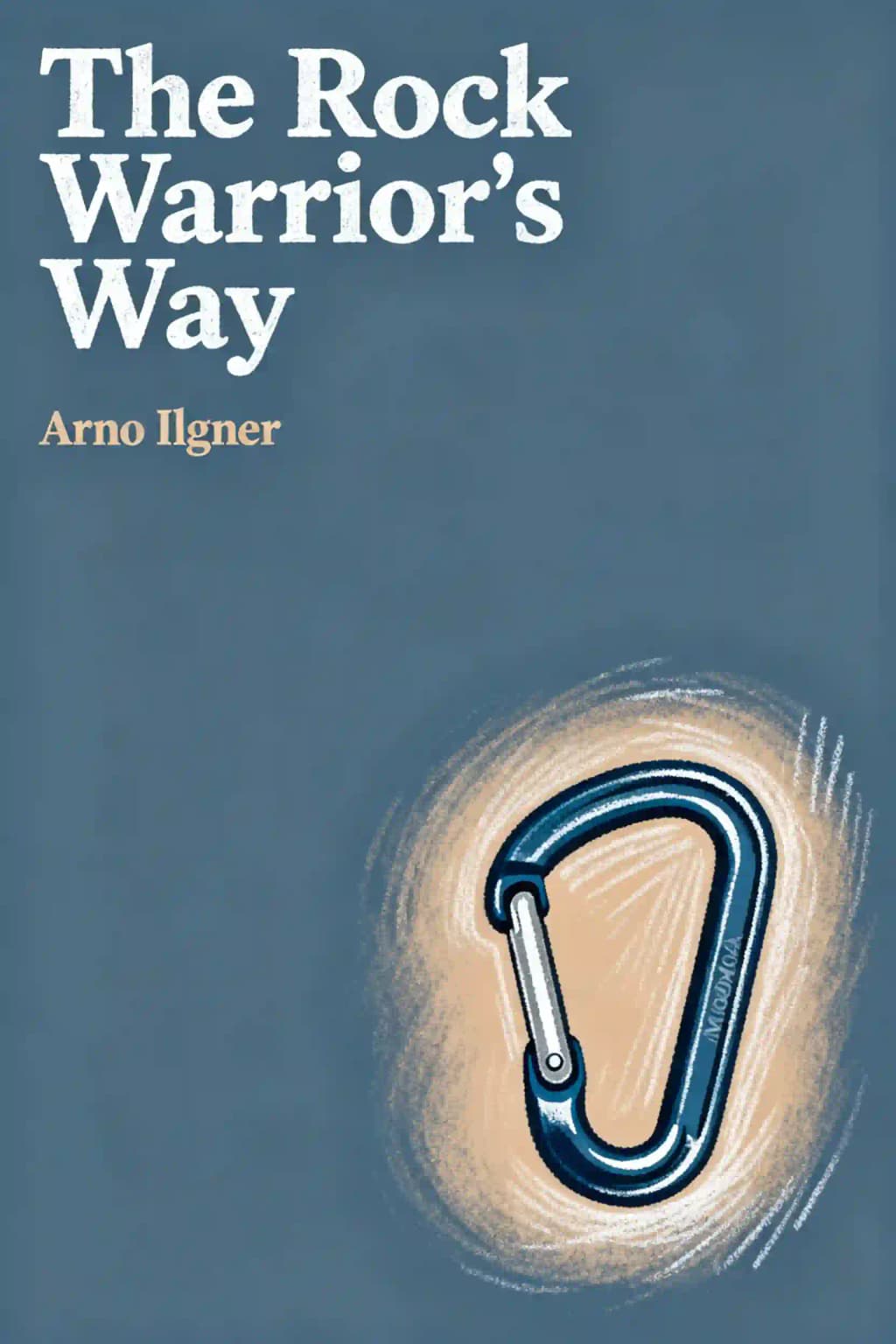
The Rock Warrior's Way journey culminates in staying mentally present during action. The Journey process focuses on finding comfort and meaning within risk rather than fleeing from it.
We're conditioned to value achievement and results, always sacrificing present satisfaction for future destinations. Yet upon reaching goals-landing that job or climbing that 5.12-we find they're merely waypoints, not final destinations. The warrior recognizes life itself is a journey and consciously lives within it rather than rushing blindly toward the next goal.
Destination thinking sabotages climbing performance. When facing an uncomfortable section, we immediately look for where the effort will end. Seeing ten feet to rest energizes us; seeing fifty feet demoralizes us-though the immediate ten feet remains identical. Our attention has escaped the present challenge into an imagined future.
Destination thinking also creates "failure" and "success" anxieties. Fear of failure drains joy from our efforts; success anxiety makes us protective of progress, thinking "Don't blow it" instead of staying engaged with climbing. In both cases, we over-value outcomes and under-value process, making climbing itself pointless. Success and failure don't exist in the present-only effort and action do.
The Journey mindset focuses attention entirely in the present. To climb at our greatest potential, we can't waste attention on the future, though this is easier said than done. The risk zone is uncomfortable, and we habitually escape discomfort. Phrases like "If I could just get to that hold..." betray our mindset-attention slipping from journey toward destination. Instead, we must be fluid and flexible, climbing continuously with unbending intent.
Death serves as an advisor, reminding us that each moment matters and to focus attention on what's important: learning and growth. The warrior strives to undertake each act as if it's his last battle on earth, staying comfortable in chaos through creative rests, loose grip, pacing, balance, and expressing joy in effort.
第 9 章
Practical Applications: Training the Warrior Mind
The Rock Warrior's Way isn't just philosophy-it's a practical training system with specific exercises for developing mental skills. These exercises range from meditation practices that help identify the Witness position to falling practice that desensitizes fear responses.
Meditation helps identify the Witness position by keeping attention on breathing and noticing when thoughts carry attention away. This practice reveals that you are not your thoughts but the observer of them, giving you a position of power from which to consciously choose whether to act on any thought.
The STOP exercise involves saying "STOP!" when catching yourself in a habit. If you can stop the habit, you prove conscious control; if not, you're functioning on automatic. For example, if you habitually become defensive when corrected, say "STOP!" This creates a moment of consciousness to break the habit pattern.
Falling practice helps take the unknown out of falling and makes it part of the normal climbing process. Begin with toprope practice by simply letting go and getting comfortable with the system. Progress to lead falls starting at the protection point, then gradually increase distance one or two moves at a time. Practice proper form: arms and legs slightly bent, arms at chest height, breathing continuously, and stepping off gently rather than jumping.
The "Liar, Liar" exercise challenges the lies our conscious mind tells us when we're uncomfortable. On a challenging route with acceptable fall consequences, set the intention to climb until you physically fall rather than "deciding" to fall. When your mind creates "comfort thoughts" like "I'm too pumped" or "The hold is too small," recognize these as lies designed to pull you back to your comfort zone. By making the next move anyway, you strengthen your intention and break through mental barriers.
Continuous climbing forces you to disengage from conscious thinking by setting the intention to climb with continuous movement without stopping to rest or think. The goal isn't speed but rather uninterrupted flow that bypasses overthinking and connects you to your intuitive climbing ability.
The complete Rock Warrior's Way approach integrates all skills into a comprehensive risk-taking style divided into three phases: Preparation (observing attention leaks, centering yourself through breathing and posture, accepting consequences, and focusing on possibilities); Transition (committing to either take the risk or not, with full acceptance of both possible outcomes); and Action (the climbing itself, maintaining momentum through continuous movement and breathing while staying present in the moment).
第 10 章
The Path of Warrior Power
Whether elite climbers like Peter Croft, Mark Wilford, or John Bachar understand why they handle fear better than others, their secret is simple: they deeply love what they do. This love-based motivation forms the foundation of the Rock Warrior's Way. When you love something, attention naturally focuses in the moment because there's nowhere else you'd rather be. This profound connection to climbing manifests in their unwavering dedication to the sport, spending countless hours honing their craft, studying routes, and pushing their limits not out of obligation, but pure passion.
In our dynamic world, settling into rigid comfort zones means slowly dying. To stay vibrant, we must engage life and take risks for learning, not conquest. The principle is simple but not easy: we must overcome limiting habits and ineffective beliefs. These might include self-imposed limitations, fear-based thinking, or the tendency to compare ourselves to others. The warrior prepares by collecting information, witnessing the Ego's sabotage attempts, centering, assessing consequences, focusing on possibilities, and making clear decisions. This preparation involves detailed route study, honest self-assessment, and developing contingency plans. Once committed to action, he dismisses doubts and stays with his intention, maintaining unwavering focus on the present moment and the immediate challenges at hand.
This personal journey often puts us at odds with the comfort-seeking masses who prioritize security over growth. While others might choose the path of least resistance, the warrior deliberately seeks out challenges that promote development. The ultimate purpose is finding peace within ourselves that can be maintained even in adversity-the highest expression of warrior power. This inner peace comes from knowing that we're capable of handling whatever situations arise, not because we're certain of success, but because we trust our ability to respond appropriately.
Approached this way, the rock becomes your teacher, offering countless opportunities for growth and self-discovery. Each climb offers lessons not just about movement and technique, but about yourself-your fears, your habits, your potential. You learn to recognize patterns in your thinking, identify trigger points that provoke fear or doubt, and develop strategies to work through these challenges. The Rock Warrior's Way isn't just about climbing better; it's about living better by embracing challenge rather than avoiding it, finding meaning in process rather than outcome, and developing the clarity and courage to live authentically in the face of uncertainty. This approach transforms climbing from a mere physical activity into a practice of mindfulness, self-awareness, and personal growth.
The warrior's path demands consistent practice, patience, and the willingness to face discomfort repeatedly. It requires developing a relationship with fear that neither ignores it nor becomes paralyzed by it, but rather uses it as valuable information to inform decisions while maintaining the courage to act when appropriate. Through this practice, climbers develop not just physical strength and technical skill, but mental resilience and emotional maturity that extend far beyond the climbing wall.