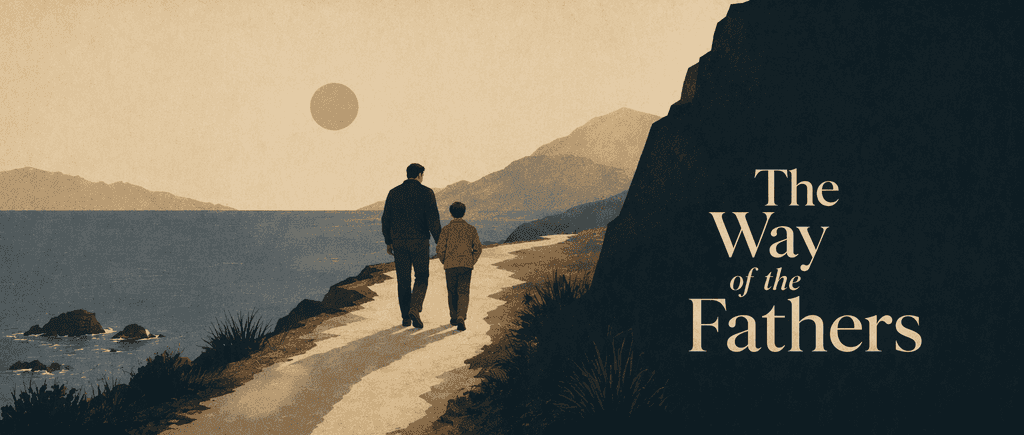
第 1 章
A Journey Through Desolation and Hope
"The Road" stands as one of the most haunting and powerful novels of the 21st century. When Cormac McCarthy's post-apocalyptic masterpiece was published in 2006, it immediately captured the literary world, winning the Pulitzer Prize for Fiction in 2007 and later being adapted into a critically acclaimed film starring Viggo Mortensen. Oprah Winfrey selected it for her book club, bringing this stark tale to millions of readers who might otherwise have missed it. The novel's unflinching look at human endurance amid total environmental collapse has made it required reading in discussions about climate change and environmental ethics. McCarthy's sparse, poetic prose creates a world so vivid you can almost taste the ash in the air as you read. What makes a father and son continue their journey when all hope seems lost? And what does it mean to "carry the fire" when darkness has consumed the world?
第 2 章
The Ashen Landscape: A World Burned Beyond Recognition
The world of "The Road" exists in perpetual gray twilight, a haunting vision of Earth transformed into an endless wasteland. The sun, once life-giving and bright, is now permanently obscured by thick clouds of ash that blanket the earth following an unspecified catastrophe. Trees stand blackened and lifeless, their branches reaching toward the sky like desperate, pleading hands, their bark peeling away in long strips that litter the ground. Nothing grows in the scorched soil - no grass pushes through the ash, no weeds claim the abandoned lots, no flowers break through the cracked pavement. No birds sing in the deadened air, no insects buzz, no animals roam the forests. The oceans have turned a dull, lifeless gray, with beaches strewn with the bones of marine life and tangles of blackened seaweed. Even time itself seems to have lost meaning - clocks have stopped, calendars abandoned, the very concept of dates and hours becoming irrelevant in this timeless wasteland.
This environmental devastation forms more than just a backdrop; it becomes a character in itself, constantly pressing against the protagonists, challenging their every move with relentless hostility. The cold is bone-deep and eternal, seeping through layers of scavenged clothing and makeshift shelters. Snow falls gray through the ash-filled air, coating the world in dirty ice that never seems to fully melt. The father and son must wrap their feet in rags and plastic bags as they trudge through this wasteland, their breath forming clouds in the frigid air, each step leaving gray footprints in their wake. The wind carries the acrid smell of decay and ash, making every breath a reminder of their dire circumstances.
What makes this setting so profoundly disturbing is its plausibility in our contemporary context. McCarthy never explains what caused this apocalypse - whether nuclear war, environmental collapse, asteroid impact, or some combination of disasters - but the result feels terrifyingly possible, perhaps even inevitable. When the father and son discover a patch of mushrooms growing in a damp corner or a single withered apple in an abandoned orchard, the moment becomes almost sacred, a glimpse of life's tenacity. These tiny remnants of life amid universal death remind us what we take for granted in our own world: the simple miracle of growing things, of seasons changing, of life perpetuating itself.
The landscape serves as a mirror for the characters' internal states, reflecting their stripped-down existence. Just as the world has been reduced to its bare essentials, so too have human concerns been distilled to their most fundamental level: survival, protection, love. The father's memories of the vibrant pre-apocalyptic world become increasingly distant, like fading photographs, while his son has never known anything but this gray existence. In one particularly moving scene, the father finds a can of Coca-Cola - perhaps the last one on earth - and gives it to his son as a treat. The simple joy on the boy's face as he tastes this relic from the vanished world becomes a powerful symbol of lost civilization and the endurance of human connection. Even in this bleakest of settings, small moments of happiness and sharing remain possible, though they are as rare and precious as the few canned goods they discover in abandoned houses.
第 3 章
The Sacred Bond: Father and Son Against the Void
At its heart, "The Road" is a love story-not between romantic partners, but between a father and son navigating the end of the world together. Their relationship forms the emotional core of the narrative, a beacon of humanity in an inhuman landscape. The father's devotion to his son transcends mere protection; it becomes his reason for living, his moral compass, and ultimately his legacy.
The unnamed father (none of the characters in the book have names) is consumed by dual responsibilities that often conflict: keeping his son alive and keeping his son's humanity intact. He must teach the boy survival skills-how to scavenge effectively, how to hide from threats, how to use the pistol they carry-while simultaneously preserving the boy's capacity for compassion, trust, and hope. "We're still the good guys," the father repeatedly assures his son, even as their circumstances force them into morally ambiguous situations.
Their conversations reveal the depth of their connection. When the boy asks philosophical questions about their situation-"Are we going to die?"-the father responds with careful honesty, never condescending, always aware that in this new world, childhood itself is a luxury they cannot fully afford. Yet he fights to preserve some semblance of innocence for his son, reading him stories from tattered books, celebrating makeshift birthdays, and creating small moments of joy amid their desperate journey.
The physical intimacy between father and son is portrayed with tender precision: they sleep curled together for warmth, the father checking the boy's breathing throughout the night, washing his hair in cold streams, examining him for injuries or illness with methodical care. These moments of quiet connection-the father watching his son sleep, the boy reaching for his father's hand-provide the emotional counterweight to the novel's relentless bleakness.
As the father's health deteriorates throughout their journey south, their roles begin to shift subtly. The boy increasingly takes on responsibilities, showing compassion that sometimes surpasses his father's. When they encounter other survivors-an old man, a thief, a child glimpsed in a window-it is often the boy who advocates for kindness, for sharing their meager supplies, for trust. "Because we're the good guys," he reminds his father, turning the man's teachings back on him.
第 4 章
Survival in a Cannibal World: The Ethics of Desperation
In the desolate world McCarthy creates, most survivors have abandoned traditional morality in favor of predatory survival. Roaming bands of "bloodcults" and "roadrats" have turned to cannibalism, hunting other humans as their primary food source. The father and son encounter evidence of this horror throughout their journey: a basement filled with naked captives being kept as livestock, a campsite where an infant has been roasted on a spit, headless bodies hanging in a smoke house.
These encounters force profound ethical questions into sharp relief. What does it mean to be "good" in a world where goodness seems to ensure your extinction? How do you maintain humanity when inhumanity surrounds you? The father struggles with these questions constantly. He carries a pistol with two bullets-ostensibly for protection, but also as a last resort if capture by cannibals becomes inevitable. He repeatedly tells his son that if the worst happens, he must put the gun in his mouth and fire, rather than suffer what would come next.
Yet even as he prepares for these worst-case scenarios, the father maintains certain lines he will not cross. When starvation threatens, he refuses to consider cannibalism, even as others have embraced it as necessary. "We would never eat anybody, would we?" the boy asks repeatedly, seeking reassurance. "No. Of course not," the father always answers, though the question becomes more difficult as their hunger grows more severe.
The father's moral code is complex and sometimes contradictory. He will steal from other survivors if necessary for his son's survival, yet he insists they return a thief's clothes after taking everything else from him-a punishment that likely means death by exposure. He teaches his son to be wary of all strangers, yet occasionally shows mercy to those they encounter. When they discover an old man on the road, the boy insists they share their food, despite the father's reluctance.
This tension between survival and morality creates some of the novel's most powerful moments. After encountering a man who has stolen their supplies, the father forces the thief to strip naked at gunpoint, then takes his clothes and abandons him to likely death. The boy's silent disapproval afterward haunts the father, leading to a crucial conversation:
"You're not the one who has to worry about everything."
"Yes I am," the boy said. "I am the one."
In this exchange, we see the central ethical question of the novel: Is survival worth the cost if you lose your humanity in the process?
第 5 章
The Shopping Cart: Symbols of a Lost Civilization
Throughout their journey, the father and son push a shopping cart containing all their worldly possessions-a powerful symbol of how consumer culture has been reduced to bare survival. What was once a symbol of abundance and choice in supermarket aisles now carries only the most essential items: a tarp for shelter, a few cans of food, matches, a gas camp stove, blankets, and a pistol with precious few bullets.
The shopping cart serves multiple symbolic functions. First, it represents the remnants of the pre-apocalyptic world-a world of convenience and consumption now irrevocably lost. The father must constantly repair its squeaky wheel with duct tape and oil, suggesting humanity's failing attempt to maintain the technologies and comforts of the past. When the wheel finally breaks beyond repair and they must abandon the cart, it marks a significant transition in their journey.
Second, the cart embodies the burden of possessions in a world where mobility equals survival. Everything they carry must justify its weight. When they discover a bunker filled with supplies-canned food, clean water, even coca-cola-they can take only what they can push in their cart, leaving abundance behind because they cannot transport it. This creates a poignant inversion of our consumer culture, where the problem is usually having too much rather than too little.
The items they choose to keep reveal what matters when civilization collapses. Practical tools for survival take precedence, but not exclusively. The father keeps his son's treasures-a toy truck, colored rocks, a flute carved from a reed-understanding that these seemingly useless objects nourish the boy's spirit. He also carries a photograph of his wife, though he eventually discards it, suggesting his gradual acceptance that the past cannot be recovered.
Perhaps most tellingly, they carry books-despite their weight and lack of practical value. In one scene, the father reads to his son from stories of courage and goodness, passing down cultural values through narrative even as the culture itself has vanished. Later, when they must lighten their load, the books are among the last items they're willing to abandon, suggesting that stories remain essential even-perhaps especially-at the end of the world.
第 6 章
The Pistol: Protection and Terrible Mercy
The pistol they carry contains only two bullets for most of the journey, making it both precious protection and a constant reminder of their vulnerability. Unlike the typical action-hero arsenal of post-apocalyptic fiction, this limited weapon creates tension with every encounter. The father must weigh each potential threat against their dwindling resources, knowing that using even one bullet could leave them defenseless later. This scarcity transforms routine decisions into agonizing moral calculations, as each passing day brings new dangers on the road.
More significantly, the pistol represents the father's most terrible responsibility: the potential mercy killing of his son. He has taught the boy how to put the gun in his mouth and pull the trigger if they are captured by cannibals, a lesson the child has absorbed with solemn understanding beyond his years. The father's instructions are methodical and precise - "like this, quick and hard" - words that carry the weight of unspeakable love and desperation. This "mercy" haunts their journey-is it an act of love or an abandonment of hope? The question becomes increasingly urgent as their situation grows more desperate, particularly during nights when they hear distant screams or spot the fires of roving cannibals.
The pistol also marks a key difference between father and son, embodying their divergent worldviews. The father is from the old world; he understands violence as sometimes necessary, shaped by memories of a civilization that slowly descended into chaos. The boy, born after the catastrophe, represents a new moral possibility, untainted by memories of the world's collapse. When they encounter an old man on the road, the father immediately aims the pistol at him while questioning his intentions, displaying the instinctive suspicion that has kept them alive. The boy begs his father not to shoot, exhibiting compassion that seems almost foreign in this harsh landscape, yet somehow more vital because of its rarity.
This tension reaches its climax when they encounter a thief who has stolen their supplies. The father forces the man to strip naked at gunpoint-effectively condemning him to death by exposure-and ignores his desperate pleas for mercy. The boy begs his father to help the man, seeing beyond immediate survival to something more fundamental about human dignity. The father refuses, driven by the harsh logic of survival, but the encounter haunts them both. Later, the boy's quiet disapproval forces the father to reckon with his actions: "You're not the one who has to worry about everything," he tells his son. "Yes I am," the boy responds. "I am the one." This simple exchange carries the weight of their different moral visions - the father's protective pragmatism versus the boy's instinctive empathy.
This exchange reveals the central question the pistol represents: In a world where violence seems necessary for survival, is it possible to remain truly human? The boy's compassion suggests it is, while the father's pragmatism suggests otherwise. The pistol becomes more than just a weapon; it's a symbol of the moral choices forced upon them by their circumstances. Their ongoing dialogue about this question forms the moral heart of the novel, suggesting that true survival might require preserving not just life, but humanity itself. The father's gradual recognition of his son's moral wisdom transforms their relationship, even as their physical circumstances grow more desperate.
第 7 章
The Fire Within: Hope in a Hopeless World
"Carrying the fire" becomes the central metaphor of the novel, representing the moral goodness and human dignity the father and son struggle to preserve. Though never explicitly defined, this "fire" clearly encompasses their refusal to surrender to barbarism despite their desperate circumstances. When the boy asks if they are "still the good guys," he is really asking if they still carry this internal flame.
The metaphor works on multiple levels. Fire literally provides warmth and light in their cold, dark world. It allows them to cook food and sterilize water. It keeps predators-both animal and human-at bay. But the internal fire they carry serves similar functions for their spirits: it provides moral warmth in an ethically cold landscape, illuminates right action in morally ambiguous situations, nourishes their souls when physical nourishment is scarce, and protects their humanity from the predatory inhumanity surrounding them.
As the father's health deteriorates, he becomes increasingly concerned with passing this fire to his son. In their final conversation, when the boy asks if the fire is real, the father affirms: "It's inside you. It was always there. I can see it." This moment transforms what might have been merely a comforting fiction into something more profound-a recognition that the boy's inherent goodness might survive even in a world seemingly designed to extinguish it.
The fire metaphor gains additional resonance through its contrast with the novel's setting. In a world burned to ash by some unspecified catastrophe, where literal fires represent danger as often as comfort, the preservation of this internal flame becomes an act of defiance against the universe itself. When the boy finally meets other "good guys" who are "carrying the fire," it suggests that this moral flame, passed from person to person, might eventually rekindle a world gone cold.
This metaphor extends beyond the novel's pages to challenge readers: What fire do we carry? What essential human qualities would we struggle to preserve if everything else were taken away? By leaving the metaphor somewhat ambiguous, McCarthy invites us to define for ourselves what constitutes the irreducible core of our humanity.
第 8 章
The Woman's Absence: Different Responses to Catastrophe
The boy's mother, present only in the father's memories, chose suicide over facing the horrors of their post-apocalyptic reality. Her absence creates a haunting counterpoint to the father's determined survival. Through flashbacks, we learn she walked into the darkness one night with a piece of obsidian, having concluded that continued existence was merely postponing an inevitable, horrible death.
Her final conversation with the father presents the novel's central philosophical question in its starkest form:
"We're not survivors. We're the walking dead in a horror film."
"I'm begging you."
"I don't care. I don't care if you cry. It doesn't mean anything to me."
"Please."
"Stop it."
"I am begging you. Don't do this."
"They're going to rape us and kill us and eat us and you won't face it."
Her choice forces readers to confront uncomfortable questions: Was her decision rational given their circumstances? Does hope become merely delusion past a certain point? Is survival itself a moral imperative, or can death sometimes be the more humane choice?
The father cannot accept her reasoning, seeing suicide as abandonment of their son. His memories of her are complicated by anger and incomprehension, yet tinged with understanding. He cannot bring himself to use her name in his thoughts, referring to her only as "the woman" or "my wife," suggesting his need to distance himself from the pain of her choice.
Her absence shapes the boy's development in profound ways. Having never known his mother, he depends entirely on his father for both physical and emotional sustenance. When he asks questions about her, the father offers sanitized versions of the truth, unable to explain her choice in terms a child could understand-or perhaps unwilling to acknowledge the rationality her decision might contain.
The contrast between the mother's surrender and the father's persistence creates the novel's central tension. Neither approach is presented as unambiguously right or wrong. The mother's choice spared her witnessing the horrors they later encounter, while the father's determination keeps his son alive long enough to eventually find others "carrying the fire." McCarthy refuses to resolve this tension, instead allowing these opposing responses to catastrophe to coexist, challenging readers to consider what they might choose in similar circumstances.
第 9 章
The Final Passage: Endings and New Beginnings
The novel's conclusion brings both death and renewal. The father, whose health has been deteriorating throughout their journey, finally succumbs to his illness. His death scene is rendered with McCarthy's characteristic sparse beauty: "He watched the boy sleeping. He'd pulled away his mask in the night and it was buried somewhere in the blankets. He watched the boy and he looked out through the trees toward the road. This was not a safe place. They could be seen from the road now it was day. The boy sat up."
After his father's death, the boy remains with the body for three days-an echo of religious resurrection narratives that suggests something profound is transforming. When he finally returns to the road, he encounters a stranger with a shotgun who invites him to join his family. The boy's first questions reveal what his father has taught him to value: "Are you one of the good guys?" and "Are you carrying the fire?"
The stranger's family includes a woman who embraces the boy and speaks to him of God. This ending offers a glimmer of hope after the relentless bleakness of the preceding narrative. The boy has found others who share his moral code, suggesting the possibility that goodness might survive and eventually rebuild some form of human community.
Yet McCarthy complicates this hopeful conclusion with the novel's final paragraph, a hauntingly beautiful meditation on brook trout in mountain streams:
"Once there were brook trout in the streams in the mountains. You could see them standing in the amber current where the white edges of their fins wimpled softly in the flow. They smelled of moss in your hand. Polished and muscular and torsional. On their backs were vermiculate patterns that were maps of the world in its becoming. Maps and mazes. Of a thing which could not be put back. Not be made right again. In the deep glens where they lived all things were older than man and they hummed of mystery."
This passage suggests that while human goodness might survive, the natural world-with its ancient beauty and complexity-has been irretrievably lost. The "maps of the world in its becoming" carried on the trouts' backs represent evolutionary history and ecological interconnection that, once destroyed, "could not be put back." This final note transforms what might have been a simply hopeful ending into something more nuanced: a recognition that even if humanity survives, something profound and irreplaceable has been lost.
The boy's journey continues beyond the novel's pages, carrying the fire into an uncertain future. Readers are left to imagine what kind of world might eventually emerge from the ashes-and what responsibility we bear for preventing such a catastrophe in our own reality.