第 1 章
America's Unhealed Wounds: A Nation in Crisis
The insurrection of January 6, 2021 shocked many Americans, but for those paying attention, it was the inevitable culmination of Donald Trump's presidency. While we often speak of America as the world's greatest democracy, the truth is more complex and painful. Our nation was founded on contradictions - proclaiming liberty while practicing slavery, declaring equality while enforcing hierarchy. The question before us isn't whether recent events have pushed us further from our democratic ideals, but whether we were ever as close to them as we believed.
Trump's presidency didn't create America's divisions; it merely held up a mirror to diseases present since our founding. Our current national trauma stems from unreconciled history, perpetuated myths, and the unchecked impunity of the powerful. The COVID-19 pandemic intensified this collective trauma through isolation, economic devastation, and the betrayal by a government unwilling to protect its citizens. Even after Biden's victory, Trump's "Big Lie" and Republican complicity created dangerous division, with 74 million Americans voting for a president whose incompetence and cruelty led to hundreds of thousands of preventable deaths.
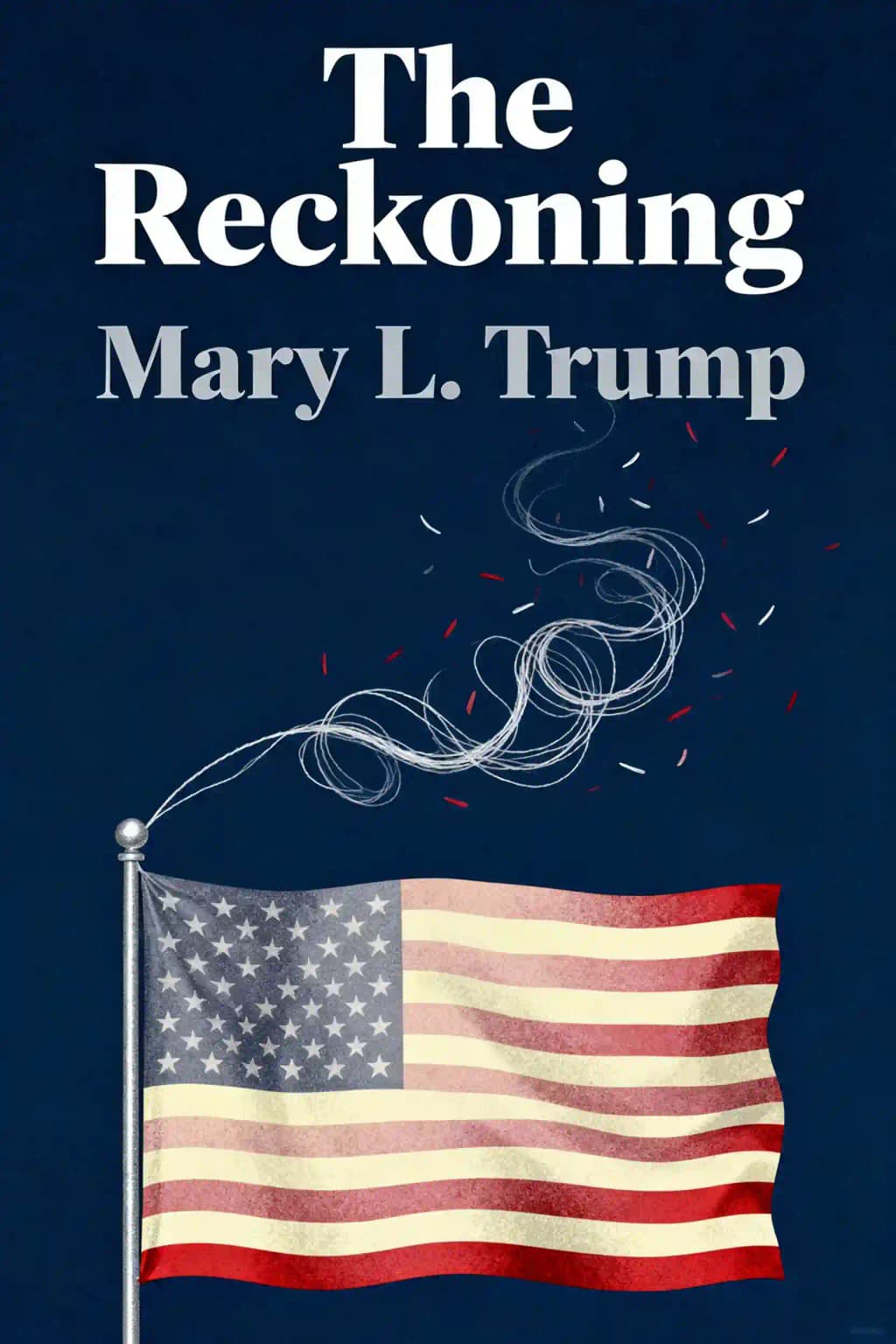
America has become a nation where trust has been shattered and a virulent minority wields outsized power. Without confronting our past and present traumas, we cannot find a path forward. As author and psychologist Mary Trump warns, the reckoning we face isn't just political - it's existential.
第 2 章
The Unfinished Work of Reconstruction
The racial divisions that plague America today weren't inevitable - they were deliberately constructed to justify enslavement and subjugation. When the Civil War ended in 1865, the nation had a rare opportunity for transformation. The Thirteenth Amendment freed over four million enslaved people, the Freedmen's Bureau was established to provide aid and education, and General Sherman's Special Field Order 15 even set aside 400,000 acres of coastline to be divided into forty-acre plots for formerly enslaved people.
But Lincoln's assassination derailed these efforts. His successor, Andrew Johnson, a former enslaver, systematically undermined Reconstruction at every turn. He issued thousands of pardons to former Confederates, overturned Sherman's land distribution orders, and vetoed the Civil Rights Act of 1866, claiming it discriminated "in favor of the Negro." Johnson's rhetoric was equally damaging - in his 1867 State of the Union address, he claimed Black Americans had "shown less capacity for government than any other race of people."
Despite these obstacles, Black communities made remarkable strides. By Reconstruction's end, over 600,000 Black children attended schools, and Black Baptist church membership swelled to 1.3 million. With the Fifteenth Amendment's ratification in 1870, Black men gained suffrage, and around 2,000 were elected to various offices.
But the promise of true equality remained unfulfilled. The Thirteenth, Fourteenth, and Fifteenth Amendments contained critical omissions and loopholes. None prohibited voting restrictions like poll taxes or literacy tests. The Thirteenth Amendment included the devastating clause "except as punishment for crime whereof the party shall have been duly convicted," which opened the door for the Black Codes and convict leasing. These gaps allowed Southern states to implement laws that reversed Reconstruction's gains and restricted freedmen's ability to vote, work independently, and accumulate wealth.
By 1873, Reconstruction's demise was virtually guaranteed when the postwar economic expansion collapsed. After the contentious 1876 election, Rutherford B. Hayes secured the presidency by agreeing to withdraw all federal troops from the South, effectively ending Reconstruction and abandoning Black Americans to a century of Jim Crow oppression.
第 3 章
The Machinery of White Supremacy
The Jim Crow South institutionalized oppression through sharecropping, peonage, and convict leasing - systems often described as "slavery by another name" or "worse than slavery." Sharecroppers were forced to buy supplies at company stores with markups of 100-1000%, creating intergenerational debt cycles. Meanwhile, the convict leasing system exploited the Thirteenth Amendment's loophole to create a new form of slavery.
To expand this lucrative practice (generating up to 10% of some states' revenue), new laws criminalized "vagrancy" and "loitering" with vague definitions easily enforced against Black citizens. The entire system - from accusation to sentencing - was controlled by whites, many still wearing Confederate uniforms. Leased convicts worked in conditions often worse than slavery. Sugarcane field workers typically died after seven years, while turpentine camps were described as "human slaughter pens."
Violence was neither random nor isolated but sustained domestic terrorism advancing white supremacy. Over 6,500 Black men, women, and children were lynched between 1865-1950, with the actual number likely much higher. Most victims committed no crimes. The depravity of these public spectacles was normalized, with spectators treating them like picnics, posing for photographs with their children around still-smoldering corpses.
Consider Luther Holbert and his unnamed wife. In 1904, after being accused of killing a plantation owner, they were hunted through swamps, captured, and brought back to Doddsville, Mississippi. Before a crowd of over 600 spectators, their fingers and ears were amputated as souvenirs, corkscrews were repeatedly inserted into their bodies, and they were burned alive. No participants faced consequences for this barbarity.
Throughout American history, Black success and prosperity have consistently triggered white violence. During Reconstruction, Black communities established churches, schools, and political organizations that threatened white supremacy, leading to violent backlash. The 1921 Tulsa massacre exemplifies this pattern, when a thriving Black community called "Negro Wall Street" was completely destroyed by white mobs, killing 300 Black residents and destroying 35 square blocks. Similar mass murders occurred throughout American history, with at least 34 documented massacres during Reconstruction alone and 12 more between 1908 and 1923.
第 4 章
The Culture of Impunity
America's history is marked by a persistent pattern of barbaric, inhumane behavior condoned by government leaders and institutions. Despite numerous revisionist attempts to rehabilitate controversial historical figures like Robert E. Lee, the documented facts paint a damning picture: Lee not only led a traitorous army against the United States but also personally enslaved people while hypocritically claiming slavery was "evil." Historical records show he separated enslaved families and ordered severe whippings of those who attempted to escape, directly contradicting the sanitized image often presented in Southern mythology.
The tradition of avoiding accountability has deep roots that extended well into modern times. The 1975 House vote of 407-10 to restore Lee's citizenship rights exemplified this pattern, with President Ford signing the resolution while characterizing it as correcting a historical "oversight." Ford went further, praising Lee as "a symbol of valor and duty," deliberately overlooking Lee's role in a war that claimed over 600,000 American lives. When Jimmy Carter restored citizenship to Jefferson Davis in 1978, it represented another step in whitewashing Confederate leadership's responsibility for defending slavery and attempting to destroy the Union.
Richard Nixon's actions before the 1968 election established the modern template for presidential impunity. Through intermediary Anna Chennault, Nixon secretly contacted South Vietnamese leaders, encouraging them to withdraw from peace negotiations by promising better terms under his administration. This violation of the Logan Act effectively sabotaged the Paris Peace talks, extending the Vietnam War for seven additional years and resulting in thousands of unnecessary American and Vietnamese casualties. Despite evidence of this treasonous interference, Nixon faced no investigation or consequences.
The pattern of presidential immunity was further cemented by Gerald Ford's pardon of Nixon after Watergate, establishing the dangerous precedent that presidents operate above the law. This tradition continued through subsequent administrations, reaching a notable point during Barack Obama's presidency. Despite campaign promises of accountability, Obama adopted a "look forward, not backward" approach, declining to investigate Bush administration officials for documented torture programs. His administration also failed to prosecute any major banking executives after the 2008 financial crisis, despite clear evidence of fraud that led to $9.8 trillion in lost American wealth and forced 3.8 million families into foreclosure.
This recurring cycle of impunity has created predictable historical patterns: Lincoln's assassination enabled Andrew Johnson to sabotage Reconstruction; the end of Reconstruction ushered in Jim Crow laws; the achievements of the Civil Rights Movement were countered by the "war on drugs" and mass incarceration; and Obama's historic presidency was followed by Trump's reactionary administration. Each failure to demand accountability for past transgressions has emboldened future actors to push boundaries further, creating an escalating cycle of misconduct. In this historical context of normalized impunity, Trump's presidency would represent not an aberration but rather the logical culmination of centuries of unchecked abuses of power.
第 5 章
The Trump Catastrophe Unfolds
Trump's presidency began ominously with his inaugural "American carnage" speech that felt more like a threat than an assessment. He immediately established a pattern when he began his first full day in office with a lie about his inauguration crowd size. These lies grew exponentially, largely unchallenged by his party, becoming assaults on basic human decency, America's global standing, and faith in our system of checks and balances.
With Republicans controlling all branches of government for his first two years, Trump consistently pushed boundaries with minimal resistance. His administration validated and mobilized racism, misogyny and homophobia that had previously been marginalized. Democrats misread how extreme the Republican Party had become, failing to realize the rulebook had been "doused in gasoline and lit on fire." Trump deliberately demoralized his opposition while attacking the press to "demean and discredit" them.
The Department of Justice under Trump abandoned its mission to enforce the law impartially, becoming instead a tool for the president's personal interests. William Barr, his second Attorney General, became Trump's "Roy Cohn," undermining the Mueller investigation, targeting political enemies, and neglecting civil rights enforcement. The State Department suffered similarly devastating blows under Rex Tillerson and Mike Pompeo. Tillerson oversaw a mass exodus of expertise that weakened the department for a "generation," while Pompeo's belligerence damaged America's standing globally.
Despite his impeachment in December 2019 for pressuring Ukraine's president to investigate Joe Biden, Senate Republicans ensured Trump's acquittal without allowing witnesses. As Senator Susan Collins noted, Trump indeed "learned a lesson" - though not the one she intended.
Then came the pandemic. In early 2020, Trump privately admitted to Bob Woodward that COVID-19 was "deadly stuff" while publicly downplaying its severity. After contracting COVID himself, Trump performed strength on the White House balcony in "his best Mussolini imitation," removing his mask despite visibly struggling to breathe. His administration provided no guidelines, information, leadership, or progress during his final months in office while Americans continued dying daily.
After losing the election, Trump pivoted to the "Big Lie," believing he could overturn the results as he had overcome obstacles before. In one of his final tweets before being banned, Trump attacked the CDC for allegedly exaggerating COVID statistics, even as January 2021 became America's deadliest month of the pandemic, with one American dying every twenty-eight seconds.
第 6 章
The Constitutional Paradox
America was built on an unresolvable paradox: the fundamental tension between liberty and equality proclaimed in the Declaration of Independence versus the explicit embrace of chattel slavery in the Constitution. This contradiction created two parallel historical tracks: the brutal factual history of genocide against Native Americans and the enslavement of Africans, alongside the carefully constructed myth of white supremacy that continues to drive the racial divide. The founding documents themselves contain this duality - while declaring "all men are created equal," they simultaneously protected the institution of slavery through provisions like the Three-Fifths Compromise and the Fugitive Slave Clause. It's this persistent denial of systemic white supremacy that has prevented genuine national healing, as white Americans repeatedly refused to ensure true equality in the aftermath of the Civil War through Reconstruction and beyond.
The Supreme Court has historically been one of America's most antidemocratic institutions, serving as a consistent barrier to racial progress. Throughout its history, the court has repeatedly undermined democracy and civil rights through a series of devastating decisions. The Dred Scott decision of 1857 not only declared that Black people could never be citizens but also ruled that Congress had no power to prohibit slavery in federal territories. United States v. Cruikshank (1876) effectively gutted federal protections against racist terrorism by limiting federal prosecution of Klan violence. Plessy v. Ferguson (1896) established the "separate but equal" doctrine that legitimized Jim Crow segregation for over half a century. Giles v. Harris (1903) allowed discriminatory voting restrictions like literacy tests and poll taxes to disenfranchise Black voters across the South.
Even in modern times, the court has maintained this pattern of preserving racial hierarchies through legal doctrine. In Milliken v. Bradley (1974), Chief Justice Warren Burger ignored extensive evidence of government-mandated housing segregation when ruling against metropolitan school integration plans in Detroit, effectively ending meaningful school desegregation efforts nationwide. Three decades later, Chief Justice John Roberts demonstrated similar historical blindness in Parents Involved (2007), claiming segregated neighborhoods resulted from abstract "societal discrimination" rather than specific government policies like redlining, restrictive covenants, and discriminatory lending. This willful blindness to America's documented racial history has become the consensus view in American jurisprudence, allowing the court to strike down remedial measures while claiming "colorblindness."
The court's current structure particularly invites reform given its increasingly undemocratic nature. Barack Obama, who won the popular vote twice and served eight years, appointed only two justices, while Donald Trump, who lost the popular vote and served one term, appointed three - fundamentally reshaping the court's ideological balance. This imbalance was exacerbated by Mitch McConnell's nakedly partisan manipulation of the confirmation process: blocking Obama's nominee Merrick Garland for eleven months in 2016 claiming "the American people should have a voice in the selection," yet rushing through Amy Coney Barrett's confirmation in just thirty days before the 2020 election. These actions have highlighted how the court's current structure enables minority rule and demands structural reform.
第 7 章
The Legacy of Systemic Racism
The trauma inflicted on enslaved people was comprehensive: physical, sexual, psychological, emotional, and spiritual abuse. Modern epigenetics suggests these traumas can be passed down genetically, creating what Dr. Joy DeGruy calls "post-traumatic slave syndrome" - multigenerational trauma from centuries of slavery compounded by ongoing oppression and institutional racism.
American infrastructure itself perpetuates racism - from Robert Moses deliberately building Long Island bridges too low for buses carrying Black and Hispanic people to beaches, to the disproportionate exposure of Black neighborhoods to highway pollution that kills up to 200,000 Americans prematurely each year. Over a quarter of Black Americans live within three miles of toxic Superfund sites, and low-income communities suffer more during heat waves due to fewer trees and green spaces.
The Harvard Everyday Discrimination Scale shows direct correlations between discrimination and increased risk of heart disease, diabetes, and asthma. Medical care for Black Americans is often compromised by implicit bias, including false beliefs about Black physiology. The cumulative result: 200 Black Americans die prematurely every day - and that was before COVID-19.
Nixon's "war on drugs" evolved under Reagan into a systematic tool for targeting Black communities. The 1986 Anti-Drug Abuse Act established wildly disproportionate sentences - five years for five grams of crack (used more by Blacks) versus 500 grams of powder cocaine (used more by whites). By 2003, Blacks comprised 80% of federal crack possession defendants despite being only 30% of users. By 1990, federal drug sentences were 49% higher for Black Americans than whites.
The "broken windows" theory became a convenient justification for criminalizing poverty and Blackness. When Giuliani implemented this approach in mid-1990s New York, police aggressively targeted minor infractions like public drinking, jaywalking, graffiti, and subway fare evasion. The actual impact was increased contact between police and young Black men for minor infractions, trapping many in the criminal justice system.
第 8 章
The Republican Bargain with Fascism
Republicans initially believed they could harness Trump's base while controlling him. For two years, they enjoyed unimpeded success through confirmed judges and tax cuts for the wealthy. But their bargain turned sour when Trump claimed victory prematurely on November 4, 2020, planting seeds of doubt and grievance.
The Big Lie's real premise was that a diverse coalition of voters wasn't a legitimate majority - continuing the message that Black Americans' votes don't count. Republican officials used this manufactured uncertainty as cover for voter suppression efforts, asking themselves: "How long can we win elections where everyone votes, given demographic trends?" The answer was clearly not in the future.
During Trump's second impeachment, the jury comprised both victims and accomplices. Senators like Ted Cruz and Josh Hawley positioned themselves as standard-bearers for 2024, willing to conspire in an insurrection if necessary. Trump's unique contribution was revealing the party's underlying incivility, allowing figures like Cruz and Hawley to openly oppose democracy.
The 74 million Americans who voted for Trump in 2020 represent a spectrum: unrepentant fascists and white supremacists at one end, low-information party-loyal voters at the other, with "I've got mine" people, authoritarians uncomfortable with diversity, and single-issue voters in between. Many ignore evidence that liberal policies work, instead consuming fear-based media that makes them susceptible to conspiracy theories and voting against their self-interests - all to preserve a false identification with a nonexistent glorious past and the benefits of whiteness.
The January 6th insurrectionists displayed Confederate flags and Nazi symbols while threatening to murder the vice president. They weren't confused about these symbols' meanings - they reveled in the barbarity they represent. Many Americans would rather identify with slavers than with the enslaved because whiteness has been so thoroughly equated with goodness and power.
第 9 章
Trauma, Memory, and Healing
As the 2020 election approached amid the COVID-19 pandemic, with no vaccine in sight and 200,000 Americans dead, the nation faced an unprecedented mental health crisis. We experienced a collective trauma - everyone serving in different capacities but all wounded to varying degrees. The pandemic spared no one regardless of privilege - being human means being vulnerable to trauma, and COVID was both disaster and atrocity.
COVID time collapsed upon itself, expanded past absurdity, and sometimes stopped altogether. Like PTSD time, we were either bound by it or set adrift without guideposts to return us to linear experience. Days and nights ran together with the slippery familiarity of depression. We tried orienting ourselves on a sliding scale of misfortune to feel better or worse compared to others.
The pull to forget trauma is stronger than the pull to run, making us complicit with what we're trying to escape. By ignoring our experiences and emotions, vital parts of ourselves remain tethered to the past. Both individuals and societies are motivated to forget, with those in power urging us to move on without looking back. Despite many reasons to forget - guilt, shame, pain, evading responsibility - erasing chapters of our history leaves future generations vulnerable.
The similarities between the Wilson and Trump administrations' handling of the 1918 and 2020 pandemics are uncanny. Wilson never issued a public statement about influenza while hundreds of thousands died; Trump obsessed over the economy. Most remarkable about 1918 was the silence that followed - as if it never happened. This cultural interdiction against speaking about trauma compounds suffering, trapping people in loops of dissociation and self-loathing.
To heal, we must resist calls to look only forward - trauma changes us at the cellular level, and dismissing pain only postpones freedom from it. As a country, we must assess the structural failures that left us vulnerable, particularly our treatment of mental health as an afterthought or moral failing rather than essential infrastructure.
第 10 章
America's Reckoning
"This is democracy's day," declared President Joe Biden in his inaugural address, emphasizing that democracy had prevailed despite being tested through "a crucible for the ages." Yet democracy remains under threat. A democratic process cannot fix democracy's problems when deliberately hamstrung by a political party seeking to maintain power against a changing electorate.
Throughout American history, we've had opportunities to make this country more democratic, open, and equitable. After the Civil War, the North could have tried Confederate leaders as traitors and provided freed Blacks with land, education and resources. After World War II, the New Deal and G.I. Bill benefits could have extended to Black Americans. Instead, the North became more segregated while the South remained a closed fascist state.
We fail ourselves when we avoid accurate language for fear of seeming extreme. How else but "fascist" can we describe a party that tolerated white supremacist rallies, separated migrant children, suppressed peaceful protests with paramilitaries, attacked the free press, and worked to establish a theocratic judiciary?
Liberal democracy has exceeded many people's capacity to tolerate it. The 2020 election won't fix everything - 2022 or 2024 may prove more consequential. The pendulum has always swung further right than left, with Democratic presidents typically only returning us to the middle. We need fundamental change - not restructuring but reimagining American potential.
The pandemic revealed decades of inequality and racism through its toll on communities of color, while the government's response exploited these inequalities for political gain. Though slavery wasn't our fault, we've all benefited from it, and it remains our burden. Working-class whites have been tricked into voting against their interests, convinced their whiteness is more valuable than healthcare or other benefits.
White privilege can't be given up voluntarily - the entire system must be dismantled. Reparations are essential to level the playing field and return what's been stolen. Until everyone can vote unimpeded and economic plunder ends, America is not a true democracy.
The Derek Chauvin verdict - guilty on all three counts - represents just "a single drop of water on a tongue parched over 400 years." It took the righteous grief and rage of hundreds of thousands of Black Americans to get the attention of a system that has ignored their pain for centuries. Black Lives Matter is a simple statement, yet the responses - All Lives Matter, Blue Lives Matter - underscore why it must be said. To be Black in America means taking unfathomable risks in everyday activities.
This is exactly who we are and how things will continue if we refuse to make different choices. There's no moving on without facing the truth and feeling the pain. It's time for us to put our bodies on the line, to listen, to kneel.