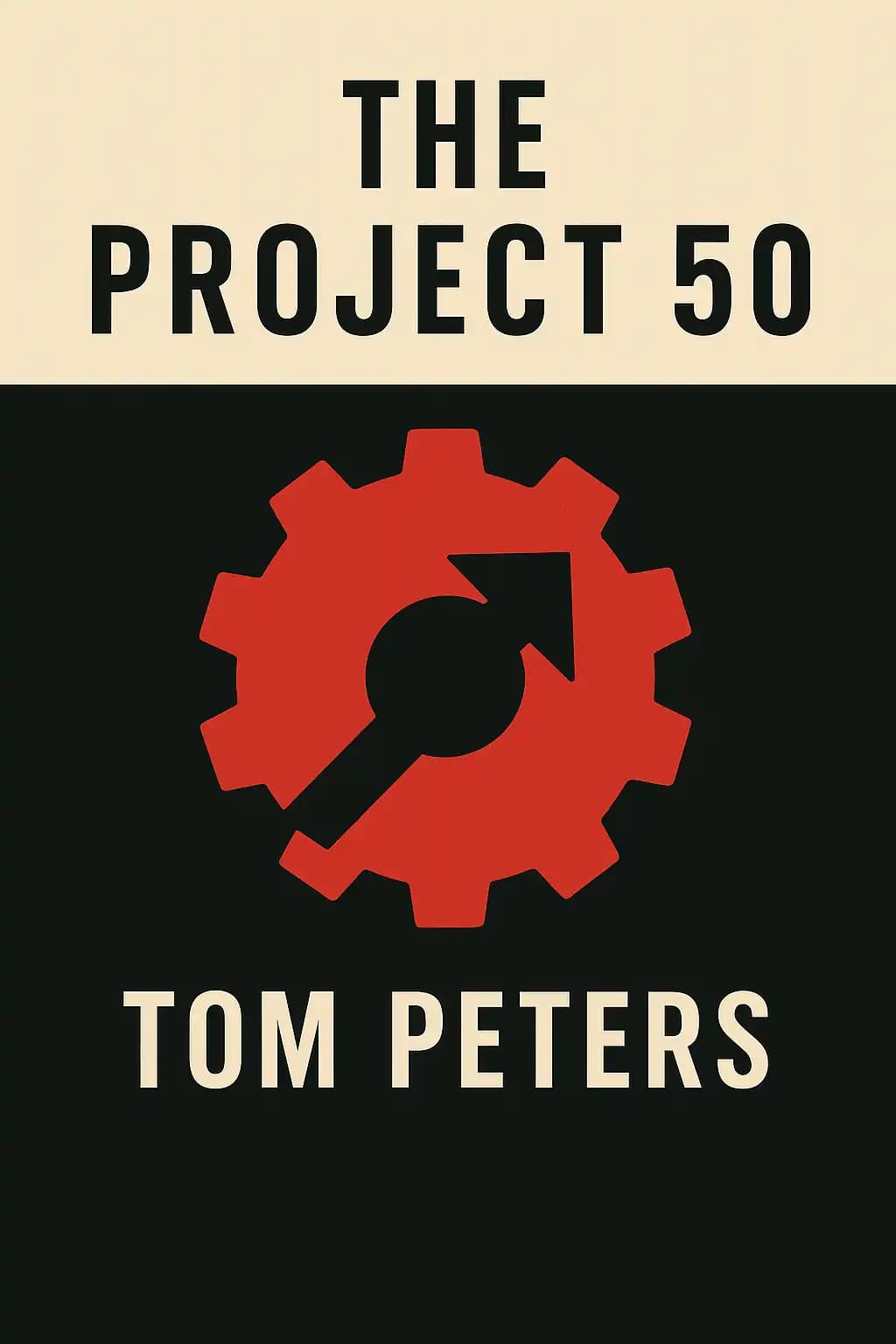
The Project50
Re-imagine! Re-invent! Re-create!
《The Project50》概述
Transform mundane tasks into legendary "WOW Projects" with Tom Peters' revolutionary guide. While critics scoffed, forward-thinking leaders embraced his "celebrate failure" philosophy, creating a workplace revolution. What if your next project could actually change everything - and be fun doing it?
《The Project50》核心主题
- project-based work
- personal branding
- creative risk-taking
- rapid prototyping
- professional distinction
《The Project50》经典语录
On time... on budget... who cares?
Too much publicity and money too soon can be project killers.
A WOW project needs a WOW team.
Let's make every project a WOW project.
《The Project50》主要人物
- Tom PetersAuthor and business thinker
下载《The Project50》摘要
免费获取《The Project50》摘要的 PDF 或 EPUB 版本。可打印或随时离线阅读。
关于本书的常见问题
The Project 50 by Tom Peters provides 50 actionable strategies to transform ordinary tasks into high-impact "WOW Projects." It emphasizes reinventing work through four stages: Create (reframing ideas), Sell (gaining buy-in), Implement (executing with agility), and Exit (transitioning gracefully). Peters argues that memorable projects—not rigid hierarchies—drive success in modern business, urging readers to prioritize innovation, gather diverse perspectives, and embrace chaos.
This book is ideal for professionals, entrepreneurs, and managers seeking to elevate their project management skills. It’s particularly relevant for those in dynamic industries (e.g., tech, consulting) or career pivots, as it provides tools to turn mundane tasks into standout initiatives. Peters’ insights also benefit teams aiming to foster creativity and adaptability in project-driven environments.
Yes, especially for individuals navigating project-based work or organizational change. Peters’ focus on actionable frameworks (e.g., reframing challenges, leveraging "cool projects") and his rejection of bureaucratic processes make it a practical guide. However, critics may find its lack of empirical data a limitation.
- WOW Projects: Memorable, impact-driven initiatives that exceed expectations.
- Reframing: Reimagining a project’s scope by seeking unconventional perspectives.
- The Four Stages: Create, Sell, Implement, Exit—a lifecycle for project success.
- Embrace Chaos: Leveraging uncertainty as a catalyst for innovation.
Unlike conventional guides focused on timelines and budgets, Peters prioritizes emotional impact and legacy. He dismisses "mediocre successes" in favor of projects worth "bragging about years later," advocating for creativity over rigid planning.
A "WOW Project" delivers exceptional results and leaves a lasting impression. It often starts as an overlooked task but becomes transformative through bold reframing, cross-disciplinary collaboration, and relentless execution. Examples include redesigning internal processes or launching a disruptive product.
The book teaches professionals to treat every task as a portfolio piece. By mastering Peters’ strategies—like selling ideas effectively and exiting projects on a high note—readers can build a reputation for delivering value, making them indispensable in competitive environments.
Some critics argue the book lacks concrete case studies or measurable frameworks. Peters’ emphasis on intuition and "chaos" may also clash with industries requiring structured methodologies (e.g., healthcare, finance).
It expands on themes from The Brand You50 and In Search of Excellence, focusing on individual agency in a project-driven economy. While earlier works highlighted organizational excellence, The Project 50 targets personal impact through discrete initiatives.
As remote work and gig economies grow, Peters’ project-centric approach aligns with trends favoring flexibility and innovation. The book’s strategies for managing ambiguity and rapid pivots resonate in industries like AI, sustainability, and startups.
- Collect inspiration: Maintain a "big binder" of ideas to spark creativity.
- Seek diverse feedback: Engage unexpected sources (e.g., a café waitress) to reframe challenges.
- Prioritize exit strategies: Plan graceful transitions to maintain momentum.
Success is measured by long-term impact—not just meeting deadlines. A project succeeds if it’s remembered fondly, advances careers, or reshapes organizational culture. Peters famously quips, "On time… on budget… who cares?" if the outcome lacks significance.