第 1 章
The Grand Chess Game: America's Unintended Empire
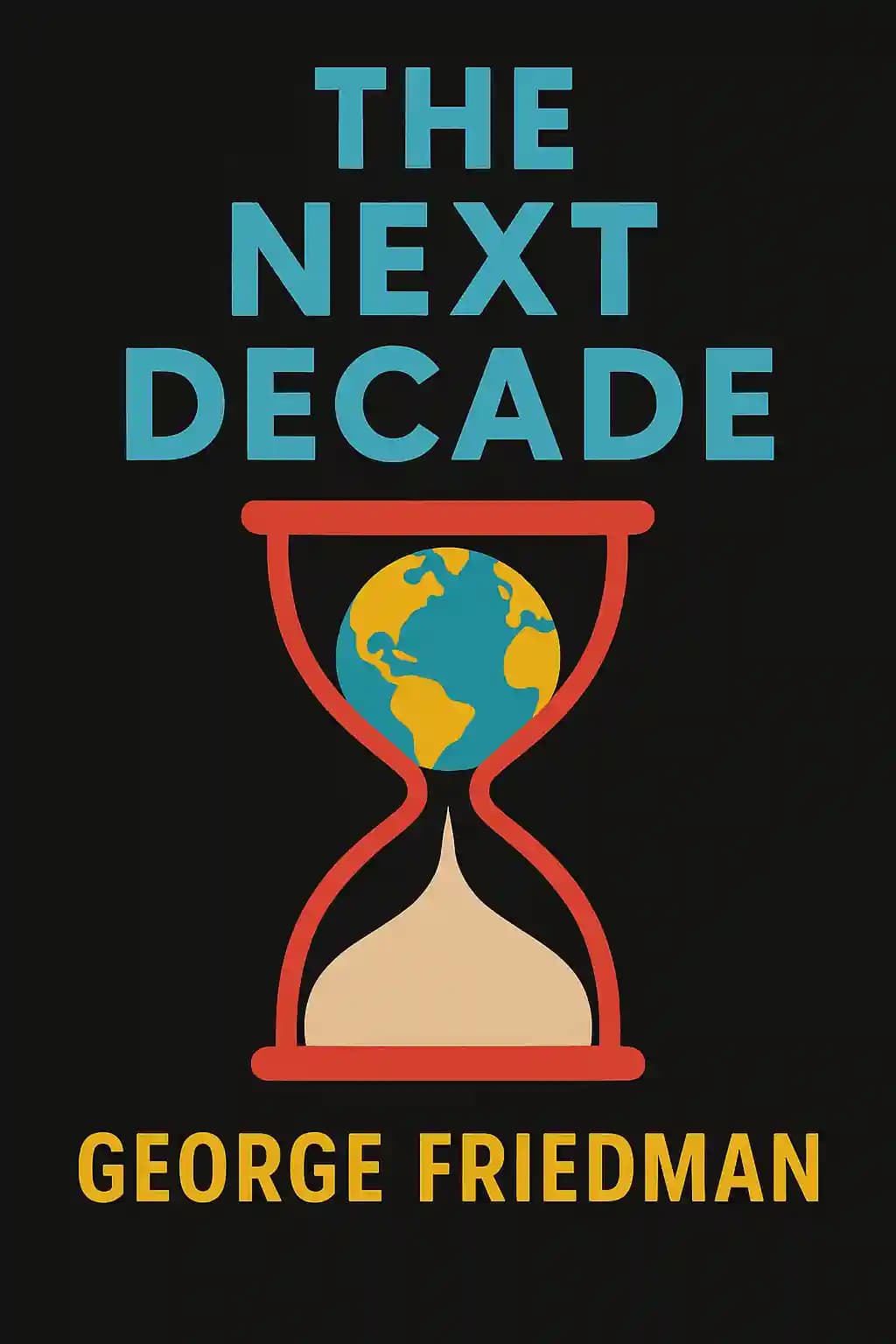
In 2010, as America struggled through economic turmoil and two ongoing wars, George Friedman published a book that would become required reading in diplomatic circles and intelligence agencies worldwide. "The Next Decade" offered a masterful analysis of America's global position and the challenges facing its leadership. Unlike many geopolitical texts that focus on abstract forces, Friedman zeroed in on the personal responsibility of American presidents to manage an accidental empire while preserving republican values. The book gained particular attention after accurately predicting Europe's financial fragmentation, Russia's resurgence, and China's economic slowdown years before they unfolded. Former Secretary of State Henry Kissinger praised it as "an extraordinary analysis of the geopolitical challenges facing American leadership," while The Economist called it "required reading for anyone interested in how power actually works in the modern world." What makes this work particularly compelling is how it strips away ideological pretense to reveal the uncomfortable realities of power politics that most Americans prefer not to acknowledge.
第 2 章
The Unintended Empire: America's Reluctant Global Dominance
America has become an empire not by choice but by historical accident. With an economy three times larger than its nearest competitor and military bases spanning the globe, the United States functions as a de facto global emperor. This reality stands in stark contrast to America's founding principles, creating a profound tension between the nation's republican ideals and its imperial obligations.
The American empire operates unlike any before it. Rather than formal colonies, America's dominance manifests through economic interdependence and military presence. Countries worldwide depend on the American market for significant portions of their GDP, creating a gravitational pull more powerful than formal imperial structures. Even minor American economic decisions ripple globally - from shrimp consumption affecting Mekong Delta farmers to Dell's facility relocations impacting entire national economies.
This imperial reality emerged gradually, becoming undeniable after the Soviet collapse in 1991 left America without counterweight. Despite Washington's 1796 farewell warning against foreign entanglements, America's vast economic footprint (25% of world output) makes isolation impossible. The American economy functions like a global whirlpool, drawing in nations worldwide through trade dependencies that create unprecedented interconnection.
What truly makes America an empire is the combination of economic dominance with unmatched military power. American forces maintain global presence not primarily to conquer territory but to preemptively disrupt emerging powers before they become threatening. This system aligns America's economic and military interests to guarantee the global economy, binding countries more tightly than formal imperial structures ever could.
The president's task in the coming decade is transforming this undocumented disorder into an orderly system - not by choice but by necessity. Despite overwhelming power, America isn't omnipotent. The challenge lies in systematically managing global dominance rather than merely reacting to events, while never using the word "empire" despite its reality. This requires presidents who can reconcile moral principles with power realities, understanding that pursuing noble ends often requires supping with devils.
第 3 章
Machiavellian Leadership: The Presidential Paradox
What kind of president can successfully manage America's imperial reality while preserving its republican soul? History suggests the answer lies in leaders who combine ruthless pragmatism with moral purpose - what might be called "Machiavellian presidents."
The greatest American presidents - Lincoln, Roosevelt, Reagan - shared this quality. They understood power's moral ambiguity while remaining guided by principles. Lincoln preserved the Union by deceiving about his slavery intentions and suspending habeas corpus. Roosevelt secretly armed France against neutrality laws and allied with Stalin despite moral contradictions. Reagan pursued Soviet destruction through arms races they couldn't afford while publicly speaking of freedom and morality.
Presidents attempting direct virtue (Carter, Bush) failed spectacularly, while ruthless presidents without moral purpose (Nixon, Kennedy) also failed. The successful president must embrace Machiavelli's uncomfortable synthesis - focusing on both the accumulation and limits of power. This means becoming a master at managing illusions, doing what's necessary without provoking public revolt.
The coming decade requires less passion and more meticulous adjustment of relationships with countries like Israel and Iran, creating alliance systems with nations like Poland and Turkey. The president must conduct ruthless, unsentimental foreign policy while appeasing a public with unreasonable fantasies of being loved. This means breaking free of Cold War institutions like NATO, IMF and UN, which lack flexibility for today's diverse world.
America's fundamental interests are physical security and a relatively untrammeled international economic system. With no rival for global hegemony, presidents must think regionally, creating balances of power with coalition partners and contingency plans for intervention. As Lord Palmerston said about Britain: "We have no eternal allies, and we have no perpetual enemies. Our interests are eternal and perpetual."
What makes this leadership challenge particularly difficult is the tension between idealism and realism in foreign policy. The idealist school argues America must act on moral principles, supporting only regimes embracing American values. The realist school counters that America must protect national interests regardless of other regimes' moral character. Both miss the point: ideals and reality are different sides of the same thing. Power without ideals becomes monstrous; ideals without power remain mere words.
第 4 章
The Financial Crisis and America's Economic Resilience
Two global events frame the next decade: Bush's response to September 11 and the financial panic of 2008. Both began as domestic American concerns before engulfing the world, revealing the price of empire.
The 2008 crisis followed a predictable pattern - every business cycle ends in a crash with one sector leading the way. When the housing bubble burst, bundled mortgages lost clear value, and highly leveraged investment banks couldn't cover their positions. The damage was truly worldwide, affecting even Eastern European homeowners who had taken mortgages denominated in euros or Swiss francs while being paid in local currencies.
Despite common rhetoric, this wasn't unprecedented. Similar financial crises occurred three other times since World War II: the 1970s municipal bond crisis, the 1980s Third World debt crisis, and the savings-and-loan crisis. Each time, the federal government intervened with bailouts and guarantees.
Roosevelt and Reagan both faced economic crises and understood the psychological element involved. Neither knew exactly how to solve the economic problems, but both attacked the psychology by creating the sense that something was being done. They shifted the boundary between public and private, state and market - Roosevelt increasing federal power, Reagan decreasing it - to rebuild confidence.
The 2008 crisis redefined boundaries between corporations and the state globally, increasing state power and reducing market autonomy. Countries realized that not controlling their own financial systems made them vulnerable, leading to increased economic nationalism. The struggle between economic and political elites intensified, with the first round going to political elites as financial elites lost credibility.
Economically, despite the pain, this downturn doesn't compare to the Great Depression. GDP fell by only 4.1% between 2007-2009, versus almost 50% during the Depression. It wasn't even the worst recession since World War II - the recessions of the 1970s and early 1980s were worse, with unemployment and inflation over 10% and mortgage interest rates above 20%.
What's most telling about America's position is that one measure of its dominance is how much a miscalculation by American financial elites can impact the world and inflict pain on everyone else. Despite the crisis, the United States remains in better condition than other powers, with its fundamental economic and military advantages intact.
第 5 章
The Middle East Challenge: Balancing Power in a Volatile Region
The September 11 attacks forced America into a response that escalated into a two-theater war, defining the past decade and dominating the next. America's dual interests in the region are clear: destroy jihadist groups to protect the homeland and prevent Arabian Peninsula oil from falling under a single regional power's control.
Historically, only Iran and Iraq have been potentially powerful enough to dominate the Arabian Peninsula. Rather than occupying Arabia directly, the United States has followed classic imperial strategy by encouraging rivalry between these powers, playing them against each other to neutralize both. Throughout the 1980s, the U.S. shifted support between sides during the Iran-Iraq war to prolong the conflict. When Iraq narrowly won and later invaded Kuwait, America applied overwhelming force but only to evict, not invade Iraq - maintaining regional balance while protecting oil flow.
The 2003 Iraq invasion violated this fundamental strategic principle. While the invasion succeeded and Saudi intelligence cooperation increased, pacifying Iraq proved impossible. U.S. forces became tied down in an insurgency, transforming Iraq from a means to project power outward into an end in itself. The Bush administration failed to anticipate Saddam's insurgency plans and didn't understand that destroying the Sunni-dominated Baathist Party would empower Shiites with ties to Iran.
With Iraq no longer an effective counterweight, Iran became the dominant regional power - creating the central geopolitical challenge for the next decade. The Iranians had initially welcomed the Iraq invasion, having tried to induce the U.S. to eliminate Saddam Hussein. Once American troops arrived, Iran became deeply involved with Shiite factions while supplying weapons to Sunnis to prolong the conflict.
Iran adopted North Korea's playbook - developing nuclear technology while cultivating an image of unpredictability to deter attack. The U.S. found itself with limited options. An air strike against Iranian nuclear targets would likely strengthen the regime through patriotic resurgence, while Iran could counter by further destabilizing Iraq and Afghanistan, unleashing Hezbollah, or mining the Strait of Hormuz to block Persian Gulf oil.
This defining problem, intertwined with economic concerns and terrorism fears, created a trap for American strategic thinking. The solution may require an American-Iranian alliance - distasteful yet necessary, and temporary, similar to past arrangements with Stalin and Mao. Such an arrangement would demonstrate America isn't controlled by Israel, put pressure on Saudi Arabia, and create new regional dynamics.
第 6 章
Redefining Israel: From Strategic Asset to Normal Relationship
No international relationship is more complex or poorly understood than that between the United States and Israel. The U.S.-Israeli relationship began modestly in 1948 with American recognition of Israeli independence, but the two countries were hardly allies initially. America's primary interest was containing the Soviet Union, focusing on Turkey and Greece.
The relationship transformed dramatically after the 1956 Suez Crisis, when the U.S. opposed the British-French-Israeli plot to seize the canal from Egypt. By the 1960s, American support for Arabs seemed increasingly questionable as they turned anti-American despite U.S. assistance. When Charles de Gaulle ended French support after the 1967 Six Day War, Israel aggressively wooed the United States.
The strategic basis for the U.S.-Israeli alliance emerged from Cold War calculations. With Soviet penetration of Syria and Iraq threatening Turkey, Israel represented a strategic asset that could tie down Syrian forces and counter Soviet influence in Egypt. This relationship deepened when Palestinian terrorism emerged as a threat, with the CIA and Mossad cooperating intensely for twenty years to suppress Soviet-sponsored terrorist organizations.
The Soviet collapse fundamentally changed this dynamic. With Turkey no longer at risk, Egypt weakened, Syria isolated, and Jordan effectively an Israeli protectorate, the strategic rationale diminished. U.S. aid to Israel remained steady even as Israel's economy surged, dropping from 21 percent of Israel's GDP in 1974 to just 1.4 percent today.
Israel today is strategically secure, having established regional dominance through a balance of power among neighbors based on mutual hostility and dependency. Egypt represents the cornerstone of this security system. The Egyptian-Israeli peace treaty, which demilitarized the Sinai, eliminated Israel's greatest strategic threat. Jordan represents Israel's second critical relationship, with Jordanian forces actually guarding the Jordan River line for Israel because Palestinian hostility threatens the Hashemite regime.
The United States should pursue a policy of quiet disengagement from Israel while maintaining public support. This approach recognizes that U.S. interests in the relationship have diminished since the Cold War's end, while costs have increased. Israel no longer faces conventional military threats requiring immediate American intervention, and its robust economy no longer depends on U.S. financial aid.
This recalibration reflects current realities: Israel doesn't need foreign aid, faces no existential conventional threats, and can maintain intelligence sharing and weapons development quietly. The Arab-Israeli balance of power is currently distorted, with Egypt and Jordan opting out, giving Israel freedom of action that doesn't serve U.S. interests.
第 7 章
Russia's Return: The Specter of Eurasian Unity
The Soviet Union's collapse didn't eliminate Russia as an international player. Though the USSR's fall shattered the empire, the Russian Federation survived with its Muscovy core and Siberia intact. During the 1990s, America was deeply concerned about the Soviet nuclear arsenal, preferring to have these weapons under the control of a single watchable state - Russia - rather than dispersed among Ukraine, Belarus, and others.
Vladimir Putin's rise to power transformed Russia. Coming from the intelligence services - the one institution that never stopped functioning during the chaos - Putin viewed the world geopolitically rather than ideologically. Recognizing Russia could never catch up industrially with the West, he brilliantly shifted Russia's economic strategy to focus on natural resources, particularly energy. This created a sustainable economy, strengthened the Russian state through Gazprom, and made Europe - especially Germany - dependent on Russian energy.
Despite its resurgence, Russia faces fundamental long-term weaknesses. Putin's energy-focused strategy works brilliantly in the short term but requires major economic expansion to succeed long-term. Russia's structural weaknesses stem from geography - a relatively small, highly dispersed population connected by little more than security apparatus and culture. Russia's declining population and poor infrastructure make a modern economy difficult to sustain.
Russia must capitalize on its current advantages - German energy dependence and American distraction in the Middle East. Russia needs German technology while Germany needs Russian resources. This complementary relationship will drive Russian strategy in the coming decade. For Germany facing economic problems, closer cooperation with Russia makes sense.
America's core interest in Eurasia remains preventing any single power from dominating the region. A unified Russia-Europe would create a force whose population, technology, and resources would likely surpass America's. The American strategy must continue blocking any German-Russian entente. The countries caught between - the Intermarium nations from the Baltic to Black Sea - become strategically vital to American interests, with Poland being the most important.
America's relationship with Poland serves two functions: potentially preventing a Russo-German alliance or creating a counterbalance if one forms. For the Baltic states, America faces a different challenge. While they provide strategic positioning near St. Petersburg, they're difficult to defend militarily. Turkey, through its historical rivalry with Russia and control of the Bosporus, naturally serves American interests in containing Russian expansion without requiring direct American involvement.
第 8 章
Europe's Fragmentation: The Return of National Interests
Contemporary Europe emerged from the hell of 20th century slaughter seeking a world where conflicts were merely economic and managed by Brussels bureaucrats. For twenty years after the Soviet collapse, Europeans believed they'd found their utopia. But looking ahead, growing geopolitical tensions could plant the seeds of more serious conflict.
The European Union fundamentally differs from America's founding federation. While the United States emerged as both a practical solution and moral mission with citizens willing to sacrifice for its preservation, the EU remains merely a confederation where sovereignty rests with individual nations. Unlike America, which established federal sovereignty through civil war, the EU has severe limitations - some members share a currency while others don't, there's no unified defense policy, and each nation retains its distinct identity and military authority.
At its core, the EU is primarily an economic union focused on maximizing prosperity rather than pursuing higher ideals that might inspire sacrifice. This fundamental limitation became painfully apparent during the 2008 financial crisis, when the delicate power balance containing Germany began unraveling.
When crisis struck, Germany's robust economy weathered the shock while eastern European nations expected bailouts from stronger EU members. Germany balked at shouldering this burden, instead directing eastern Europeans to the IMF. This decision underscored how far Europe was from being a unified entity and highlighted Germany's position as Europe's prime decision-maker.
The crisis exposed the euro's fundamental flaw - a single currency serving countries at different development stages and business cycles. Nations like Greece couldn't devalue their currency to boost exports and competitiveness, finding themselves at the mercy of decisions made primarily for Germany's benefit. The resulting tensions awakened the very nationalism the federation was designed to bury.
Germany's relationship with Europe has always been complex. Born from war with France and twice crushed after invading it, Germany now faces fundamental shifts in its strategic position. Its traditional problem of being squeezed between enemies has vanished - it no longer borders Russia directly, has a friendly relationship with France, and enjoys mutually beneficial trade with Russia.
For the coming decade, the American president must apply balance-of-power principles to Europe. This requires maintaining the alliance with Britain, which shares economic interests and maritime orientation with the U.S., while cultivating Turkey to gain influence in the Black Sea. Most critically, America must prevent the geographical amalgamation of Russia and Europe, which would create an uncontainable power.
第 9 章
The Pacific Horizon: Preparing for Tomorrow's Challenges
The Western Pacific presents no immediate crisis for the United States, but this tranquility won't last indefinitely. Having been a key trouble spot for much of the previous century, Asia's relative peace over the past thirty years has been the exception rather than the rule. The president's task in the coming decade will be methodical preparation for the inevitable crises looming just beyond the horizon.
China's dramatic growth beginning in the 1980s resulted from the release of pent-up demand after Mao's death and Deng Xiaoping's reforms. Despite impressive growth, only 60 million Chinese (less than 5% of the population) live in middle-class households earning over $20,000 annually, mostly near the coast. Meanwhile, 80% of Chinese live in extreme poverty comparable to sub-Saharan Africa, earning less than $6 per day per family.
This creates a dangerous social and geographic chasm - the coastal region's interests align more with foreign trading partners than with the impoverished interior. When economic growth inevitably slows, China faces potential catastrophe. With a producer economy disproportionate to its consumer economy, rising labor costs, and increasing competition, China's ability to maintain employment will decline, threatening the entire system's stability.
Japan, meanwhile, has been navigating its own economic challenges since 1990. Unlike China, Japan's social cohesion allowed it to sacrifice growth to maintain employment - what Westerners called "lost decades" was actually a preservation of core values. Now facing demographic collapse with each generation smaller than the last, Japan can no longer support retirees through debt. Yet unlike China, Japan lacks a billion impoverished citizens, giving it more flexibility to absorb austerity without risking instability.
For thirty years, China and Japan have defined their relationship primarily through their connections to America rather than directly with each other. This will change as both nations face internal transformations. Japan, despite its constitutional pacifism, maintains the western Pacific's most capable navy and substantial military forces while relying on American protection for its sea lanes.
America's strategy in the western Pacific must be to delay and deflect, as resources and attention will be focused on Russia and the Middle East. Korea, Australia, and Singapore form the three critical relationships America must cultivate. These countries would be essential allies in any potential conflict, particularly with Japan. Building Korea's navy, creating facilities in Australia, and modernizing Singapore's forces can be done without arousing anxiety while creating the framework for managing future conflicts.
第 10 章
America's Hemispheric Security: Neglected Backyard
Despite sharing a hemisphere with Latin America and Canada, the United States has historically shown limited interest in the region, with the notable exceptions of Mexico and Cuba. Latin America remains of marginal importance to American interests, partly due to geography and partly because the region has never posed a significant threat.
South America's natural fragmentation prevents the rise of a transcontinental power that could challenge the United States. The continent is divided by the Andes mountains and the Amazon jungle into three distinct regions: Brazil along the Atlantic coast, the southern nations (Argentina, Uruguay, Paraguay), and the Andean nations to the west. These geographical barriers make basic overland commerce difficult and political unity impossible.
Cuba represents the one place where outside involvement has been considered a serious threat due to its strategic location. Controlling Cuba means controlling the sea-lanes into the Gulf of Mexico and thereby New Orleans - the crucial port through which midwestern agricultural products flow to global markets. The United States has always been obsessed with Cuba because naval forces there could control access to the Gulf of Mexico.
Brazil is Latin America's only potential competitor to the United States - the region's first significant, independent global power with the world's eighth largest economy. Currently, Brazil poses no threat to American interests. Geography prevents easy northward expansion, and there's minimal economic friction. However, looking decades ahead, Brazil could potentially develop sufficient naval power to dominate the South Atlantic.
The United States should therefore begin working now to create a countervailing power by strengthening Argentina - historically Latin America's major power in the early 20th century. With modest investment, Argentina could develop as Brazil's regional competitor. America's strategy should be subtle - slowly strengthening Argentina's economic and political capabilities while drawing its military closer through civilian government channels.
第 11 章
The Empire and the Republic: America's Defining Challenge
America's global empire creates unavoidable entanglements with virtually every nation on earth. While some argue the United States is overextended, disentangling from these global interests isn't realistically possible. At nearly 25% of the world economy, with investments and borrowing that dominate global markets, America must manage the chaos of the Islamic world, a resurgent Russia, a divided Europe, and a troubled China while solving current economic problems.
The United States has been on this imperial trajectory since the Spanish-American War of 1898. Moving at such velocity, changing course isn't an option - the only choice is managing what exists by reconciling moral principles with power realities. Power's exercise is always morally ambiguous, yet America's moral principles mean nothing if the country is destroyed. Pursuing universal rights requires power, not just speeches, and accepting that difficult decisions about who gets hurt are inevitable.
The next decade provides a crucial transition period to develop a more balanced exercise of power. America must choose enemies carefully, fight only winnable wars, and avoid Asian land wars where Americans are vastly outnumbered and logistically challenged. Instead, we should follow the British example of maintaining balance of power by diverting potential enemies' resources toward their neighbors.
America's true power foundation is oceanic dominance, which prevents attacks, enables intervention, and controls international trade. Rather than obsessing over asymmetric warfare or the "long war" against terrorism, we must prepare for inevitable systemic wars between major powers. This means prioritizing naval power and space-based systems while rationalizing our chaotic foreign policy apparatus with its sixteen overlapping intelligence services and competing departments.
Americans prefer mutual vilification to facing facts, arguing about what ought to be rather than what is. The empire poses a profound threat to the republic's moral foundation. What's needed is a Machiavellian president with both power understanding and moral core, functioning institutions, and above all, a mature public taking responsibility for the nation.
America is far more powerful than most realize, its problems trivial compared to its strength. What's needed is an unsentimental understanding of our situation, leaders who can reconcile reality with American values, presidents who understand both power and principles, and a mature public that recognizes what's at stake. The situation isn't hopeless, but requires an enormous act of will for the country to grow up.