第 1 章
Beyond the Blueprint: Rethinking Life's Complexity
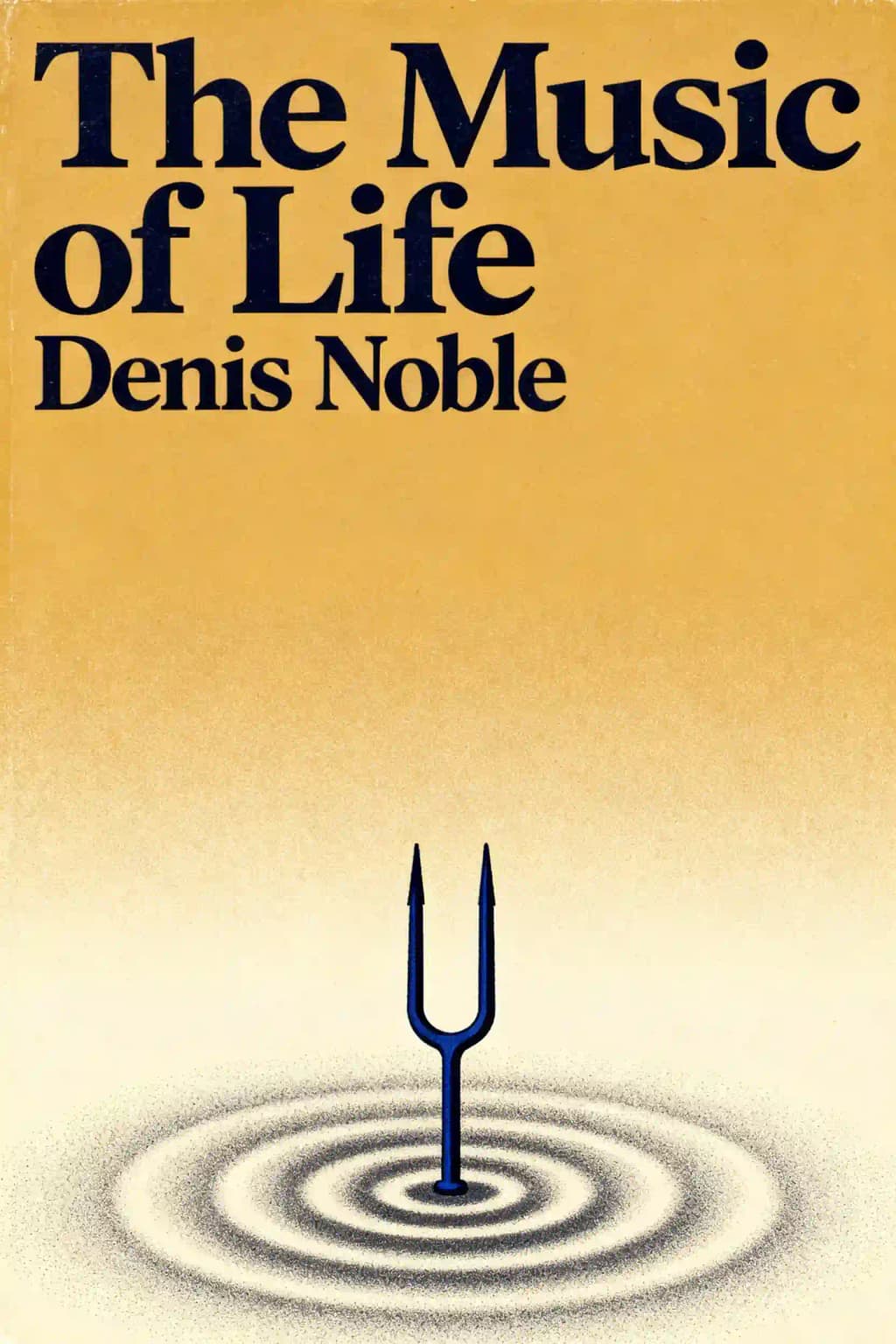
When Nobel Prize-winning biologist Sydney Brenner was asked what he thought about the Human Genome Project, he quipped that it was like buying a very expensive dictionary without a grammar book. This perfectly captures the central insight of Denis Noble's groundbreaking work. "The Music of Life" has become something of a cult classic among systems biologists and physiologists since its 2006 publication, with luminaries like Richard Dawkins acknowledging its importance despite challenging some of his own famous metaphors. The book's influence extends beyond scientific circles-Radiohead's Thom Yorke cited it as inspiration for the album "In Rainbows," drawn to its exploration of how complex systems create emergent properties greater than their parts. What makes Noble's perspective so compelling is his ability to overturn our most fundamental assumptions about genes and life without requiring specialized knowledge-just a willingness to see familiar concepts in an entirely new light.
第 2 章
The CD of Life: Rethinking Genetic Determinism
Imagine being moved to tears while listening to Schubert's piano trio in E-flat major. Now imagine alien observers-silicon-based "Silmans"-trying to understand this emotional response. Following the chain of causality, they might trace your tears back to the CD playing the music and conclude that the digital information encoded there "caused" your crying. But we know this is absurd. The CD didn't cause your emotional response-Schubert composed the music, musicians performed it, and your emotional memory created the context for your reaction. The CD merely stores information that enables recreation of the experience.
This same fundamental error occurs in biology when we think DNA "causes" life. The human genome resembles a CD in carrying digital information through four chemicals (nucleotides) referred to as A, T, G, and C. But DNA itself is relatively passive-it sits there until cellular machinery reads sequences from it, much like a CD player reads information from a disc.
Here's the paradox that undermines genetic determinism: proteins are required for the machinery that reads the DNA code to produce proteins. Furthermore, genes don't map neatly to single proteins. In higher animals, DNA coding segments (exons) are separated by non-coding stretches (introns), allowing for multiple "splice variants" that can produce different proteins from the same gene. The fruit fly Dscam gene, with 110 introns, has tens of thousands of possible splice variants whose expression depends on cellular environment and life cycle stage.
This complexity makes expressions like "gene for x" fundamentally misleading. There's no one-to-one correspondence between genes and biological functions. Yet genetic determinism has gained wide appeal in public discourse, with regular references to "genes for this" and "genes for that." The "selfish gene" view popularized by Richard Dawkins is ultimately a metaphorical polemic rather than a straightforward empirical hypothesis-as Dawkins himself acknowledges, writing "I doubt that there is any experiment that could be done to prove my claim."
From a systems perspective, genes and proteins are like building blocks that can be arranged in countless ways, with the same elements playing different roles depending on their interactions. The genome resembles more a database of successful organisms than a program directing life's development. The system provides meaning to the genetic code, not the other way around. While systems cannot exist without genes, there's an asymmetry-survival logic lies in the system, not genes. Systems (organisms) live or die; genes merely contain the database for reconstruction.
第 3 章
The Mathematical Impossibility of Genetic Reductionism
To understand why a purely reductionist approach to biology is mathematically impossible, consider the ancient parable of a Chinese Emperor and a farmer. The farmer, having saved the Emperor in battle, requests rice grains arranged on a chessboard: one grain on the first square, doubled on each subsequent square. What seems a modest request quickly becomes astronomical - by square 32, the amount would exceed modern global rice production, and by square 64, the world would be knee-deep in rice. This illustrates combinatorial explosion, a concept crucial to understanding genomic complexity and why simple reductionism fails in biological systems.
The human genome contains approximately 30,000 genes, each interacting with others in complex ways. Even if we consider the simplest scenario where just two genes were required to cooperate for each biological function, there could be nearly 500 million different potential functions. This already vast number becomes truly mind-boggling when we consider reality: most biological processes require far more genetic interactions. For instance, maintaining heart rhythm requires the coordinated action of roughly 100 genes. If we apply this more realistic scenario - where 100 genes are needed per function - the possible number of functions becomes 10^289, astronomically larger than the chessboard's mere 10^19 grains. To put this in perspective, there are only about 10^80 atoms in the observable universe.
The complexity compounds further when we consider that genes don't just interact in fixed groups. They can interact in varying combinations, at different times, and in response to different environmental triggers. Allowing for any possible combination of gene interactions produces a number with over 70,000 digits - far exceeding what nature could possibly have tried even over billions of years of evolution. This mathematical reality fundamentally undermines the idea that we can simply decode DNA and rebuild life from the bottom up.
Nature has necessarily developed strategies to manage this overwhelming complexity. These include chemical constraints that limit which molecules can interact, cellular compartmentalization that keeps certain processes isolated, and protein specialization that restricts possible interactions. The genome isn't a deterministic program that simply runs from start to finish - it's more accurately understood as a sophisticated digital database, similar to how a CD stores information for reproduction but requires external systems to interpret and express that information.
The analogy of a pipe organ with 30,000 pipes helps illustrate this concept. Just as an organ enables countless musical compositions through the integrated activity of its pipes, the genome permits the "music of life" to be expressed through gene interactions. However, just as an organ requires both a composer to write the music and a skilled organist to perform it, the genome requires complex cellular machinery and environmental factors to properly express its information. This understanding moves us beyond simple genetic determinism toward appreciating the true complexity of biological systems.
The mathematical impossibility of pure reductionism in genetics has profound implications for how we approach biological research, drug development, and our understanding of life itself. It suggests that while understanding individual genes is important, we must also study the higher-level patterns and principles that nature uses to orchestrate this vast complexity into functioning life.
第 4 章
The Incomplete Recipe: What DNA Doesn't Tell Us
The genome cannot be considered a complete "book of life" for several fundamental reasons. First, proteins aren't the only molecules determining biological function-water, lipids, and many other non-gene-coded molecules are essential. Second, much protein behavior depends not on genetic instructions but on the chemistry of self-assembling systems.
This is like a French bistro's famous omelette recipe that omitted the crucial step of folding in beaten egg whites because the chef considered it so obvious it didn't need mentioning. When connoisseurs asked why this step was missing, the chef's daughter indignantly replied, "How else do you think anyone prepares an omelette!?" Similarly, nature doesn't code for what's chemically natural to proteins-it doesn't need to.
Unlike human languages, which aim to describe the world and avoid ambiguity, the genomic language has no such purpose. It doesn't describe functionality-the code for gene XYZ doesn't explain that it enables synapses to function, testicles to produce sperm, or pancreatic cells to secrete insulin. This makes the genome less like a book and more like a parts list without assembly instructions or functional descriptions.
If silicon-based Silmans were to analyze human DNA completely, they would face a fundamental problem. Despite determining all protein sequences, they'd realize the DNA contains no information about water, lipids, or other essential components for life. When they send robots to collect these environmental components and place the DNA in this context, they would watch with incredulity as cells form, divide, and eventually develop into a human. Like frustrated Parisian chefs, they'd discover the "recipe" doesn't specify everything-it just happens!
This reveals that DNA never acts outside a cellular context. We inherit not just our genome, but our mother's entire egg cell with all its machinery, including mitochondria, ribosomes, and cytoplasmic components. We also inherit "the world"-the peculiar chemistry of water, lipids, and countless molecules whose properties aren't coded for by DNA.
第 5 章
The Orchestration of Life: Downward Causation
Like an organist surveying keyboards and pedals from above, the cellular machinery that plays the genome creates patterns and forms that constrain the instrument to follow ordered sequences. To create high-level physiological functions like heartbeats or neural activity, thousands of genes express simultaneously. Though we have only 20-30,000 genes, we don't run out because many are re-used across multiple organs. It's the pattern of expression, not individual genes, that defines which organs form.
The reductionist view that the genome dictates to all other levels fails to capture biological complexity. The interactions of gene products are highly non-linear-2+2 may make 5 or even 105! The genome isn't a complete map but more like a musical score with just enough information for a competent player to interpret.
Nerve and muscle cells demonstrate downward causation through sodium channels-proteins that allow ions to transmit electrical charges across cell membranes. While more sodium channels increase nerve signal speed, Alan Hodgkin discovered this only works up to an optimal point, after which additional channels actually slow transmission. The system maintains this optimal level through electro-transcription coupling-when too many channels accumulate, fewer are expressed. This represents causation operating from top down, not bottom up.
Similarly, the heart "remodels" its gene expression patterns based on activity levels, with athletic hearts showing different patterns than those with heart failure. These changes involve vast numbers of genes, not just a few.
Mothers transmit influences to embryos that affect gene expression levels, determining adult health patterns years later. These "maternal effects" can extend across several generations, meaning the genome doesn't carry all transmitted information. This inheritance of acquired characteristics contradicts neo-Darwinian theory, approaching the taboo of "Lamarckism." Epigenetic effects can persist through at least four generations, as shown in rat fertility studies.
Downward causation extends beyond gene expression to include influence from any higher level upon lower levels. The body's communication system uses messengers like hormones and transmitters, both acting on cell surface receptor proteins in a lock-and-key relationship. These downward causation processes follow the same scientific rules as upward causation and can be equally quantified in mathematical equations.
第 6 章
The Emergence of Rhythm: Systems-Level Properties
In 1959, when computers were rare, massive machines consuming enormous power, a young physiologist attempted to access London University's only computer to model heart electrical activity. Rejected and advised to take his problem to Nobel laureates Hodgkin and Huxley, he persisted by learning advanced mathematics and programming. Despite being relegated to 2-4 AM computer time, he eventually succeeded in modeling heart rhythm, publishing his findings in Nature.
These early heart models have been refined over decades but remain fundamentally correct. Just 50 proteins in a tight-knit network can account for cardiac rhythmic activity, demonstrating nature's use of modular systems. The key insight is that causation works bidirectionally-components alter system behavior, and the system alters component behavior. In computer models, the voltage oscillations in heart cells and ion flow through protein channels are interdependent. When feedback from cellular rhythms to the proteins is disabled, all oscillation ceases, proving that downward causation (system-to-component effects) is essential for the system to function.
While reductionist science is often considered "hard" science and systems-level science "fuzzy," there's nothing fuzzy about the mathematical equations modeling heart rhythm. This isn't a return to vitalism, which claimed non-physical elements were needed for life. The heart rhythm model represents rigorous scientific understanding captured in precise mathematical form.
Nature contains an astonishing range of rhythmic mechanisms spanning frequencies from over 1000 per second to once every few years-a trillion-fold range. While heart rhythm operates at roughly 1 hertz, other biological oscillators include nerve cells generating impulses at up to 1000 per second, insect wings oscillating 200 times per second, respiration occurring every few seconds, hunger cycles happening several times daily, circadian rhythms, lunar-based cycles like ovulation, annual rhythms governing animal migrations, and even multi-annual rhythms like the 17-year cicada reproductive cycle.
第 7 章
The Middle-Out Approach: Navigating Biological Complexity
The bottom-up approach to understanding biological systems suffers from two fatal problems. First is computability: even simulating the folding of a single protein takes months on the world's most powerful computers. Scaling this to simulate interactions of trillions of molecules in a single cell over biologically meaningful timeframes would require computational resources beyond what could exist in our solar system.
The top-down approach, while successful in physiology for many years, also has limitations. It works by identifying components that need further study at progressively lower levels, essentially "drilling down" through the system. However, after reaching the molecular level, we still need to build everything back up quantitatively to understand it at a systems level.
The "middle-out" approach, as Sydney Brenner termed it, offers a pragmatic solution to biological complexity. Since biological function happens at different levels, we can gather quantitative data at any level and use it as a starting point for systems analysis. There can be many "middles"-some might start with cells, others with genes. The key insight is that any level can be the starting point for a causal chain. The advantage is selectivity: as we reach down to lower levels, our higher-level analysis helps identify only the relevant features, filtering out unnecessary details.
The virtual heart exemplifies this approach. Starting with painstaking work recording the location and orientation of muscle fibers in a dog heart, this project created a comprehensive anatomical model that incorporates contractile behavior, blood circulation, and electrical properties. The model connects cellular and protein levels and can represent differences in gene expression between normal and diseased hearts. Though impressively realistic, the model currently represents only about 2% of the genes involved in heart function-demonstrating both nature's modularity and how much further such projects have to go.
第 8 章
Cellular Harmony: How Different Cells Play Together
Imagine silicon-based Silmans discovering tropical islands where they find 200 eukaryote species that, despite having identical DNA, display completely different characteristics. These species pass on their acquired characteristics to daughter cells despite having the same genetic code. This discovery challenges their understanding of inheritance.
The Silmans' shocking discovery turns out to be something entirely familiar: they've mistaken human bodies for islands, and the 200 different cell types within each body as distinct species. Their mistake contains truth, however-to cells themselves, the human body is indeed like an island on which they're evolutionarily trapped.
All cells in a body contain identical genes inherited from the sperm-egg fusion, yet they develop into remarkably different types. This occurs because different genes are expressed differently in each cell type-the musician plays the same 30,000-pipe organ (genome) differently in each cell. When cells divide, they transfer their acquired pattern of gene expression to daughter cells through epigenetic inheritance. This doesn't depend on DNA sequence differences but on chemical markings imposed on the DNA, such as methylation of cytosines.
Multicellular species emerged relatively recently in evolutionary history, appearing in great profusion only during the Cambrian explosion around 530 million years ago-representing just 13-15% of the four billion years life has existed on Earth. Their defining characteristic is "cellular harmony," where cells must cooperate for the benefit of the whole organism despite their individual "selfish" interests.
This cooperation parallels the development of musical modes and keys: for most of human musical history, rhythm and melody dominated through medieval modes adequate for single-line melodies. But when demand arose for multiple voices playing together (polyphonic harmony), modern musical keys developed to ensure harmonious results when each part followed the same key.
With approximately 200 different cell types in humans (each with unique gene expression patterns), all cells must work harmoniously as they "sink or swim together." Since most genes are expressed in many cell types, it makes sense that all cells share the same gene complement, with cell type determined by gene marking rather than gene complement.
第 9 章
The Evolutionary Composer: Modularity and Redundancy
Like Chinese characters, genes are modular systems built from smaller components. Long stretches of DNA code are constructed from perhaps just a thousand or two basic modules shared across many genes. Both systems appear messy at first glance because evolution has changed their functions over time in often arbitrary ways.
Nature rarely creates completely new modules but instead "plunders the treasure chest of old DNA modules" to form new combinations and repurpose old genes. This explains why even evolutionarily distant species share many gene sequences-over 99% of our genes have related copies in mice, and half match those in sea squirts despite 500 million years of separation. However, tiny genetic differences can encode enormous functional differences through complex interactions.
The author cautions against saying genes "do" things, as their function varies with circumstances-they are used rather than acting independently. Genes are controlled by proteins coded by other genes, creating massive gene-protein networks. The terminology matters: "gene networks" misleadingly suggests a self-contained genetic program, when in fact these networks respond to influences from across the organism and environment through downward causation.
Redundancy provides robustness in biological networks. When one pathway fails, feedback mechanisms up-regulate alternatives to maintain function. The author demonstrates this with a heart rhythm model where reducing sodium channel activity causes the mixed cation channel to compensate, maintaining the heart's rhythm even when the sodium channel is completely knocked out. This redundancy creates fail-safe systems that allow evolution to modify "aircraft design" while ensuring the "aircraft continues to fly."
Evolution creates "Faustian pacts"-beneficial adaptations that eventually become fatal. The potassium channel that makes the heart energy-efficient also makes it electrically fragile, interacting with 40% of pharmaceutical compounds and susceptible to mutations that can cause sudden cardiac death. Evolution neither cares about nor anticipates these problems, especially if they affect only a small population fraction after reproductive age.
Evolution is the "grand composer" that orchestrates the music of genes, cellular harmony, and life's symphony by serendipitously winnowing down possibilities. Though neither perfect nor designed, life's logic can be worked out by reconnecting physiology and developmental biology to evolutionary theory. The grand composer was "even more blind than Beethoven was deaf!"
第 10 章
Beyond Reductionism: The Self as Process, Not Object
The author challenges the notion that the "self" can be located in a specific part of the brain. While neurons, brains and bodies are objects, the "I" is not an object in the same sense. This represents a problem of levels and ontology similar to cardiac pacemaker rhythm, which exists at the cellular level but not below it.
Through a philosophical dialogue, the author explores the problem of qualia-whether we all experience sensory perceptions like color in the same way. The conversation examines solipsism, private experience, and whether our perceptions exist solely in our heads, revealing tensions between dualism and materialism in explaining consciousness.
When a philosopher stimulates a physiologist's brain to make him point, the physiologist admits feeling the movement was "imposed" rather than intended. The physiologist argues he could eventually map the complete neural pattern for intentional pointing, potentially locating the neural basis of the "I" that does the intending. However, this approach fails because intentional actions require social context-like pointing at a dog lead because someone wants to walk the dog.
The author challenges the cultural belief that a person can be identified with their brain. While brain damage endangers the self more than damage to other body parts, this doesn't mean the brain alone is sufficient for selfhood. Through a thought experiment of progressively removing body parts, the author demonstrates how a brain completely separated from sensory input and motor output would lack the ability to communicate, making questions of consciousness meaningless.
Different cultures conceptualize "mind," "soul," and "self" quite differently. To illustrate an alternative approach to the self, the author shares the Zen Buddhist story of the Oxherder, which guides meditation practice toward "forgetting" the illusions of self. East Asian languages like Japanese and Korean naturally de-emphasize the subject in sentences, focusing instead on processes and actions, making it easier to conceive of the self as a process rather than an object.
The author argues that metaphors lie deeper in our language and thought than we realize. The self is a hidden metaphor-a useful one that allows us to attribute responsibility, but not necessarily a physical object. Instead, the self can be understood as a coherent integrated process carrying the characteristics of an agent. We naturally think of the self as an object because it's always associated with a particular body, but this doesn't require that a physical object, rather than a coherent process, has evolved.
The author titled the book "The Music of Life" because music, like life itself, is a process rather than a thing that must be appreciated as a whole. Music is notoriously difficult to describe in words-as the Zen Buddhist parable suggests, "no words are needed for those who understand music." Even describing the self as a process remains a metaphor with its own limits. The author quotes Leonardo da Vinci's observation that "our soul is composed of harmony," noting that painting can capture harmony instantaneously while writing and music require sequential logic. We can choose our metaphors rather than having them imposed on us, and with this understanding, the artist disappears-leaving readers to their own thoughts.