第 1 章
The Enduring Charm of Little Women
Little Women isn't just a novel-it's a cultural phenomenon that has captivated generations of readers since its publication in 1868. When a 1927 poll asked high school students about their most influential books, Louisa May Alcott's masterpiece surpassed even the Bible. What makes this seemingly simple domestic tale of four sisters in Civil War-era New England so powerful that it continues to inspire film adaptations, stage productions, and passionate devotion over 150 years later? Perhaps it's the authenticity with which Alcott captured family dynamics, drawing from her own unconventional upbringing among Transcendentalist thinkers like Emerson and Thoreau. Or maybe it's the novel's revolutionary portrayal of young women with ambitions beyond marriage. Taylor Swift has cited Jo March as her childhood hero, while J.K. Rowling drew inspiration from the March family dynamics for her own writing. The novel has been translated into languages from French to Urdu, proving its universal appeal transcends cultural boundaries. Whether you're discovering the March sisters for the first time or revisiting old friends, their journey from childhood to womanhood continues to offer wisdom, comfort, and inspiration to readers of all ages.
第 2 章
The March Sisters: Four Distinct Paths to Womanhood
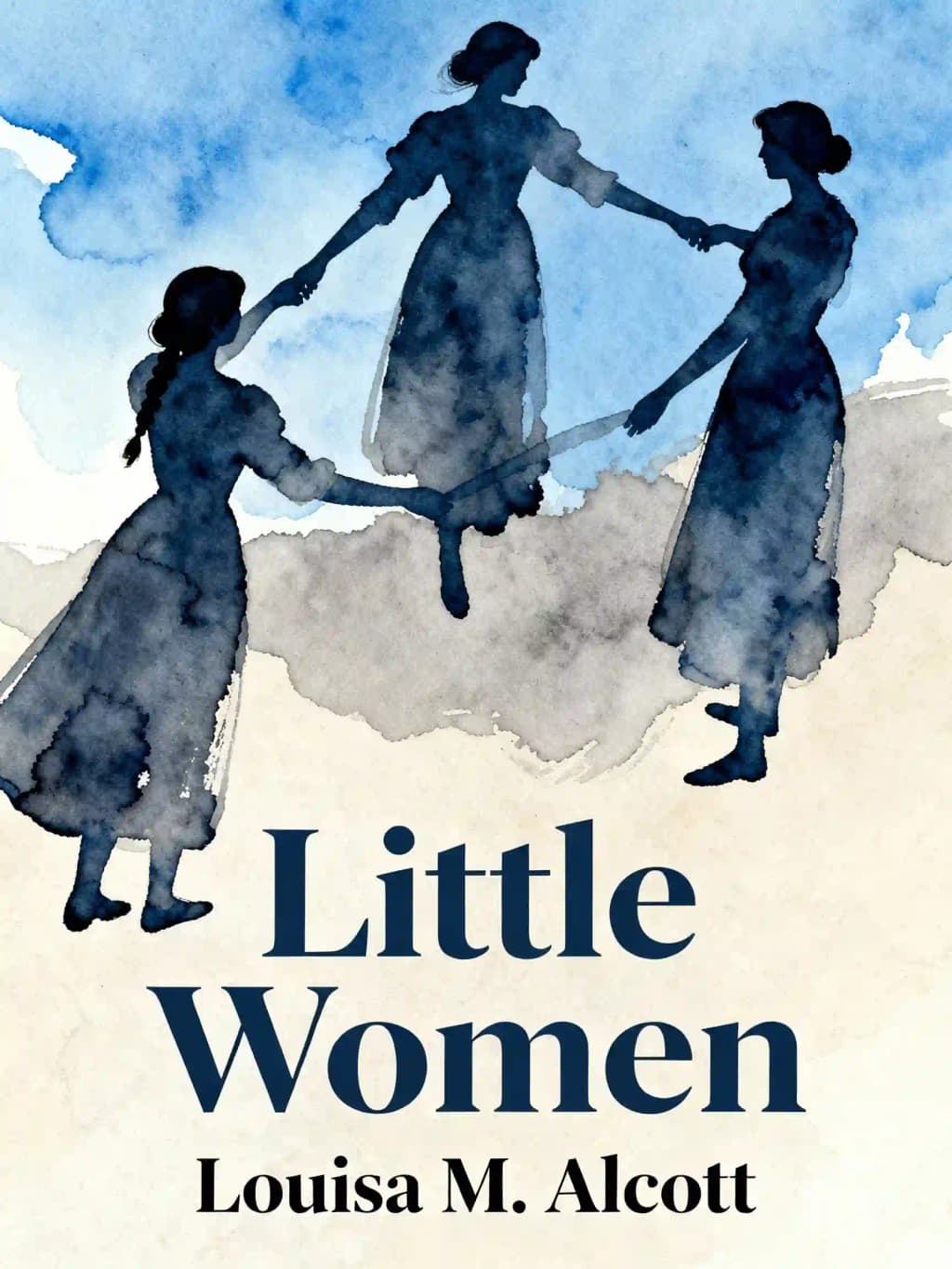
The heart of Little Women lies in its masterful portrayal of four distinctly different sisters navigating the complex transition from childhood to adulthood in Civil War-era America. Meg, the eldest, embodies traditional feminine virtues while wrestling with deeper internal conflicts about vanity and material desires. Her journey represents the conventional path of marriage and motherhood, yet Alcott carefully crafts this choice to feel authentic rather than obligatory. Through Meg's struggles with jealousy over her wealthy friends' lifestyles and her eventual contentment in creating a modest but loving home with John Brooke, Alcott explores how women can find fulfillment within traditional roles while maintaining their integrity.
Jo, the novel's fiery protagonist and Alcott's alter ego, boldly rebels against societal expectations with her boyish manners, literary ambitions, and fierce independence. Her declaration "I'm happy as I am, and love my liberty too well to be in a hurry to give it up for any mortal man" was revolutionary for its time. Through Jo's writing journey - from melodramatic stories written in the garret to more mature works born of genuine emotion - Alcott presents a powerful argument for women's creative and intellectual fulfillment. Jo's relationship with Professor Bhaer further challenges conventional romance tropes, suggesting that true partnership should be founded on mutual respect and intellectual compatibility.
Shy, gentle Beth represents the Victorian "angel in the house" ideal, selflessly devoted to family and content with simple domestic pleasures. Her musical talent brings joy to others, particularly Mr. Laurence, their wealthy neighbor whose heart she softens with her genuine affection. Beth's tragic fate serves as both a celebration of feminine virtue and a subtle critique of the impossible standards Victorian society placed on women. Her influence on her sisters, especially Jo, continues long after her death, showing how gentleness and goodness can have lasting impact.
Amy, the youngest, undergoes perhaps the most profound transformation. Initially portrayed as vain and selfish - exemplified by her burning of Jo's manuscripts and obsession with having fashionable items like lime drops and ring curls - she evolves into a cultured young woman who learns to balance artistic ambition with genuine appreciation for beauty and grace. Her European tour becomes a journey of both artistic and personal growth, culminating in a marriage to Laurie that represents the union of romantic love with practical compatibility.
What makes these characters endure is their profound authenticity - they feel like real young women with relatable flaws, dreams, and struggles. Readers see themselves in Meg's mortification over wearing an unfashionable dress to Sally Moffat's party, Jo's crushing disappointment when her manuscript is rejected, Beth's paralyzing social anxiety, or Amy's burning shame over her poverty and perceived social inadequacies. The sisters quarrel realistically - as in Jo and Amy's famous ice-skating incident - but also support each other through trials both large and small. Their distinct personalities create a rich kaleidoscope of feminine experience that allows readers of different temperaments to find themselves within the pages, while their unshakeable sisterly bond provides the emotional anchor that has kept readers returning to the March household for generations.
第 3 章
Marmee: The Revolutionary Mother Figure
At the heart of the March family stands Marmee, a revolutionary maternal figure whose parenting philosophy was remarkably progressive for the Victorian era. While most mothers of the time focused on raising proper ladies who would make advantageous marriages, Marmee's approach challenged these conventional expectations. Rather than demanding blind obedience, she encourages her daughters' individuality and self-development, treating each girl as a distinct personality with unique gifts to nurture. "I am ambitious for you," she tells them, "but not to have you make a dash in the world-marry rich men merely because they are rich, or have splendid houses." Instead, she hopes they'll be "loved and valued for their own sakes" and find contentment whether married or single - a radical notion in an era when marriage was considered the only acceptable path for women.
Marmee's approach to moral education demonstrates remarkable psychological insight. When Amy faces humiliation at school for bringing forbidden limes to class, Marmee doesn't simply punish her but uses the incident to address Amy's growing conceit, delivering a gentle lecture on modesty: "The great charm of all power is modesty." She transforms moments of misbehavior into opportunities for character development, helping her daughters understand the deeper implications of their actions. Similarly, when Jo struggles with her volcanic temper, Marmee confesses her own lifelong battle with anger: "I've been trying to cure it for forty years," revealing the vulnerable humanity behind her maternal strength. This honest admission creates a powerful bond of understanding between mother and daughter, showing how shared struggles can become pathways to growth.
Perhaps most revolutionary is Marmee's acknowledgment of women's emotional complexity in an era when females were expected to be perpetually sweet-tempered and compliant. When she admits to Jo, "I am angry nearly every day of my life," she validates women's right to feel negative emotions at a time when female anger was considered pathological. Yet she also models healthy emotional management through patience, faith, and productive channeling of strong feelings into positive action, as seen in her charitable work and advocacy for the poor.
Behind Marmee's fictional perfection stood Alcott's real mother, Abba, whose sharp tongue and financial struggles were softened in the novel. While Marmee represents an idealized mother figure, her core values - prioritizing character over wealth, encouraging authentic self-expression, and validating her daughters' ambitions beyond marriage - were genuinely revolutionary. Through Marmee, Alcott created a new model of maternal authority based on emotional intelligence and mutual respect rather than rigid discipline. Her parenting philosophy emphasized personal growth over social conformity, intellectual development over superficial accomplishments, and moral courage over mere politeness. This nurturing environment allowed young women to develop their full potential while remaining connected to family bonds, offering readers an alternative vision to the stern patriarchal family structure dominant in her era.
第 4 章
The Pilgrimage from Girlhood to Womanhood
Alcott frames the March sisters' coming-of-age journey as a spiritual pilgrimage, directly referencing John Bunyan's "Pilgrim's Progress." In the novel's opening chapter, Mrs. March reminds her daughters how they once played at being pilgrims, carrying "burdens" on their backs and journeying from the cellar (City of Destruction) to the rooftop (Celestial City). This allegory becomes the novel's structural backbone as each sister confronts her particular "burden"-Meg's vanity, Jo's temper, Beth's timidity, and Amy's selfishness-while progressing toward moral maturity. The parallel between their childhood game and their actual journey through adolescence creates a powerful metaphorical framework that resonates throughout the narrative.
The sisters' journey isn't linear but filled with setbacks and triumphs that feel authentic to adolescent development. When Meg attends the Moffats' fortnight of parties, she temporarily succumbs to materialistic values, allowing herself to be dressed up "like a fashion plate" and flirting after drinking champagne. Her subsequent confession to Marmee leads to a crucial lesson about valuing "the praise which is worth having" over shallow admiration. This episode particularly resonates as Meg struggles between her modest upbringing and her desires for luxury, exemplified in her later married life when she attempts to make jelly in expensive silk and learns the value of practical wisdom. Similarly, Jo's writing career evolves from sensationalistic stories that bring quick money to more authentic work after Professor Bhaer challenges her to write something "simple, true, and wholesome." Her transformation as a writer mirrors her personal growth, as she learns to channel her passionate nature into meaningful creative expression rather than melodramatic tales of murder and revenge.
Physical spaces in the novel mark significant transitions and serve as metaphors for internal growth. Beth's crossing into Mr. Laurence's mansion to thank him for the piano represents her brief transcendence of shyness, a moment made more poignant by her later retreat from the world due to illness. Jo's move to New York signifies her step toward independence, with her boarding house becoming a testing ground for her principles and ambitions. Amy's European tour transforms her from a pretentious girl into a cultured young woman with refined taste and deeper values, as evidenced by her mature handling of both artistic disappointment and romantic relationships with Fred Vaughn and Laurie.
What makes Alcott's portrayal of female development revolutionary is her insistence that marriage isn't the only meaningful destination. While Meg finds fulfillment as John Brooke's wife and mother to twins, navigating the challenges of domestic economy and marital compromise, Jo initially rejects marriage entirely, declaring she'll be "a literary spinster with a pen for a spouse." Her eventual marriage to Professor Bhaer represents a union of minds and purposes, centered on shared intellectual and educational goals rather than romance alone. Beth's path, though tragically shortened, demonstrates the quiet dignity of domestic devotion, while Amy's marriage to Laurie combines romantic love with artistic and philanthropic pursuits. Through these varied paths, Alcott validates multiple expressions of womanhood while emphasizing that true growth comes through conquering internal flaws rather than securing external status. Each sister's journey reflects different aspects of nineteenth-century female experience, from traditional domesticity to artistic ambition, creating a nuanced portrait of women's development that remains relevant today.
第 5 章
The Economics of Domesticity
Money-its presence, absence, and moral implications-forms a constant undercurrent in Little Women. The novel opens with the sisters lamenting their poverty at Christmas, unable to buy presents and feeling the sting of their reduced circumstances. Financial concerns shape many of their decisions and challenges throughout, from Meg's teaching position to Jo's literary endeavors to Amy's artistic aspirations. Yet Alcott uses the March family's economic situation to explore deeper questions about values, class, and women's relationship to wealth in Victorian America, particularly during and after the Civil War.
The March family's poverty is relative and somewhat contradictory, reflecting the complex social position of the "genteel poor." They employ Hannah as a servant and maintain middle-class social connections despite claiming financial hardship. Their home, while modest, contains books, a piano, and other markers of cultural refinement. This reflects Alcott's own complex class position-her family experienced genuine poverty due to her father Bronson Alcott's impractical idealism and failed utopian ventures, yet maintained intellectual connections with wealthy figures like Emerson and Thoreau. Through the Marches, Alcott explores how genteel families navigated reduced circumstances while maintaining dignity and principles, often prioritizing intellectual and moral wealth over material comfort.
Each sister's relationship with money reveals distinct aspects of her character and broader Victorian attitudes toward wealth. Meg's longing for luxury makes her vulnerable to materialism, as when she impulsively buys an expensive silk dress she can't afford and later struggles with household economy as a young wife. Amy initially displays mercenary tendencies, valuing wealth and position in potential suitors and dreaming of marble halls, though she eventually chooses love with Laurie over a advantageous marriage to Fred Vaughn. Jo views money practically as a means to support her family and independence, selling her hair-her "one beauty"-to fund Marmee's journey to Washington and later using her writing to generate income. Beth alone seems untouched by financial concerns, finding contentment in simple pleasures and domestic duties.
The novel contrasts the March family's principled poverty with several wealthy characters, suggesting that character matters more than cash. Mr. Laurence's generosity transforms his wealth into a community resource, seen in his gifts of the piano to Beth and educational opportunities to Jo. Aunt March's miserliness makes her rich but isolated, serving as a cautionary tale about prioritizing wealth over relationships. When Aunt March leaves Plumfield to Jo, the inheritance becomes meaningful not as personal enrichment but as an opportunity to create a school-wealth redirected toward social good, embodying the novel's ideal of using resources for community benefit.
Through these economic dynamics, Alcott delivers a nuanced message about wealth and values in Gilded Age America. While acknowledging poverty's genuine hardships and never romanticizing want, she suggests that principled choices about earning, spending, and sharing resources matter more than wealth itself. The March family's ability to maintain dignity, generosity, and moral integrity despite financial constraints offers a model of ethical economics that challenged Victorian materialism. This economic morality tale resonated with readers navigating America's growing consumerism and continues to speak to modern concerns about balancing material success with meaningful values and social responsibility.
第 6 章
Love and Marriage: Challenging Victorian Conventions
Alcott's treatment of romance and marriage in Little Women was simultaneously conventional and subversive. While all three surviving March sisters eventually marry, the novel challenges Victorian assumptions about marriage as women's inevitable destiny and sole source of fulfillment.
Meg's courtship with John Brooke follows the most traditional path, yet even here Alcott introduces complexity. When Aunt March warns Meg against marrying a poor man, Meg defends John passionately, awakening to her own feelings through opposition. Their marriage faces realistic challenges-John's need for attention conflicts with Meg's absorption in motherhood, leading to a temporary estrangement until Marmee advises balance. Through this storyline, Alcott acknowledges marriage's difficulties while suggesting that mutual respect and communication can overcome them.
Amy's relationship with Laurie evolves from childhood friendship to mature love. Initially planning to marry Fred Vaughn for his wealth, Amy eventually recognizes the emptiness of a mercenary match. Her growth is evident when she tells Laurie, "I've given up expecting that sort of perfection from anyone," showing her transition from girlish romanticism to realistic partnership.
Most revolutionary is Jo's romantic journey. She rejects Laurie's proposal despite their deep friendship, explaining, "I don't believe I shall ever marry. I'm happy as I am." This declaration of female contentment outside marriage was radical for its time. When Jo eventually marries Professor Bhaer, it's a partnership based on intellectual compatibility and shared values rather than conventional romance. Their relationship begins with him criticizing her writing and encouraging her better nature-a meeting of minds that evolves into love.
Marmee articulates the novel's philosophy when she tells her daughters she'd rather see them "happy old maids than unhappy wives" and that "poverty seldom daunts a sincere lover." This balanced view-neither dismissing marriage nor idealizing it-was progressive in an era when unmarried women were pitied. Through these varied relationships, Alcott suggests that marriage should be a choice based on authentic compatibility rather than social expectation or financial necessity-a message that remains relevant in our own time.
第 7 章
The Creative Life: Art and Ambition
Artistic ambition runs through Little Women like a bright thread, with each March sister pursuing creative expression in her own way. Through their varied artistic journeys, Alcott explores the challenges and rewards of creative life, particularly for women whose artistic ambitions often conflicted with domestic expectations.
Jo's writing career forms the novel's most developed artistic narrative. Her journey from writing melodramatic "blood and thunder" tales for quick money to finding her authentic voice parallels Alcott's own literary evolution. When Professor Bhaer challenges Jo about her sensational stories, asking if she is "satisfied with doing this sort of thing," he prompts her creative crisis and growth. Jo eventually discovers her true material in domestic stories drawn from her own experience-"simple, true, wholesome"-mirroring Alcott's reluctant turn to "moral pap for the young" that ironically brought her lasting fame.
Amy's artistic aspirations reveal both the privileges and limitations facing female artists. Her European tour provides cultural education unavailable to her sisters, yet she eventually concludes she lacks "genius" and abandons professional ambitions. "Rome took all the vanity out of me," she tells Laurie, deciding instead to make her life her art by becoming a "true gentlewoman." This bittersweet compromise reflects the reality many talented women faced when confronting the gap between ambition and opportunity.
Beth's musical gift exemplifies art as connection rather than profession. Her piano playing brings joy to her family and builds a bridge to Mr. Laurence, healing his grief over his dead granddaughter. Through Beth, Alcott suggests that artistic expression has value beyond public recognition or financial reward.
Even Meg demonstrates creativity through domestic arts like cooking and sewing, creating beauty within her modest home. When she transforms an old dress with new trim for a party, her "artistic eye" and "skillful hands" make "a pretty costume from nothing."
These varied creative paths suggest Alcott's nuanced understanding of artistic life. While acknowledging the structural barriers facing female artists, she celebrates creativity in all its forms-professional, amateur, and domestic. Through the March sisters, she validates women's creative ambitions while honestly portraying the compromises many women made between artistic dreams and practical realities.
第 8 章
The Enduring Legacy: Why We Still Read Little Women
Little Women's remarkable longevity stems from its ability to speak to readers across generations and cultures. While firmly rooted in its Civil War-era New England setting, the novel addresses universal themes of identity, family, ambition, and moral growth that transcend its specific historical context.
The March sisters' coming-of-age struggles remain instantly recognizable to modern readers. Who hasn't experienced Jo's frustration when her carefully crafted manuscript is rejected, or Meg's embarrassment when she can't afford fashionable clothes like her wealthier friends? Amy's determination to overcome her selfishness and Beth's quiet courage facing illness speak to timeless aspects of human character development.
Alcott's psychological insight gives the novel surprising depth beneath its seemingly simple domestic surface. The sisters' distinct personalities create a framework for exploring different temperaments and approaches to life's challenges. Readers often identify strongly with one sister while recognizing aspects of themselves in others, creating a complex mirror for self-reflection.
The novel's moral framework-emphasizing kindness, integrity, and service to others-provides ethical guidance without heavy-handed preaching. When the March sisters give away their Christmas breakfast to the impoverished Hummel family, readers witness generosity's transformative power as the girls find greater satisfaction in giving than receiving. These moral lessons are embedded in compelling narrative rather than delivered as abstract principles.
Perhaps most significantly, Little Women validates women's inner lives and ambitions at a time when female experience was often marginalized in literature. By treating the domestic sphere as worthy of serious artistic attention, Alcott elevated everyday female experience to literary significance. Her portrayal of Jo's writing ambitions and creative struggles has inspired generations of female authors from Simone de Beauvoir to J.K. Rowling.
Modern adaptations continue to reinterpret the novel for new generations, from Greta Gerwig's 2019 film highlighting the story's feminist elements to Korean television drama "Little Women" transposing the narrative to contemporary Seoul. Each adaptation finds fresh relevance in the March sisters' journey, confirming that Alcott's seemingly simple tale of four sisters contains endless depths for exploration. In a world of rapid technological and social change, Little Women continues to offer readers an emotional anchor in timeless human experiences of love, loss, growth, and connection.
第 9 章
From Page to Screen: Little Women's Cultural Afterlife
Little Women's journey from beloved novel to cultural touchstone has been propelled by numerous adaptations across media, each reinterpreting the March family for new generations. The novel has inspired at least seven major film versions, multiple television adaptations, a Broadway musical, an opera, and countless stage productions, demonstrating its remarkable versatility and enduring appeal.
Among film adaptations, George Cukor's 1933 version featuring Katharine Hepburn as Jo captured the novel's emotional core while establishing visual iconography for the March household that influenced later interpretations. Gillian Armstrong's 1994 adaptation with Winona Ryder brought feminist undertones to the forefront, while Greta Gerwig's acclaimed 2019 version boldly restructured the narrative to emphasize its economic themes and meta-commentary on women's stories.
These adaptations reveal changing cultural attitudes toward the novel's central themes. Early versions emphasized the story's sentimentality and domestic virtues, while more recent interpretations highlight Jo's creative struggles and the economic constraints facing nineteenth-century women. Gerwig's adaptation particularly resonated with contemporary audiences by foregrounding Alcott's ambivalence about Jo's marriage and the commercial pressures that shaped both Alcott's and Jo's writing careers.
Beyond direct adaptations, Little Women's influence permeates popular culture. Louisa May Alcott herself capitalized on the novel's success with sequels including Little Men (1871) and Jo's Boys (1886), expanding the March family universe. Modern works like The March Sisters at Christmas (2012) and the graphic novel Meg, Jo, Beth, and Amy (2019) reimagine the story in contemporary settings, while novels like Virginia Kantra's Meg & Jo (2019) offer adult perspectives on the characters' later lives.
The novel's characters have become cultural archetypes, with "Jo March" shorthand for a headstrong, creative young woman bucking convention. When a modern character is shown reading Little Women-as in Friends, The Office, or Sex and the City-it signals something about their personality and values. The passionate debate over whether Jo should have married Laurie continues in internet forums and social media, demonstrating how deeply readers invest in these fictional lives.
This rich afterlife confirms Little Women's status not just as a beloved novel but as a cultural touchstone that continues to evolve through reinterpretation. Each generation finds its own meaning in the March family story, ensuring that Alcott's creation remains vibrantly alive in cultural conversation more than 150 years after its publication.