Economist Emily Oster transforms parenting into a strategic enterprise with her data-driven framework. Using the Four Fs method, parents navigate school choices and family dynamics like CEOs. Ever wondered why her "family mission statements" went viral among overwhelmed professionals seeking clarity in chaos?
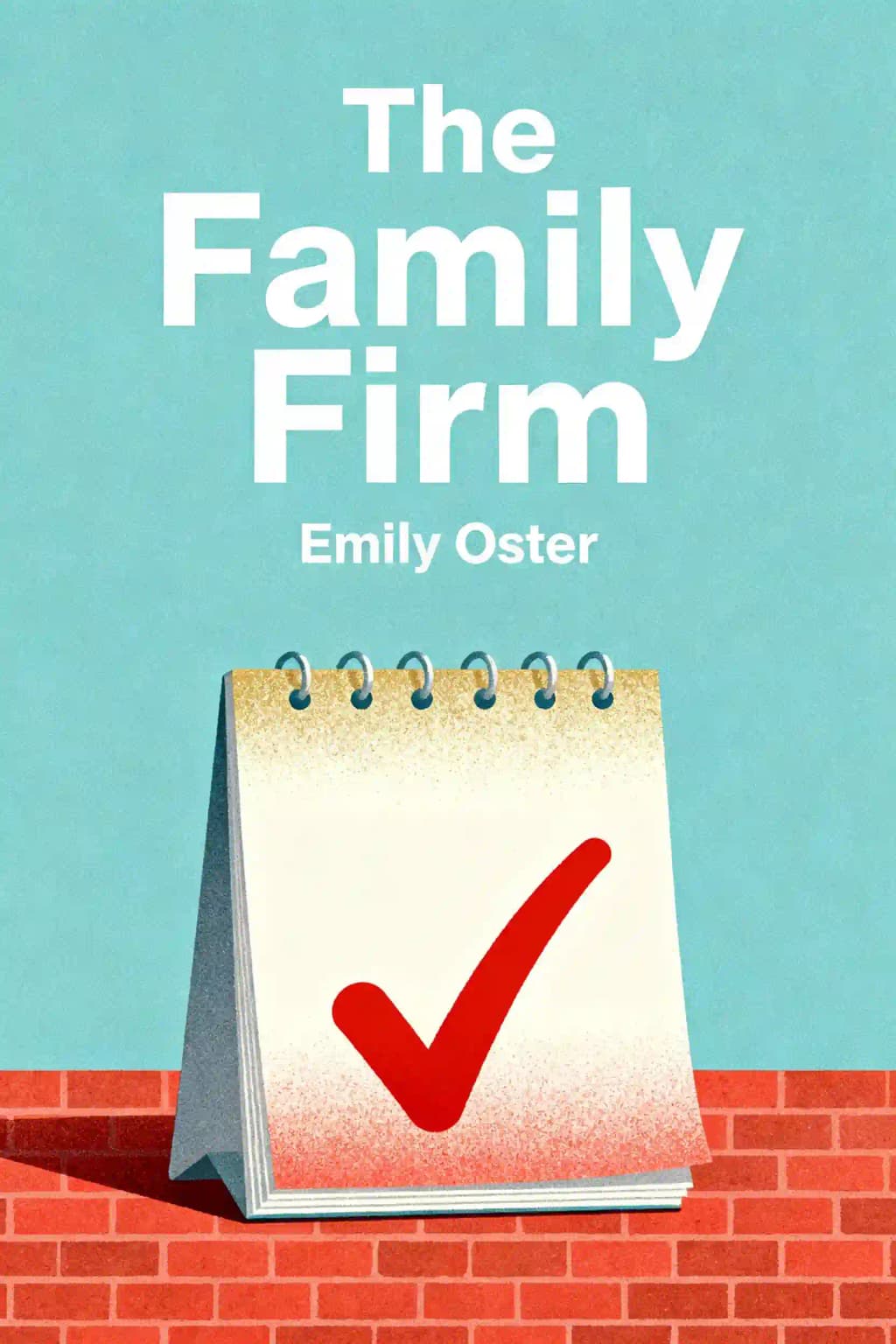
Emily Fair Oster, author of The Family Firm: A Data-Driven Guide to Parenting, is a bestselling economist known for translating complex research into actionable insights for families. She is a professor of economics at Brown University.
Oster merges academic rigor with practical parenting strategies, drawing on her expertise in health economics and decision-making. Her work, including Expecting Better, Cribsheet, and The Unexpected, redefines parenting literature by applying data analysis to topics like pregnancy, education, and household management.
Oster founded ParentData, a platform with a newsletter reaching hundreds of thousands of subscribers, and her research on COVID-19 school closures influenced national policy debates. A frequent contributor to The New York Times and TED speaker, she challenges conventional wisdom with evidence-based frameworks. Her books have collectively sold over 1 million copies, solidifying her role as a leading voice in modern parenting.
The Family Firm offers a data-driven framework for parenting children aged 5-12, applying business strategy principles to family decision-making. Economist Emily Oster introduces the "Four Fs" method (Frame, Fact-Find, Final Decision, Follow-Up) to help parents tackle schooling, nutrition, extracurriculars, and logistics systematically. The book blends research on older kids with actionable organizational tools.
Parents of elementary/middle-school children seeking structured approaches to complex decisions like school selection, screen time, or extracurriculars will benefit most. It’s ideal for data-oriented caregivers who appreciated Oster’s earlier books (Expecting Better, Cribsheet) and want strategies tailored to older kids.
Yes, for parents wanting to reduce decision fatigue through evidence-based frameworks. The Washington Post praised it as a "mini-MBA program for family logistics," while critics note its corporate analogy might oversimplify parenting. It’s particularly valuable for translating childhood development research into actionable systems.
Oster’s signature framework includes:
Designed to prevent reactive parenting, it helps families approach decisions like school selection methodically.
Unlike Expecting Better (pregnancy) or Cribsheet (infants), this focuses on ages 5-12 with fewer definitive answers but more decision-making frameworks. It shifts from pure data analysis to operational strategies, emphasizing structured parenting over statistical deep dives.
Some argue its corporate analogies (e.g., "family mission statements") feel impersonal for parenting. The New Republic notes the approach may appeal more to highly educated, data-focused parents, potentially overlooking socioeconomic diversity in family dynamics.
Oster emphasizes using research (e.g., sleep studies, school performance data) to inform choices but acknowledges gaps in evidence. The Four Fs framework encourages parents to balance data with values during the "Final Decision" phase.
Yes, it provides tools to compare schools using measurable factors (class size, curriculum) and intangible fits (child’s personality). The Four Fs process helps structure school tours, enrollment deadlines, and long-term educational goals.
A guiding document clarifying family priorities (e.g., "independence over achievement") to streamline decisions. Oster suggests creating one to resolve conflicts around issues like extracurricular commitments or dietary rules, ensuring alignment with core values.
Oster argues revisiting decisions (e.g., a chosen sport or bedtime routine) prevents stagnation. The Follow-Up phase lets families adapt based on outcomes—similar to business performance reviews—and is critical for refining approaches as children grow.
It merges organizational psychology (e.g., Google Docs for chore charts) with developmental economics, offering concrete tools rather than vague advice. Unlike opinion-driven guides, it teaches parents to build customized systems using Oster’s academic research and corporate strategizing.
通过作者的声音感受这本书
将知识转化为引人入胜、富含实例的见解
快速捕捉核心观点,高效学习
以有趣互动的方式享受这本书
Avoid the trap of hysteresis—the tendency to stay on your current path despite new information.
Don't automatically continue just because you did it once.
The goal isn't certainty that you've made the right choice—that's impossible—but confidence that you've made it thoughtfully.
Once responsibilities are assigned, others must resist micromanaging.
Let the computer hold all the household information—it doesn't get tired...
将《The Family Firm》的核心观点拆解为易于理解的要点,了解创新团队如何创造、协作和成长。
将《The Family Firm》提炼为快速记忆要点,突出坦诚、团队合作和创造力的关键原则。

通过生动的故事体验《The Family Firm》,将创新经验转化为令人难忘且可应用的精彩时刻。
随心提问,选择声音,共同创造真正与你产生共鸣的见解。

"Instead of endless scrolling, I just hit play on BeFreed. It saves me so much time."
"I never knew where to start with nonfiction—BeFreed’s book lists turned into podcasts gave me a clear path."
"Perfect balance between learning and entertainment. Finished ‘Thinking, Fast and Slow’ on my commute this week."
"Crazy how much I learned while walking the dog. BeFreed = small habits → big gains."
"Reading used to feel like a chore. Now it’s just part of my lifestyle."
"Feels effortless compared to reading. I’ve finished 6 books this month already."
"BeFreed turned my guilty doomscrolling into something that feels productive and inspiring."
"BeFreed turned my commute into learning time. 20-min podcasts are perfect for finishing books I never had time for."
"BeFreed replaced my podcast queue. Imagine Spotify for books — that’s it. 🙌"
"It is great for me to learn something from the book without reading it."
"The themed book list podcasts help me connect ideas across authors—like a guided audio journey."
"Makes me feel smarter every time before going to work"

免费获取《The Family Firm》摘要的 PDF 或 EPUB 版本。可打印或随时离线阅读。
Imagine this: You're frantically eating dinner in the car between soccer practice and piano lessons, while simultaneously coordinating who can pick up your child from a playdate tomorrow. Sound familiar? When children reach school age, family logistics transform from manageable to mind-bogglingly complex. Emily Oster, economist and mother of two, found herself naturally applying business principles to these parenting challenges. The result is a revolutionary approach that legitimizes treating family management with the same seriousness we bring to our careers. This isn't just about organization-it's about creating intentional family systems that reflect your deepest values while maintaining your sanity. As Mindy Kaling noted when praising the book, it provides a structured framework for family management that high-performing parents desperately need but rarely receive.