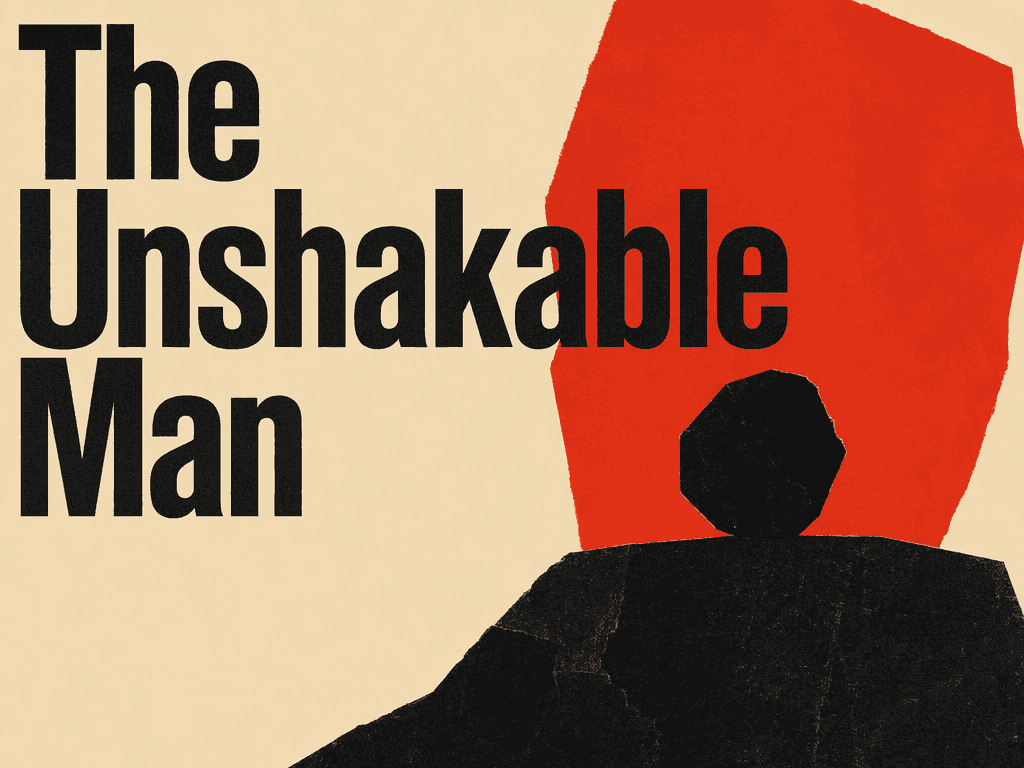
Chesterton's masterpiece that transformed C.S. Lewis from atheist to Christian icon. This powerful rebuttal to evolutionary materialism remains a 4.15-rated Goodreads classic. What perspective-shifting truth made Bishop Conley call it essential "to understand the world"?
Gilbert Keith Chesterton (1874-1936) was a prolific English author, journalist, and philosopher, best known for The Everlasting Man and as one of the most influential Christian apologists of the early 20th century. This landmark work of apologetics explores the uniqueness of Christianity and human civilization, articulating themes of faith, reason, and divine purpose that profoundly influenced C.S. Lewis during his conversion from agnosticism.
Known as the "prince of paradox" for his wit and paradoxical style, Chesterton wrote around 80 books, 200 short stories, and over 4,000 newspaper essays and columns. His other major works include Orthodoxy, a classic defense of Christian belief, The Man Who Was Thursday, and the beloved Father Brown detective series.
A charismatic public intellectual who debated George Bernard Shaw and H.G. Wells, Chesterton converted to Catholicism in 1922, which significantly shaped his later writings. His works remain continuously in print and influential worldwide nearly a century after his death.
The Everlasting Man is a Christian apologetics book published in 1925 that examines human history and the life of Christ. G.K. Chesterton argues that humanity is fundamentally different from other animals due to reason and creativity, and that Jesus Christ represents a uniquely transformative figure in history. The book is structured in two parts: one analyzing man's distinctive nature, and another exploring Christ's unprecedented impact on civilization.
G.K. Chesterton was an English writer and Christian apologist who wrote The Everlasting Man as a deliberate rebuttal to H.G. Wells's The Outline of History. While Chesterton detailed his personal spiritual journey in Orthodoxy, The Everlasting Man illustrates the spiritual journey of humanity and Western civilization. He challenged the evolutionary narrative that portrayed humans as merely advanced animals and Jesus as simply another charismatic leader.
The Everlasting Man is ideal for readers interested in Christian apologetics, philosophy of history, and intellectual defenses of faith. It appeals to those questioning evolutionary narratives about religion, seekers exploring Christianity's distinctiveness, and fans of C.S. Lewis—who credited this book as influential to his own conversion. Readers comfortable with dense philosophical arguments and historical analysis will find Chesterton's wit and reasoning most rewarding.
The Everlasting Man remains valuable for its unique approach to defending Christianity through historical and anthropological analysis rather than purely theological arguments. Chesterton's central thesis—that dismissing humanity's distinctiveness or Christ's uniqueness requires ignoring obvious evidence—provides a compelling counter-narrative to materialist interpretations of human history. His writing style, combining wit with philosophical depth, offers both intellectual stimulation and spiritual insight that transcends its 1925 publication date.
The Everlasting Man presents a two-fold argument: if humanity is viewed objectively as just another animal, we must conclude humans are bizarrely unusual animals; similarly, if Jesus is viewed as merely another human leader, we must acknowledge he was extraordinarily unusual. Chesterton rejects the idea that "humanity merely fades away into nature, or civilization merely fades away into barbarism, or religion fades away into mythology". He insists the lines of distinction remain clear and undeniable.
The Everlasting Man directly challenges H.G. Wells's portrayal of human life as a seamless development from animal life and Jesus Christ as merely another charismatic figure. Where Wells presented evolutionary continuity, G.K. Chesterton emphasized radical discontinuity and uniqueness. Chesterton argues that Wells's approach requires "rubbing out the lines" that actually define human civilization and Christian history, thereby distorting rather than clarifying humanity's true story.
Part I, "On the Creature Called Man," examines humanity's distinctive qualities—reason, art, mythology, and religion—that separate humans from animals. Part II, "On the Man Called Christ," analyzes Jesus's life and Christianity's emergence as uniquely transformative in history. Both parts begin symbolically in caves: the prehistoric cave where early humans created art, and the cave where Christ was born. This parallel structure reinforces Chesterton's argument about humanity's and Christianity's exceptional nature.
Chesterton uses cave drawings as evidence that humans possess reason and artistic expression that no other animal exhibits. He acknowledges human bodies evolved but argues human reason could not have evolved from "nothingness"—the gap between animal instinct and human rationality is too vast. The Everlasting Man emphasizes that humans alone create art, develop complex religions, and pursue philosophical questions, making the "humans are just animals" claim absurd when examined honestly.
The Everlasting Man employs reductio ad absurdum by following secular premises about Christ to their logical contradictions. Chesterton examines Jesus from a purely secular perspective, demonstrating that treating him as merely human leads to absurdities—such as his teachings being completely original yet supposedly fabricated, or his influence transforming civilization despite being just another moral teacher. This rhetorical technique forces readers to confront Christianity's genuine historical uniqueness.
The Five Deaths of the Faith refers to instances throughout church history when Christianity appeared externally defeated or internally compromised. G.K. Chesterton argues that each time the church pursued popular acceptance over truth, it "died," yet miraculously revived by returning to authentic doctrine. The Everlasting Man presents this pattern as evidence that the church "cannot be destroyed externally nor internally"—demonstrating Christianity's supernatural resilience throughout history.
The Everlasting Man has been criticized for:
The Everlasting Man addresses enduring questions about human distinctiveness and meaning in an increasingly materialist culture. As debates about consciousness, artificial intelligence, and human exceptionalism intensify in 2025, Chesterton's arguments about reason's irreducibility remain provocative. The book offers intellectual resources for those seeking alternatives to reductionist narratives about humanity and Christianity. His methodology—examining claims through their logical conclusions rather than assumptions—provides a framework applicable beyond religious apologetics to contemporary philosophical discussions.
通过作者的声音感受这本书
将知识转化为引人入胜、富含实例的见解
快速捕捉核心观点,高效学习
以有趣互动的方式享受这本书
Man is not merely an evolution but rather a revolution.
The riddles of God are more satisfying than the solutions of man.
Man can be accepted as a fact without being explained as a development.
History's curtain rises on a play already in progress.
将《The Everlasting Man》的核心观点拆解为易于理解的要点,了解创新团队如何创造、协作和成长。
将《The Everlasting Man》提炼为快速记忆要点,突出坦诚、团队合作和创造力的关键原则。

通过生动的故事体验《The Everlasting Man》,将创新经验转化为令人难忘且可应用的精彩时刻。
随心提问,选择声音,共同创造真正与你产生共鸣的见解。

"Instead of endless scrolling, I just hit play on BeFreed. It saves me so much time."
"I never knew where to start with nonfiction—BeFreed’s book lists turned into podcasts gave me a clear path."
"Perfect balance between learning and entertainment. Finished ‘Thinking, Fast and Slow’ on my commute this week."
"Crazy how much I learned while walking the dog. BeFreed = small habits → big gains."
"Reading used to feel like a chore. Now it’s just part of my lifestyle."
"Feels effortless compared to reading. I’ve finished 6 books this month already."
"BeFreed turned my guilty doomscrolling into something that feels productive and inspiring."
"BeFreed turned my commute into learning time. 20-min podcasts are perfect for finishing books I never had time for."
"BeFreed replaced my podcast queue. Imagine Spotify for books — that’s it. 🙌"
"It is great for me to learn something from the book without reading it."
"The themed book list podcasts help me connect ideas across authors—like a guided audio journey."
"Makes me feel smarter every time before going to work"

免费获取《The Everlasting Man》摘要的 PDF 或 EPUB 版本。可打印或随时离线阅读。
What if everything we think we know about human history is backwards? G.K. Chesterton's masterpiece "The Everlasting Man" challenges our most fundamental assumptions about humanity's journey. Rather than seeing religion as primitive superstition gradually replaced by enlightened reason, Chesterton reveals a startling alternative: perhaps we began with profound spiritual insight that later fragmented into mythology. This isn't just intellectual contrarianism-it's a radical reframing that influenced C.S. Lewis's conversion from atheism to Christianity. Chesterton invites us to step outside our modern prejudices and see the human story with fresh eyes, as if encountering it for the first time. His perspective cuts through conventional narratives with surgical precision, revealing something eternal and unchanging at humanity's core.