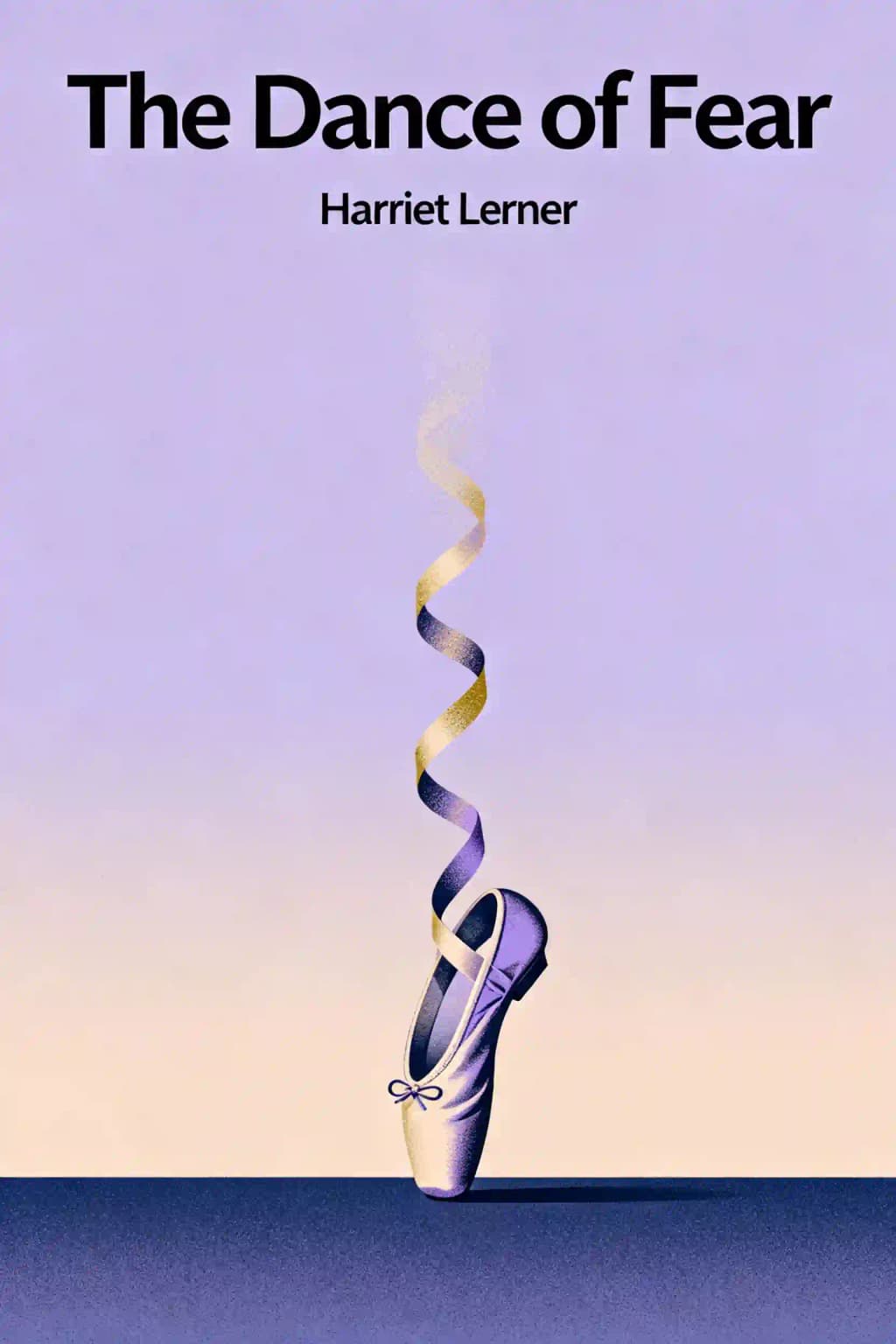
Unmasking anxiety's hidden language, "The Dance of Fear" transforms how we understand shame and panic. With nearly 4/5 stars from thousands of readers, Lerner's psychological masterpiece reveals why naming your fears - not avoiding them - unlocks authentic relationships and professional breakthroughs.
Harriet Lerner, Ph.D., is the bestselling author of The Dance of Fear: Rising Above Anxiety, Fear, and Shame to Be Your Best and Bravest Self and a renowned clinical psychologist specializing in women’s psychology and family relationships.
A New York native born in 1944, Lerner spent nearly three decades at Kansas’s Menninger Clinic, where her work reshaped psychoanalytic perspectives on gender and family dynamics.
Her influential "Dance" series—including The Dance of Anger (a New York Times bestseller) and The Dance of Intimacy—combines feminist theory with practical advice, helping millions navigate emotional challenges.
A sought-after speaker featured on NPR and in The Oprah Magazine, Lerner’s insights stem from decades of clinical practice and research. Her books, translated into 35 languages, blend humor, empathy, and actionable strategies, cementing her as a trusted voice in self-help literature.
The Dance of Fear explores how anxiety, fear, and shame shape our lives, offering strategies to navigate these emotions through personal stories and actionable advice. Lerner blends psychological insights with relatable examples, such as overcoming public speaking anxiety or managing workplace stress, emphasizing courage and self-compassion. The book reframes fear as a universal experience, providing tools to build resilience and authenticity.
This book is ideal for individuals grappling with everyday anxiety, self-doubt, or relationship challenges. It’s particularly valuable for readers seeking practical psychological frameworks to manage fear in personal or professional contexts. Fans of Lerner’s prior work, like The Dance of Anger, or those interested in feminist-informed self-help will find it impactful.
Yes, for its accessible blend of storytelling and clinical expertise. Lerner’s humor and vulnerability make complex emotions relatable, while her strategies—like reframing shame or addressing overfunctioning—offer tangible takeaways. Critics praise its focus on “fear lite” rather than severe disorders, making it a pragmatic guide for daily emotional challenges.
Key ideas include:
Lerner advises staying “calm and clear” in chaotic environments by setting boundaries, focusing on controllable factors, and avoiding overidentification with others’ judgments. She critiques toxic positivity, advocating instead for honest self-assessment and strategic communication to reduce anxiety-driven reactions.
Notable lines include:
These emphasize facing emotions directly rather than suppressing them. Lerner interprets fear as a teacher and shame as a signal to reconnect with self-worth.
While The Dance of Anger focuses on conflict resolution in relationships, The Dance of Fear delves into internal emotional struggles. Both books use Lerner’s signature storytelling style, but Fear expands her framework to address individual psychological barriers to authenticity.
Some readers note the book prioritizes anecdotal advice over clinical research, making it less suited for severe anxiety disorders. Others desire more step-by-step exercises. However, most praise its empathetic tone and real-world applicability.
Drawing on 30+ years as a clinical psychologist and feminist theorist, Lerner merges family systems theory with personal experience. Her work at the Menninger Clinic informs case studies, while her focus on women’s voices shapes the book’s emphasis on societal shame dynamics.
Yes. Lerner examines how fear of conflict or abandonment fuels dysfunctional patterns, offering scripts to express needs without blame. She highlights the role of shame in silencing honest communication and provides tools to rebuild trust.
She frames fear as a “dance”—a dynamic interplay between internal emotions and external relationships. This metaphor underscores that fear isn’t static; changing our responses can alter its impact, turning paralyzing dread into manageable energy.
Lerner normalizes vulnerability as inherent to courage, arguing that suppressing fear amplifies shame. She encourages “small acts of bravery,” like setting boundaries or seeking help, to build confidence incrementally. This aligns with her broader theme that growth comes through engagement, not avoidance.
通过作者的声音感受这本书
将知识转化为引人入胜、富含实例的见解
快速捕捉核心观点,高效学习
以有趣互动的方式享受这本书
Being human means inevitably experiencing painful emotions.
Claims that 'bliss is available to anyone anytime' strike her as arrogant and dishonest.
Avoidance only makes things worse-you must confront what terrifies you head-on.
The courage to let go may be the hardest part.
将《The dance of fear》的核心观点拆解为易于理解的要点,了解创新团队如何创造、协作和成长。
将《The dance of fear》提炼为快速记忆要点,突出坦诚、团队合作和创造力的关键原则。

通过生动的故事体验《The dance of fear》,将创新经验转化为令人难忘且可应用的精彩时刻。
随心提问,选择声音,共同创造真正与你产生共鸣的见解。

"Instead of endless scrolling, I just hit play on BeFreed. It saves me so much time."
"I never knew where to start with nonfiction—BeFreed’s book lists turned into podcasts gave me a clear path."
"Perfect balance between learning and entertainment. Finished ‘Thinking, Fast and Slow’ on my commute this week."
"Crazy how much I learned while walking the dog. BeFreed = small habits → big gains."
"Reading used to feel like a chore. Now it’s just part of my lifestyle."
"Feels effortless compared to reading. I’ve finished 6 books this month already."
"BeFreed turned my guilty doomscrolling into something that feels productive and inspiring."
"BeFreed turned my commute into learning time. 20-min podcasts are perfect for finishing books I never had time for."
"BeFreed replaced my podcast queue. Imagine Spotify for books — that’s it. 🙌"
"It is great for me to learn something from the book without reading it."
"The themed book list podcasts help me connect ideas across authors—like a guided audio journey."
"Makes me feel smarter every time before going to work"

免费获取《The dance of fear》摘要的 PDF 或 EPUB 版本。可打印或随时离线阅读。
Ever noticed how your cat seems to have life figured out? While you're spiraling at 3 AM about tomorrow's presentation, your pet is sleeping soundly, completely unburdened by tomorrow's uncertainties. This isn't just cute-it's profound. Animals live entirely in the present moment, experiencing fear only when danger actually arrives, not in the endless loop of "what ifs" that plague human consciousness. We've built entire industries around managing anxiety, yet we rarely pause to ask: what if the problem isn't fear itself, but our relationship with it? What if anxiety, shame, and fear aren't enemies to conquer but messengers to decode?
