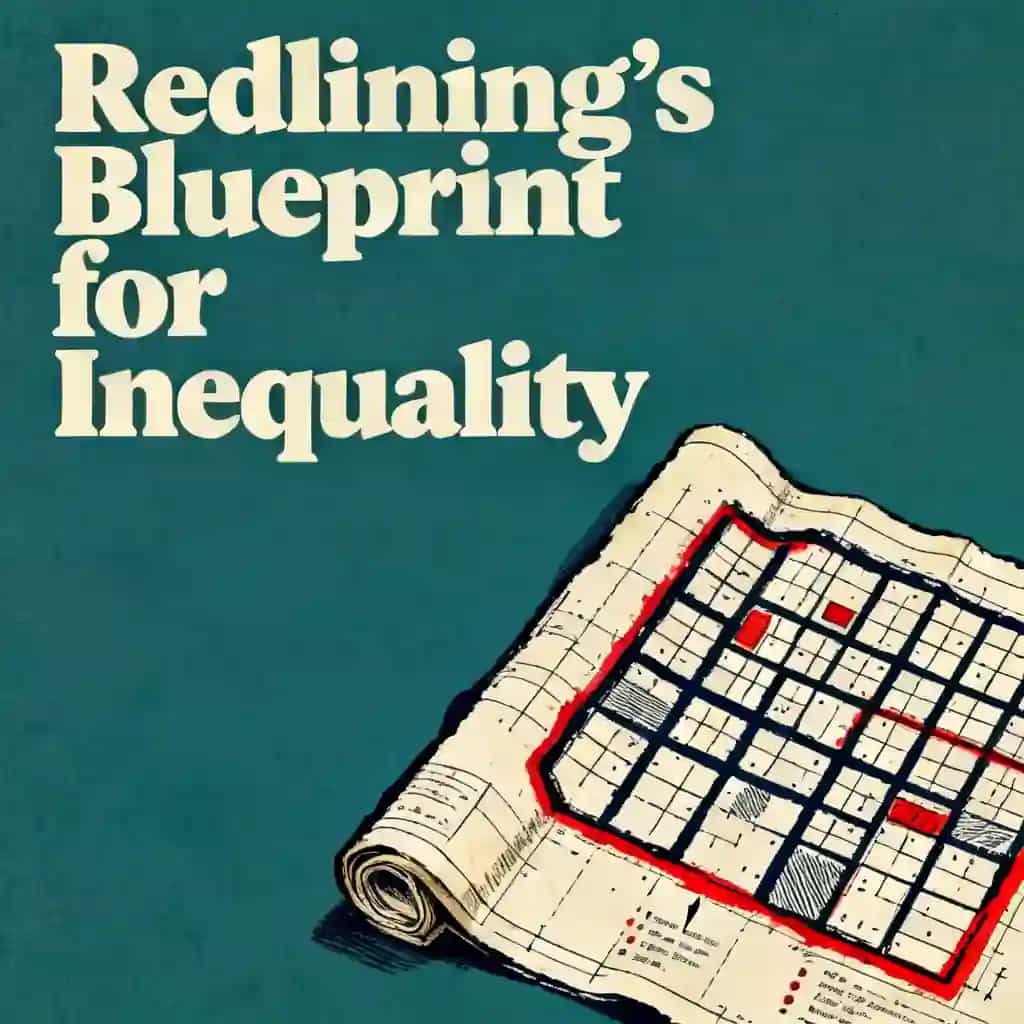
"The Color of Law" exposes how government policies deliberately segregated America. A National Book Award finalist praised by Bill Gates and Ta-Nehisi Coates, this eye-opening work asks: What if racial inequality wasn't accidental, but engineered by the very institutions meant to protect us?
Richard Rothstein, acclaimed author of The Color of Law: A Forgotten History of How Our Government Segregated America, is a distinguished historian and housing policy expert at the Economic Policy Institute. His groundbreaking work exposes how federal, state, and local laws systematically enforced racial segregation in U.S. neighborhoods, reshaping national conversations about systemic racism.
A former New York Times education columnist and senior fellow at the NAACP Legal Defense Fund’s Thurgood Marshall Institute, Rothstein brings decades of research on inequality to this revelatory narrative. His prior books include Class and Schools: Using Social, Economic and Educational Reform to Close the Black-White Achievement Gap and Grading Education: Getting Accountability Right, establishing his authority on structural inequities.
Praised by The New York Times as “the best history of housing segregation” and widely cited in policy debates, The Color of Law continues to inform legal and academic discourse, with Rothstein’s 2023 follow-up Just Action co-authored with daughter Leah Rothstein offering solutions. The book remains essential reading in sociology and urban studies curricula nationwide.
The Color of Law exposes how U.S. government policies intentionally created racial housing segregation, arguing it resulted from systemic de jure (legal) actions—not personal choice. Rothstein details tactics like redlining, restrictive covenants, and segregated public housing that entrenched inequality. The book challenges the myth of de facto segregation, showing how laws from the 20th century still shape today’s racial divides.
This book is essential for readers interested in systemic racism, urban policy, or U.S. history. Educators, policymakers, and advocates will gain insights into housing discrimination’s roots. Rothstein’s evidence-rich approach also appeals to those seeking to counter misconceptions about segregation’s origins.
Yes—Rothstein’s rigorously researched work reframes segregation as a government-engineered system, not a natural outcome. It provides historical context for modern disparities and has been praised by scholars like Ta-Nehisi Coates as “brilliant.” Its actionable analysis makes it a critical resource for understanding structural racism.
Rothstein argues that segregation was enforced through:
De jure segregation refers to racial separation enforced by law or government action. Rothstein contrasts this with de facto segregation (blamed on private bias), proving policies like zoning, public housing discrimination, and federal loan practices deliberately segregated communities.
Rothstein links historical housing policies to today’s wealth gap, underfunded schools, and health disparities. For example, excluded families couldn’t build equity via homeownership—a key wealth source—while discriminatory lending persists in altered forms.
Some conservatives argue Rothstein overstates government’s role, downplaying individual agency. However, scholars like William Julius Wilson praise its “forceful” evidence. Critics also note limited discussion of grassroots resistance to segregation.
He defines “ghetto” as areas where systemic barriers (e.g., redlining, violence) trap Black residents. Unlike immigrant enclaves, these neighborhoods arose from coercion, not choice, and lack pathways to economic mobility.
Rothstein advocates for reparations, inclusive zoning reforms, and enforcing fair housing laws. He stresses acknowledging past harms to address ongoing inequities in education, policing, and wealth distribution.
Both books trace systemic racism, but Rothstein focuses on housing, while Michelle Alexander examines mass incarceration. They complement each other in showing how policies sustain racial caste systems.
As debates over reparations and housing equity intensify, Rothstein’s work remains a blueprint for understanding how past policies underpin current crises like gentrification and racial wealth gaps.
通过作者的声音感受这本书
将知识转化为引人入胜、富含实例的见解
快速捕捉核心观点,高效学习
以有趣互动的方式享受这本书
America's residential segregation wasn't accidental but deliberately engineered.
Government wasn't following existing patterns but actively imposing segregation.
American progress toward greater freedom and equality isn't always linear.
将《The Color of Law》的核心观点拆解为易于理解的要点,了解创新团队如何创造、协作和成长。
将《The Color of Law》提炼为快速记忆要点,突出坦诚、团队合作和创造力的关键原则。

通过生动的故事体验《The Color of Law》,将创新经验转化为令人难忘且可应用的精彩时刻。
随心提问,选择声音,共同创造真正与你产生共鸣的见解。

"Instead of endless scrolling, I just hit play on BeFreed. It saves me so much time."
"I never knew where to start with nonfiction—BeFreed’s book lists turned into podcasts gave me a clear path."
"Perfect balance between learning and entertainment. Finished ‘Thinking, Fast and Slow’ on my commute this week."
"Crazy how much I learned while walking the dog. BeFreed = small habits → big gains."
"Reading used to feel like a chore. Now it’s just part of my lifestyle."
"Feels effortless compared to reading. I’ve finished 6 books this month already."
"BeFreed turned my guilty doomscrolling into something that feels productive and inspiring."
"BeFreed turned my commute into learning time. 20-min podcasts are perfect for finishing books I never had time for."
"BeFreed replaced my podcast queue. Imagine Spotify for books — that’s it. 🙌"
"It is great for me to learn something from the book without reading it."
"The themed book list podcasts help me connect ideas across authors—like a guided audio journey."
"Makes me feel smarter every time before going to work"

免费获取《The Color of Law》摘要的 PDF 或 EPUB 版本。可打印或随时离线阅读。
The racial divide in American neighborhoods didn't happen by accident. When riots erupted in Ferguson in 2014, many dismissed the city's segregation as an unfortunate byproduct of personal choices and economic factors. This comforting narrative allows us to avoid confronting a disturbing truth: America's residential segregation was deliberately engineered through explicit government policies at federal, state, and local levels. For generations, we've been told a myth about how our segregated landscape formed - a myth that has prevented us from addressing the root causes of racial inequality that persist today. What if everything you thought you knew about how America's neighborhoods became segregated was wrong? Public housing wasn't always associated with crime-ridden high-rises in segregated neighborhoods. Originally built for working and lower-middle-class white families, early public housing was attractive, well-maintained, and selective - with strict tenant requirements including good housekeeping habits and sufficient furniture. The transformation began during World War I when the federal government's first civilian housing projects explicitly excluded African Americans, even in northern cities where they worked in significant numbers.