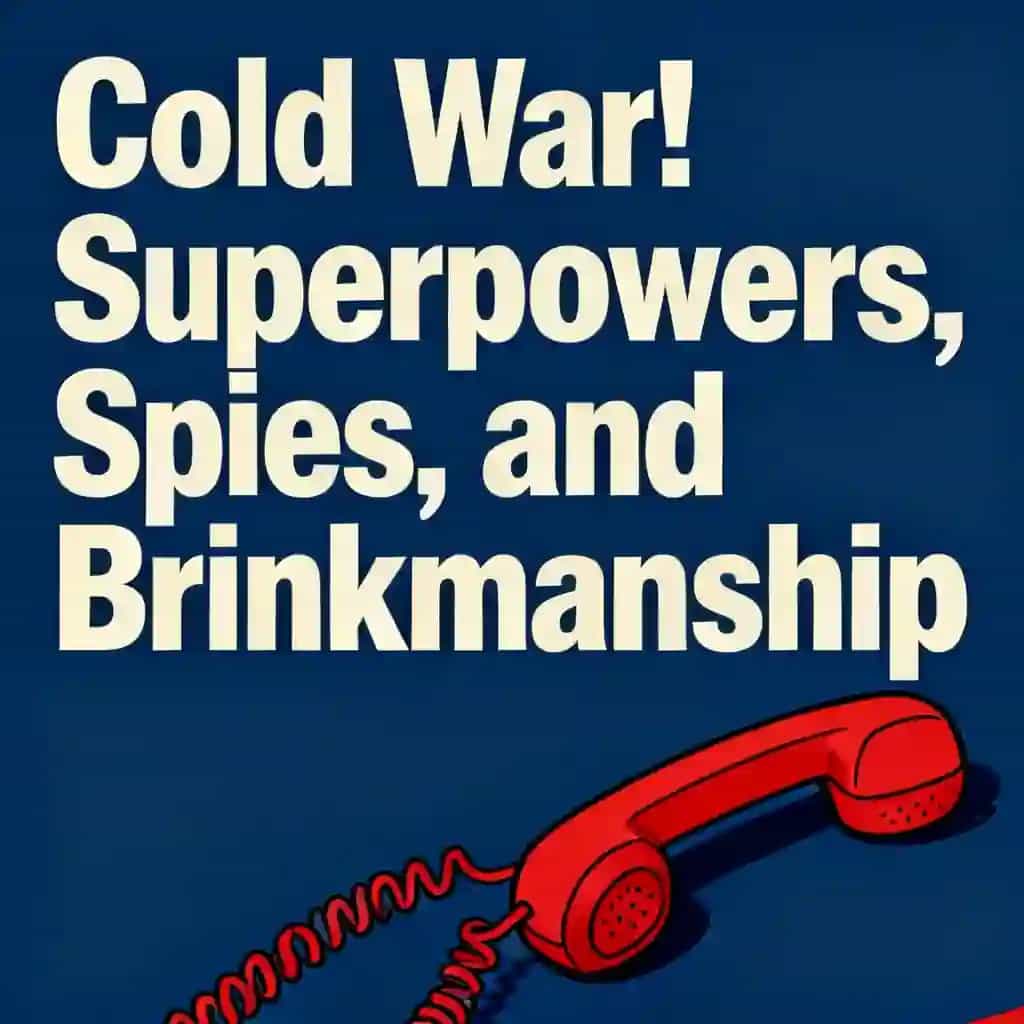
McMahon's concise masterpiece decodes how two superpowers shaped our world, arguing both America and Soviet Russia built empires driven by fear rather than ambition. How did this conflict's cultural battle lines influence today's geopolitical landscape? A revelatory lens for understanding modern power dynamics.
通过作者的声音感受这本书
将知识转化为引人入胜、富含实例的见解
快速捕捉核心观点,高效学习
以有趣互动的方式享受这本书
When two nuclear-armed titans stare each other down for nearly half a century without firing a shot directly at each other, yet still manage to cause 20 million deaths worldwide, you know you're dealing with something unprecedented in human history. The Cold War wasn't just another geopolitical rivalry - it was a total competition between competing visions of how society should function. What makes this conflict so fascinating is how it seeped into every aspect of life: it determined where highways were built in America, what movies made it to theaters, and even how refrigerators were designed in Soviet kitchens. This wasn't just a diplomatic chess match - it was a struggle that reshaped architecture, sports, education, and even family life across continents. World War II left Europe as Churchill described it: "a rubble heap, a charnel house, a breeding ground of pestilence and hate." Berlin stood as an "utter wasteland" with 90% of buildings destroyed. The Soviet Union suffered catastrophic losses: 25 million dead, another 25 million homeless, and 32,000 industrial enterprises obliterated. From these ashes emerged two fundamentally different visions for rebuilding the world. America, having doubled its GDP during the war to $175 billion while suffering relatively minor losses, stood as "the most powerful nation, perhaps, in all history." Yet Pearl Harbor had shattered Americans' sense of invulnerability, creating an obsession with security that would define decades to come. American planners envisioned a world of free trade, open markets, and economic interdependence - formalized through the creation of the IMF and World Bank at Bretton Woods.
将《The Cold War》的核心观点拆解为易于理解的要点,了解创新团队如何创造、协作和成长。
将《The Cold War》提炼为快速记忆要点,突出坦诚、团队合作和创造力的关键原则。

通过生动的故事体验《The Cold War》,将创新经验转化为令人难忘且可应用的精彩时刻。
随心提问,选择声音,共同创造真正与你产生共鸣的见解。

"Instead of endless scrolling, I just hit play on BeFreed. It saves me so much time."
"I never knew where to start with nonfiction—BeFreed’s book lists turned into podcasts gave me a clear path."
"Perfect balance between learning and entertainment. Finished ‘Thinking, Fast and Slow’ on my commute this week."
"Crazy how much I learned while walking the dog. BeFreed = small habits → big gains."
"Reading used to feel like a chore. Now it’s just part of my lifestyle."
"Feels effortless compared to reading. I’ve finished 6 books this month already."
"BeFreed turned my guilty doomscrolling into something that feels productive and inspiring."
"BeFreed turned my commute into learning time. 20-min podcasts are perfect for finishing books I never had time for."
"BeFreed replaced my podcast queue. Imagine Spotify for books — that’s it. 🙌"
"It is great for me to learn something from the book without reading it."
"The themed book list podcasts help me connect ideas across authors—like a guided audio journey."
"Makes me feel smarter every time before going to work"

免费获取《The Cold War》摘要的 PDF 或 EPUB 版本。可打印或随时离线阅读。