Sean Covey's transformative guide empowers teens with life-changing habits that build confidence and success. Endorsed by Olympic legend Michael Phelps, these principles have revolutionized school cultures nationwide. What secret language are students using that's turning "emotional piggybanks" into real-world advantages?
Sean Covey, bestselling author of The 7 Habits of Highly Effective Teens, is a renowned leadership expert and president of FranklinCovey Education, where he spearheads the global Leader in Me program implemented in over 7,000 schools.
A Harvard Business School graduate and former BYU quarterback, Covey blends practical wisdom with relatable insights for young audiences, drawing from his decades of work equipping teens with life skills.
His expertise in youth development extends to other influential works like The 6 Most Important Decisions You’ll Ever Make and The 7 Habits of Happy Kids, which reinforce his focus on responsibility, goal-setting, and emotional resilience. A frequent keynote speaker featured in major media outlets, Covey’s strategies are trusted by educators and families worldwide.
The 7 Habits of Highly Effective Teens has sold over 8 million copies and been translated into 30 languages, cementing its status as a foundational guide for adolescent personal growth.
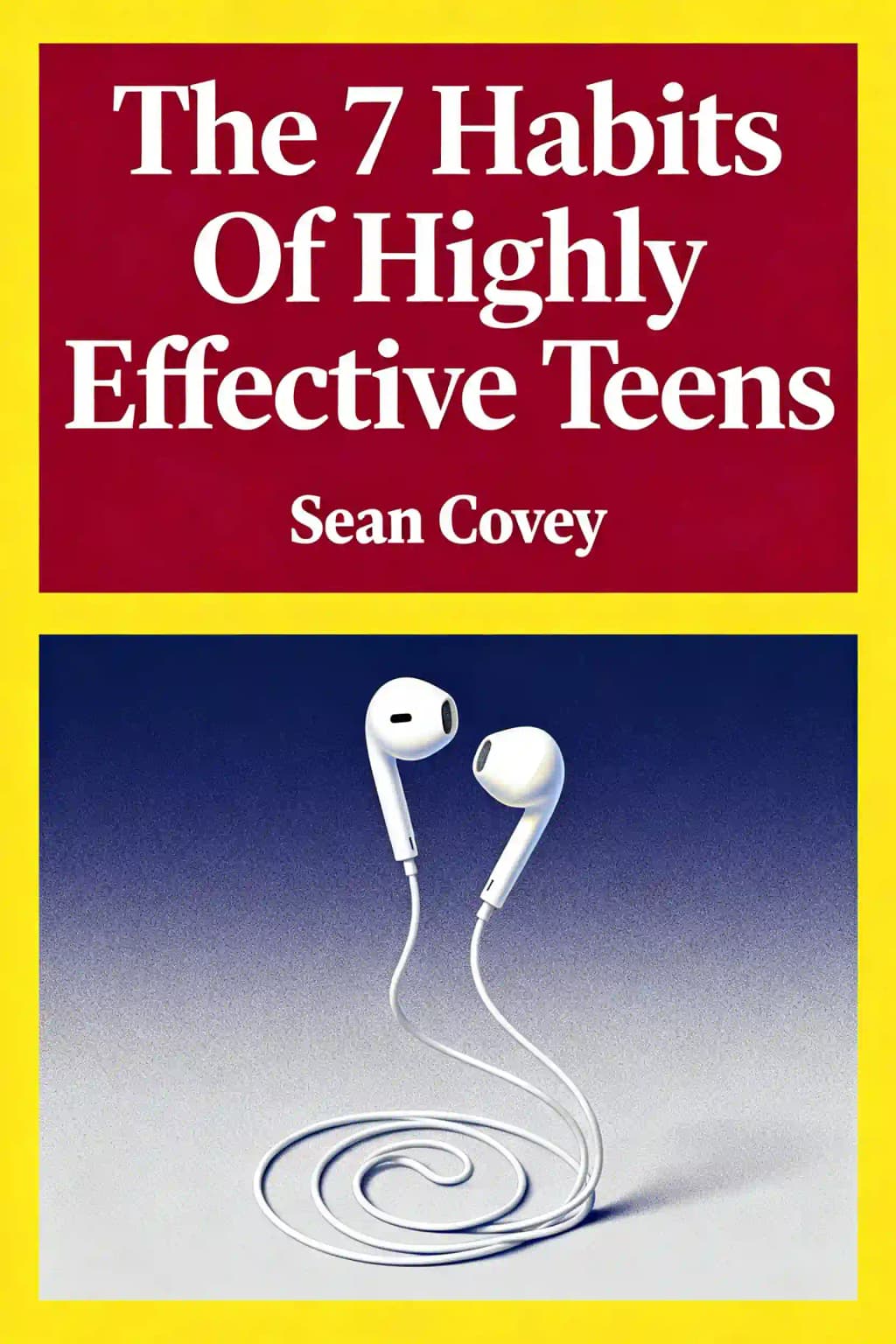
The 7 Habits of Highly Effective Teens by Sean Covey adapts his father Stephen Covey’s principles into a teenage-focused guide. It offers tools to build self-esteem, resist peer pressure, set goals, improve family relationships, and balance priorities. The book uses cartoons, real-life stories, and humor to teach seven core habits, blending actionable advice with entertaining content for teens navigating adolescence.
Teens aged 13–19, parents, educators, and mentors will find this book valuable. It’s particularly useful for those struggling with self-image, decision-making, or peer pressure. The updated 2014 edition also addresses modern challenges like cyberbullying and social media, making it relevant for today’s digital-native teens.
With over 5 million copies sold globally, the book is a proven resource for adolescent development. Its engaging mix of quotes, comics, and relatable anecdotes simplifies complex concepts like responsibility and goal-setting. Reviews highlight its practicality for improving academic performance, relationships, and emotional resilience.
Habit 1 (Be Proactive) teaches teens to pause and choose responses rather than react impulsively. Habit 4 (Think Win-Win) encourages assertiveness in social situations, promoting confidence to resist harmful influences while maintaining friendships.
Covey shares stories of teens overcoming adversity, such as academic struggles or family conflicts. These are paired with humorous cartoons and quotes from figures like Gandhi and Einstein, creating an engaging, relatable tone.
While preserving core principles, this version simplifies language and adds teen-specific themes: dating, school stress, and parental conflicts. Visual aids like flowcharts and bullet points replace corporate examples, making concepts accessible to younger readers.
This metaphor represents self-trust: deposits (e.g., honesty, self-care) boost confidence, while withdrawals (self-criticism, dishonesty) diminish it. It’s part of the Private Victory section, focusing on self-mastery before social success.
Habit 2 (Begin with the End in Mind) guides teens to visualize goals through exercises like writing mission statements. Habit 3 (Put First Things First) introduces time-management matrices to prioritize tasks aligned with long-term objectives.
Yes, the Public Victory habits emphasize empathy (Habit 5) and collaborative problem-solving (Habit 6). Covey advises teens to rebuild trust with parents by seeking mutual understanding and avoiding blame.
New content addresses cyberbullying, social media etiquette, and digital distractions. Covey integrates modern examples, like balancing screen time, while retaining the original’s core framework.
Habit 7 (Sharpen the Saw) advocates balancing four dimensions: body (exercise), brain (learning), heart (relationships), and soul (reflection). Teens learn to avoid burnout by scheduling downtime and hobbies.
通过作者的声音感受这本书
将知识转化为引人入胜、富含实例的见解
快速捕捉核心观点,高效学习
以有趣互动的方式享受这本书
Principles never let you down.
Always be a first-rate version of yourself, instead of a second-rate version of somebody else.
Reactive people make impulsive choices, exploding like shaken soda when life gets difficult.
This reactive language is like handing someone else the remote control to your life.
将《The 7 habits of highly effective teens》的核心观点拆解为易于理解的要点,了解创新团队如何创造、协作和成长。
将《The 7 habits of highly effective teens》提炼为快速记忆要点,突出坦诚、团队合作和创造力的关键原则。

通过生动的故事体验《The 7 habits of highly effective teens》,将创新经验转化为令人难忘且可应用的精彩时刻。
随心提问,选择声音,共同创造真正与你产生共鸣的见解。

"Instead of endless scrolling, I just hit play on BeFreed. It saves me so much time."
"I never knew where to start with nonfiction—BeFreed’s book lists turned into podcasts gave me a clear path."
"Perfect balance between learning and entertainment. Finished ‘Thinking, Fast and Slow’ on my commute this week."
"Crazy how much I learned while walking the dog. BeFreed = small habits → big gains."
"Reading used to feel like a chore. Now it’s just part of my lifestyle."
"Feels effortless compared to reading. I’ve finished 6 books this month already."
"BeFreed turned my guilty doomscrolling into something that feels productive and inspiring."
"BeFreed turned my commute into learning time. 20-min podcasts are perfect for finishing books I never had time for."
"BeFreed replaced my podcast queue. Imagine Spotify for books — that’s it. 🙌"
"It is great for me to learn something from the book without reading it."
"The themed book list podcasts help me connect ideas across authors—like a guided audio journey."
"Makes me feel smarter every time before going to work"

免费获取《The 7 habits of highly effective teens》摘要的 PDF 或 EPUB 版本。可打印或随时离线阅读。
Imagine standing at a crossroads where every choice you make shapes not just your next seven years, but the sixty that follow. This is exactly where every teenager stands. While some teens seem to navigate life's challenges effortlessly, others struggle through the same obstacles. What separates them isn't luck or circumstances - it's habits. These seven powerful habits form a framework that transforms ordinary teen lives into extraordinary ones, creating a foundation for success that extends far beyond high school graduation. The principles have resonated so deeply that they've found their way onto LeBron James' bookshelf and into thousands of classrooms worldwide. But what makes these habits so transformative?