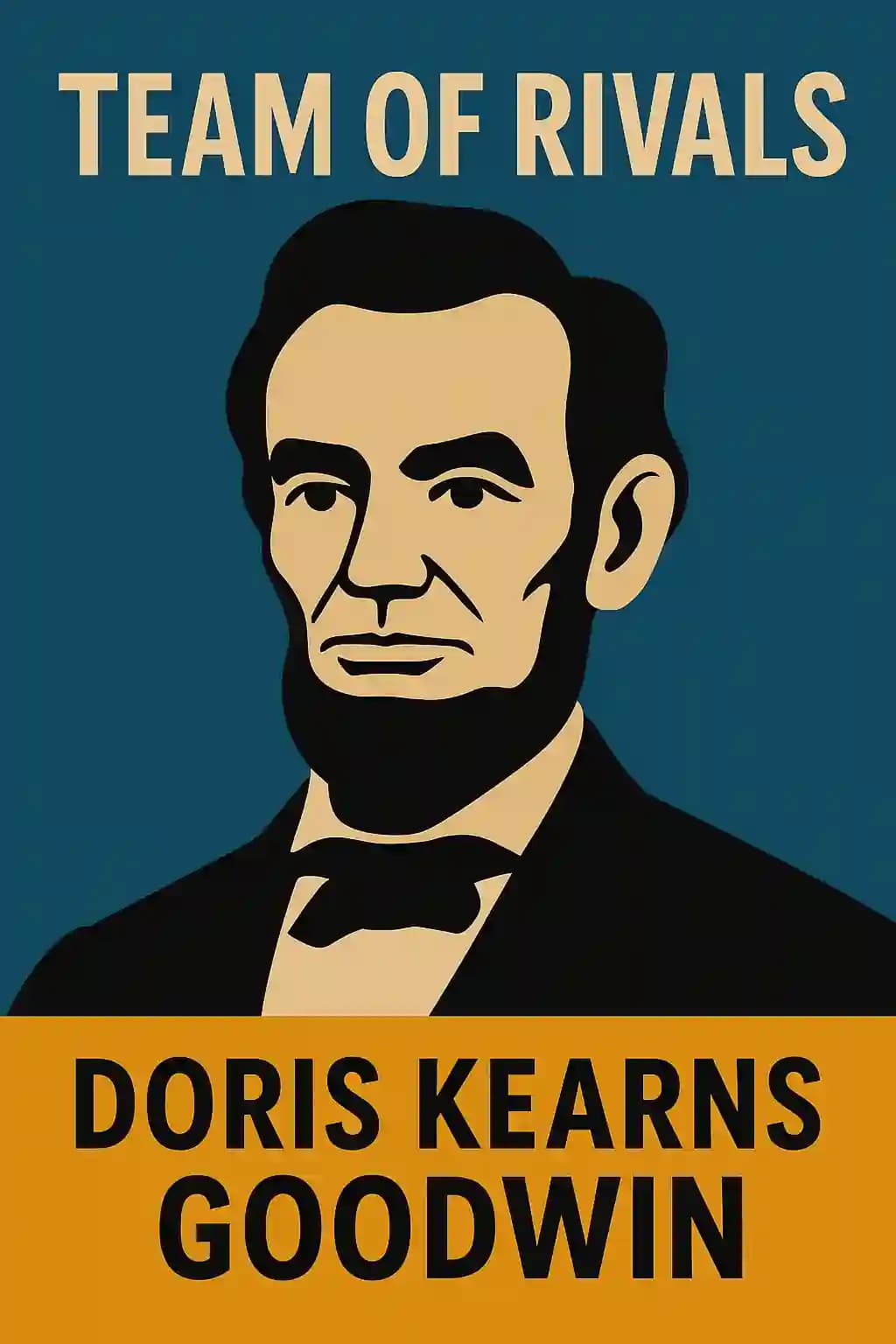
Team of Rivals
The Political Genius of Abraham Lincoln
《Team of Rivals》概述
Lincoln's genius wasn't just winning the Civil War - it was assembling his fiercest rivals into history's most consequential cabinet. This presidential masterclass in leadership so impressed Obama he modeled his own administration after it, later inspiring Spielberg's Oscar-winning film.
《Team of Rivals》核心主题
- political coalition building
- adversarial leadership
- civil war cabinet
- emotional intelligence
- presidential decision making
《Team of Rivals》经典语录
He possessed an extraordinary ability to put himself in the place of other men, to experience what they were feeling, to understand their motives and desires.
When Lincoln emerged as the victor, his rivals were dismayed and angry.
Lincoln's assassination marked the end of an era, but his legacy endures.
Lincoln's story is a powerful reminder that leadership is not about dominance...
...Lincoln's example remains a beacon of hope...
《Team of Rivals》主要人物
- William H. SewardSecretary of State and former political rival
- Salmon P. ChaseSecretary of the Treasury and abolitionist
- Edward BatesUnited States Attorney General from Missouri
- Mary Todd LincolnThe President's wife and First Lady
下载《Team of Rivals》摘要
免费获取《Team of Rivals》摘要的 PDF 或 EPUB 版本。可打印或随时离线阅读。
关于本书的常见问题
Team of Rivals explores Abraham Lincoln’s leadership through the lens of his relationships with cabinet members who initially opposed him, including William Seward, Edward Bates, and Salmon Chase. The Pulitzer Prize-winning biography highlights Lincoln’s political genius in uniting former rivals during the Civil War, emphasizing his empathy, strategic decision-making, and management of factional conflicts.
History enthusiasts, leadership scholars, and readers interested in political strategy will find this book compelling. Its blend of narrative depth and analysis suits both Lincoln novices and those familiar with his legacy. Bill Gates praises it as a timeless guide for leaders navigating complex team dynamics.
Yes. Goodwin’s meticulous research and engaging prose make it a standout in presidential biographies. Reviewers note its insights into coalition-building and crisis management, though some critique its limited battlefield coverage. The book’s focus on interpersonal dynamics offers fresh perspectives on Lincoln’s presidency.
Key themes include leadership through collaboration, the moral stakes of slavery, and resilience amid adversity. Goodwin underscores Lincoln’s ability to harness dissent, turning ideological opponents into allies to preserve the Union and advance emancipation.
Lincoln is depicted as a pragmatic, empathetic leader who prioritized merit over personal loyalty. By appointing rivals to his cabinet, he fostered debate while maintaining authority—a strategy that strengthened his administration’s problem-solving during the Civil War.
Some historians argue Goodwin underplays military strategies and postwar events, such as the hunt for Lincoln’s assassins. Others note the condensed audio version omits personal anecdotes that enrich the print edition.
Unlike traditional biographies focused solely on Lincoln or military campaigns, Goodwin’s work emphasizes collective leadership. It’s often paired with David Herbert Donald’s Lincoln for complementary insights into his personal and political life.
While the book itself isn’t quote-driven, Goodwin highlights Lincoln’s adage: “Am I not destroying my enemies when I make friends of them?” This philosophy underpins his approach to uniting disparate voices.
The book’s lessons on consensus-building, emotional intelligence, and ethical leadership resonate in modern politics and business. Bill Gates cites it as a primer for managing teams in divisive times.
Goodwin drew from extensive primary sources—letters, diaries, and speeches—to reconstruct Lincoln’s interactions. Her interdisciplinary approach blends political history with psychological profiles of key figures.
Mary Todd’s influence on Lincoln’s career and mental health is explored, humanizing his personal struggles. Secondary figures like Secretary of War Edwin Stanton also receive nuanced portrayals, revealing their impact on critical decisions.
Goodwin details Lincoln’s evolving stance on slavery, from pragmatic compromises to the Emancipation Proclamation. The book frames abolition as both a moral imperative and strategic war measure, shaped by cabinet debates.