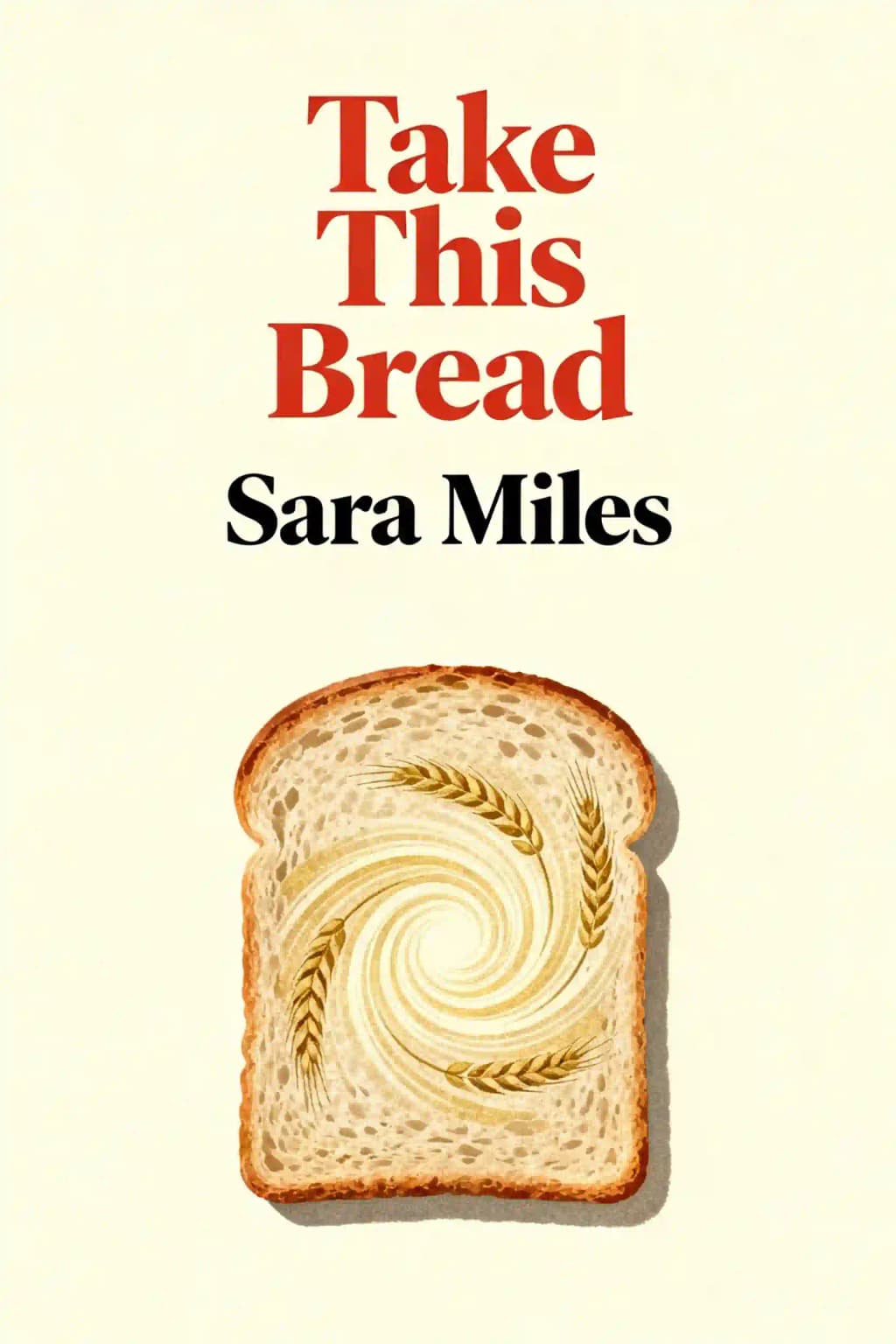
When a radical atheist lesbian journalist accidentally discovers communion and launches a dozen food pantries for the hungry, Anne Lamott calls it "the most amazing book." Sara Miles' spiritual memoir challenges what faith looks like when bread becomes both sacrament and survival.
Sara Miles, author of the spiritual memoir Take This Bread: A Radical Conversion, is a renowned writer and activist bridging faith, social justice, and grassroots community action.
Her work explores themes of radical hospitality, religious conversion, and the transformative power of food ministries through the lens of her own journey from atheism to founding San Francisco’s St. Gregory’s Food Pantry.
A former journalist, Miles has contributed to The New York Times Magazine, The New Yorker, and NPR, blending sharp political reporting with theological inquiry. Her subsequent books, including Jesus Freak: Feeding Healing Raising the Dead and City of God: Faith in the Streets, further examine faith in practice through personal and communal narratives.
Miles’s insights are frequently cited in theological discussions and social justice movements, with her food pantry model inspiring similar initiatives globally. Take This Bread has become a modern spiritual classic, used in seminary curricula and interfaith outreach programs.
Take This Bread chronicles Sara Miles’ journey from atheist journalist to founder of a San Francisco food pantry after a transformative communion experience. This spiritual memoir explores radical hospitality, integrating faith with social justice, and redefining church through communal meals and service to marginalized communities.
This book resonates with readers exploring unconventional faith journeys, social justice advocates, and those interested in LGBTQ+ perspectives on Christianity. It appeals to anyone seeking stories about community-building, inclusivity, and the intersection of spirituality with practical activism.
Yes—critics praise its raw honesty and unique lens on Christianity’s transformative power. It offers fresh insights into sacramental living, making it valuable for skeptics and believers alike. The New York Times called it “astonishing,” while Anne Lamott deemed it “the most amazing book”.
Miles embodies radical hospitality through her food pantry, welcoming people regardless of background. She dismantles social barriers by creating spaces where the wealthy and unhoused share meals, reflecting her belief that “communion isn’t a metaphor”.
The Eucharist catalyzes Miles’ conversion, symbolizing both spiritual nourishment and physical sustenance. She reinterpreted communion as a call to action, transforming altar bread into food donations and establishing pantries as “Eucharist in reverse”.
As a lesbian Christian, Miles challenges exclusionary dogma by emphasizing Jesus’ inclusive teachings. Her memoir argues that authentic faith transcends labels, with St. Gregory’s Church affirming her identity while supporting her pantry work.
Miles’ pantry ministry treats feeding the hungry as sacred work. By distributing groceries where communion is celebrated, she blurs lines between worship and social action, arguing that “feeding people is the first step in building God’s kingdom”.
Some reviewers note the memoir’s unconventional theology might challenge traditional Christians. Others suggest the narrative’s focus on personal anecdotes leaves systemic poverty analysis underdeveloped.
Unlike abstract theological works, Miles grounds her faith in tangible acts of service. It shares themes with Shane Claiborne’s The Irresistible Revolution but stands out for its LGBTQ+ perspective and food-centered spirituality.
Many report renewed faith in communal activism, with some starting pantries themselves. Book clubs often discuss Miles’ challenge to “practice Christianity instead of just preaching it”.
Its themes of bridging social divides through shared meals resonate amid modern polarization. The book’s model for faith-based service remains vital as food insecurity persists globally.
Bread represents both Christ’s body and universal human need. Miles frames food distribution as Eucharistic practice, where “physical hunger and spiritual hunger meet”.
通过作者的声音感受这本书
将知识转化为引人入胜、富含实例的见解
快速捕捉核心观点,高效学习
以有趣互动的方式享受这本书
Jesus invites everyone to his table.
Politics suddenly became physical rather than theoretical.
Take the weight.
Jesus happened to me.
My mother nursed a fifty-year grudge against Christianity.
将《Take This Bread》的核心观点拆解为易于理解的要点,了解创新团队如何创造、协作和成长。
将《Take This Bread》提炼为快速记忆要点,突出坦诚、团队合作和创造力的关键原则。

通过生动的故事体验《Take This Bread》,将创新经验转化为令人难忘且可应用的精彩时刻。
随心提问,选择声音,共同创造真正与你产生共鸣的见解。

"Instead of endless scrolling, I just hit play on BeFreed. It saves me so much time."
"I never knew where to start with nonfiction—BeFreed’s book lists turned into podcasts gave me a clear path."
"Perfect balance between learning and entertainment. Finished ‘Thinking, Fast and Slow’ on my commute this week."
"Crazy how much I learned while walking the dog. BeFreed = small habits → big gains."
"Reading used to feel like a chore. Now it’s just part of my lifestyle."
"Feels effortless compared to reading. I’ve finished 6 books this month already."
"BeFreed turned my guilty doomscrolling into something that feels productive and inspiring."
"BeFreed turned my commute into learning time. 20-min podcasts are perfect for finishing books I never had time for."
"BeFreed replaced my podcast queue. Imagine Spotify for books — that’s it. 🙌"
"It is great for me to learn something from the book without reading it."
"The themed book list podcasts help me connect ideas across authors—like a guided audio journey."
"Makes me feel smarter every time before going to work"

免费获取《Take This Bread》摘要的 PDF 或 EPUB 版本。可打印或随时离线阅读。
A war correspondent who'd spent a decade covering revolutions across Latin America walked into a San Francisco church on a cloudy morning with zero intention of becoming religious. Sara Miles-raised by militantly secular parents in Greenwich Village, shaped by restaurant kitchens and conflict zones-simply wanted to see an interesting building. Then someone placed bread in her hands and said "the body of Christ," and everything changed. She found herself physically unbalanced, knocked sideways by something she couldn't explain. "Jesus happened to me," she writes, struggling to reconcile what she thought was happening (eating bread), what someone said was happening (receiving Christ's body), and what she knew was happening (God was suddenly, impossibly real). That moment launched her into the messiest, most radical expression of Christianity imaginable-one that would eventually feed hundreds of San Francisco's hungriest residents from the altar of an Episcopal church.