第 1 章
The Soul's Necessary Darkness: Where Meaning Hides in Plain Sight
Have you ever noticed how our culture's obsession with happiness often feels like a trap? While the Declaration of Independence enshrines the "pursuit of happiness" as a fundamental right, Jungian psychology offers a radically different perspective: life's true goal is not happiness but meaning. This distinction lies at the heart of James Hollis's profound exploration of our most difficult emotional territories. As Oprah Winfrey once noted during her Book Club feature, "This book completely transformed how I view suffering." The work has quietly become required reading in many psychology programs and therapy training institutes, with figures from Carl Jung to Jordan Peterson citing its influence on their understanding of the human condition. What makes this exploration so powerful is its counterintuitive premise: those swampy emotional states we desperately try to avoid-guilt, grief, loneliness, depression-are precisely where our most profound growth and meaning can be found.
第 2 章
The Swamplands: Where Meaning Emerges from Suffering
The discrepancy between what we long for and what we experience has haunted Western thought from Pascal's "thinking reeds" to Nietzsche's grief at human limitations. While many flee suffering through fundamentalism, addiction, or neurosis, the swamplands of the soul are precisely where meaning is forged. Jung considered neurosis "the suffering of a soul which has not discovered its meaning" and saw symptoms as expressions of a desire for healing.
At the heart of Jungian psychology lies the reality of the unconscious-that autonomous force operating within us beyond our control. Most of life becomes a flight from the anxiety of being radically present to ourselves. Culture itself seems designed as a diversion to avoid solitude and the intimidating journey we're summoned to undertake. Our conscious ego obsessively seeks security against the surge of unconscious material, becoming what Hollis calls "a nervous nelly" dusting the parlor of life.
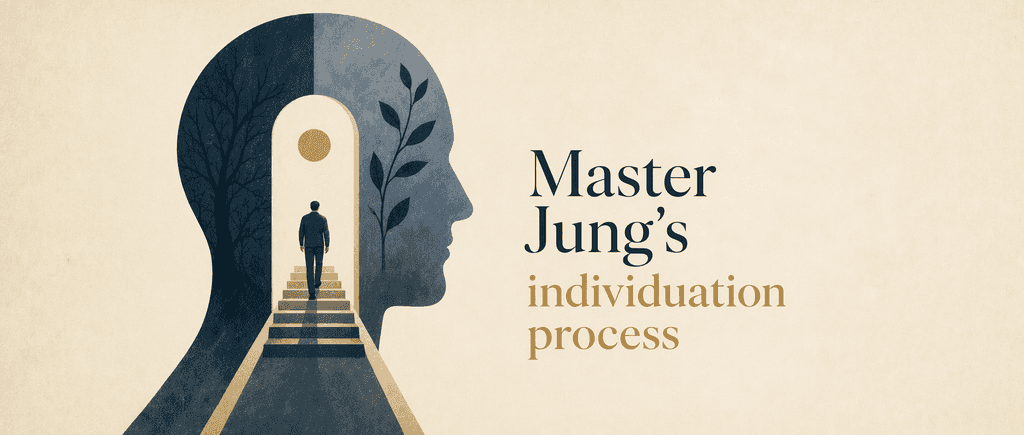
From depth psychology's perspective, ego's proper role is dialogue with the Self-what Jung called the Auseinandersetzung-serving the individuation process rather than fleeing the swamplands. Soul work requires not solving our problems but living through them, seeking meaning in our suffering. As Jung noted, the opus consists of "insight, endurance and action"-psychology provides only insight; the rest requires moral courage and strength to bear the consequences.
The swamplands aren't something to avoid but to move through toward enlarged consciousness. This journey isn't about happiness but meaning-finding purpose in our darkest moments and allowing them to transform us. When we resist these difficult states, we remain stuck in patterns that diminish our lives. When we embrace them as teachers, they become portals to deeper understanding.
第 3 章
Guilt: The Black Bird on Our Shoulders
Guilt sits "like a large black bird" on most human shoulders. Consider Ilse's haunting story-the woman in the photograph walking two children toward the Majdanek Krematorium during the Holocaust. Caught in an Einsatzkommando roundup despite being non-Jewish, she faced an impossible choice at the selection point: take two children to the gas chamber or die herself. The photograph captured this moment-her pulling one reluctant child while the other clung to her, her wool stocking torn. After delivering the children to their deaths, she survived until liberation. Years later in America, she discovered the photograph in a history book, triggering memories of both her terror and her relief at being spared. Now elderly, she travels seeking "the Just" from Jewish tradition who might hear her confession, though she cannot find absolution.
True guilt involves accepting responsibility for our choices and their consequences, even when made unconsciously. Unlike judicial systems that recognize diminished capacity, the path of individuation demands acknowledging our participation in both personal and collective wrongs. Greek tragedy illustrates how our "wounded vision" (hamartia) leads to choices with unforeseen consequences, but through acknowledgment and penance, redemption becomes possible.
For those without access to traditional confessionals, dealing with guilt maturely requires "the three R's": recognition, recompense, and release. Recognition demands acknowledging harm done to self or others. Recompense, though sometimes impossible, remains essential when possible, but must stem from genuine contrition rather than mere material compensation. When contrition is genuine and recompense made, release becomes possible-through divine grace for the religious, or through consciousness expansion for others.
Existential guilt is an unavoidable aspect of being human. We understand that life depends on death-we kill animals or plants to survive. We all compete in the marketplace, taking something for ourselves from others. We inevitably make well-intentioned choices with sometimes evil consequences. This guilt may be the hardest to bear-being responsible not only for things done but undone.
Sometimes growth requires transgressing boundaries-children must leave home, people must break commitments, some must become "Holy Criminals" violating societal norms for personal vision. Such transgressors bear the guilt of consequences. Guilt binds us to the past, contaminating present and future. Mature integration requires recognizing wrong choices, making symbolic compensation, and letting go-allowing new patterns to unfold.
第 4 章
Loss, Grief and Betrayal: The Inevitable Companions
Loss pervades human existence from birth to death. We begin life separated from the protective womb and end with the ultimate loss of life itself. Between these points lie countless losses-of security, innocence, connection, companions, and physical vitality. Every culture creates myths dramatizing this primal separation from an imagined Edenic state, expressing our profound nostalgia for connectedness.
Devin's story illustrates how grief, loss, and betrayal can lead to soul recovery. At thirty-eight, this architect had followed his alcoholic father's expectations perfectly-joining the family profession and settling near home. After his emotionally unstable wife died of cancer, Devin entered therapy feeling psychically numb. His depression marked not just grief for Anne but the loss of his authentic self through years of family exploitation. A breakthrough dream featuring Elvis Presley and his deceased wife revealed how Devin had been trapped in caretaking others while losing his own journey. Through confronting these painful swamplands, Devin recovered his desire and eventually claimed the life he was meant to have rather than the one others had prescribed.
Betrayal is a profound form of loss that strips away innocence, trust, and simple relationship. When we work through betrayal, we're forced to embrace the polarities within both the betrayer and ourselves. As Carotenuto notes, betrayal provides an opportunity to integrate the ambivalence and love-hate feelings in every relationship. Perhaps the bitterest pill is recognizing our own unconscious participation in the "collusive ballet" that led to betrayal.
Through suffering loss, grief, and betrayal, we're pulled down and possibly through to a larger worldview. The message of these experiences is that we cannot hold onto anything, take anyone for granted, or spare ourselves acute pain. What remains constant amid inconstancy is the summons to individuation. Loss, grief and betrayal aren't just dismal places we unwillingly visit-they're integral to consciousness maturation.
第 5 章
Doubt and Loneliness: The Silence of Infinite Spaces
Doubt and loneliness represent fundamental human experiences that confront us with the silence of infinite spaces both without and within. As Pascal wrote, "The silence of these infinite spaces frightens me." We all experience moments of profound aloneness, vulnerability and fear, when we feel insufficient to meet life's demands and thrown back on our meager resources.
Doubt, though unwelcome to our security-seeking ego, is essential for growth. The German word Zweifeln ("twoness") captures the split we feel when experiencing doubt. Norman's story illustrates how the inability to tolerate doubt traps one in childhood wounds-desperately seeking connection with women while simultaneously fearing and attacking them. Doubt serves several vital functions: it's the necessary fuel for change and growth; it's essential for democracy, protecting against rigid values; and it represents a form of radical faith that preserves ambiguity. As theologian Paul Tillich argued, doubt is a necessary ingredient in any respectful encounter with ultimacy-a form of humility before mystery.
Life begins with traumatic separation from the womb's connectedness, and we spend our lives either trying to recover that lost connection through regression or sublimating this need into searches for connection with nature, others, and the divine. Yet these connections are never sustainable-even in intimate relationships, as Rilke noted, "Loneliness goes on then with the rivers."
By midlife, everyone confronts relationship's limits and must relinquish two great fantasies: that we're immortal exceptions to the human condition, and that some "magical Other" will rescue us from existential isolation. Whether a person matures depends directly on their ability to take responsibility for choices, cease blaming others, and acknowledge loneliness despite social roles and relationships.
The paradox is profound: only by embracing our essential aloneness can we develop authentic selfhood and genuine connection with others. As Thomas Wolfe observed, loneliness is "the central and inevitable fact of human existence," while Moustakis notes that avoiding this existential truth leads to self-alienation. Individuation requires solitude-being alone yet dialoguing with one's inner presence. As Rilke wisely noted, the highest task between two people is that "each should stand guard over the solitude of the other."
第 6 章
Depression, Desuetude and Despair: The Three Corbies
Like the three ravens from the old Scottish ballad who wait to feast on a fallen knight, depression, desuetude and despair lurk outside our windows. They are familiar presences that intrude upon our consciousness, reminding us of our mortality. Just as Churchill called his depression a "black beast" and Kafka described his as a "secret raven," these dark visitors haunt us all. Though biorhythms and mood fluctuations are normal, our culture's distorted search for unalloyed happiness makes these natural states seem aberrant when they are actually essential counterpoints to joy.
Depression takes multiple forms-reactive, endogenous, and intrapsychic-often confused or experienced simultaneously. Reactive depression follows loss naturally; endogenous depression stems from biological bases often transmitted genetically; intrapsychic depression occurs when life's energy is pressed down by internal conflict. From a Jungian perspective, intrapsychic depression is a well with a bottom, though we must dive deeply to find it.
Many function with "walking depression" or "smiling depression," managing life while carrying a heavy soul. The task is becoming conscious enough to separate past wounds from present identity: "I am not what happened to me; I am what I choose to become." Depression at midlife signals collision between false self and natural self-a necessary confrontation.
Depression often presents a terrible choice-anxiety or depression. If we move forward as our soul insists, anxiety floods us; if we remain static, depression presses down our purpose. We must choose anxiety, for it offers potential growth while depression defeats life. Jungians recognize depression's therapeutic value-a regression of energy serving the Self, calling us to recover split-off parts of our soul.
Desuetude-literally "to grow out of the habit of using"-is the experience of being dispirited, lacking energy to traverse life's wasteland. In medieval terms, we suffer from acedia (spiritual torpor), the "monk's disease" where the soul becomes dry and arid. As Max Piper noted, "the essence of acedia is the refusal to acquiesce in one's own being." To sacrifice one's personal journey wounds the soul and diminishes spirits.
Despair is to be without hope, prospects, or alternatives-the worst of the dismal states. In Judeo-Christian tradition, despair is sin because it limits the Limitless. Yet who hasn't known moments when forces aligned against us seem insurmountable? As Camus argued in The Myth of Sisyphus, suicide becomes the only philosophical problem. But James Hillman counters that even in despair, one doesn't truly wish to die but rather for instantaneous transformation.
The task in despair is moving from victim to hero, from pathetic to tragic. Like Prometheus bound yet free, or Camus' Sisyphus who chooses to push his boulder rather than be doomed to push, we can wrest dignity from the gods through our struggle. The human condition ends in death, but our task is neither to deny terrible feelings nor relinquish dignity, but to suffer through toward whatever awaits beyond despair's tautologies.
第 7 章
Obsessions and Addictions: Our Self-Created Hell
Did we ever stop to reflect on what makes Hell hellish? By midlife, if we're introspective at all, we realize the only constant in our lives has been ourselves. However much we blame parents, society or partners for our problems, we're stuck with the recurrent encounter with self.
The journey into Hell-whether Dante's catabasis, Milton's Paradise Lost, or Rimbaud's Une Saison d'Enfer-reflects our midlife confrontation with self. What makes Hell truly hellish is its endlessness - we become stuck in the symbolic extension of what we've chosen, as Dante's vision illustrates with flatterers immersed in excrement and materialists eternally rolling boulders.
Obsessions are ideas that invade consciousness with sufficient power to supplant the will, causing anxiety and reflexive behaviors to assuage the urgency. The deeper the wound, the more intractable the obsession. Some obsessions, however, fuel creativity - like William Butler Yeats's fifty-year magnificent obsession with Maud Gonne that drove him to poetry. Obsessions typically reflect projections of our missing psychic pieces onto others, often replicating parent-child dynamics.
All addictions are anxiety management techniques - when psychic material triggers angst, our defenses activate. We momentarily "connect" through repetitive behaviors, temporarily reducing anxiety, but these effects don't last, forcing the cycle to repeat. The wheel turns, bringing guilt, shame, and failure with each repetition. We project what cannot be consciously borne onto substances, behaviors or people.
These hellish addictions seem our own fault - "myself am Hell" - but we're actually enslaved by unassimilated ideas anchored in our past, constricting us to childhood limitations. Our task is to "burrow into the obsession," deconstructing the addiction to find the primal idea buried deeply. Only by descending into our anxiety, feeling what we truly feel, can we break the tyranny of timeless emotions.
第 8 章
Anger: The Three-Headed Dog
In Greek mythology, the three-headed dog Cerberus guards the Underworld, representing the three-headed nature of anger. The etymology of "anger" comes from "angh" meaning "to constrict" - when our natural spontaneity is constricted, anger results. Many families don't tolerate anger, forcing children to channel it into acting out, depression, or shadow splits. Like sexuality, anger is seen as anarchic and disruptive to social order, yet it's inescapable - we all carry pockets of anger in our psyche.
The three heads of Cerberus represent three origins of anger. First, the overwhelming of a child's boundaries by the outer world (too-much-ness), leading to passive, co-dependent personalities. Second, the insufficiency of environment (not-enough-ness), creating diminished self-worth and addiction to external validation. Third, our own complicity in self-wounding - the anger we direct toward ourselves.
When transformed by consciousness, anger becomes vital energy for healing and furthering the soul's desires. While original wounds rarely heal completely, their symbolic meaning can be reshaped. When we acknowledge anger, track its origin, and see its effect on our imaginal self, we can break free from the limits of the past. As Dr. Faustus realized, recognizing that "where we are is Hell" begins our journey up and out of the nether kingdom.
第 9 章
Fear and Anxiety: The Common Thread
The common thread running beneath all swampland states is angst. Even amid joyful events like the author's daughter giving birth, anxiety can emerge reflexively. Heidegger called humans "Being-toward-Death," Kierkegaard wrote of "fear and trembling," and Auden named our time "The Age of Anxiety." The erosion of stabilizing mythologies has left us "between two worlds, one dead, the other powerless to be born."
Fear is specific (like fearing dogs after being bitten), while anxiety is free-floating, originating from general life insecurity. Angst is existential anxiety - the awareness of how precarious human existence truly is. M. Truman Cooper's poem illustrates how fear (symbolized by Paris) follows us everywhere, suggesting the only solution is to face what we fear directly.
Depth psychology developed largely in response to anxiety's manifestations. Early psychoanalysts discovered that physical symptoms often served dual purposes - like a stress headache that also allows avoiding a dreaded math exam. Phobias often represent symbolic expressions of unnamed anxieties, as with agoraphobia - less about marketplaces than about the loss of control risked by venturing beyond safety.
Panic attacks represent the ultimate terror breaking through - feeling like literal death with sensations of choking and heart palpitations. We all engage in magical thinking and rituals to ward off nebulous forces, becoming distraught when these talismans fail. Behind every obsession lies enormous angst. Our wounds become our identity, trapping us in reactive patterns that estrange us from ourselves. The only way out is facing what the neurosis defends against.
Our most primitive defense against anxiety is the "fight or flight" response. We distance ourselves from painful realities through repression, forgetting, splitting off, and projecting our unpleasant complexes onto others. We may serve these dissociated complexes for decades without conscious awareness of their underground work.
The task remains the same: to "go through," to meet anxiety head-on and break its tyranny. Anxiety becomes a psychological problem only when it prevents us from living fully, and a moral problem when our chosen strategies impair us. As Kazantzakis wrote for his epitaph: "I want nothing. I fear nothing. I am free." Anxiety is the price of a ticket on the journey of life - no ticket, no journey; no journey, no life.
第 10 章
Going Through: Re-Imagining Ourselves
The final chapter addresses how we navigate swampland states without becoming mired in them. We cannot avoid these states - they will pull us in repeatedly regardless of moral probity or disciplined analysis. There is no contract we can strike with the universe to exempt us from suffering. The great rhythms of nature, fate, and our own psyche move outside our will.
Robert's dream perfectly illustrates his psychological predicament - lying in a murky pond, sinking as if in quicksand, barely able to hold himself from drowning completely. The dream shows his complete clinical picture: he's "treading water," trying to keep from sinking. Though his partner is present in the dream, she cannot help him; he must rescue himself.
The dream reveals both Robert's dilemma and potential salvation. The fisherman who draws five trout from the murky waters represents a masculine energy that offers another approach - one that hearkens back to his need for empowerment through his father. This figure can both enter the water and remain grounded, drawing forth vital elements (fish) that may nourish and sustain. Robert must reach up to contact this inner fisherman, reimagining himself not as the passive, terrified child strapped to a gurney, but as someone who can pull himself from the swamp.
We carry our Hell with us, reconstituting it through repetition compulsion. As Jung observed, we are "as much possessed by our pathological states as any witch or witch-hunter in the darkest Middle Ages." Our devil is the embodiment of our own autonomous history. Only at midlife, after sufficient suffering and maturation, can we acknowledge this paradox - that we ourselves have become our own enemy. This recognition marks the beginning of consciousness.
The journey through the swamplands ultimately leads to what Rilke called the "white city" - a vision granted only to those who have "gone through" the swampland of loss. There is an incredible sweetness that comes to those who have endured and transcended, like Oedipus at Colonus who could say, "Suffering and time, vast time, have been instructors in contentment."
第 11 章
The Blur and Blot of Life: Finding Meaning in Fragments
In this final section, the author explores how we experience life as a series of fragments that we must piece together to create meaning. Using the metaphor of a play experienced in multiple locations simultaneously, we're shown how life presents itself in slivers and slices that we must actively work to integrate.
The author presents three fundamental principles for navigating life's inevitable descents into psychological darkness. First, we must accept that our psychic life will frequently act outside ego control, pulling us into swamplands where we'll suffer - no amount of denial or positive thinking will spare us. Second, each swampland state contains an implicit challenge to discover its meaning and the necessary change it demands. Third, since our responses to swampland stress are reflexive and tied to past experience, we must re-imagine ourselves to live in the present.
We cling to two impossible fantasies that impede our engagement with life: immortality and the Magical Other. Death, while not a swampland state itself, haunts our days as the ego's greatest threat, yet confronting mortality provides depth and perspective to life. The fantasy of the Magical Other - hoping someone will rescue us and make our lives work - is equally destructive, sabotaging relationships with unreachable expectations.
Each of us has been offered a journey of individuation that requires conscious daily work. Jung notes that every neurosis is "an offended god" - some violated archetypal principle that we must reclaim through our work in the swamplands. Paradoxically, we may discover divine principles less on mountaintops than in these difficult emotional territories.
Life remains a blur and blot that we never see clearly, never get right, never fix, never finish. Jennifer's story with her dying mother illustrates this - despite her mantra of "contained openness," she left their final encounter feeling she'd failed, more contained than open. We never get it all right. Only occasionally do we experience clarity, purpose, victory.
In the final analysis, we don't solve our problems, for life isn't a problem to be solved but an experiment to be lived. It's enough to have suffered through into deeper meaning. We cannot avoid the swamplands of the soul, but we may come to value them for what they bring us - "a further union, a deeper communion."