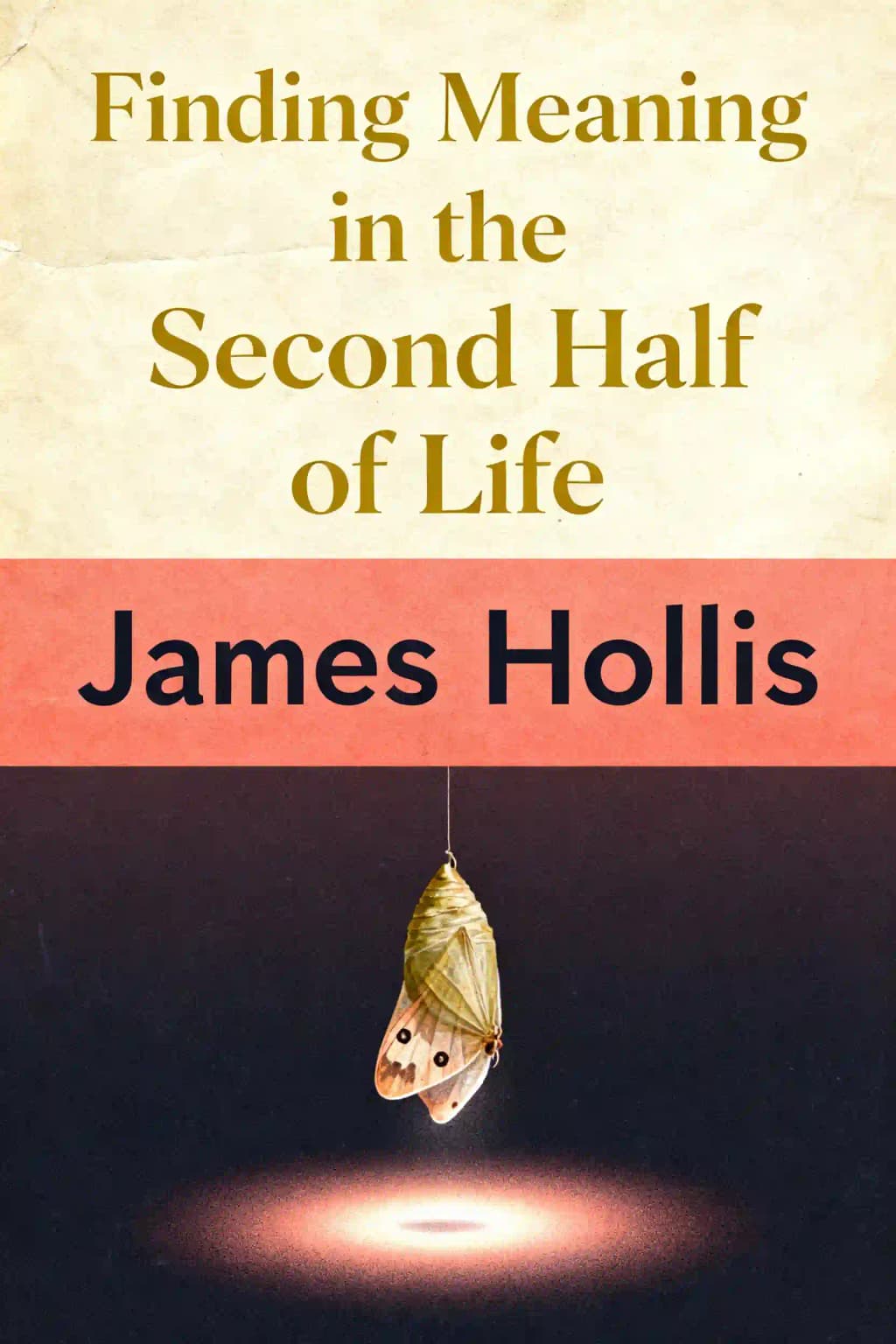
In midlife's turbulent passage, Jungian psychoanalyst James Hollis offers profound guidance beyond superficial success markers. Translated into 20+ languages, this life-changing work is championed by inspirational speaker John O'Leary as "one of the best books ever." What meaningful truth awaits in your second half?
James Hollis, Ph.D., is a Jungian psychoanalyst and the bestselling author of Finding Meaning in the Second Half of Life. He combines decades of clinical expertise with existential philosophy to guide readers through midlife transitions and the pursuit of purpose.
A trained analyst from the C.G. Jung Institute Zürich and former Executive Director of the Jung Society of Washington, Hollis bridges academic rigor with accessible insights. He draws from his 26-year career teaching humanities and his private practice.
His influential works, including The Middle Passage and Living with Borrowed Dust, explore themes of self-discovery, relationships, and confronting life’s unconscious patterns.
A frequent lecturer and media contributor, with appearances on CNN and The Weekend University podcast, Hollis’s frameworks are widely cited in therapeutic and personal growth communities. His books have become essential resources in Jungian psychology, translated globally and integrated into professional training programs.
Finding Meaning in the Second Half of Life explores how adults over 35 can transcend societal expectations and achieve authentic self-discovery. James Hollis uses Jungian psychology to argue that midlife crises signal opportunities for spiritual growth, urging readers to confront unresolved trauma, redefine purpose, and embrace vulnerability. The book rejects quick fixes, focusing instead on introspection and accepting life’s inherent uncertainties.
This book suits adults experiencing existential dissatisfaction in their 30s–70s, particularly those questioning career paths, relationships, or mortality. It resonates with readers seeking deeper self-understanding beyond material success, and anyone interested in Jungian concepts like individuation or shadow work. Therapists and coaches also use it to guide clients through midlife transitions.
Yes, for those willing to engage deeply with existential questions. While it lacks step-by-step advice, Hollis’s insights into navigating disillusionment and fostering resilience make it a transformative read. Reviews praise its intellectual rigor, though some critique its abstract approach.
Key concepts include:
Hollis reframes midlife crises as spiritual awakenings where the soul demands growth. Symptoms like career dissatisfaction or marital strain signal a need to shed false selves and confront unresolved fears. Unlike pop psychology, he views this turbulence as necessary for evolving beyond superficial adulthood.
The book hinges on:
The first half focuses on acquiring roles (career, family) and societal approval. The second half demands releasing these constructs to confront existential questions like “Who am I beyond my history?” Hollis argues fulfillment comes not from happiness, but from embracing life’s paradoxes.
Some readers find Hollis’s academic tone less accessible for casual audiences. Critics note the absence of actionable steps, while others argue his focus on individualism overlooks systemic barriers to self-actualization.
Hollis drew from his midlife transition from academia to Jungian analysis after battling depression at 35. His shift mirrors the book’s thesis: meaning emerges when we courageously confront inner voids, not cling to external achievements.
“The goal of life is not happiness, which is transient, but meaning, which abides.” This reflects Hollis’s view that enduring fulfillment stems from aligning with one’s authentic purpose, however challenging.
Yes. Hollis encourages readers to view career shifts not as failures, but as soul-driven reinventions. He advises assessing whether current work aligns with core values versus fear-based compliance.
It expands on themes from The Middle Passage and Swamplands of the Soul, deepening his exploration of midlife spirituality. Compared to Living an Examined Life, this book offers more structured Jungian frameworks.
通过作者的声音感受这本书
将知识转化为引人入胜、富含实例的见解
快速捕捉核心观点,高效学习
以有趣互动的方式享受这本书
We've been living someone else's life.
Anxiety is an elixir, and depression a sedative.
I hate my life.
From suffering alone comes wisdom.
Relationships carry our deepest expectations.
将《Finding meaning in the second half of life》的核心观点拆解为易于理解的要点,了解创新团队如何创造、协作和成长。
将《Finding meaning in the second half of life》提炼为快速记忆要点,突出坦诚、团队合作和创造力的关键原则。

通过生动的故事体验《Finding meaning in the second half of life》,将创新经验转化为令人难忘且可应用的精彩时刻。
随心提问,选择声音,共同创造真正与你产生共鸣的见解。

"Instead of endless scrolling, I just hit play on BeFreed. It saves me so much time."
"I never knew where to start with nonfiction—BeFreed’s book lists turned into podcasts gave me a clear path."
"Perfect balance between learning and entertainment. Finished ‘Thinking, Fast and Slow’ on my commute this week."
"Crazy how much I learned while walking the dog. BeFreed = small habits → big gains."
"Reading used to feel like a chore. Now it’s just part of my lifestyle."
"Feels effortless compared to reading. I’ve finished 6 books this month already."
"BeFreed turned my guilty doomscrolling into something that feels productive and inspiring."
"BeFreed turned my commute into learning time. 20-min podcasts are perfect for finishing books I never had time for."
"BeFreed replaced my podcast queue. Imagine Spotify for books — that’s it. 🙌"
"It is great for me to learn something from the book without reading it."
"The themed book list podcasts help me connect ideas across authors—like a guided audio journey."
"Makes me feel smarter every time before going to work"

免费获取《Finding meaning in the second half of life》摘要的 PDF 或 EPUB 版本。可打印或随时离线阅读。
Have you ever stood in the center of your carefully constructed life and felt like an imposter? Perhaps you've achieved everything society told you to pursue-career success, family, financial stability-yet something essential feels missing. This profound midlife reckoning happens when our souls begin to rebel against lives that have become too small. The carefully constructed identity that served us in life's first half suddenly feels like a prison rather than a foundation. Consider the retired professor who fell into depression without his academic structure, or the successful executive who realized mid-flight: "I hate my life." These experiences represent what James Hollis calls "an insurgency of the soul"-a rebellion against the ego's limited understanding that invites more conscious living in life's second half. This crisis typically emerges in our late thirties or forties, when pursuits and identities that once gave meaning begin to ring hollow. Physical symptoms like insomnia or anxiety may manifest as the psyche demands attention. We often discover, to our dismay, that we've been living someone else's life-following scripts written by family, society, or our own limited understanding of who we should be. Before the last century, most people lived according to the first half of life's agenda, constrained by social institutions and shorter lifespans. Today, with twice the adult lifespan and eroded social constraints, we face unprecedented opportunity to ask: "Who am I apart from my roles?" and "What is the second half of life about if not repeating the script of the first half?"