第 1 章
The Habit Revolution: How Ordinary Actions Create Extraordinary Lives
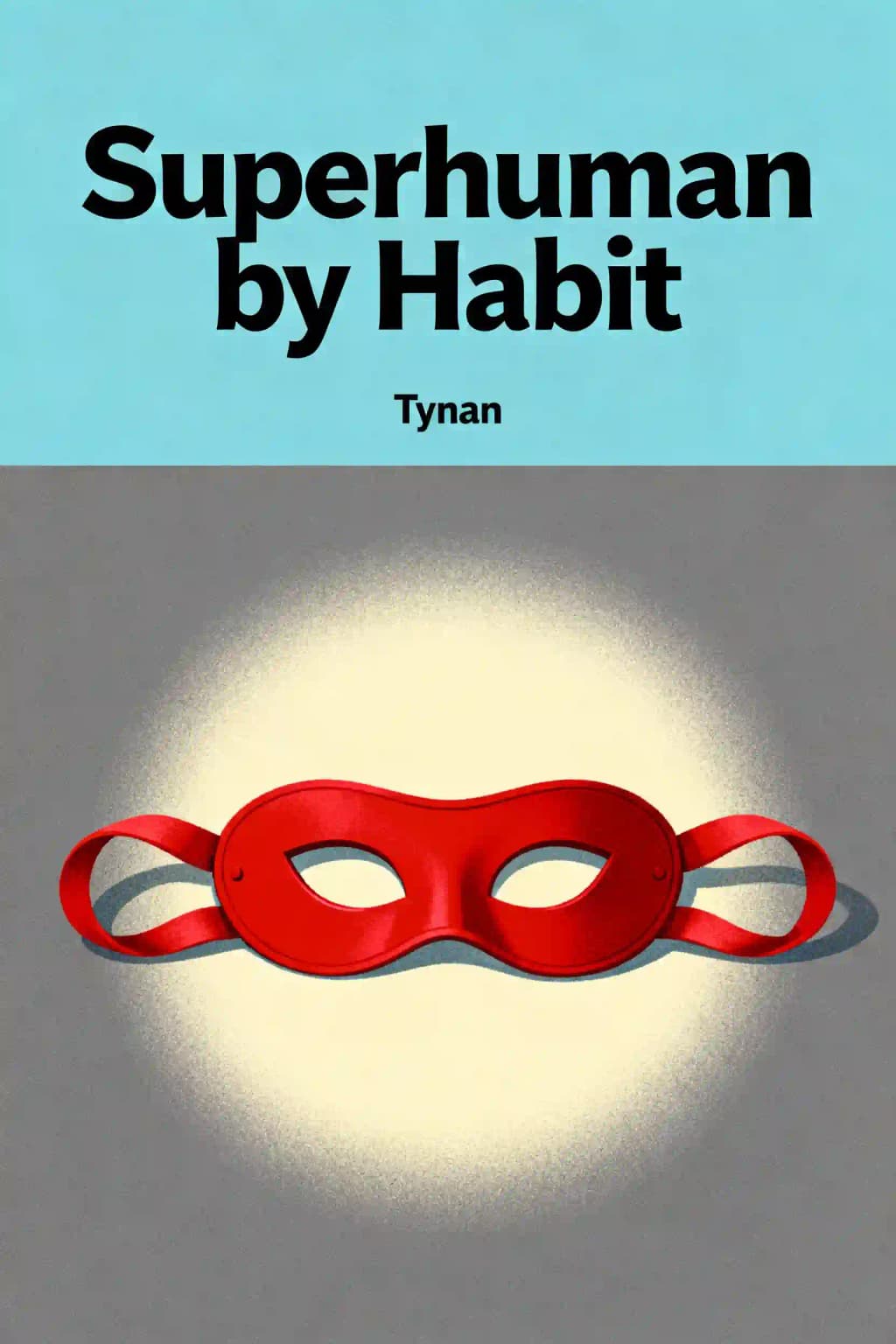
In a world where productivity gurus sell million-dollar courses and influencers showcase perfectly optimized routines, Tynan's "Superhuman by Habit" stands apart as a refreshingly honest manifesto. Unlike many self-help authors who seem naturally disciplined, Tynan freely admits he was once a chronic procrastinator with chaotic sleep patterns and perpetually unfinished projects. What makes this book particularly compelling is how it's become a quiet favorite among high-performers across industries-from Silicon Valley executives to professional athletes-who cite its straightforward approach as transformative. The book doesn't promise overnight success but instead offers something more valuable: a sustainable path to becoming the person you want to be through the deliberate cultivation of habits. In an age of quick fixes, Tynan's philosophy represents a countercultural yet deeply effective approach to personal transformation that has earned him a devoted following among those who value substance over hype.
第 2 章
The Hidden Power of Habit Formation
Habits represent the ultimate life hack-a way to convert willpower-intensive actions into automatic behaviors requiring minimal conscious effort. This effortlessness is the key to their power, creating a loophole that allows us to upgrade our lives with a fixed initial investment rather than an ongoing drain on our limited willpower.
The people who consistently excel in life aren't fundamentally different from the rest of us-they've simply mastered the art of building and maintaining habits. Like financial investors who live below their means to accumulate impressive wealth over time, habit-builders channel their excess willpower into creating automatic behaviors that pay dividends for years to come. Meanwhile, those who never develop this skill must constantly rely on whatever willpower they have available, which inevitably runs out when they're tired, stressed, or facing unexpected challenges.
What's fascinating is that we're already creatures of habit by design. Most of our daily actions-from brushing teeth to how we respond to stress-are dictated by our subconscious through established habits. Even our outlook on life stems from habitual patterns of seeing either positives or negatives in our experiences. Because habits so fundamentally shape who we are, when we find ourselves discontent with life, examining our habits should be the first step toward change.
The distinction between new habits and old habits is crucial. New habits are things you do, but old habits are things you are. There's a profound difference between waking up early and being an early riser, between eating healthy and being a healthy eater. For permanent improvement, you need to develop more old habits by creating new ones and sticking with them until they become subconscious parts of your identity.
This reveals the ultimate self-improvement process: add as many new positive habits as possible, convert them to old habits through consistent practice, then make room for more new ones. It's a perpetual cycle of growth that compounds over time, transforming you into someone who accomplishes extraordinary things not through heroic willpower but through the quiet power of routine.
第 3 章
The Long Game: Consistency Over Intensity
When evaluating habits, we must think in terms of years or decades, not days or weeks. One cigarette barely affects health, but thousands yearly make smoking deadly. Similarly, one cup of green tea does little, but daily consumption for years significantly improves health. The most crucial factor isn't the immediate impact but ensuring your habits create net positive change over time.
Going from slightly less healthy each year to slightly more healthy each year represents a profound shift in life trajectory, far more important than any short-term improvement. Short-term thinking inevitably leads to burnout cycles-pushing limits today leads to recovery periods where nothing gets done, ultimately reducing long-term productivity.
This long-term perspective reveals why consistency trumps intensity every time. A modest lifelong habit outperforms an extreme habit that lasts less than a year-just as steady 5% interest beats one year of 50% returns followed by nothing. This has two practical implications: First, be conservative when designing new habits. Instead of perfect dieting forever, commit to cutting sugar by half. Second, be extremely wary of missing even once. Failing to execute doesn't just lose minor progress-it threatens the entire cumulative benefit of establishing the habit.
When you do inevitably miss a day, never skip twice. While one miss might reduce success chances by 5%, two consecutive misses might drop it by 40%. Three days missed and you're essentially starting over, having lost all momentum. When you miss once, make the next occurrence your absolute top priority. Do it perfectly if possible, but do it terribly if that's all you can manage-just ensure it happens.
Sometimes life requires temporary adjustments to habits. The key difference between breaking habits and strategically pausing them is making it a premeditated, conscious decision. When planning a variance, make it concrete and specific about when it ends. Instead of abandoning your gym routine while traveling through Europe, commit to twenty pushups every morning, then resume your normal routine immediately upon returning home.
When you've promised to write 500 words daily but feel sick, tired, and uninspired-just do a terrible job. Write about how bad you feel or how you don't want to write. The power of a habit lies in consistency, not individual excellence. Skipping makes you feel guilty and unmotivated the next day. Doing a crappy job makes you feel slightly guilty but also proud for persevering, and eager to improve next time. The psychological difference is enormous.
第 4 章
The Honest Path to Self-Improvement
The fundamental skill for both selecting habits and maintaining them is brutal honesty with yourself. This means identifying which bad habits truly hold you back and replacing them with better ones. Being "brutally honest" differs from being brutal-it's about accurate self-assessment, not self-punishment.
Self-honesty requires self-trust. Many people struggle to identify weaknesses because they fear self-criticism will damage their self-esteem. This leads to an inability to self-diagnose and often results in putting others down to feel better. Admitting failure to meet your own standards creates vulnerability, especially in areas tied to self-esteem. This internal tension forces you to either change dramatically or accept your unwillingness to improve.
When choosing your next habit, target those that are major impediments in your life or negatively influence multiple areas. However, the habit must be one you genuinely care about-your conviction about its benefits matters more than its difficulty. While a top-down approach (tackling big habits first) is recommended, sometimes building small habits creates the momentum and confidence needed for larger challenges.
Once obvious habits are addressed, ask friends for feedback, as they often spot glaring issues we're blind to. Also explore areas that "just aren't you"-if you're scrawny, try weightlifting; if you're type-A, consider meditation. Social skills deserve special attention, as they're often mistakenly viewed as innate rather than learnable, despite their immense impact on life quality.
Taking complete responsibility for everything negative in your life is a powerful mindset for habit-building. By assuming everything is your fault-unhappiness, poor fitness, insufficient wealth, lack of friends-you create opportunities to change your circumstances rather than remaining a passive victim. This isn't about accuracy (not everything truly is your fault) but about overcoming our natural bias against accepting responsibility for negative outcomes.
The author once believed exceptional people possessed inherent magic that made them unreachably successful. However, after befriending highly accomplished musicians, socializers, and business leaders, he discovered they were surprisingly normal. Their exceptionalism came not from who they were but from what they did-specifically, their habits. This realization suggests that nearly anything is possible when broken down into habits and executed consistently.
第 5 章
Setting Yourself Up for Success
People tend to gravitate toward either adding new behaviors or subtracting existing ones. "Adders" find it easier to incorporate new activities (like going to the gym, starting a meditation practice, or learning a language) while "subtracters" prefer eliminating problematic behaviors (like cutting out junk food, reducing screen time, or stopping procrastination). Understanding your preference helps avoid being constrained by it while allowing you to rely on your strengths during challenging phases of habit formation. Neither approach is inherently superior - success comes from choosing the strategy that aligns with your natural tendencies.
Habits should always serve concrete goals rather than existing for their own sake. This goal-orientation allows you to properly calibrate the habit's intensity to match your actual needs. If you want to lose weight for appearance, perhaps a sustainable habit that sheds one pound monthly is sufficient and leaves capacity for other priorities. Similarly, if your goal is to read more, reading ten pages daily might be more realistic and sustainable than attempting to finish a book every week. The key is matching the habit's scope to your genuine objectives rather than arbitrary standards.
Excitement and motivation are distinct forces that power habit formation. Excitement resembles a sprinter's energy-immediately powerful but quickly depleted. It's the rush you feel when buying new workout clothes or downloading a meditation app. Motivation is like a marathoner's energy-less intense but substantially more enduring. While excitement can fuel the first couple weeks of a habit, only genuine motivation sustains long-term practice. This explains why New Year's resolutions often fail by February - they rely too heavily on initial excitement rather than deep-seated motivation.
It's better to never start a habit than to begin one without sufficient motivation. The first step in creating any habit should be understanding exactly why you're drawn to it. A habit motivated by health concerns and family longevity will outlast one motivated by a friend's insulting comment. For instance, someone who starts exercising because they want to be active with their grandchildren typically maintains their habit longer than someone working out to impress others. Remember that excitement dominates early but inevitably fades, forcing you to rely on your true motivation.
Rather than beginning with ambitious but unsustainable habits, maximize compliance by increasing frequency while minimizing intensity. Daily habits are harder to overlook, and low-intensity habits are easier to complete. For meditation, start with just one minute daily instead of thirty minutes every other day. Though this seems ridiculously small, it establishes the habit pattern. The same principle applies to exercise (five minutes of movement), writing (50 words), or saving money ($1 per day). Once consistent, gradually increase duration-from one minute to two, then five, then ten. This "tiny habits" approach builds a strong foundation through consistency rather than intensity.
Success in habit formation often comes down to strategic implementation rather than willpower. By understanding your natural tendencies, aligning habits with meaningful goals, distinguishing between excitement and motivation, and starting small but consistent, you create an environment where habits can take root and flourish naturally.
第 6 章
Designing Your Habit System
While we recognize that negative habits have specific triggers (stress triggers overeating, waking up triggers smoking), we rarely apply this understanding to positive habits. Without proper triggers, habits remain inconsistent activities rather than automatic behaviors. When establishing a new habit, identify and commit to its trigger-don't just say "I'll drink tea every morning," but rather "As soon as I wake up, I will drink tea." This specificity creates a clear action plan and removes decision-making from the equation. For example, instead of "I'll exercise more," try "When I get home from work, I'll change directly into workout clothes and do 20 minutes of exercise."
Habits can serve as triggers for other habits, creating reliable chains that make daily necessities effortless. My morning chain starts with putting water on to boil (trigger to brush teeth), making tea (trigger to check email and calendar), and finishing tea (trigger to start work). These chains can be customized for different parts of your day - morning routines, work preparation, or evening wind-down sequences. For instance, a productive evening chain might include: finishing dinner (trigger to clean kitchen), kitchen cleaned (trigger to prepare tomorrow's clothes), clothes ready (trigger to evening meditation).
For particularly challenging habits, enlisting a friend's help with accountability can be effective, though it's best to develop self-accountability for most habits. When asking for help, make the agreement concrete (either I visited prohibited websites or I didn't), establish regular progress reporting (like a shared spreadsheet), and create consequences for failure (such as a small bet). Digital tools like habit-tracking apps can supplement human accountability, providing data-driven motivation and streak-tracking features.
The ideal environment for habit building centers on simplicity and freedom from distraction. Eliminating distractions that consume willpower-like advertisements or junk food-preserves mental energy for your habits. This might mean unsubscribing from promotional emails, removing social media apps from your phone, or reorganizing your kitchen to keep healthy foods at eye level. Your peer group is equally crucial; friends who support your growth provide advantage, while those threatened by your progress create drag. Consider joining communities or groups aligned with your desired habits, whether it's a running club, writing group, or meditation circle.
Just as building positive habits creates meta-benefits, certain negative habits interfere with other habits. The three main disruptors are drugs/alcohol, seeking stimulation, and negative friends. Drugs alter decision-making and trigger themselves, creating a downward spiral that can destroy weeks of progress in a single evening. Stimulation-seekers can't focus on one thing, jumping between activities for quick dopamine hits - checking social media, watching short videos, or constantly switching tasks. This behavior makes it impossible to develop deep focus or stick to longer-term goals. Negative friends may feel threatened by your changes and discourage your new habits, often through subtle undermining comments or peer pressure to maintain old behaviors. Recognizing these disruptors early allows you to create strategies to minimize their impact, such as avoiding certain situations, implementing digital boundaries, or gradually distancing yourself from unsupportive relationships.
第 7 章
Transforming Your Mindset Through Daily Practice
While people readily accept work and productivity habits as malleable, few consider outlook and emotional responses as habit-controlled behaviors. Yet outlook is fundamentally your learned reaction to external events, which can be deliberately shaped through positive habits and consistent practice. The result manifests as a remarkable resilience - even when objectively negative things occur, your instinctive response becomes, "That's not so bad, and besides, this good thing happened too." This shift isn't mere positive thinking; it's rewiring your default neural pathways.
Building self-positivity through intentional practice dramatically increases happiness, minimizes emotional impact from "bad" events, and maintains an even positive mood throughout life's ups and downs. The simple yet powerful practice involves finding one positive aspect whenever you encounter a negative thought-no matter how seemingly insignificant. If your car gets towed, focus on the credit card miles from paying the fee, or how the walk home gives you unexpected exercise. If you miss a flight, appreciate the extra time to catch up on reading or work. Initially cumbersome and feeling artificial, this practice becomes automatic after 2-4 weeks of consistent effort, and after 2-3 months, your brain naturally seeks out silver linings without conscious prompting.
We often fall into the trap of thinking everyone else is an idiot while conveniently forgetting that to others, we're the idiots too. Despite our strong convictions and certainty in our viewpoints, we're not always right - and neither is anyone else. The most effective approach is practicing radical compassion, acknowledging the paradox of certainty while humbly accepting our own fallibility. When frustrated with someone's actions or words, simply remind yourself: "This person is just doing their best and trying to be happy, just like me." This small mental shift transforms perception instantly, helping you see the other as a complete human whose current interaction represents just a tiny slice of their complex life story.
While most mindset habits require a consistent loading period before becoming automatic, occasionally a powerful belief change can transform behavior instantly through profound realization. When I was twenty-five, reading detailed research about the molecular effects of processed food on cellular health completely transformed my eating habits overnight-my triggers shifted from desiring immediate pleasure to understanding long-term consequences. These watershed moments can't be actively sought since we don't know what insights will resonate most deeply, but we can maximize their likelihood by maintaining genuine curiosity, being open-minded to new information, and habitually exposing ourselves to high-quality knowledge sources through reading, conversations, and diverse experiences.
The key to lasting mindset transformation lies in understanding that our thoughts and reactions are habits we can consciously reshape. Through consistent practice of positive reframing, compassionate understanding, and openness to transformative insights, we can build a more resilient and balanced psychological foundation that serves us in all aspects of life.
第 8 章
Health Habits: The Foundation of Everything Else
Health habits are among the most valuable to develop because they offer extraordinarily high payoffs across multiple life areas. Rather than improving just one aspect, they transfer well to others. Health habits improve life expectancy, overall wellbeing, and maximize physical and mental capabilities. For those without established health routines, starting with one or two health habits is highly recommended.
Eating healthy may be the single most important habit to cultivate, affecting lifespan, wellbeing, and mental function. The most surprising benefit is improved mood and mental clarity. Healthy eating creates an upward spiral of self-care that motivates other positive habits while reducing desire for drugs or alcohol. The key is eliminating sugar and refined grains-about 80% of achieving a healthy diet. These physically and mentally addictive substances are best quit cold turkey. Though difficult the first year, preferences eventually shift until healthy foods become genuinely appealing.
Good sleep feels simultaneously like a luxury and superpower-sleeping until naturally waking feels indulgent, yet being alert when others drag themselves through the day feels invincible. The goal is getting enough sleep (typically around 8 hours) and waking without an alarm. Though sacrificing sleep might temporarily increase productivity, long-term quality output correlates directly with following natural sleep patterns. Create an optimal sleep environment with complete darkness (using blackout curtains or a sleep mask) and silence (with earplugs if needed).
Despite initial skepticism about meditation seeming "wishy-washy," the author found it valuable after noticing many respected people cited it as crucial to their success. The tipping point was reading research claiming meditation and exercise were the two best practices for increasing willpower. The practice is simple: sit quietly for five minutes daily focusing on your breath, redirecting attention whenever your mind wanders. Being "bad" at meditation is actually beneficial-it indicates you need the practice and gives you opportunity to strengthen focus.
Working out quickly becomes an indispensable habit once you experience its benefits. For those not already physically active, it should be a high priority despite temporarily disrupting schedules or energy levels. Benefits include increased longevity, better sleep, improved body composition, higher self-esteem, and enhanced physical abilities. The author recommends a three-day split routine with progressive overload-when you hit your target rep range, increase weight and reset to the lower rep range.
第 9 章
Building a System for Lifelong Growth
Expansion habits optimize our input-what we absorb from the world-which directly correlates with our creative output. The author began blogging nine years ago without expectations, yet it became a major connection point, income source, and most importantly, a tool for developing clearer thinking and communication. The recommended approach is setting a daily writing goal-whether a blog post, word count, or time commitment. Topic and quality don't matter initially-success is simply meeting your writing quota.
Our brains naturally seek comfort and familiarity-the same mechanism that makes habits work-but this tendency can prevent growth and new experiences. The "pushing your comfort zone" habit involves deliberately confronting fear when you catch yourself thinking "I'd like to do this, but I'm too scared/nervous." The key is honesty with yourself, recognizing when you're making excuses out of fear. Success comes from the process of expanding your comfort zone, not the outcome of the action itself.
Productivity habits are particularly powerful because work tends to be already systematized. By viewing your job as a system of habits, you can pinpoint what works and iteratively improve over time. When tracking my wasted time, I discovered most procrastination happened before I even started work. Rather than tackling procrastination broadly, I focused on starting work earlier. The solution was simple: track the start time of my most important daily task. This measurement alone trains the subconscious to recognize when you begin important work and value starting early.
At its core, building habits is simple: identify daily actions and make them better. We place our faith in the compounded power of small repeated actions and adjust our behavior to reap those benefits. Starting with small, manageable habits ensures a lifelong process of building and maintaining them. While increasing willpower is worthwhile, progress is slow even under ideal conditions. To truly exceed normal capabilities, we must use willpower efficiently by habitualizing actions that previously consumed it, making them automatic.
The techniques in this book have helped many increase health, happiness, productivity, and impact far beyond what willpower and effort alone could achieve. Whether they work for you is your decision-but the strongest advice is to choose a habit immediately, commit to it, and begin the journey. The difference between who you are today and who you'll be in five years depends largely on the habits you choose to build-and there's no better time to start than now.