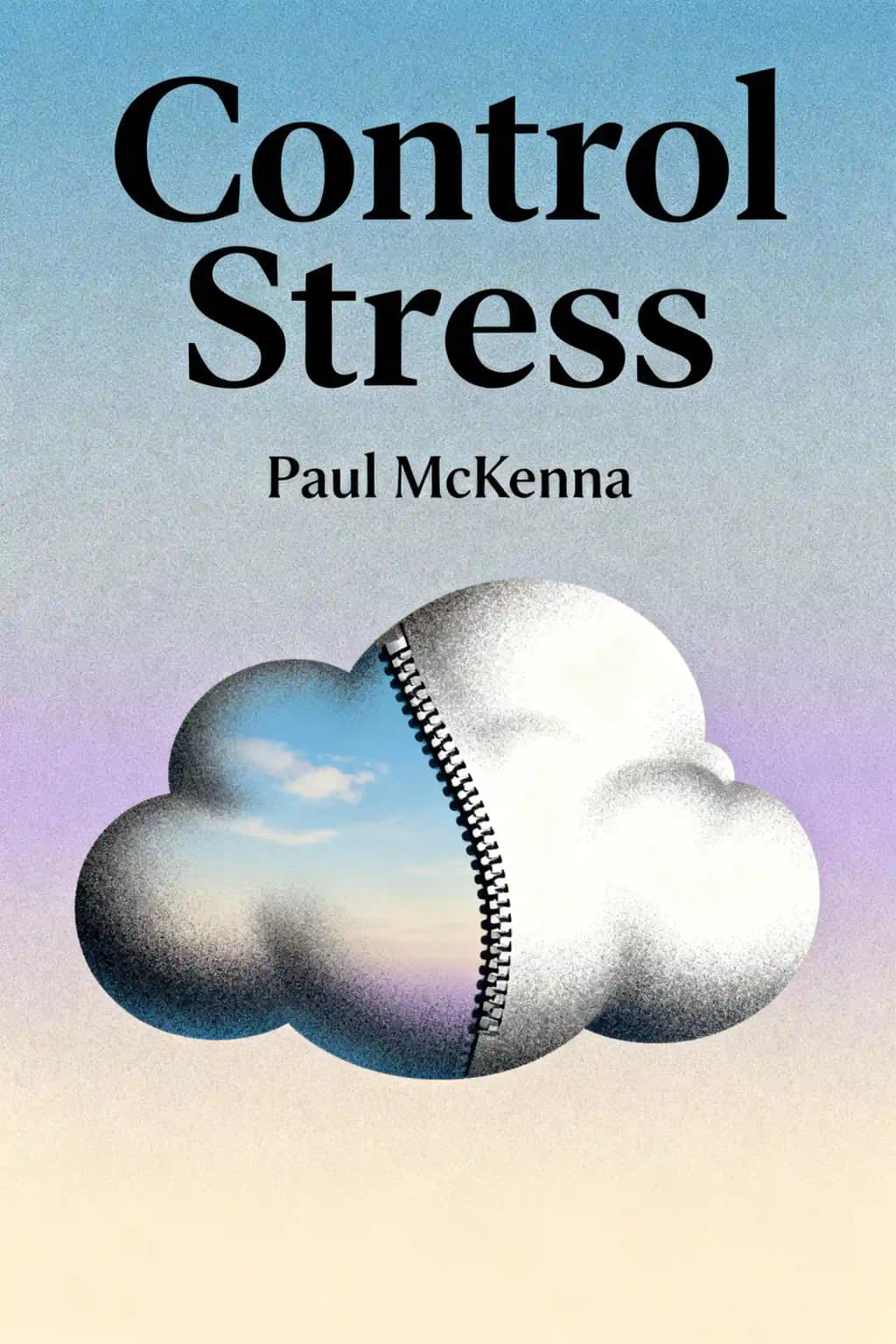
Stressed out? Paul McKenna's revolutionary guide has helped millions reclaim calm through science-backed techniques. Used by Olympic athletes and Hollywood stars, this bestselling system combines cognitive restructuring with heart-brain connection - proving stress is merely perception, not reality. Your transformation begins now.
Paul McKenna, PhD, the internationally bestselling author of Control Stress, is renowned as the world’s leading hypnotist and behavioral scientist specializing in stress reduction, mental resilience, and personal transformation.
A pioneer in hypnosis, neuro-linguistic programming (NLP), and amygdala-based therapies, McKenna combines cutting-edge psychological techniques with practical strategies for managing modern stressors.
The UK’s most successful non-fiction writer, his influential titles like I Can Make You Thin (the bestselling self-help book in British history) and I Can Make You Happy have sold over 10 million copies across 32 languages.
His transformational methods have been featured on The Ellen DeGeneres Show, Good Morning America, and his Discovery Channel series, while his Hulu show McKENNA interviews leaders like Tony Robbins.
Recognized by The Times of London as one of the world’s most important modern self-help gurus, McKenna’s stress management systems are trusted by Fortune 500 companies and Olympic athletes alike.
Control Stress provides a scientifically-backed system combining psychological techniques, hypnosis, and relaxation practices to manage stress. Based on 25+ years of research, it teaches readers to reframe stress responses, achieve instant calm, and improve decision-making. Includes a free hypnosis download to reinforce mental resilience. The book aims to enhance immunity, stamina, and overall life quality through actionable strategies.
Ideal for anyone experiencing chronic stress, anxiety, or burnout—especially those facing work-related pressures. It’s valuable for readers seeking drug-free solutions, improved emotional control, or methods to boost productivity. Paul McKenna’s approach suits individuals open to hypnosis and cognitive-behavioral techniques for long-term stress management.
Yes, with 5-star reviews praising its practicality, the book offers immediate tools like the hypnosis audio to reduce anxiety. Readers report feeling calmer, more empowered, and better equipped to handle life’s challenges. Its blend of written guidance and audio reinforcement makes it stand out among self-help resources.
Key methods include:
The audio uses guided hypnosis to induce deep relaxation, helping listeners internalize the book’s lessons subconsciously. Designed to reduce cortisol levels and reinforce positive mental habits, it complements daily reading. Users describe it as a “game-changer” for maintaining long-term emotional balance.
Yes—McKenna’s system targets both situational and chronic anxiety by addressing root cognitive patterns. Reviews note reduced panic attacks and improved coping mechanisms. His 30+ years of clinical success with anxiety disorders add credibility to the methods.
Key benefits include:
Many report feeling calmer after the first hypnosis session. Full mastery of techniques takes 2-4 weeks of practice. The book emphasizes “instant calm” tools for immediate use during crises.
Yes—it specifically references economic uncertainty and job-related pressures. Strategies include compartmentalizing work stress, maintaining focus during deadlines, and preventing burnout through mindset shifts.
Unique for integrating hypnosis with traditional CBT, it offers a multi-sensory solution. Unlike purely analytical guides, this system leverages subconscious reprogramming—a signature of McKenna’s 30-year career as a hypnotherapy pioneer.
Yes, including:
Practical tools include:
While his earlier works focus on habits like quitting smoking, this targets stress holistically. It expands on concepts from I Can Make You Sleep but adds new hypnosis protocols tailored for modern anxiety triggers.
通过作者的声音感受这本书
将知识转化为引人入胜、富含实例的见解
快速捕捉核心观点,高效学习
以有趣互动的方式享受这本书
Stress has become an epidemic.
Many people have been stressed for so long they've normalized it.
Life is not a marathon-it is a series of sprints.
Our thoughts directly affect how our bodies feel.
将《Control Stress》的核心观点拆解为易于理解的要点,了解创新团队如何创造、协作和成长。
将《Control Stress》提炼为快速记忆要点,突出坦诚、团队合作和创造力的关键原则。

通过生动的故事体验《Control Stress》,将创新经验转化为令人难忘且可应用的精彩时刻。
随心提问,选择声音,共同创造真正与你产生共鸣的见解。

"Instead of endless scrolling, I just hit play on BeFreed. It saves me so much time."
"I never knew where to start with nonfiction—BeFreed’s book lists turned into podcasts gave me a clear path."
"Perfect balance between learning and entertainment. Finished ‘Thinking, Fast and Slow’ on my commute this week."
"Crazy how much I learned while walking the dog. BeFreed = small habits → big gains."
"Reading used to feel like a chore. Now it’s just part of my lifestyle."
"Feels effortless compared to reading. I’ve finished 6 books this month already."
"BeFreed turned my guilty doomscrolling into something that feels productive and inspiring."
"BeFreed turned my commute into learning time. 20-min podcasts are perfect for finishing books I never had time for."
"BeFreed replaced my podcast queue. Imagine Spotify for books — that’s it. 🙌"
"It is great for me to learn something from the book without reading it."
"The themed book list podcasts help me connect ideas across authors—like a guided audio journey."
"Makes me feel smarter every time before going to work"

免费获取《Control Stress》摘要的 PDF 或 EPUB 版本。可打印或随时离线阅读。
Ever notice how a car alarm blaring at 3 AM gets your heart racing, even though you know it's probably just a cat brushing against the bumper? Your body's stress response works exactly the same way-designed to protect you from real danger, but increasingly triggered by imagined threats. The problem isn't the alarm system itself; it's that we've become so accustomed to living with it constantly blaring that we've forgotten what silence sounds like. Here's what's really happening: your autonomic nervous system operates through two channels. The sympathetic nervous system floods your body with adrenaline when you face danger-perfect for escaping a charging bear. The parasympathetic nervous system does the opposite, slowing your heart and allowing recovery. But here's the catch: your nervous system can't distinguish between a bear and an angry email from your boss. Both trigger the same chemical cascade, except you can't physically run from an email. Those stress chemicals, designed to be burned through action, accumulate in your system like toxic sludge. Many of us have been marinating in this chemical soup so long we've normalized it, completely unaware that background anxiety isn't just "how life is." It's a malfunction-one we can fix.
