第 1 章
Marriage Begins With Expectations, Not Just Rings
When Les and Leslie Parrott married, they never anticipated their first year would be spent in therapy. Despite dating for six years and enjoying a nine-month engagement, they were blindsided by the challenges of merging two lives. Their story isn't unusual. Most couples invest thousands in perfect wedding ceremonies while neglecting marriage preparation itself. In fact, less than 20% of American marriages begin with any formal preparation, despite alarming statistics showing that 43% of today's marriages won't survive, with over 200,000 new marriages ending before their second anniversary.
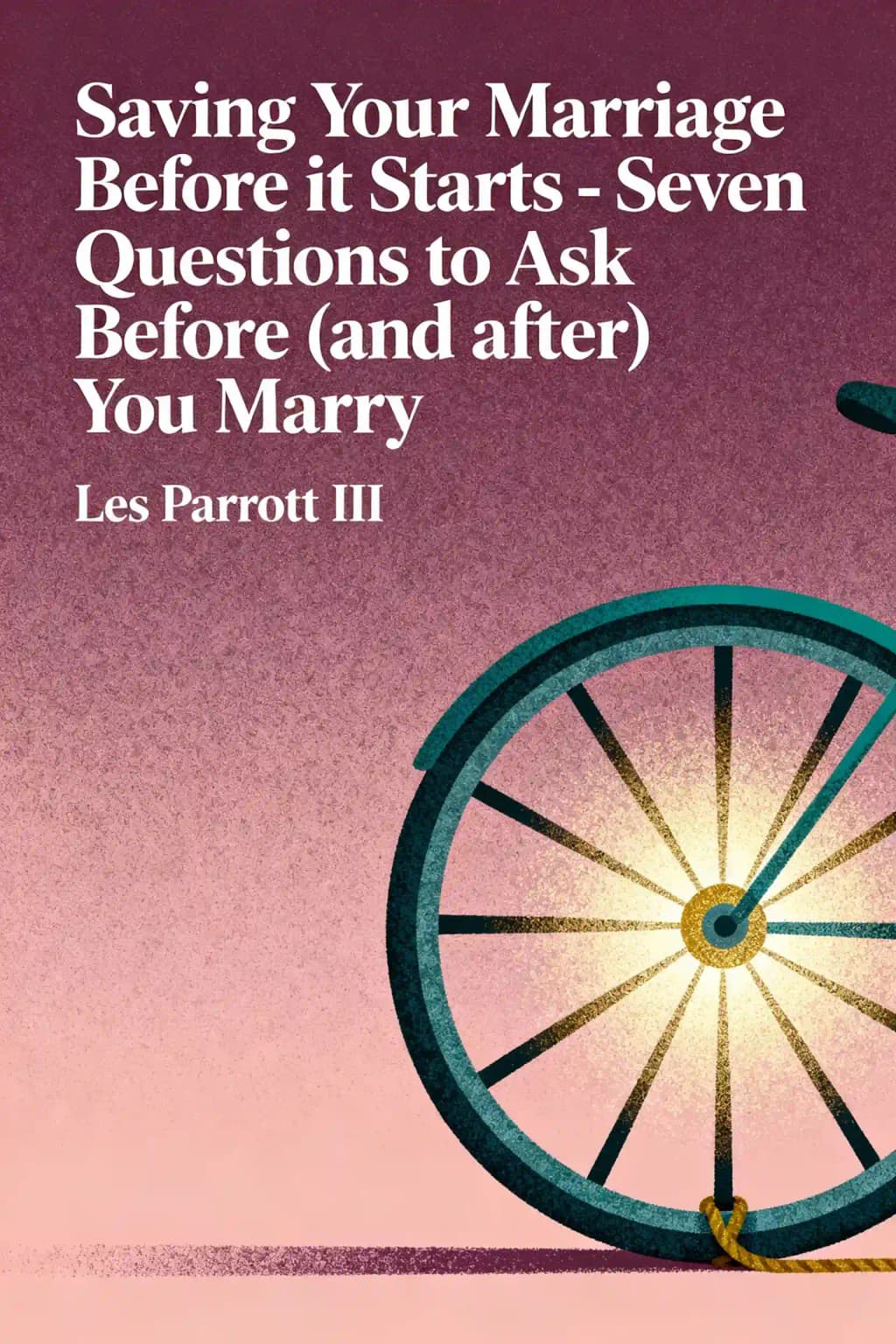
"Saving Your Marriage Before It Starts" has become a relationship phenomenon since its publication, selling millions of copies worldwide and being translated into over 15 languages. Celebrity couples like Justin and Hailey Bieber have publicly credited the book's principles for strengthening their marriage. The Parrotts' approach has revolutionized premarital counseling in thousands of churches and counseling centers, offering couples what Psychology Today called "the relationship equivalent of preventive medicine" by addressing seven fundamental questions every couple must answer before-and after-they marry.
第 2 章
Confronting Marriage Myths: The First Step to Success
Every couple enters marriage with unconscious expectations that can sabotage their relationship when reality fails to match their dreams. Four destructive myths particularly plague new marriages: assuming both partners expect exactly the same things, believing everything good will automatically improve, thinking everything bad will disappear, and expecting a spouse to make one whole.
Neil and Cathy illustrate the first myth perfectly. Neil envisioned marriage as providing stability after years of moving for his career, while Cathy expected marriage to bring excitement and adventure to her predictable life. Neither was wrong, but their unspoken expectations created immediate tension. We all bring unconscious "rules" from our families of origin into marriage. Les once violated Leslie's unspoken rule about maximizing family holiday time by sleeping in, creating conflict neither understood initially.
These hidden expectations manifest as "unspoken rules" and "unconscious roles" that partners assume the other person understands and accepts. Successful couples learn to identify their "personal ten commandments" and make their unconscious roles explicit. Who's the planner? Who manages money? Who navigates on trips? Without discussion, these assumptions become relationship landmines.
The second myth-that everything good automatically improves in marriage-ignores the necessary losses marriage requires. We give up certain freedoms, accept new limitations, and most significantly, lose the idealized image we have of our partner. The emotional honeymoon inevitably ends as we discover the real person behind our romantic projections. This disenchantment is actually necessary for deeper intimacy, as one divorce attorney observed: the primary reason couples split is they "refuse to accept the fact that they are married to a human being."
The third myth-that everything bad will disappear-stems from fairy tales like Cinderella. Despite recognizing this as fantasy, many people unconsciously marry to escape life's difficulties. However, marriage isn't a substitute for inner spiritual healing. It doesn't erase personal pain or eliminate loneliness. The uncomfortable truth is that the same problems and emotional baggage carried before marriage remain afterward.
The fourth myth-that a spouse will make one whole-builds on the notion that "opposites attract." While marriage can sharpen us like iron against iron, neither marriage nor our partner can magically complete us. Unhealthy marriages fall into either enmeshed (A-frame) relationships where partners are overly dependent, or disengaged (H-frame) relationships marked by isolation. True wholeness comes through interdependent (M-frame) relationships where two self-respecting individuals commit to nurturing both their own and their partner's growth.
第 3 章
Understanding Love's Architecture: Beyond Feelings
When asked what makes a good marriage, nearly 90 percent of people say "being in love." Yet defining love remains elusive. Is Chaucer right that "love is blind"? Or is it time to remove our blindfolds and examine love more clearly?
Robert Sternberg's "triangular model" provides clarity by showing that love has three essential components: passion, intimacy, and commitment. Passion forms the biological side-that spine-tingling sensation driving us toward romance. Initially overwhelming and even obsessive, passion eventually becomes incorporated into a fuller picture of love. Intimacy creates the emotional connection-having someone who knows us better than anyone else and still accepts us. Commitment provides the cognitive foundation-looking toward an unseen future with the promise to remain faithful until death.
Two people rarely mean the same thing when saying "I love you." John and Monica illustrate this perfectly. After fifteen months of marriage, they complained of "falling out of love." Monica needed verbal affirmation, while John believed his actions (bringing home a paycheck, fixing appliances) spoke louder than words. Both assumed their way of loving was what the other wanted, and both felt unloved because their styles were out of sync.
When the three components of love are balanced equally, they create what Sternberg calls "consummate love." When unbalanced, different styles emerge: romantic love (intimacy + passion), foolish love (passion + commitment), or companionable love (intimacy + commitment). Marriage falters not in achieving consummate love but in maintaining it as love styles change throughout the relationship.
Love also progresses through predictable stages: romance, power struggle, cooperation, mutuality, and co-creativity. During the romance stage, couples nearly forget they are unique individuals with separate identities. The power struggle emerges when differences become glaring and partners must learn to adjust. In cooperation, couples accept responsibility for personal problems rather than blaming their partner. Mutuality brings a secure sense of belonging despite occasional conflicts. Finally, co-creativity allows love to overflow into meaningful service to others.
Making love last requires deliberately cultivating each component. To nurture passion, successful couples practice meaningful touch, plan enjoyable experiences together, and offer daily compliments. For intimacy, they spend quality time together, listen with a "third ear" to feelings beyond words, practice unconditional acceptance, and explore spiritual terrain together. To strengthen commitment, they recognize its high value, meet each other's needs, honor their partner's promise, and make commitment part of their being.
第 4 章
The Habit of Happiness: Choosing Your Attitude
The key to a happy marriage isn't luck but willpower - developing the right attitude despite circumstances. Like a plane needing the correct attitude for landing regardless of weather conditions, couples must choose happiness regardless of external factors. This aeronautical metaphor extends further: just as pilots must constantly adjust their aircraft's position through active controls, couples must actively maintain their positive orientation through life's turbulence.
Les learned this profound lesson after comparing his modest student lifestyle with neighbors who seemed to "get all the breaks" with their nicer apartment, fashionable clothes, and new sports car. His self-pity created a negative mindset that affected everything - from his daily interactions with his wife to his outlook on their future together. The revelation came unexpectedly in statistics class when learning about binary computer processing. Understanding how computers process information as either positive or negative - much like the human brain - he realized he was programming himself for unhappiness by labeling circumstances negatively. This insight transformed not just his perspective but his entire approach to marriage.
Negative people mistakenly believe better circumstances would make them positive, but happiness doesn't depend on external factors. Through repetition and practice, we become either fundamentally positive or negative regardless of changing circumstances. Ron and Scott illustrate this perfectly: both married three years with good jobs and similar challenges, but their responses couldn't be more different. Ron maintains a positive outlook despite problems - finding humor in difficulties, expressing gratitude for small blessings, and viewing challenges as opportunities for growth. Scott, conversely, interprets everything negatively - from his wife's attempts at communication to their financial situation - ultimately destroying his marriage through persistent negativity.
UCLA researcher Dr. Allen Parducci's groundbreaking study discovered that traditional markers of success - money, professional achievement, health, beauty, intelligence, and power - contribute surprisingly little to a couple's happiness. Instead, "subjective well-being" comes from each partner's ability to adjust to circumstances beyond their control. This adaptability manifests in three key areas: accepting imperfect situations, finding meaning in challenges, and maintaining perspective during difficulties. Mary and Joseph's Christmas story exemplifies this capacity - facing an unexpected pregnancy, traveling during late pregnancy, and giving birth in a stable, they maintained faith and found joy despite their circumstances.
Three relationship poisons can bleed joy from even the strongest marriages: self-pity, blame, and resentment. Self-pity destroyed Rick and Jan's marriage when they constantly complained about their new pastorate - the "awful" church, the "small" parsonage, and their unappreciative congregation. Their focus on what was lacking prevented them from seeing opportunities for growth and connection. Blame shifts responsibility to avoid accountability, making it impossible to take ownership of one's attitude or actions. It manifests in phrases like "If only you had..." or "You always make me feel..." Resentment acts like cancer - at first small and imperceptible, but growing larger and spreading poison throughout the relationship as you ruminate about perceived injustices. Each remembered slight adds another layer of toxicity, gradually eroding trust and intimacy.
Living happily ever after isn't about depending on externals or viewing marriage as a lottery win. It requires active participation - taking the raw materials of your relationship and building something meaningful through daily choices and attitudes. The habit of happiness is an inside job: finding the right attitude despite circumstances, programming your mind with positive impulses, and adjusting to things beyond your control. Successful couples understand that happiness is a skill to be developed, not a condition to be discovered.
第 5 章
Communication: The Lifeblood of Marriage
Communication stands as the fundamental pillar that either elevates or erodes marital relationships. Extensive research consistently demonstrates that couples who excel in communication report remarkable levels of marital satisfaction - nearly 97% report being happily married. In stark contrast, only 56% of couples with poor communication patterns describe their marriages as satisfying. This dramatic difference underscores how our communication patterns, formed through childhood experiences and family dynamics, create unique "rules" that must be consciously renegotiated within marriage.
Silence, far from being neutral, operates as a potent negative communicator that can inflict deep emotional wounds. The underlying fear of emotional vulnerability often drives destructive communication patterns as partners instinctively protect themselves from feeling inadequate, exposed, or afraid. Renowned family therapist Virginia Satir identified four specific dysfunctional communication styles that emerge when people feel threatened: placating (constantly agreeing and apologizing to maintain peace, even at personal cost), blaming (deflecting personal responsibility and finding fault in others to avoid expressing genuine pain), computing (maintaining an overly logical, detached stance while suppressing emotional content), and distracting (changing topics or using humor inappropriately to avoid addressing conflict).
The most successful couples build their communication foundation not on mechanical techniques but on core personal qualities that foster authentic connection. Three essential characteristics form this foundation: warmth, genuineness, and empathy. Warmth manifests as deep acceptance - embracing your partner wholly, including their imperfections and idiosyncrasies. Genuineness reveals itself primarily through nonverbal channels, with body language accounting for 58% of the message and vocal tone conveying 35%, while actual words comprise merely 7% of the communication impact. Empathy requires the challenging but crucial ability to temporarily set aside one's own perspective to truly understand your partner's emotional landscape and lived experience.
Five vital skills transform ordinary marital communication into extraordinary connection: First, replacing accusatory "you" statements with ownership-taking "I" statements fundamentally shifts the emotional dynamic. Second, practicing reflective listening means mirroring both content and emotion rather than rushing to problem-solve. Third, understanding and respecting gender-based communication differences - recognizing that women often use "rapport-talk" to build emotional connections while men typically prefer "report-talk" to exchange information and solve problems. Fourth, offering sincere, complete apologies when needed, including acknowledgment of harm and commitment to change. Fifth, utilizing physical touch as a powerful communicator - research shows appropriate touch can reduce stress hormones, lower blood pressure, and provide comfort when words prove insufficient.
The transformation from "You never listen to me!" to "I feel lonely when we don't have meaningful conversations" changes confrontational moments into opportunities for deeper understanding. Effective reflective listening requires active engagement with both the content and emotional undertones of your partner's message. For instance, when a spouse expresses frustration about a work situation, they often seek emotional validation ("I hear how frustrated and undervalued you're feeling") before practical solutions.
To navigate gender differences successfully, couples can benefit from explicitly labeling their communication needs. When a wife shares workplace challenges and her husband immediately offers solutions, she might say, "I'm looking for emotional support right now, not solutions," allowing him to adjust his response accordingly. Throughout all stages of marriage, physical touch remains a powerful communicator - whether through a gentle hand squeeze during difficult conversations, a comforting hug after a hard day, or simple physical presence during times of stress.
第 6 章
Bridging the Gender Gap: Celebrating Differences
Scientific research confirms significant biological differences between male and female brains, with women having stronger connections between hemispheres and men showing greater hemisphere separation. This neurological variance manifests in how each gender processes information and responds to stimuli. Women's enhanced inter-hemispheric communication enables better multitasking and emotional processing, while men's more compartmentalized brain structure facilitates focused, single-task concentration. Psychologically, women typically find their core identity through relationships and connections, while men derive theirs through independence and achievement - a fundamental difference that shapes countless interactions.
These inherent differences, when properly understood and respected rather than ignored or criticized, can lead to deeper marital intimacy. The key lies not in trying to change these differences but in learning to appreciate and work with them constructively. Research consistently reveals a fundamental distinction in focus: men typically orient toward achievement and problem-solving, while women prioritize relationships and emotional connection. This explains why romantic behaviors often evolve after marriage in predictable patterns.
Leslie's experience with Les becoming less overtly romantic after their wedding illustrates this dynamic perfectly. While Leslie initially interpreted this change as problematic, she came to understand that Les, like many men, approaches relationships pragmatically - focusing on long-term stability and tangible outcomes. His apparent decrease in romantic gestures didn't indicate decreased affection but rather reflected his shift toward demonstrating love through practical actions and future planning. Leslie, like many women, naturally emphasizes present emotional experiences and values connection for its own sake.
A wife's three most fundamental needs in marriage are to be cherished, known, and respected. When genuinely cherished, a woman feels secure enough to support her husband's independence without feeling threatened. Being known goes beyond surface-level understanding - it means having emotions validated and accepted without immediate attempts to "fix" them. Men often instinctively jump to problem-solving mode, while women typically seek emotional resonance first. Respect manifests as accepting her authentic self without attempting to change or manipulate her perspectives and needs.
A husband's core needs are equally important but distinctly different: admiration, autonomy, and shared activity. Admiration serves as a man's primary emotional fuel - while women often derive worth from their inherent being, men typically measure their value through achievements and contributions that require recognition. Gender differences in stress response are particularly notable - women tend to process stress through emotional engagement and verbal expression, while men typically become more focused and may temporarily withdraw, requiring personal space to process.
The importance of shared activities often surprises couples. Les's confession about solo skiing in Lake Tahoe - "it's just not the same as skiing with you" - revealed how deeply men value having their wives as recreational companions. This doesn't mean couples must share identical interests, but rather find creative ways to participate in each other's worlds. For marriages where interests differ significantly, wives can strategically cultivate shared activities by identifying elements of their husband's interests that they might find enjoyable, even if not their first choice. This approach helps build bridges while respecting natural differences.
第 7 章
Fighting the Good Fight: Conflict as Opportunity
Conflict in marriage is inevitable - no matter how deeply a couple loves each other, they will eventually disagree. Research shows 37 percent of newlyweds become more critical after marriage, and 30 percent report increased arguments within the first year. This shift often catches couples off guard, leading many to question their compatibility. But conflict, when handled properly, can actually deepen intimacy and strengthen bonds. In fact, how couples handle disagreements is far more important to marital survival than being in love or sharing common interests.
The surprising truth about marital conflicts is that they often erupt over seemingly minor issues rather than profound differences. Money consistently tops the list of conflict topics regardless of income level, with couples typically having opposing spending and saving styles. One partner might be a cautious saver while the other believes in living for the moment - creating tension in daily financial decisions. Financial disagreements are so crucial that 32 percent of married adults identify finances as the most important pre-marriage discussion topic, ahead of children, career goals, and religious values.
Dr. John Gottman's groundbreaking research has identified predictable patterns that unhappy couples follow during conflict, dubbed "The Four Horsemen of the Apocalypse": criticism (attacking personality rather than behavior, such as "You're so lazy" instead of "I need help with the dishes"), contempt (intentionally insulting your partner through mockery or hostile humor), defensiveness (refusing responsibility and deflecting blame), and stonewalling (withdrawing completely from interaction, often through silent treatment). These patterns are so reliable that Gottman's research can predict marital breakdown with 95% accuracy by observing these behaviors during a single 15-minute conversation.
Contrary to popular belief, conflict is natural and necessary in intimate relationships. Couples who avoid fighting often create what therapists call "devitalized marriages" where unresolved issues lead to "anger substitutes" like overeating, depression, chronic anxiety, or physical illness. Rather than representing a crisis, conflict offers an opportunity for growth - it's actually "the price you pay for deepening intimacy" and understanding each other better.
Extensive research by psychologists Howard Markman and Scott Stanley reveals that successful marriages aren't determined by whether couples argue, but by how they argue. Happy couples resolve disagreements without leaving emotional scars by following specific rules: don't run from strife; choose battles carefully (about 90 percent of issues can be overlooked without harm); define issues clearly without bringing up past grievances; state feelings directly using the "X, Y, Z" formula ("In situation X, when you do Y, I feel Z"); rate the intensity of feelings on a scale from 1 to 10 to maintain perspective; give up put-downs and character assassination; and don't dwell on unrelated complaints during arguments.
The most crucial factor in conflict resolution is not how arguments begin but how couples repair and exit them. Successful couples learn to de-escalate tensions through humor, compromise, or taking breaks when emotions run high. They make genuine attempts to understand their partner's perspective and validate their feelings, even while disagreeing. Though we all slip occasionally into poor communication patterns, following these "rules" helps transform potentially destructive conflicts into opportunities for deeper understanding and connection. The key is viewing disagreements not as threats to the relationship but as chances to grow closer through better mutual understanding.
第 8 章
Soul Mates: The Spiritual Dimension of Marriage
The spiritual dimension of marriage is the least discussed but most important aspect of a healthy relationship. True oneness isn't about sameness or equal division, but about nourishing the soul of your marriage. Scientific research confirms that tending to the spiritual dimension creates unbreakable bonds between couples.
Anne Frank's poignant diary entry expressing her deep longing for connection parallels the spiritual hunger within marriage. This restless aching exists at the center of all our lives, an insatiable longing that even good marriages can't fully quench. Despite doing everything right-communication work, conflict resolution-couples like Roy and Pauline still felt something missing. Their experience reveals that marriage isn't merely a machine needing maintenance but a supernatural bond requiring spiritual nourishment.
Marriage naturally reveals God in two significant ways: through faithfulness and forgiveness. Robertson McQuilkin exemplifies divine faithfulness in his devotion to his wife Muriel after her Alzheimer's diagnosis. Despite pressure to institutionalize her, he resigned his college presidency to care for her full-time, finding that her condition made her "more dear to me than ever." This covenant faithfulness reflects God's own character-our human faithfulness can only be sustained through God's model of faithfulness to us.
Forgiveness lies at the heart of marriage. Two people living together inevitably cause pain, sometimes innocently, sometimes not. Without forgiveness, resentment piles up until we blame our partners not just for their wrongdoing, but for our failure to forgive them. Human forgiveness works best for specific acts, not for who someone is. When we forgive our partners, we reveal God's love to them, free from condemnation.
Three classic spiritual disciplines can transform a marriage: worship, service, and prayer. Research confirms that couples who worship together even monthly increase their chances of staying married. Serving others as a team creates a powerful bond between partners. Whether sponsoring a child, practicing hospitality, or performing anonymous acts of kindness, shared service promotes humility, compassion, and intimacy.
Perhaps most surprisingly, couples who pray together report higher marital satisfaction and better sex lives. Research shows that frequency of prayer is a more powerful predictor of marital satisfaction than frequency of sexual intimacy. Married couples who pray together are 90 percent more likely to report higher satisfaction with their sex life than couples who don't pray together. Despite media stereotypes of religious couples as sexually prudish, prayerful couples experience greater intimacy.
The sacred secret to becoming soul mates is pursuing a mutual communion with God, as the aching urge to be connected soul-to-soul can only be quenched when spirits are joined by a greater Spirit. This spiritual dimension transforms marriage from a mere partnership into a sacred journey of growth, forgiveness, and profound connection that can withstand life's greatest challenges.






![[the-seven-principles-for-making-marriage-work-by-john-m-gottman:c0000] The Seven Principles for Making Marriage Work p1-1](/_next/image?url=https%3A%2F%2Fd1y2du6z1jfm9e.cloudfront.net%2Fassets%2Fpodcast%2Fpurple.png&w=1024&q=50)
![[the-seven-principles-for-making-marriage-work-by-john-m-gottman:c0001] The Seven Principles for Making Marriage Work p1-1](/_next/image?url=https%3A%2F%2Fd1y2du6z1jfm9e.cloudfront.net%2Fassets%2Fpodcast%2Fgreen.png&w=1024&q=50)