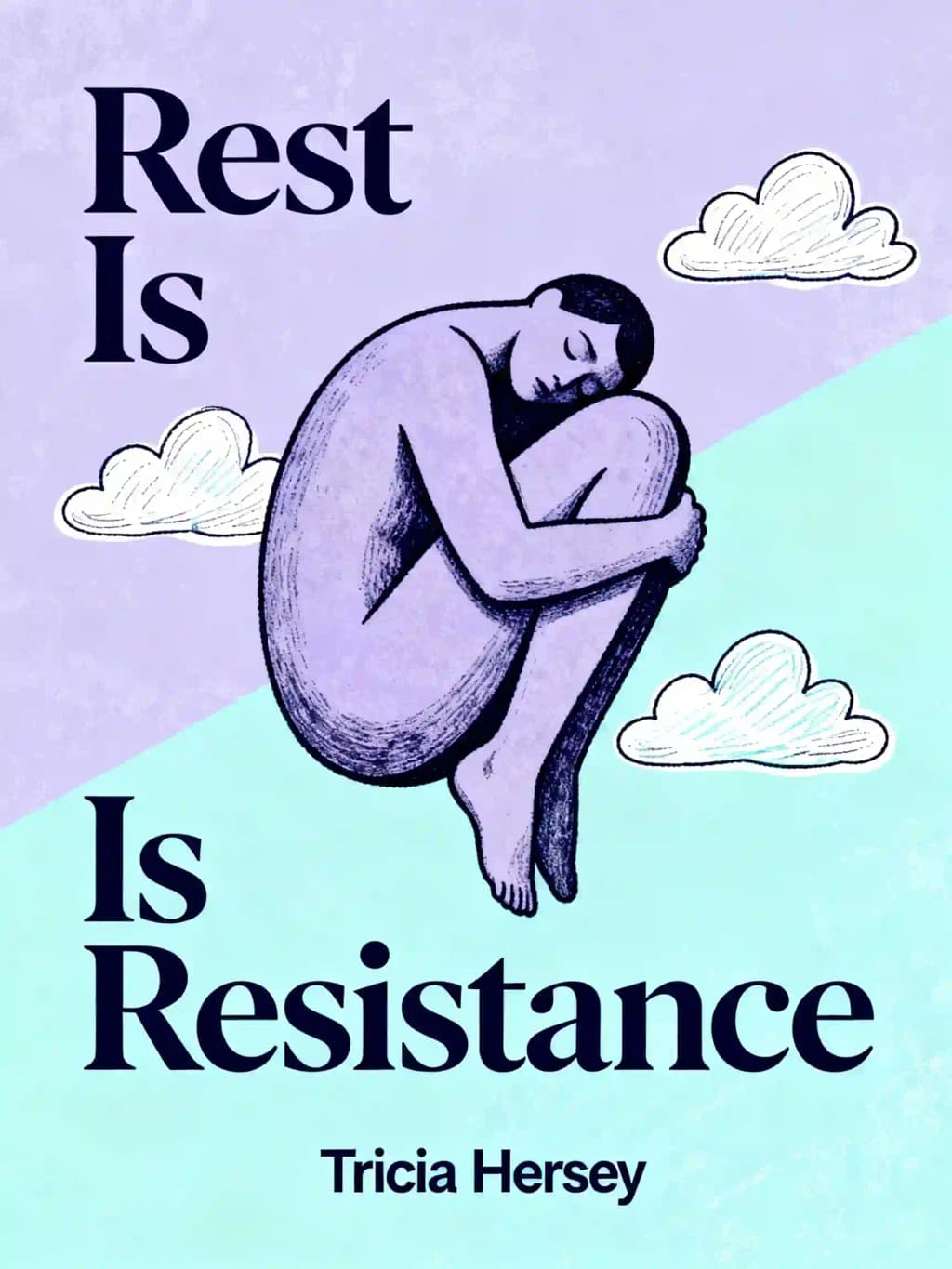
Rest Is Resistance : Free Yourself from Grind Culture and Reclaim Your Life
the INSTANT NEW YORK TIMES BESTSELLER
《Rest Is Resistance : Free Yourself from Grind Culture and Reclaim Your Life》概述
In "Rest is Resistance," Tricia Hersey - the revolutionary "Nap Bishop" - challenges our grind culture with a radical proposition: rest isn't lazy, it's liberation. Drawing from Black liberation theology, she's sparked a movement where napping becomes a powerful act of defiance against capitalism's relentless demands.

《Rest Is Resistance : Free Yourself from Grind Culture and Reclaim Your Life》核心主题
- grind culture critique
- rest as resistance
- black liberation theology
- capitalist exploitation
- reclaiming dreamspace
《Rest Is Resistance : Free Yourself from Grind Culture and Reclaim Your Life》经典语录
Rest saved my life.
Rest is resistance.
Our bodies are sites of liberation.
When we rest, we create freedom.
Every shut eye ain't sleep.
《Rest Is Resistance : Free Yourself from Grind Culture and Reclaim Your Life》主要人物
- Tricia HerseyAuthor and founder of The Nap Ministry
- Madison JeffersonEnslaved person who testified on labor conditions
- Tricia Hersey's grandmotherSource of ancestral wisdom on rest and sleep
- Tricia Hersey's sonMentioned regarding his birth and grind culture
关于作者
《Rest Is Resistance : Free Yourself from Grind Culture and Reclaim Your Life》作者介绍
Tricia Hersey is the New York Times bestselling author of Rest Is Resistance: A Manifesto and a pioneering voice in social justice advocacy through rest-based activism.
A multidisciplinary artist, theologian, and founder of The Nap Ministry, Hersey merges her background in public health (BS, Eastern Illinois University) and theology (MDiv, Emory University) to position rest as a radical act against systemic oppression, capitalism, and white supremacy.
Her work, rooted in Black liberation theology and Afrofuturism, has been featured in The New York Times, The Guardian, NPR, and Dutch Vogue, and she has presented at institutions like MIT, Brown University, and Google Global. She expanded her manifesto into the practical companion The Nap Ministry’s Rest Deck: 50 Practices to Resist Grind Culture.
With over 500,000 Instagram followers, Hersey’s viral “rest as reparations” framework redefines wellness through communal napping experiences and trauma-informed workshops. Rest Is Resistance debuted as an instant New York Times bestseller, solidifying her role as a leading critic of productivity culture.
下载《Rest Is Resistance : Free Yourself from Grind Culture and Reclaim Your Life》摘要
免费获取《Rest Is Resistance : Free Yourself from Grind Culture and Reclaim Your Life》摘要的 PDF 或 EPUB 版本。可打印或随时离线阅读。
关于本书的常见问题
Rest Is Resistance advocates for rest as a radical act of defiance against grind culture, capitalism, and systemic oppression. Tricia Hersey, founder of The Nap Ministry, frames rest as essential for Black liberation, spiritual healing, and reclaiming autonomy. The book blends personal stories, Afrofuturism, and historical resistance (like American maroons) to argue that prioritizing rest disrupts exploitative systems and fosters creativity.
This book is for activists, burnout survivors, and anyone feeling trapped by productivity-centric culture. It resonates with those interested in social justice, Black liberation theology, or holistic well-being. Hersey’s manifesto also appeals to communities impacted by systemic exhaustion, offering a framework to reimagine rest as a collective practice.
Yes—it became a New York Times bestseller for its transformative perspective on rest as political resistance. Readers praise its blend of lyrical prose, historical analysis, and actionable philosophy. While it avoids step-by-step guides, its focus on mindset shifts makes it a vital resource for dismantling internalized grind culture.
Hersey traces rest deprivation to slavery’s legacy, where enslaved Africans were systematically denied sleep. She positions rest as reparations, healing racialized trauma by reconnecting with ancestral wisdom. For Black communities, rest becomes a tool to resist white supremacy and reclaim autonomy over time, bodies, and creativity.
Grind culture is the oppressive belief that self-worth hinges on productivity. Hersey condemns its ties to capitalism, arguing it perpetuates exhaustion, especially among marginalized groups. The book urges readers to reject efficiency metrics and instead embrace rest as a revolutionary act of self-preservation.
Imagination is framed as a liberation tool, enabling readers to envision futures free from grind culture. Drawing on Afrofuturism and figures like Harriet Tubman, Hersey encourages daydreaming and communal visioning as acts of resistance against oppressive systems.
Hersey emphasizes interdependence, advocating for collective rest spaces (like The Nap Ministry’s “napping experiences”) to foster solidarity. She argues that community care disrupts individualism perpetuated by capitalism, creating networks of support grounded in mutual healing.
“Rest as reparations” acknowledges historical injustices like slavery, using rest to heal generational trauma. “Rest as resistance” involves rejecting productivity demands to affirm one’s humanity. Both concepts position rest as a political act challenging systemic exploitation.
While avoiding rigid formulas, Hersey suggests practices like napping, mindfulness, and unplugging from technology. She encourages listeners to trust their body’s wisdom and create personalized rest rituals, as seen in The Nap Ministry’s Rest Deck of 50 restorative activities.
Hersey’s work as a poet, theologian, and community organizer informs the book’s blend of artistic storytelling, Black liberation theology, and activism. Her public health and divinity degrees shape its holistic approach to systemic change.
Some readers note the book prioritizes philosophy over practical steps, which may challenge those seeking quick fixes. However, this aligns with Hersey’s rejection of “convenience-style” solutions, urging deeper cultural unlearning.
The book expands on The Nap Ministry’s mission, which Hersey founded in 2016 to promote rest through collective napping, workshops, and art. Both the book and the organization frame rest as a spiritual practice and form of grassroots activism.