第 1 章
The Man Who Changed America's Political Landscape
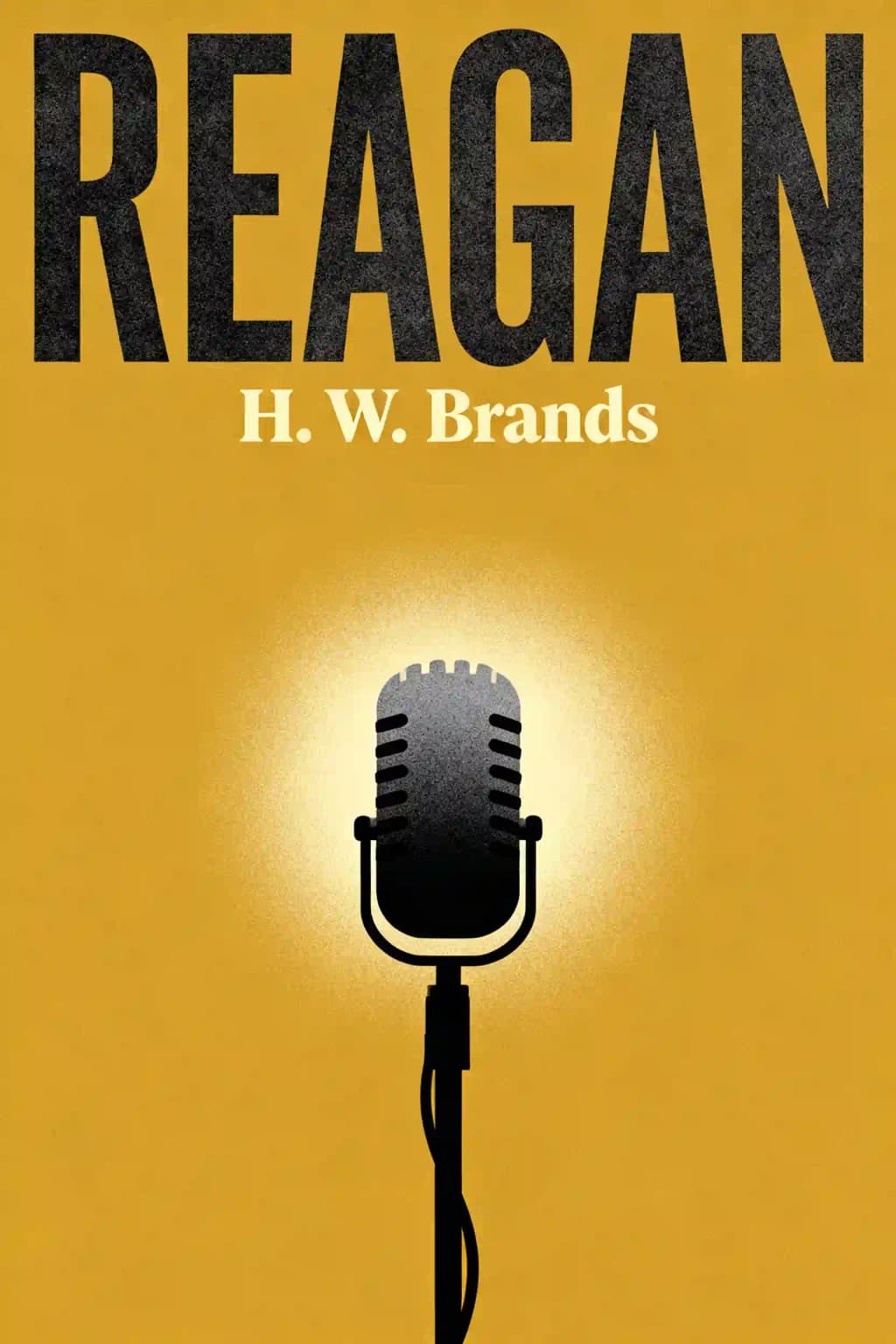
Ronald Reagan's story is one of the most remarkable in American political history. From a small-town Illinois boy who found his confidence through performance to a two-term president who fundamentally reshaped American politics, Reagan's journey captivates both admirers and critics. "Reagan" by H.W. Brands offers a comprehensive look at this transformative figure whose influence extends far beyond his presidency. The book has become a favorite among political historians and has been cited by figures ranging from Barack Obama to Mitt Romney as essential reading for understanding modern conservatism. What makes this biography particularly compelling is how it reveals Reagan's evolution from New Deal Democrat to conservative icon while maintaining his fundamental optimism about America. As we navigate today's polarized political landscape, understanding Reagan's ability to communicate complex ideas with clarity and conviction remains more relevant than ever.
第 2 章
From Small-Town Boy to Hollywood Star
Reagan's formative years were defined by three elements: his father Jack's alcoholism, his mother Nelle's saintliness, and his discovery that making audiences laugh could counteract life's insecurities. At eleven, he found his father passed out drunk in the snow outside their home. After momentarily considering leaving him there, young Reagan dragged him inside. The family moved frequently across Illinois during Reagan's first decade before settling in Dixon when he was nine.
Unlike his socially adept older brother Neil, young "Dutch" Reagan struggled with frequent moves and athletic inadequacy. "I was forever the new kid in school," he remembered painfully. His confidence breakthrough came through performing at church recitals organized by his mother. "People laughed and applauded. That was a new experience for me and I liked it."
Reagan developed a love for stories - both reading them (Rover Boys, Tarzan, Frank Merriwell) and telling them. His ninth-grade English teacher B.J. Frazer encouraged his storytelling talent, having him read essays aloud to classmates. Frazer, who also ran the school's drama program, encouraged Reagan to try acting, which further boosted his confidence.
Years later, Reagan reflected that entertainment often attracts the insecure: "There's something about the entertainment world that attracts people who may have had youthful feelings of shyness or insecurity." Americans themselves, he observed, were like him - new kids seeking a common story to give their disparate experiences collective meaning.
At Eureka College, Reagan's football dreams fizzled - his coach put him on the fifth string, noting he was "nearsighted... couldn't see worth a damn." He found more success in drama and student politics. As freshman representative, Reagan delivered a rousing speech that launched a successful student strike against faculty layoffs. "I discovered that night that an audience has a feel to it and... that audience and I were together," he recalled decades later.
After graduation in 1932, during the Great Depression's darkest days, Reagan pursued radio announcing as a path to entertainment. At WHO radio in Des Moines, he covered sports with a 50,000-watt transmitter reaching across the Midwest. Often announcing games remotely, he would receive telegraphic summaries and transform bare statistics into vivid narratives. When technical malfunctions occurred, Reagan's improvisational skills shined - once keeping a Cubs-Cardinals game alive during a wire outage by inventing a record string of foul balls. His talent wasn't just reporting games but crafting compelling stories that captivated listeners' imaginations.
Despite radio success, Reagan yearned for Hollywood. Using his annual Cubs spring training coverage trips to California as opportunity, he made three attempts to break into film. His third visit in 1937 proved fortuitous when rain canceled baseball games, allowing him to meet former WHO colleague Joy Hodges, who arranged a meeting that led to a screen test and eventually a Warner Brothers contract at $200 weekly.
Reagan discovered a natural talent for film acting. "As soon as I heard the director's words, I forgot all about the camera and the lights and concentrated on delivering my lines," he recalled. His breakthrough came with "Knute Rockne," where he played George Gipp, producing the iconic line: "Some day when the team's up against it and the breaks are beating the boys, ask them to go in there with all they've got and win just one for the Gipper."
第 3 章
From Actor to Political Activist
Reagan's political awakening accelerated when he joined Hollywood organizations like the Hollywood Independent Citizens Committee of the Arts, Sciences, and Professions (HICCASP). At an executive council meeting, Reagan proposed the organization oppose both communism and fascism, only to be shocked by the vehement reaction from leftists who called him "fascist" and "Red-baiter." This meeting revealed the communist sympathies within Hollywood organizations, a revelation that Reagan later described as a turning point in his political education.
His involvement in the Screen Actors Guild deepened as Hollywood's labor wars intensified. When addressing hostile SAG members during a strike, Reagan presented research showing the dispute was purely jurisdictional rather than about improving working conditions. The next day, he received an anonymous threat that a group would "fix you so you won't ever act again," prompting Warner Brothers to arrange police protection and a gun license for him.
Reagan's testimony before the House Un-American Activities Committee in 1947 marked his first appearance on a national political stage. As Screen Actors Guild president, he acknowledged a "small clique" of suspected communists in the guild but emphasized they were consistently defeated by "90 percent or better" of members. When asked about appropriate steps against communism, Reagan defended industry self-regulation: "We have done a pretty good job in our business of keeping those people's activities curtailed." He cautioned against outlawing political parties based on ideology, concluding, "I still think that democracy can do it."
This was Reagan's first experience on such an openly political stage with a national audience - and he discovered he had a talent for it. Quick on his feet, he could read the room's mood and knew how to present himself to the cameras. He struck a perfect balance between cooperating with the investigation while defending his industry.
As Reagan's film career declined in the 1950s, he transitioned to television, hosting "General Electric Theater" and giving speeches at GE facilities across the country. During these tours, Reagan mastered retail politics, learning to win over skeptical audiences. His aide Earl Dunckel recalled how Reagan would charm women first, then deliberately approach standoffish male workers: "He would leave them and walk over to these fellows and start talking to them. When he left them ten minutes later, they were all slapping him on the back saying, 'That's the way, Ron.'"
The train travel Reagan preferred gave him time for reflection and reading. He consumed materials on American capitalism and free-market economics, collecting facts and anecdotes with "a magpie's eye" and "a storyteller's memory," impressing acquaintances with his encyclopedic knowledge.
第 4 章
A Time for Choosing: Reagan's Political Emergence
Reagan's political breakthrough came in 1964 when Barry Goldwater's failing presidential campaign turned to him as a last-minute surrogate. Reagan delivered a nationally televised address that generated $1 million in donations and instantly established him as the most attractive Republican in America. Though it couldn't save Goldwater's campaign, "A Time for Choosing" articulated the twin themes that would define Reagan's political career: smaller government at home and stronger defense abroad.
The speech positioned Reagan perfectly - not merely as Goldwater's surrogate, but as conservatism's spokesman. Goldwater's defeat, far from damaging Reagan, made him more appealing as a conservative standard-bearer. Reagan couldn't know his speech had launched one of America's most remarkable political careers - that he would become governor of California and twice president of the United States. He only knew that at a time when most career doors were closing, he had kicked a new one wide open.
By 1966, Reagan had become the "hottest prospect" for California's gubernatorial race against incumbent Democrat Pat Brown. Though Reagan faced challenges - his lack of political experience, his background as a Roosevelt Democrat, and his refusal to travel by plane - he had significant advantages: his television presence, Southern California base, and growing conservative following.
Reagan initially claimed he hoped to turn down any nomination but soon adjusted his stance, saying he "couldn't ignore the will of the people or the call of duty" despite his "personal desires." His campaign emphasized his character more than specific policy positions, with political columnist David Lawrence noting that "it is the character of the man, rather than the position he takes on public issues, which so often wins an election."
As governor, Reagan faced immediate challenges implementing his conservative vision. His simple approach of cutting state spending across the board by 10 percent antagonized everyone with a stake in government programs. Despite attempts to accommodate legislators with weekly dinners at the governor's residence, the cultural gap remained unbridgeable. Even with the 10 percent cuts, the budget wouldn't balance, and Reagan ultimately proposed tax increases totaling nearly $950 million - creating embarrassing headlines about a "RECORD TAX HIKE" just months after promising to "squeeze and cut and trim."
Reagan's most visible challenge came with student protests at Berkeley. When the "People's Park" confrontation erupted into violence in May 1969, Reagan deployed the National Guard and vigorously defended his actions, characterizing the protesters as "well prepared and well armed" revolutionaries. Despite faculty demands to lift the military occupation, Reagan stood firm, telling the Commonwealth Club that the riot was "no spontaneous eruption" but part of a pattern of violence.
第 5 章
The Path to the Presidency
After leaving the governorship, Reagan's radio commentaries became his most effective political platform. Radio allowed him to leverage his greatest strengths - his seductive voice and storytelling abilities. Unlike television, which would require visual accompaniment, radio let his words create mental images in listeners' minds, much like Roosevelt's Fireside Chats had done.
Reagan's commentary was overwhelmingly negative - the natural posture of conservatives since the New Deal. Despite his criticism of government waste and inefficiency, Reagan carefully avoided calling for elimination of specific popular programs like Social Security or Medicare. He sounded negative, certainly, but also increasingly like a candidate preparing for another run.
Reagan's 1976 primary challenge to incumbent President Gerald Ford fell short, but positioned him for 1980. With Carter's presidency struggling amid economic "stagflation" and foreign policy failures like the Iran hostage crisis, Reagan's timing couldn't have been better. His campaign emphasized restoring America's standing in the world and reviving the economy through tax cuts and deregulation.
The 1980 campaign showcased Reagan's political talents, particularly during debates. When George Bush challenged Reagan in the primaries, scoring an upset in Iowa, Reagan rebounded in New Hampshire after a memorable debate moment where he seized control by declaring "I'm paying for this microphone!" when the moderator tried to silence him. Against Carter, Reagan's famous "There you go again" line and closing question "Are you better off than you were four years ago?" cemented his advantage.
Reagan won a landslide victory with 51% of the popular vote to Carter's 41%, carrying 44 states and 489 electoral votes. His inauguration speech on January 20, 1981, captured his governing philosophy with the famous declaration: "In the present crisis, government is not the solution to our problem; government is the problem."
第 6 章
The Reagan Revolution Takes Shape
Reagan's presidency began with bold economic initiatives. Breaking with traditional conservative fiscal philosophy, Reagan proposed cutting taxes before reducing spending - crossing an economic Rubicon. While mentioning vague spending cuts "in virtually every department," he specifically called for a 10 percent reduction in personal income tax rates for each of the next three years. He framed his program as America's last chance to restore prosperity and freedom, warning that judgment day could no longer be delayed.
The administration's economic team, led by budget director David Stockman and Treasury Secretary Donald Regan, faced immediate challenges implementing this vision. Stockman proposed deep cuts across cabinet departments but encountered resistance even from Reagan's own appointees. Meanwhile, Defense Secretary Caspar Weinberger insisted on massive military spending increases, complicating budget-balancing efforts.
Reagan's economic program passed Congress with bipartisan support, cutting personal income tax rates, reducing the top rate to 50%, lowering capital gains taxes, and indexing tax rates to eliminate bracket creep. Reagan called it "the greatest political win in half a century" and "a turnaround of almost half a century" in government growth. Though the tax cuts were secure, the spending cuts remained vulnerable to future congressional resistance.
The administration faced an early test when air traffic controllers went on strike in August 1981. Reagan emphasized the crucial distinction between private and public sector strikes, drawing on his own union background: "I respect the right of workers in the private sector to strike... But we cannot compare labor-management relations in the private sector with government." He gave controllers 48 hours to return to work or lose their jobs. Many didn't believe him, but Reagan stood firm, decertifying their union and advertising for replacements. Within a week, three-quarters of flights were operating again.
Just months into his presidency, Reagan faced a near-fatal assassination attempt when John Hinckley shot him outside the Washington Hilton on March 30, 1981. Despite being seriously wounded with a collapsed lung, Reagan maintained his composure and humor, telling his wife "Honey, I forgot to duck" and joking to surgeons "I hope you are all Republicans." His recovery showcased his resilience and boosted his popularity, with approval ratings jumping to 68 percent - the highest they would ever reach.
第 7 章
Confronting the "Evil Empire"
In foreign policy, Reagan adopted a confrontational stance toward the Soviet Union, declaring in March 1983 that it was "the focus of evil in the modern world." His "evil empire" speech electrified his evangelical audience but divided the nation. While conservatives applauded his moral clarity in condemning communism, liberals criticized his rhetoric as counterproductive.
Reagan challenged the fundamental premise of nuclear deterrence - that mutual assured destruction was the best humanity could achieve. "I've become more and more deeply convinced that the human spirit must be capable of rising above dealing with other nations and human beings by threatening their existence," he declared. What Reagan proposed was the Strategic Defense Initiative (SDI) - defensive technologies to shield America from nuclear attack. Though acknowledging this was a formidable task that might not be accomplished before century's end, he believed it worth every investment to free the world from nuclear threats.
Reagan was entirely serious about strategic defense, but he was also aware it would capture the attention of Soviet leadership during a time of transition. Following the KAL 007 tragedy, when the Soviets shot down a Korean passenger jet, Reagan orchestrated a response that would maximize damage to Soviet prestige while benefiting the United States. His rhetoric was harsh - calling it "an act of barbarism" - but his substantive measures were modest.
This approach proved remarkably effective. Reagan maintained America's moral high ground while leaving the door open for future negotiations with Soviet leaders, who he believed paid more attention to deeds than words.
Reagan's approach to the Middle East proved less successful. After initially supporting Israel's 1982 invasion of Lebanon, Reagan found himself drawn into a complex regional conflict he didn't fully understand. The bombing of the American embassy in Beirut underscored the dangers of involvement in Lebanon and drove Reagan to intensify his efforts. Despite Reagan's attempts at mediation, Lebanon's factional war intensified. Though he considered himself an honest broker, American support for the Lebanese government and Israel made U.S. marines targets. When they came under artillery attack in August 1983, Reagan authorized naval bombardment from the battleship New Jersey, effectively putting America in the war. This escalation culminated in tragedy when a suicide bomber crashed a truck into the marine barracks, killing 241 American servicemen.
Hours after the Beirut bombing, Reagan launched the invasion of Grenada. Concerned about hundreds of American medical students on the island who might become hostages, Reagan ordered a preemptive extraction. The operation proceeded in strict secrecy, with Reagan keeping Congress in the dark, fearing leaks would trigger predictions of "another Vietnam." The invasion succeeded swiftly, providing a much-needed foreign policy victory amid the Lebanon disaster.
第 8 章
The Gorbachev Factor
On March 11, 1985, Reagan learned of Konstantin Chernenko's death and Mikhail Gorbachev's ascension to power. The CIA had been watching Gorbachev closely, viewing him as a potential reformer who might address Soviet economic problems, reduce military spending, and ease U.S.-Soviet tensions.
Reagan, who had dismissed the potential of personal diplomacy with communist leaders before becoming president, grew confident in his ability to find common ground with foreign counterparts. After failed attempts to meet with Soviet leaders Brezhnev, Andropov, and Chernenko (who all died in succession), Reagan finally had an opportunity when Gorbachev indicated willingness to hold a summit.
As preparations began, Reagan immersed himself in "Soviet Union 101" - briefing papers on Soviet politics, economics, and culture. He proved an eager student, particularly interested in understanding "what makes this Gorbachev fellow tick" and connecting with the human aspects of Soviet society rather than abstract geopolitics.
On the eve of the Geneva summit, Reagan composed a rare personal memo revealing his nuanced assessment of Gorbachev. He viewed the Soviet leader as highly intelligent but traditionally Soviet in his goals - seeking arms control primarily to reduce economic burdens rather than from ethical conviction. Reagan identified the struggling Soviet economy as Gorbachev's weakness, potentially forcing concessions on arms, particularly regarding SDI.
The Geneva summit in November 1985 established a working relationship between the two leaders, though they remained at odds over SDI. Reagan introduced strategic defense as a potential solution to nuclear threats, framing it as a defensive system that could eventually be shared with everyone, including the Soviets. Gorbachev forcefully countered Reagan's SDI proposal, arguing that strategic parity already existed between the superpowers and that space-based weapons would trigger a dangerous new arms race.
Their relationship deepened at the Reykjavik summit in October 1986, where they came tantalizingly close to a historic agreement to eliminate nuclear weapons entirely. However, the summit ultimately collapsed over Reagan's refusal to confine SDI testing to laboratories for ten years as Gorbachev demanded. Despite this failure, the summit laid groundwork for future arms control agreements.
第 9 章
Scandal and Recovery
Reagan's second term was marred by the Iran-Contra scandal, which broke in November 1986. The administration had secretly sold arms to Iran in hopes of securing the release of American hostages in Lebanon, then diverted proceeds to fund the Nicaraguan Contras despite Congressional prohibitions. When the story became public, Reagan initially denied trading weapons for hostages: "Those charges are utterly false." He explained the Iran initiative as a strategic diplomatic effort to "renew a relationship with Iran," end the Iran-Iraq war, eliminate terrorism, and secure hostages' return.
As evidence mounted contradicting these claims, Reagan's credibility suffered. A Los Angeles Times poll showed only 14 percent of Americans believed Reagan was telling the truth. When the diversion of funds to the Contras was revealed, Reagan appeared genuinely shocked. According to Chief of Staff Donald Regan, the president "blanched" and "the color drained from his face," appearing as "the picture of a man to whom the inconceivable had happened."
The Tower Commission, appointed to investigate the scandal, faulted Reagan's management style and laid operational blame on National Security Advisers Robert McFarlane and John Poindexter, along with NSC staffer Oliver North. Reagan's testimony to the commission was problematic - at one point he embarrassingly read from a preparation memo, and later wrote a letter abdicating all reliability: "I don't remember-period."
The scandal led to the resignation of Chief of Staff Donald Regan, who had clashed repeatedly with Nancy Reagan. Howard Baker replaced Regan and helped stabilize the administration, allowing Reagan to refocus on foreign policy in his final years in office.
Despite the Iran-Contra scandal, Reagan achieved significant domestic policy victories in his second term, particularly tax reform. The 1986 tax reform reduced the top personal rate from 50% to 28% and the corporate rate from 46% to 34%, while eliminating many popular tax shelters and deductions but expanding standard deductions and personal exemptions. At the signing ceremony, Reagan dismissed the pessimists and celebrated the bipartisan achievement: "I feel like we just played the World Series of tax reform and the American people won."
第 10 章
The Cold War Thaws
Reagan's most enduring legacy came in his final years as president, as the Cold War began to thaw. Meeting with Gorbachev in Moscow for their final summit, Reagan broached the sensitive topic of religious freedom, suggesting that guaranteeing religious tolerance would dramatically improve Soviet-American relations. The summit's most significant moment came during a casual walk when a Muscovite asked Reagan if he still considered the Soviet Union an "evil empire." Reagan simply answered, "No."
This represented a profound shift in Reagan's worldview - he now saw Gorbachev as a partner rather than an adversary, telling reporters the change was "due to the general secretary, who I have found to be different than previous Soviet leaders." Returning home, Reagan wrote in his diary, "What can I say except 'Thank the Lord.'"
The December 1987 Washington summit had produced the Intermediate-Range Nuclear Forces (INF) Treaty, eliminating an entire class of nuclear weapons. This breakthrough agreement marked the beginning of the end of the Cold War, though Reagan would leave office before witnessing the fall of the Berlin Wall or the dissolution of the Soviet Union.
As Reagan's presidency neared its end, George Bush secured the Republican nomination to succeed him. At the Republican convention, Reagan was given center stage, delivering a masterful speech recounting his administration's achievements. The delegates responded with chants of "Reagan! Reagan! Reagan!" and even "Four more years!" Reagan concluded with stirring imagery about the "prairie fire" they had lit and promised to remain available as a "foot soldier" if needed.
第 11 章
Legacy and Final Years
Upon leaving the White House, Reagan quickly capitalized on his presidential experience, commanding $50,000 per speech through a speakers' bureau. His fees sometimes went much higher - notably a $2 million payment for speaking in Japan on behalf of Sony's acquisition of Columbia Pictures. He also signed a $5 million book deal with Simon & Schuster for a memoir and a second unspecified book.
Reagan celebrated his eightieth birthday in February 1991 with a star-studded gala at the Beverly Hilton. Nearly a thousand guests from Hollywood and Washington paid up to $2,500 each to honor him at this event, which doubled as a fundraiser for the Reagan Library foundation. Margaret Thatcher traveled from London to toast her old friend, quoting Reagan's reference to FDR's "rendezvous with destiny" speech.
Reagan's memory was failing severely. During testimony before the Walsh commission investigating Iran-contra, he struggled with even basic facts about his presidency. "It's like I wasn't president at all," Reagan admitted in frustration. Nancy eventually had Reagan thoroughly examined, and in November 1994, he announced his Alzheimer's diagnosis to the American people in a poignant letter, concluding, "I now begin the journey that will lead me into the sunset of my life."
By Reagan's centennial in 2011, his legacy had crystallized. Analysts compared him to Franklin Roosevelt, noting that what Roosevelt had been to the first half of the twentieth century, Reagan was to the second: Roosevelt launched the age of liberalism and defeated fascism; Reagan revived conservatism and set communism on the path to extinction.
Reagan's success stemmed from his ability to restore Americans' faith in their country. His persuasiveness came not from acting but from genuine conviction about America's greatness. He focused relentlessly on shrinking government at home and defeating communism abroad. His pragmatism enabled him to pursue conservative ends through flexible means - accepting tax increases when necessary and forging alliances with communist leaders despite his ideological opposition.
Of his two major goals, Reagan fully accomplished defeating communism while partially achieving smaller government - cutting taxes and regulations but failing to cut spending. His optimistic belief that "for America there will always be a bright dawn ahead" remained his enduring message even as the shadow of his own forgetfulness grew longer.
第 12 章
The Great Communicator's Enduring Impact
Reagan's transformation from a small-town Midwestern boy to Hollywood actor to conservative icon represents one of the most remarkable journeys in American political history. His ability to articulate complex ideas in simple, compelling ways earned him the title "The Great Communicator" and fundamentally changed how presidents connect with the American people.
What made Reagan exceptional wasn't just his communication skills but his unwavering optimism about America's future. Even when confronting serious challenges - economic recession, Cold War tensions, or political scandals - Reagan maintained his belief in America's essential goodness and capacity for renewal. This optimism wasn't merely rhetorical; it shaped his approach to governance and international relations.
Reagan's legacy remains contested, with conservatives celebrating his tax cuts and Cold War victory while progressives criticize his social policies and economic inequality. Yet even his critics acknowledge his transformative impact on American politics. The Reagan Revolution fundamentally shifted the political landscape, making conservative principles mainstream and forcing Democrats to adapt their approach to governance.
Perhaps Reagan's most significant contribution was restoring Americans' faith in themselves after the tumultuous 1970s. When he declared "It's morning again in America" in 1984, he tapped into a profound desire for national renewal. His ability to make Americans feel good about their country again, despite its imperfections, remains his most powerful and enduring legacy.