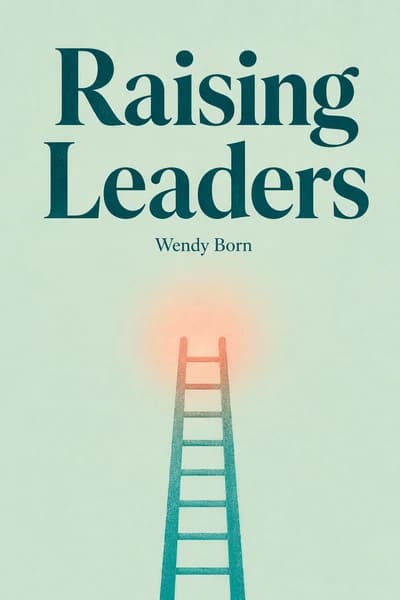
Raising Leaders
Using the Principles of Parenting at Work to Become a Great Leader and Create Great Leaders
《Raising Leaders》概述
In "Raising Leaders," leadership expert Wendy Born reveals the surprising parallels between parenting and workplace leadership. Endorsed by cricket legend John Buchanan, this guide shows why compassionate leaders outperform peers by 500% - transforming both families and corporations through love, language, and vision.
《Raising Leaders》核心主题
- parenting leadership parallels
- nurturing workplace culture
- empathetic management
- holistic talent development
- visionary team building
《Raising Leaders》经典语录
A healthy team is a productive team.
Your words shape the reality of those you lead.
Love might seem like an unusual concept to bring into the workplace, but I assure you, it's essential.
Remember, leadership, like parenting, is not about perfection.
Are you ready to raise leaders?
《Raising Leaders》主要人物
- Wendy BornAuthor, parent, and leadership consultant
下载《Raising Leaders》摘要
免费获取《Raising Leaders》摘要的 PDF 或 EPUB 版本。可打印或随时离线阅读。
关于本书的常见问题
Raising Leaders explores how parenting principles like empathy, patience, and fostering growth apply to effective leadership. Wendy Born argues that nurturing teams mirrors raising children, emphasizing psychological safety, trust-building, and long-term development. The book blends case studies, leadership frameworks, and actionable strategies to help leaders inspire resilience and accountability.
New parents, managers transitioning to leadership roles, and mentors shaping future leaders will benefit most. It’s ideal for those seeking to balance empathy with productivity or foster innovation through psychological safety. Born’s insights also resonate with HR professionals designing leadership training programs.
The book highlights four core ideas:
- Parenting parallels: Using patience and guidance to develop teams.
- Psychological safety: Creating environments where risks and failures lead to growth.
- Long-term mindset: Prioritizing sustainable development over short-term wins.
- Accountability through trust: Building mutual respect to drive responsibility.
Born emphasizes that psychological safety—modeled after nurturing parenting—enables teams to innovate without fear of judgment. Leaders are encouraged to replace micromanagement with mentorship, fostering open communication and iterative learning. Case studies show how this approach reduces turnover and boosts creativity.
Unlike tactical guides, it reframes leadership as a holistic, human-centric practice. Born’s unique “parenting at work” framework merges emotional intelligence with strategic decision-making, offering tools to balance support and accountability. The focus on long-term team development sets it apart from results-driven manuals.
Yes. Strategies include:
- Conducting “safety check-ins” to gauge team comfort.
- Delegating tasks to encourage ownership.
- Using failure as a teaching moment.
- Aligning individual growth with organizational goals.
Each chapter includes exercises for immediate implementation.
It expands on themes from her prior book, The Languages of Leadership, by adding parenting-inspired techniques. Both emphasize communication and adaptability, but Raising Leaders specifically integrates family dynamics into professional leadership development.
Yes. Born’s emphasis on trust and autonomy applies well to remote settings. Tips include virtual “psychological safety audits,” asynchronous feedback loops, and fostering connection through mentorship rather than surveillance—key for distributed teams.
Case studies feature companies that reduced turnover by 30% through mentorship programs, startups that scaled using “failure debriefs,” and leaders who improved diversity by modeling inclusive parenting behaviors. Born also shares personal anecdotes from her 25-year career.
Born cites psychology studies on attachment theory, organizational behavior research from Harvard, and data on psychological safety from Google’s Project Aristotle. The blend of academic rigor and practical experience strengthens its credibility.
Success is measured by team resilience, innovation, and the ability to self-direct. Born argues that great leaders “work themselves out of a job” by empowering others to lead independently—a concept rooted in effective parenting.
Some reviewers note the parenting analogy may oversimplify complex workplace dynamics. However, Born addresses this by providing adaptable frameworks for diverse organizational cultures, ensuring relevance beyond traditional hierarchies.