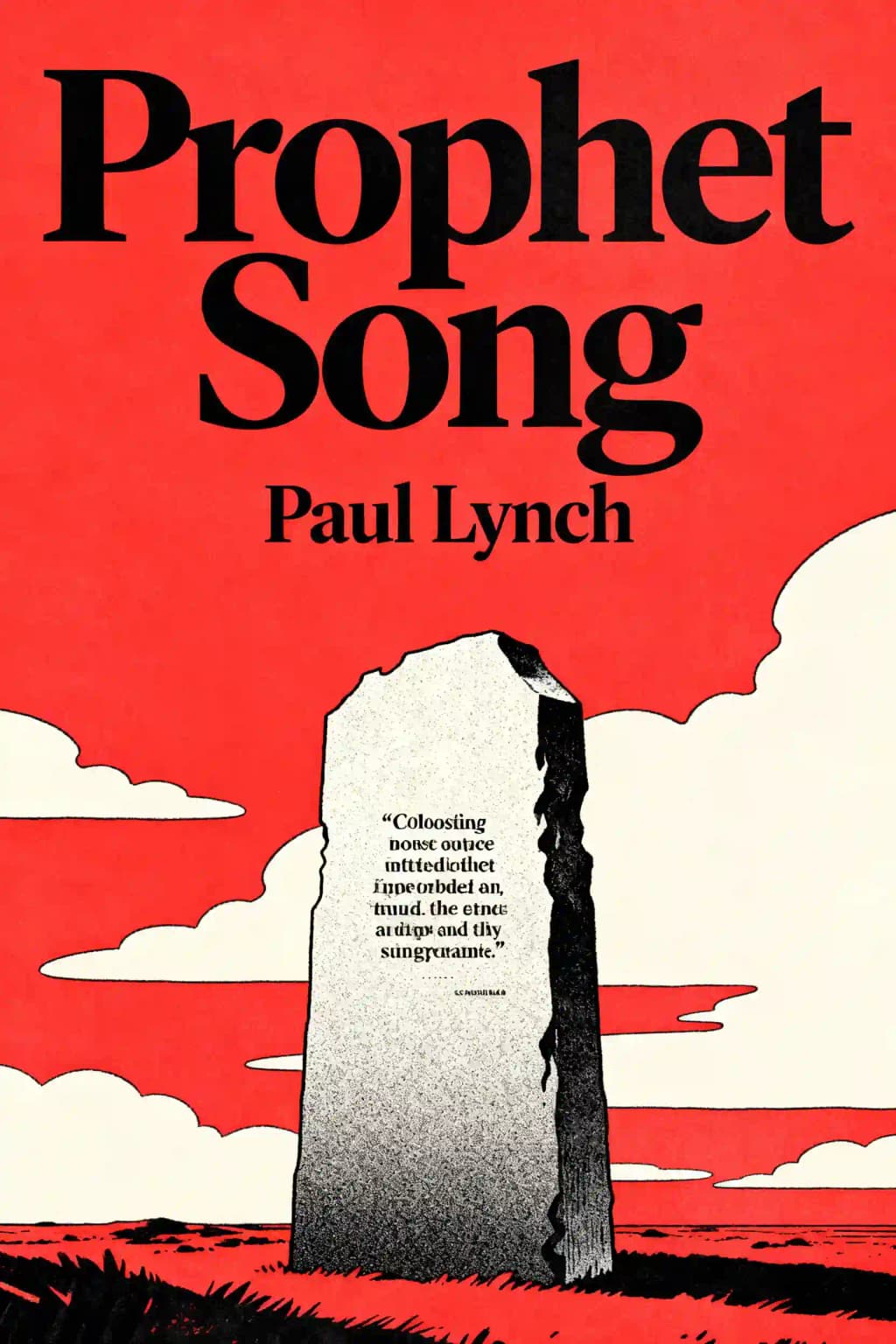
In "Prophet Song," Paul Lynch's Booker Prize-winning masterpiece creates a terrifyingly believable Ireland descending into totalitarianism. This breathless, claustrophobic narrative - praised as "a literary manifesto for empathy" - forces us to confront our indifference toward refugee crises worldwide.
Paul Lynch is the Booker Prize-winning Irish author of Prophet Song, a harrowing dystopian novel exploring the collapse of democracy and the human cost of political upheaval. Born in Limerick in 1977 and raised in County Donegal, Lynch is celebrated for his lyrical, poetic prose style, drawing comparisons to literary masters like Cormac McCarthy and William Faulkner.
Before turning to fiction, he served as chief film critic for Ireland's Sunday Tribune, reviewing over a thousand films and developing his signature narrative intensity.
Lynch has published five acclaimed novels, including Grace, which won the Kerry Group Irish Novel of the Year, and Beyond the Sea, winner of France's Prix Gens de Mers. In 2024, he was appointed Distinguished Writing Fellow at Maynooth University and elected to Aosdána, Ireland's academy of arts.
Prophet Song won the 2023 Booker Prize and the Dayton Literary Peace Prize, with the jury calling it "soul-shattering." His novels have been translated into over 40 languages worldwide.
Prophet Song is a dystopian novel that follows Eilish Stack, a mother of four navigating her family's survival as Ireland descends into totalitarianism. After her husband Larry is arrested for being a labor union organizer, Eilish struggles to protect her children while their familiar world crumbles into a war-torn wasteland. The novel charts Ireland's gradual transformation from a stable democracy into an authoritarian state through one family's harrowing experience.
Prophet Song is essential reading for those interested in dystopian fiction, political thrillers, and contemporary explorations of authoritarianism. Readers drawn to literary fiction with experimental narrative styles will appreciate Lynch's unconventional approach. The book particularly resonates with anyone seeking to understand refugee experiences, the erosion of democracy, or the complexities of maternal resilience under extreme circumstances. It's ideal for readers who can handle dark, emotionally intense, and anxiety-inducing narratives that reflect urgent global political realities.
Prophet Song is absolutely worth reading, having won the 2023 Booker Prize and becoming Ireland's bestselling book of 2023. The Booker Prize jury described it as "soul-shattering," while The Washington Post called it "a prophetic masterpiece." Lynch's masterful pacing and world-building create an unsettlingly realistic progression from normalcy to dystopia that feels entirely natural and profoundly relevant. Despite being dark and challenging, the novel offers crucial insights into how democracies fail and why recognizing warning signs proves difficult.
Paul Lynch is an Irish novelist born in Limerick in 1977 and raised in County Donegal, known for his poetic, lyrical writing style. He has published five novels and won multiple prestigious awards, including the 2023 Booker Prize for Prophet Song and the 2018 Kerry Group Irish Fiction Award. Before turning to fiction, Lynch served as chief film critic for Ireland's Sunday Tribune newspaper. His work draws comparisons to literary giants like William Faulkner, Cormac McCarthy, and Samuel Beckett, with novels translated into over 40 languages.
Prophet Song features a distinctive unconventional narrative style with run-on sentences, no paragraph breaks, and dialogue without quotation marks. Lynch's approach creates an immersive, stream-of-consciousness experience that mirrors the protagonist's mounting anxiety and psychological disintegration. This experimental technique has been described as "beautifully measured and solemn prose" that intensifies the novel's claustrophobic atmosphere. The lyrical yet raw style makes the dystopian descent feel visceral and immediate, contributing to what reviewers call one of the most anxiety-inducing reading experiences.
Prophet Song won the 2023 Booker Prize for its prophetic relevance, emotional intensity, and masterful depiction of how ordinary governments descend into totalitarianism. The jury praised its "soul-shattering" impact and Lynch's ability to make Ireland's gradual transformation into a dystopian state feel entirely natural and terrifyingly plausible. The novel's exceptional pacing ensures there are no drastic changes, yet readers feel the danger circling closer with each page. Lynch's intimate maternal perspective and experimental narrative style created what judges recognized as urgently relevant literature for our current political climate.
Paul Lynch stated that his primary inspiration was the Syrian Civil War, the resulting refugee crisis, and the West's indifference to refugee suffering. Lynch wanted to challenge the assumption that people would recognize and escape dangerous political situations, asking himself whether he would truly notice the signs in time. He deliberately set the dystopia in his own stable, liberal country of Ireland rather than a distant nation to demonstrate that even established democracies can collapse. German author Hermann Hesse's work also inspired Lynch to write his first dystopian novel.
Prophet Song explores the fragility of democracy and how totalitarianism emerges through gradual erosion rather than sudden coups. Central themes include:
The core message of Prophet Song is that totalitarianism can happen anywhere, even in stable parliamentary democracies, and recognizing warning signs proves far more difficult than we imagine. Lynch challenges the comfortable assumption that "we would have noticed" or "we would have left" by showing how life's complexity traps people in dangerous situations. The novel warns against denial and complacency while demanding empathy for refugees worldwide who face impossible choices. Ultimately, Lynch argues that no society is immune to democratic collapse and that understanding this vulnerability is essential for protecting freedom.
Prophet Song is not based on a specific true story but draws heavily from real historical events and contemporary conflicts. Lynch deliberately based the dystopia on the Syrian Civil War while incorporating elements from authoritarian regimes throughout the 20th century, including references to the Reichstag fire and the Matteotti murder. The novel functions as "fantasy narrative but not science fiction"—everything is "tremendously concrete" with blood, rubble, and wounds reflecting actual refugee experiences. By setting these real horrors in fictional Ireland, Lynch creates what he calls a fulfilled prophecy rather than distant speculation.
Some critics note that Prophet Song has narrative flaws, including plot elements that feel insufficiently developed or unconvincing. The experimental writing style with run-on sentences and no paragraph breaks, while praised by many, can be challenging and exhausting for some readers. The relentlessly dark, violent, and anxiety-inducing content makes it emotionally difficult, potentially alienating readers seeking more hopeful narratives. However, most reviewers acknowledge that despite these flaws, the novel's urgent political relevance and masterful world-building justify its Booker Prize win.
Prophet Song remains profoundly relevant in 2025 as global democratic institutions face continued challenges and refugee crises persist worldwide. Lynch's exploration of how quickly stable societies can unravel resonates with ongoing concerns about authoritarianism, civil liberties erosion, and political polarization in Western democracies. The novel's themes of denial and the difficulty of recognizing warning signs mirror contemporary debates about democratic backsliding. By depicting Europe as "powerless and indifferent" to Ireland's crisis, Lynch critiques the international community's inadequate responses to humanitarian disasters that continue today.
通过作者的声音感受这本书
将知识转化为引人入胜、富含实例的见解
快速捕捉核心观点,高效学习
以有趣互动的方式享受这本书
Show them you have nothing to hide.
What I see now is a black hole opening before us.
How am I supposed to live?
将《Prophet Song》的核心观点拆解为易于理解的要点,了解创新团队如何创造、协作和成长。
将《Prophet Song》提炼为快速记忆要点,突出坦诚、团队合作和创造力的关键原则。

通过生动的故事体验《Prophet Song》,将创新经验转化为令人难忘且可应用的精彩时刻。
随心提问,选择声音,共同创造真正与你产生共鸣的见解。

"Instead of endless scrolling, I just hit play on BeFreed. It saves me so much time."
"I never knew where to start with nonfiction—BeFreed’s book lists turned into podcasts gave me a clear path."
"Perfect balance between learning and entertainment. Finished ‘Thinking, Fast and Slow’ on my commute this week."
"Crazy how much I learned while walking the dog. BeFreed = small habits → big gains."
"Reading used to feel like a chore. Now it’s just part of my lifestyle."
"Feels effortless compared to reading. I’ve finished 6 books this month already."
"BeFreed turned my guilty doomscrolling into something that feels productive and inspiring."
"BeFreed turned my commute into learning time. 20-min podcasts are perfect for finishing books I never had time for."
"BeFreed replaced my podcast queue. Imagine Spotify for books — that’s it. 🙌"
"It is great for me to learn something from the book without reading it."
"The themed book list podcasts help me connect ideas across authors—like a guided audio journey."
"Makes me feel smarter every time before going to work"

免费获取《Prophet Song》摘要的 PDF 或 EPUB 版本。可打印或随时离线阅读。
A knock at the door on an ordinary Tuesday afternoon. Eilish Stack, still in her lab coat from her work as a molecular biologist, opens it to find two plainclothes officers asking for her husband Larry, a teacher and union activist. They leave a cream-colored card requesting he call at his "earliest convenience." This seemingly mundane interaction carries an undercurrent of menace that will soon engulf their lives. When Larry visits the police station that evening, Detective Inspector Stamp presents him with allegations of sedition under the newly enacted Emergency Powers Act. Despite Larry's protests that he's merely fulfilling his role as a trade unionist, the message is clear-he's being watched. What makes this scenario particularly chilling is how ordinary it feels. The Stack family could be any middle-class household, with everyday concerns about children's swimming lessons and household routines. The contrast between domestic normalcy and encroaching totalitarianism creates an unbearable tension. How many of us would recognize the warning signs if they appeared in such mundane packaging? Would we speak up, or tell ourselves it's safer to stay quiet? Authoritarianism doesn't arrive wearing jackboots-it comes with a polite smile and an official business card.
