第 1 章
The Power Behind the Progressive Mask
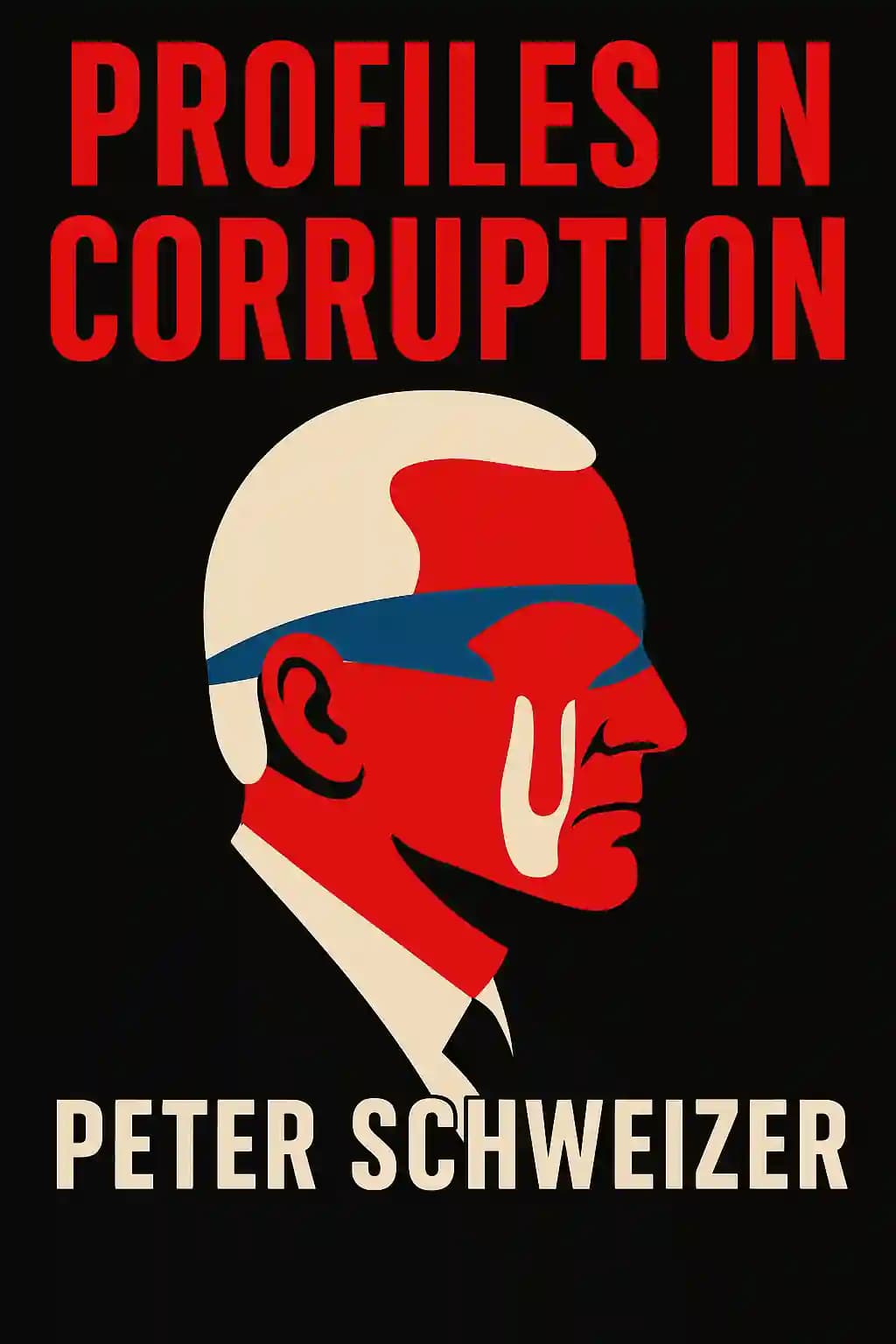
In a world where politicians craft carefully curated public personas, Peter Schweizer's "Profiles in Corruption" rips away the facade to expose what lurks beneath. The book has become a cultural lightning rod since its release, spending weeks atop bestseller lists and igniting fierce debate across the political spectrum. Praised by conservatives as essential reading and dismissed by progressives as partisan attack journalism, the book's explosive revelations about America's leading progressive politicians have made it required reading in Washington power circles. What makes this work particularly compelling isn't just its allegations, but its meticulous documentation - with over 1,100 endnotes sourced from public records, financial disclosures, and court documents. As political corruption increasingly dominates headlines, Schweizer's investigation forces us to confront an uncomfortable question: Do those demanding more government power deserve to wield it?
第 2 章
The Small Corruptions That Herald Larger Ones
Corruption rarely begins with dramatic scandals. Instead, it starts with small compromises that establish patterns of behavior. Bill and Hillary Clinton's early Arkansas dealings - Hillary's suspiciously profitable commodity trading and their Whitewater investment - foreshadowed larger abuses once they reached national prominence. These early warning signs evolved into presidential pardons for donors, the Clinton Foundation's pay-to-play operations, and Hillary's private email server designed to circumvent federal transparency laws.
Today's progressive politicians exhibit similar warning signs that demand scrutiny. As novelist Robert Penn Warren illustrated in "All the King's Men" through his "flower-in-the-crannied-wall theory," attractive political exteriors often conceal dark, corrupt roots winding through hidden relationships. This metaphor perfectly captures how modern politicians present inspiring public facades while their private dealings reveal troubling contradictions.
The contemporary political divide isn't merely about income inequality but power inequality - those with political influence operate by different rules, protecting family and friends from justice while directing taxpayer money toward their inner circles. While genuine public servants exist across the political spectrum, many politicians follow Willie Stark's corrupt model from Warren's novel, leveraging public positions for personal gain.
Progressive politicians warrant particular scrutiny not because they alone are corrupt, but because they uniquely advocate for dramatic expansion of federal power. Before granting them greater control over our lives, we must examine how they've used whatever public authority they've already held. Have they proven themselves ethical stewards, or have they wielded power primarily for personal benefit? Unfortunately, media focus on horse-race journalism rather than investigative reporting has left many of these revelations unexplored, particularly as the "Trump Vortex" has consumed journalistic resources that might otherwise scrutinize other political figures.
第 3 章
Kamala Harris: The Beneficiary of Political Patronage
Kamala Harris's political ascent is inextricably linked to her relationship with Willie Brown, the powerful California politician who was 31 years her senior and married when they began dating. As Assembly Speaker and later San Francisco Mayor, Brown boosted Harris's career and finances in ways that established a troubling pattern of political favoritism.
Brown appointed Harris to lucrative part-time state commissions while she already held a full-time county position - the Unemployment Insurance Appeals Board ($114,000/year) and California Medical Assistance Commission ($99,000/year) - effectively tripling her income. He also bought her a BMW and, most crucially, introduced her to his vast network of political supporters and donors, bringing her into San Francisco's elite social circles.
"Willie Brown is an albatross hanging around my neck," Harris complained privately to a political consultant. Yet this albatross provided the connections and resources that launched her career. When Harris ran for district attorney against her former boss Terence Hallinan, Brown's political machine mobilized fully behind her. His former aide Rebecca Prozan became her campaign manager, while Brown wrote fundraising letters and made personal donations. Harris vastly outspent Hallinan, raising $621,000 despite signing a pledge to honor the city's $211,000 spending cap - a violation resulting in a record $34,000 ethics fine.
As district attorney, Harris established a pattern of selective prosecution that benefited Brown's allies. She dropped charges against strip club owner Sam Conti (a longtime Brown friend) despite clear evidence of prostitution, dismissed corruption charges against Brown appointee Hector Chinchilla who had collected $181,000 from developers while heading the Planning Commission, and gave only a minor plea deal to contractor Ricardo Ramirez who endangered public safety by using inferior recycled concrete on major infrastructure projects like the Golden Gate Bridge.
Harris's signature "Back on Track" program for first-time drug offenders claimed impressive results by counting only graduates while ignoring the nearly half who were kicked out. The program also enrolled illegal immigrants and violent criminals like Alexander Izaguirre, who fractured a woman's skull in a brutal purse-snatching while participating in the program. When questioned about allowing undocumented immigrants into a job training program for positions they couldn't legally hold, Harris simply stated that enforcing immigration law wasn't her job.
As California Attorney General, Harris continued leveraging her power to benefit political allies. After marrying corporate attorney Douglas Emhoff in 2014, she notably avoided joining fourteen other state attorneys general investigating nutritional supplement companies for false advertising - even as the Obama Justice Department pursued similar cases against companies like Herbalife, which had generated over 700 complaints to Harris's office.
Perhaps most egregiously, Harris blocked Prime Healthcare's $843 million bid to purchase struggling Daughters of Charity hospitals despite overwhelming community support, after the SEIU - her largest campaign contributor - opposed the deal because Prime refused their unionization demands. According to lawsuits, SEIU officials brazenly claimed Harris was "their politician" who would "do what they told her to." Harris imposed unprecedented "poison pill" conditions on Prime while later approving a bizarre alternative deal allowing Blue Mountain Capital - headed by major Democratic donors - to take over with fewer service requirements than she had demanded from Prime.
第 4 章
The Biden Family Business
Joe Biden's folksy persona as "Middle-Class Joe" from Scranton masks a half-century career of leveraging political power for family enrichment. Since his 1972 election to the U.S. Senate at just 29 years old, Biden has kept family at the center of his political operations - brother James served as his first campaign's finance chairman at 22, while sister Valerie managed every campaign for three decades.
Despite Biden's insistence that he "never talked with my son or brother or anyone else about their business interests," evidence suggests his political position has been the family's most valuable asset. Five family members - son Hunter, daughter Ashley, brothers James and Frank, and sister Valerie - appear to have benefited financially from Joe's political influence.
During Biden's Senate years, his family began monetizing these connections. Son Hunter received consulting fees from MBNA Corporation while his father supported bankruptcy legislation favoring credit card companies. Hunter later became a lobbyist with Oldaker, Biden & Belair LLP, specializing in "appropriations lobbying" to secure federal funds. Biden's sister Valerie, who ran all his campaigns, was also senior partner in a political messaging firm that received $2.5 million in consulting fees during the 2008 presidential campaign alone.
When Biden became vice president in 2008, the family's commercial opportunities expanded globally. Hunter established investment vehicles with Yale friend Devon Archer, launching Rosemont Seneca Partners. Just ten days after accompanying his father on Air Force Two to Beijing in December 2013, Hunter's firm finalized a deal with the Chinese government worth $1 billion, later expanded to $1.5 billion. Their joint venture, Bohai Harvest RST (BHR), engaged in deals serving Beijing's strategic interests, including investments in a nuclear company later charged with espionage against the US and in facial recognition technology used for government surveillance.
In Ukraine, Hunter joined the board of natural gas company Burisma Holdings in April 2014, receiving up to $83,000 monthly despite having no relevant experience - just weeks after his father was appointed the Obama administration's point person on Ukraine. When Ukrainian prosecutor Viktor Shokin began investigating Burisma, Joe Biden pressured Ukrainian officials to fire him, later bragging about threatening to withhold $1 billion in U.S. aid to achieve this. Biden's final vice-presidential trip to Ukraine in January 2017 came just four days before Burisma announced that Ukrainian prosecutors had ended all criminal investigations into the company.
Hunter's financial dealings extended beyond China and Ukraine. Court documents reveal mysterious funds flowing into his Morgan Stanley account, including $142,300 from Kazakh oligarch-controlled Novatus Holdings and $1.2 million from an anonymous LLC via BSI S.A., a Swiss bank later implicated in a multi-billion dollar money laundering investigation.
James Biden, Joe's younger brother, has similarly benefited from these connections. In 2010, shortly after a White House meeting between Biden advisor Michele Smith and Kevin Justice (a longtime Biden family friend), Justice's construction firm HillStone International announced James would join as executive vice president. Despite having no housing construction background, James was brought on just as the firm began negotiating a massive Iraqi housing contract. Company executives openly acknowledged the value of having "the brother of the vice president as a partner," with James's share of the potential profits reaching hundreds of millions.
Frank Biden, another brother, became involved with Mavericks in Education Florida LLC, a for-profit charter school management company, during Joe's first year as vice president. Frank served as president and director of development, flying around Florida in private jets to lobby officials while promotional materials prominently mentioned his relationship to the vice president. Despite abysmal academic performance - their best-performing school had just a 43% graduation rate - Mavericks schools received over $70 million in state money, with $9 million going to the management company. Ironically, during his 2020 presidential campaign, Joe Biden told a Texas crowd, "I do not support any federal money... for for-profit charter schools-period," claiming "it siphons off money from public schools," never mentioning his brother's profitable charter school business.
第 5 章
Cory Booker: The Machine Behind the Inspirational Facade
Cory Booker has carefully cultivated an image as a charismatic reformer - a vegan Rhodes Scholar who abstains from alcohol, meditates daily, and performs heroic acts like rescuing neighbors from burning buildings. Yet behind this inspirational persona lies a political machine that has consistently enriched friends and allies while failing to deliver on promises of reform.
Despite growing up in the affluent white suburb of Harrington Park, Booker positioned himself as a champion of Newark's poor. After winning a municipal council seat in 1998 by striking a deal with local political boss "Big Steve" Adubato Sr., Booker was frequently absent from meetings while attending Stanford trustee meetings and giving speeches nationwide. He gained national attention through publicity stunts like his tent protest in a crime-ridden area, which the media portrayed as sacrifice though insiders revealed he rarely stayed overnight.
After winning the mayoral election in 2006 with $6 million in campaign funds, Booker rewarded friends and donors with lucrative city contracts. He appointed former operatives of his corrupt predecessor Sharpe James to key positions, including Pablo Fonseca as chief of staff who "wielded an inordinate amount of power" while Booker was frequently absent giving paid speeches nationwide, collecting over $1.3 million in speaking fees. His former law firm Trenk continued paying him nearly $700,000 while receiving over $2 million in city contracts.
Booker's administration was plagued by corruption scandals. Deputy Mayor Ronald Salahuddin was convicted of extortion and bribery, while Linda Watkins-Brashear, whom Booker appointed to run the Newark Watershed Conservation and Development Corporation, later pled guilty to corruption charges after treating the agency "like her own personal bank account." Though Booker served as an ex officio board member, he never attended a single meeting.
In 2010, Facebook founder Mark Zuckerberg announced a $100 million commitment to Newark schools on Oprah's show, with Booker at his side. Rather than directly improving schools, much of this money was diverted to consultants with ties to Booker. The Foundation for Newark's Future hired a director paid $382,000 annually for part-time work, while consultants burned through $2 million conducting surveys. The largest portion of the gift - $33 million - went to teacher back pay rather than school improvements.
While still mayor in 2012, Booker launched Waywire, a video-sharing social media company ostensibly created to give "marginalized voices" a platform. Despite minimal personal investment and maintaining his mayoral duties, Booker secured the largest ownership stake while wealthy friends like Oprah Winfrey and Google's Eric Schmidt provided funding. When controversy around Waywire threatened his Senate campaign, Booker resigned from the board and donated his shares to charity.
In the Senate, Booker maintained close ties with Facebook executives who had been major campaign donors, hiring former Facebook public policy director Louisa Terrell as his chief of staff. From his position on the Communications, Technology, and Internet subcommittee, he supported legislation beneficial to big tech. Meanwhile, his political machine continued operating as his top aides moved between his Senate staff and lucrative lobbying positions, particularly at Mercury Public Affairs, where his confidants Michael Soliman and Mo Butler became partners.
Mercury Public Affairs, with Booker confidants as partners, saw a 35% increase in lobbying revenue after hiring Mo Butler, Booker's self-described right-hand man. The firm's client list strategically aligned with Booker's Senate committee assignments. Horizon Blue Cross Blue Shield hired Mercury while Booker worked on healthcare legislation. Foreign clients like Qatar and Turkey paid Mercury millions after Booker joined the Foreign Relations Committee, and Booker subsequently visited both countries and advocated for Qatar's interests in committee hearings.
第 6 章
Elizabeth Warren: The Anti-Corporate Crusader with Corporate Ties
Elizabeth Warren positions herself as a champion of the middle class against corporate power, claiming America's economic system is "rigged" to benefit the wealthy while ordinary citizens are "chipped at, hacked at, squeezed and hammered." Her meteoric rise from Harvard professor to U.S. Senator occurred in just two years, fueled by her image as an untainted reformer fighting Wall Street excesses.
Yet Warren's academic success is intertwined with her claimed Native American heritage. She began listing herself as a "minority" Native American law professor in the Association of American Law Schools directory just before her appointment to the University of Pennsylvania. Though she claims this wasn't career-motivated, both Penn and Harvard touted her as a diversity hire, with Harvard describing her as their "first woman of color." DNA testing later revealed she was at most 1/32nd Native American, possibly as little as 1/1024th.
Despite her public stance against economic predation, Warren and her husband profited from others' financial misfortune. During economic downturns in Oklahoma, they purchased foreclosed properties at bargain prices and flipped them for substantial profits. Over fifteen years, they invested in approximately $1.2 million in real estate deals. In one notable example, they bought a house for $30,000 and sold it five months later for $145,000 - a 383 percent gain.
Warren leveraged her expertise in bankruptcy law to build a lucrative consulting practice for major corporations, charging $700 per hour in 2002 (equivalent to $996 in 2019). After helping write corporate bankruptcy laws that allowed financially healthy corporations to use bankruptcies to avoid legal liabilities, she positioned herself to interpret those same rules for corporate clients. Despite claiming to fight for families against corporations, Warren repeatedly worked to help companies avoid pension obligations and lawsuits. She represented LTV Steel in their attempt to avoid $140 million in coal miner retirement benefits, defended Fairchild Aircraft against families of crash victims, assisted Southwest Electric Power Company in liquidating a rural power cooperative, advised Dow Chemical in avoiding breast implant liability claims, and helped Travelers Insurance establish immunity from asbestos lawsuits (earning $212,000 for this work alone).
By 2012, Warren's net worth reached $14.5 million, including a $5 million home and an investment portfolio worth up to $8 million. While publicly criticizing Wall Street and major corporations, Warren invested most of her wealth in traditional Fortune 500 companies through funds like TIAA CREF and Vanguard 500. During Harvard Law's 2009 financial crisis, when the school faced cutting staff or reducing faculty salaries, Warren's salary actually increased rather than being reduced to save jobs.
Warren's daughter Amelia Warren Tyagi has been her "longtime accomplice" professionally while building a business that paralleled her mother's career. As Warren gained oversight power over financial institutions through TARP, Amelia's company Business Talent Group (BTG) added advisors connected to those same firms, including executives from Morgan Stanley and the Carlyle Group - companies receiving billions in TARP funds. BTG grew from $4 million in revenue in 2009 to $11 million by 2012 - despite Warren publicly criticizing the same gig economy model her daughter's company promoted.
Warren's son-in-law Sushil Tyagi has engaged in questionable global business ventures. His film production company Tricolor Films produced "The Song of Sparrows," funded by Iranian government institutions including the State Welfare Organization and the Cultural and Artistic Organization of Tehran - both controlled by the Islamist regime. The film credits include thanks to the Iranian Revolutionary Guards Air Force during a time when Iran was accused of assisting in killing American soldiers in Iraq.
Despite her long-standing opposition to legalized gambling in Massachusetts, Warren reversed course in 2018 by supporting legislation to overturn a federal court decision blocking the Mashpee Wampanoag Tribe's casino plans. While some attributed this to mending relations with Native Americans after her ancestry controversy, another explanation emerged: the casino was to be run by Malaysian gambling conglomerate Genting, which would receive 40% of profits. Crucially, Genting was represented by Cleary Gottlieb - the same law firm that had funded Warren's Harvard work.
第 7 章
Sherrod Brown: The Working-Class Hero Who Never Worked
Sherrod Brown presents himself as a progressive champion of the working class with midwestern roots, though his background reveals a privileged upbringing. Born to a doctor's family in Mansfield, Ohio, Brown attended Yale University before launching his political career at just 21, winning election to Ohio's legislature while still a senior at Yale. Despite positioning himself as a working-class hero with his perpetually wrinkled suits and office adorned with miners' memorabilia, Brown has never held a full-time job outside government service in his nearly 50-year political career.
Brown's political career began when he was recruited during his senior year at Yale to run for Ohio's state legislature. Despite describing himself as a "farmer" to voters, his family's ownership of farmland since the 1800s hardly qualified him as one while studying at Yale. By 1982, at just 29, he won election as Ohio's Secretary of State, where he focused on voter registration efforts but faced criticism for allegedly tilting ballot initiative language to favor his preferences.
Brown's tenure as Secretary of State was marked by tragedy when his deputy director Colleen Shaughnessy was murdered in 1983. The case resembled "an Agatha Christie mystery" with suspicious circumstances - she was found beaten, strangled, and stabbed in her locked office with no signs of forced entry. During the investigation, witnesses reported that Brown's 1982 campaign had kept two sets of financial books, and Shaughnessy was allegedly one of two female staffers who knew about this arrangement. Though prosecutors charged a teenager, he was acquitted due to lack of evidence, and the case remains unsolved.
After losing his secretary of state position to Republican Bob Taft in 1990, Brown immediately relocated to northeastern Ohio to run for a newly opened congressional seat near Cleveland. He campaigned as a progressive populist and outsider, strongly advocating for term limits and criticizing "old-timers" who remained in Washington too long. Despite his rhetoric about twelve-year term limits that should be "retroactive," Brown completely reversed his position after serving his twelve years, suddenly arguing that longevity in office was beneficial.
Brown maintains extremely close ties with his brothers Charlie and Robert. Charlie was even involved in screening senior staff for Sherrod's congressional office and serves as a campaign surrogate. Charlie Brown had his own political career as West Virginia's attorney general but resigned amid scandals involving soliciting campaign contributions from staff and perjury allegations. After leaving politics, Charlie became a class-action lawyer focused on controversial health care litigation, with Sherrod appearing to use his congressional position to benefit his brother's cases.
Charlie Brown and his legal partner James Turner run several health advocacy nonprofits from their law firm, with official-sounding names like "Citizens for Health" and "Consumers for Dental Choice." These organizations target controversial health issues including childhood vaccines, fluoride in drinking water, artificial sweeteners, and cell phone radiation. These nonprofits effectively advance the law firm's litigation interests by raising medical concerns that become the basis for lawsuits. Notably, the areas of Charlie's litigation almost perfectly overlap with Sherrod's congressional committee assignments.
Sherrod Brown repeatedly introduced legislation and took political actions that directly benefited his brother Charlie and his legal partners. In 2005, Sherrod introduced the Medical Advertising Reform Act targeting drugs like Celebrex and Bextra on the same day his brother's legal partner merged thirty-one federal cases against these exact medications. When FDA preemption threatened these lawsuits in 2006, Sherrod immediately sent a letter to the HHS Secretary demanding the position be overturned.
第 8 章
Bernie Sanders: The Socialist Millionaire
Bernie Sanders is one of America's most polarizing political figures, seen by supporters as a truth-teller about capitalism and inequality, and by critics as a grandstanding hypocrite. Despite his difficult and gruff style, Sanders has become a major force in American politics with his progressive credentials. He identifies deeply with socialist Eugene V. Debs and has consistently targeted "enemies" throughout his career, from the Rockefellers in the 1970s to today's "billionaire class."
Born in Brooklyn to Jewish immigrant parents, Sanders attended the University of Chicago where he became politically active in civil rights and socialist movements. After college, he worked briefly on Kibbutz Sha'ar Ha'amakim in Israel - a settlement with strong Soviet connections where members once admired Stalin. Sanders eventually settled in rural Vermont after seeing a storefront advertisement in Manhattan, pooling inheritance money with his brother and first wife to buy 85 acres for $2,500. Throughout the 1970s, he avoided consistent employment, collected unemployment while running political campaigns, and struggled financially - at one point stealing electricity by running extension cords to his landlord's outlet when he couldn't pay his bills.
At age thirty-nine, Sanders narrowly won the Burlington mayoral race by just ten votes. As mayor, Sanders immediately established a pattern of benefiting himself and allies. He appointed his girlfriend Jane Driscoll to head the Mayor's Youth Office without advertising the position or providing evidence of her qualifications. After they married, Jane received a controversial pay raise. Sanders created a powerful Community and Economic Development Office, placing his friend Peter Clavelle in charge to control which businesses thrived in Burlington.
After campaigning against wealthy developer Tony Pomerleau's waterfront project as an "enclave for the rich," Sanders surprisingly formed an alliance with the Pomerleau family that would last decades. The wealthy family funded Sanders family projects, including Jane's initiatives. Sanders's popularity as mayor was bolstered by Burlington's economy, which thrived on Reagan-era military spending - despite Sanders's rhetoric against "Reaganism and imperialism." When progressive allies protested at the General Electric plant producing Vulcan Gatling guns, Sanders shocked them by siding with GE executives and having protesters arrested.
After multiple campaigns for higher office, Sanders won a congressional seat in 1990 with over half a million dollars from developers, Manhattan investment managers, and trust fund families. His campaign classified workers as "consultants" to avoid paying Social Security and workers' compensation taxes, drawing criticism for hypocrisy from opponents. Once in Congress, Jane served in various staff roles before the family established Sanders & Driscoll LLC in 2000, operating under aliases "Leadership Strategies" and "Progressive Media Strategies." These entities funneled campaign money to family members, with critics claiming Sanders paid over $150,000 to his wife and stepdaughter for campaign work between 2000-2004.
In 2004, Jane Sanders became president of Burlington College, a tiny unconventional institution with fewer than 200 students. The Sanders family directed college resources to family enterprises, establishing a woodworking program with Jane's daughter Carina's unaccredited Vermont Woodworking School without soliciting outside proposals. Burlington College funneled over $500,000 to Carina's school while struggling to pay its own faculty.
In 2010, Jane Sanders pursued an ambitious $10 million lakefront property purchase from the Roman Catholic diocese despite the college's modest $4 million annual budget. To obtain bank loans, Jane claimed nearly $2 million in "confirmed donations" that were actually contingent on a donor's death and another matching gift. When these misrepresentations were discovered, with several donors reporting their pledges were overstated or fabricated, the FBI and Justice Department launched a fraud investigation. Jane left Burlington College in deep financial trouble with a $200,000 severance package, which she later characterized as a "sabbatical" on Bernie's financial disclosure forms. The college ultimately collapsed in 2016.
Despite railing against the wealthy, Sanders has amassed considerable wealth through book publishing while serving in the Senate. With more books than substantive legislation to his name, Sanders received advances including $795,000 for "Our Revolution" and $63,750 for his teen book, pushing his annual income above $1 million in 2016-17. Critics noted he stopped mentioning "millionaires" in his speeches after joining their ranks. The Sanders family owns three homes, including a vacation property purchased through a tax-advantaged trust shortly after Burlington College closed.
第 9 章
The Power Paradox: Why Intentions Aren't Enough
Corruption takes many forms - using political power to enrich family, tilting justice for friends, steering government contracts to allies, or using public office for personal gain. While progressives claim pure motives in their quest for greater power, Nobel laureate Milton Friedman reminds us that "Concentrated power is not rendered harmless by the good intentions of those who create it."
History shows corruption follows power, and as George Washington warned, "Few men have virtue to withstand the highest bidder." The link between power and corruption is an iron rule of history. What leaders do with power reveals their true character - as historian Robert Caro observed, "power always reveals." Ultimately, as George Orwell noted, people who elect corrupt politicians "are not victims, but accomplices."
The progressive message continues to be "hand us more power," asking us to ignore history - including their own - in how such power is actually exercised. We must ask: Why trust someone with more power when you cannot even trust them with the little they already have? Before granting expanded government authority to those who claim to fight for the common good, we should examine how they've used the authority they already possess. The evidence suggests that for many progressive champions, public power has primarily served private interests - precisely the corruption they claim to oppose.