第 1 章
The Art of Persuasion: How to Win Hearts and Minds in Any Room
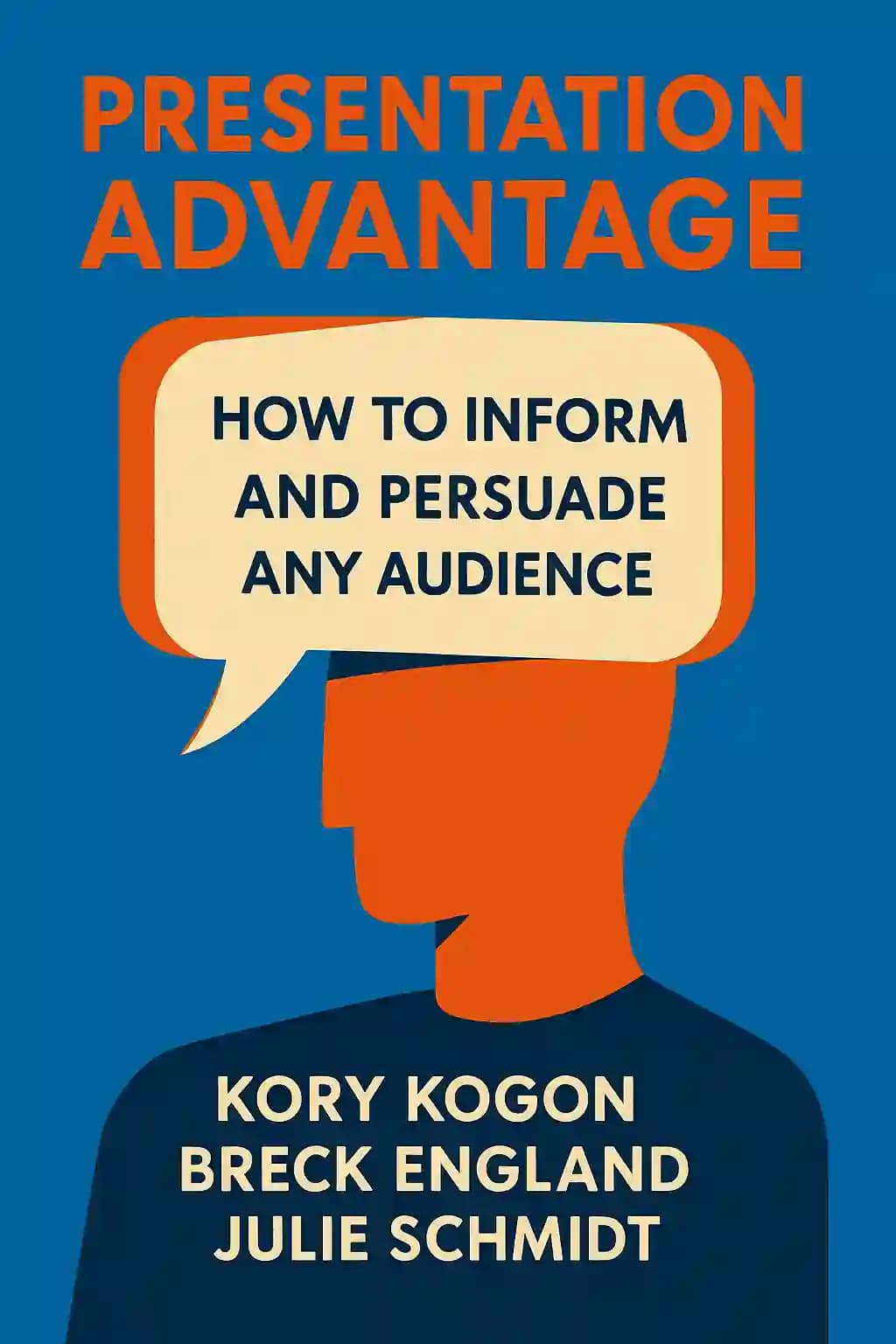
In a world where the average human attention span has shrunk to just eight seconds-shorter than that of a goldfish-the ability to captivate an audience has become the ultimate professional superpower. The Presentation Advantage by Kory Kogon, Breck England, and Julie Schmidt has been hailed as the definitive guide to this crucial skill, consistently appearing on leadership development reading lists at companies like Google and Microsoft. Even Warren Buffett once claimed that mastering public speaking could increase a person's professional value by 50 percent overnight-a statement that speaks volumes about the book's practical importance in today's business landscape.
What makes this book particularly compelling is its universal application. Whether you're pitching to venture capitalists, leading a team meeting, or simply trying to convince your family about vacation plans, the principles within apply to any situation where your ideas need to resonate. As communication increasingly becomes the currency of success in our knowledge economy, those who can effectively convey their message gain an immediate competitive edge-what the authors aptly call "the presentation advantage."
第 2 章
The Shrinking Attention Span: Our Modern Communication Crisis
We live in an age of unprecedented distraction, where the human attention span has reportedly dropped below that of a goldfish. The typical business meeting has become a battleground for attention, with participants mentally checking out within eight seconds on average. While the presenter speaks, audience members are texting under the table, checking email, watching social media videos, or simply struggling to stay awake. The Urban Dictionary's definition of a presentation as "agonizing minutes of exclusive divided attention" perfectly captures this reality, reflecting a shared cultural experience of disconnection.
Our technology-saturated environment has made audience attention the scarcest commodity of the digital age. Studies show that the average person checks their phone 96 times per day - approximately once every 10 minutes. The moment people become confused or bored during presentations, they retreat into their smartphones or tablets, creating a virtual escape hatch from engagement. Despite spending roughly 50% of our working hours communicating, we're increasingly like dogs who hear tone but miss content. Each technological advancement - from instant messaging to social media to video calls - has made it more convenient to avoid genuine emotional connection, choosing "LOL" over actual laughter, emoji over real tears, and information dumps over meaningful human presence.
What many fail to recognize is that presentations aren't just formal events where you stand before an audience with PowerPoint slides. They happen constantly in less formal settings-quick status reports in the hallway, client calls over Zoom, conversations with family members at dinner, or salary discussions with your boss. In today's Knowledge Age, professionals spend at least half their time communicating, yet studies show that 71% of employees feel their leaders don't communicate effectively. People have come to expect presentations to fail due to multiple factors: lack of preparation, poor visual aids, overreliance on PowerPoint (with an average of 40 slides per deck), disengaged delivery, or unclear messaging that lacks a coherent story arc.
The ability to give persuasive presentations has become "the top business skill" of our age, with research showing that organizations effective at communication are 2.4 times more likely to outperform their peers. Companies lose an estimated $37 billion annually due to poor communication and unengaging presentations. An effective presentation starts with you-you are your message. When you connect with genuine passion, demonstrate character and competence through authentic storytelling, and engage your audience regardless of subject difficulty, you become more than just a presenter - you become a great communicator who can cut through the noise of our distracted age. The most successful leaders understand that in a world of shrinking attention spans, the ability to capture and maintain attention through compelling communication is not just a skill, but a crucial competitive advantage.
第 3 章
The Three Essential Connections: The Foundation of Persuasion
The fundamental purpose of every presentation is to shift a paradigm-to change how people perceive, understand, and interpret the world. Without causing this shift, your presentation cannot drive behavior change. To create effective presentations, you must connect in three essential ways: with your message, with yourself, and with your audience. These connections form an interdependent triangle, each reinforcing the others to create maximum impact.
Connecting with your message means being driven by purpose and passion-genuinely caring about what you're presenting. Without this connection, you'll appear bored and dull, making no impact on your audience. If you struggle to feel passionate about your topic, you need to "raise the ante" by identifying the strategic importance of your message. For example, a presentation about quarterly sales figures becomes more compelling when framed as a story about market leadership and customer impact. Always frame presentations in terms of what's truly at stake-never downplay the power of your real message or mistake strategic issues for tactical ones. Consider how even seemingly mundane topics like process improvements can affect organizational success, employee satisfaction, and competitive advantage.
Connecting with yourself means being authentic and trustworthy. Your credibility depends on both character (integrity, motive, intent) and competence (capabilities, skills, track record). Without this connection, you'll come across as untrustworthy or incompetent. True credibility comes from within-trusting yourself to tell the truth, talk straight, be transparent about your agenda, know your subject, and serve your audience like your best customers. This might mean acknowledging limitations in your expertise, sharing relevant personal experiences, or admitting when you don't have all the answers.
Despite living in an age of political and commercial "spin," presenters with character don't manipulate audiences with manufactured "facts." While it's difficult to see the whole truth due to our paradigms, there remains an objective truth. Ethical presenters help people see reality as it is, rather than persuading them to exchange one distorted view for another. For instance, when presenting data, show both favorable and challenging metrics, providing context for both. In today's skeptical world, honesty and plain-speaking create the presentation advantage. Trustworthiness matters more than slickness-without it, you'll shift no paradigms.
Connecting with your audience means capturing and maintaining their attention-increasingly difficult in our distracted age. Adult attention spans have shrunk from 12 seconds in 2000 to just 8 seconds by 2013. You have mere moments to engage listeners before they mentally drift away. People today check phones 110 times daily, send billions of business emails, and exchange thousands of texts monthly. To combat this, successful presenters use techniques like strategic pausing, storytelling, and interactive elements every 3-5 minutes. Virtual presentations compound this challenge, as you can't make eye contact or read body language. Combat this by using polls, chat features, and direct questions to specific participants. The key is turning presentations into conversations rather than lectures-engaging with eyes, minds, and hearts throughout. Create moments of reflection, encourage dialogue, and use relevant examples that resonate with your specific audience's experiences and challenges.
第 4 章
Crafting Your Message: From Bullets to Stories
The first step to presentation success is developing a powerful message that captures attention immediately. Most presentations fail because they're just "ODTAA" (One Damn Thing After Another)-random bullet points without structure or story. Effective presenters tell compelling stories that throw listeners "off balance" to make them care about the message.
Stories captivate us from childhood through adulthood-they're how humans naturally process information. While most presentations consist of disconnected bullet points that audiences tune out, stories create mental pictures that engage listeners. A good presentation story begins by "throwing life out of balance" to create immediate interest. As storytelling expert Robert McKee explains, stories start when something disrupts balance, and everything after is about restoring that balance. Your job is to pull the rug out from under your audience so they care enough to pay attention.
Powerful messages tell people exactly what to do and provide the knowledge that makes them feel like doing it. This formula-connecting what people need to know with how they need to feel to motivate what they should do-creates paradigm shifts that change behavior. When presenting, start with your bottom line up front - busy people have only about 6.5 seconds of attention to capture.
Understanding your audience is crucial for presentation success. Expert Syndrome-the unconscious assumption that your audience understands your technical jargon-afflicts specialists like accountants, engineers, and IT professionals. As scientist Randy Olson warns technical experts: "If you gather knowledge but are unable to convey it to others in a compelling form, you might as well not even have bothered." When facing audiences with different knowledge levels, briefly tell the whole story up front before diving into details-serving those with low interest while still satisfying those wanting depth.
The key is shifting from "I-centered" to "YOU-centered" presentations. Your listeners are your customers, and your presentation should answer their big "so what?" question. By anticipating their questions and addressing them proactively, you'll deliver exactly what they need.
After understanding your audience, develop the core content of your presentation. The Triple S Formula is essential for making your message memorable: State each key point, Support it, and Summarize it. This repetition pattern helps cement ideas in your audience's mind. Professional persuaders understand this principle well-as Malcolm Gladwell notes, "The secret is not deception but repetition." Your goal is to make your message impossible to ignore by engaging and reengaging listeners' brains.
Your presentation needs strong "bread" to sandwich your key points. For the introduction, you have just 6.5 seconds to grab your audience's attention. Effective openings focus on "you" rather than "I" or "we," addressing audience needs with emotional appeals that trigger the limbic system. This emotional connection helps information stick-as brain scientist John Medina notes, "Emotionally charged events persist much longer in our memories." For conclusions, which are equally memorable, mirror your introduction by summarizing key points and ending with a call to action.
第 5 章
Visual Impact: Making Your Message Unforgettable
Visuals can transform your presentation from forgettable to unforgettable. Research confirms that "pictorial memory is quantitatively superior to verbal memory"-people remember images long after they've forgotten text. Unfortunately, most presentations remain visual disasters filled with bullet points nobody remembers, spreadsheets nobody can read, tiny fonts, obnoxious colors, mysterious charts, and irrelevant images.
To create visually impactful presentations, use relevant images that emotionally connect with your audience. Start with a "Big-Picture Picture"-a macrovisual that simplifies everything, shifts paradigms, and sums up your entire point. Like Rollin King's napkin sketch of the Southwest Airlines triangle route, these images create immediate emotional impact. They should be your opening "grabber" and closing reminder. The most powerful visuals are those that bust paradigms and make your audience feel something. As Walt Disney noted, "pictures still speak the most universally understood language."
When designing your presentation, don't waste your opening with generic "WELCOME" slides or logos. Instead, choose images that will immediately impact your audience's paradigm. Effective presenters use visuals that contain the entire story and emotional core of their message.
Effective visuals generate thinking rather than merely displaying information. Use a variety of visuals as conversation starters that raise questions and evoke emotions. Create suspense with visuals that make people wonder about their meaning. Use visuals to tell stories-showing real people, places, and events whenever possible. Choose the right visual for your specific purpose, like pie charts for percentages or line graphs for trends. A visual is good if it gets people thinking, talking, and acting.
People learn better from organized presentations than disorganized ones. Avoid visual ODTAA (One Damn Thing After Another) like "bullet-riddled corpses" (endless bullet lists), "photomaniacs" (slide after slide of photos), or "fontaholics" (too many typefaces). Your audience needs predictable patterns to grasp your message easily. Apply a visual theme with consistent look and feel, use headings to communicate structure, preview key points, use bullets sparingly (3-5 maximum), and use numbers instead of bullets for sequential items or priority lists.
Color helps control where the audience's eyes go-use bright colors to focus attention on important information and dimmer colors for less important elements. Consider your presentation environment when choosing background and lettering: light backgrounds with dark text work well for printed materials, while dark backgrounds with light text can be more dramatic and easier on the eyes in dimly lit rooms.
Investor Guy Kawasaki advises never using fonts smaller than 30 points, noting that small text indicates presenters don't know their material well enough or mistakenly believe more text is more convincing-what he calls "total bozosity." Use sans serif typefaces (like Arial or Calibri) for better readability rather than serif fonts (like Times New Roman). Generally use 36-44 point fonts for titles and 32-point for main text, with no more than two font types in a presentation.
Complexity and clutter are at the heart of bad presentations. Despite everyone wanting simplicity, many presenters avoid it because being called "simple" has negative connotations. As advertising legend Jack Trout notes, "complexity is not to be admired. It's to be avoided." The most effective visuals strip away everything unnecessary to focus attention on what truly matters.
第 6 章
Delivering with Presence: The Human Connection
The final component of connecting with your audience is delivering your presentation with excellence. This doesn't require becoming someone you're not-both extroverts and introverts can be excellent presenters with very different styles. The key is alignment: your body language and tone of voice must match your words for the audience to connect with you.
First impressions form in milliseconds through what scientists call "the amygdala hijack"-your audience's brains instantly assess whether you're a threat, resource, or ally. You can make this work for you by controlling your first impression and aligning your body language with your message. This involves looking professional (dressing slightly better than your audience), maintaining confident eye contact (the "emotional handshake"), having an expressive face that radiates genuine emotion, using supportive gestures, and ensuring your voice connects with everyone.
Eye contact creates an instant emotional connection with your audience. Look steadily at individuals for about three seconds before moving on (though be culturally sensitive as norms vary). Avoid darting eyes that signal nervousness, and don't focus only on engaged audience members while ignoring others. In virtual presentations, look at the camera rather than the screen to create the impression of direct eye contact.
Your facial expressions are mirrored by your audience through mirror neurons-if you look sad, nervous, or indifferent, they'll feel the same. These expressions are universally understood across cultures. Be genuinely connected to your message so your expressions are authentic. Even when delivering difficult messages, find deeper purpose by understanding the reasons behind them. Being professional isn't being phony-it's providing good service to your audience by communicating clearly and empathetically.
Your gestures should enhance rather than detract from your message. When passionate about your message, natural gesturing adds impact and reduces nervousness. For standing presentations: start with hands at your sides, use wide expansive gestures that extend beyond your body frame, gesture toward audience with open palms, use symbolic gestures for numbers, and vary which hand you use.
Random or patterned movement distracts audiences and diminishes credibility, as illustrated by the CEO who unconsciously "danced" triangular patterns during his presentation and lost company confidence. Purposeful movement, however, guides attention and keeps audiences engaged. Move closer to connect better (but not too close), distribute attention by moving to different audience members, and use movement to release nervous energy.
Your voice reveals your passion and engages the audience through five essential Ps: Project (direct your voice clearly throughout the room, taking deep breaths); Pause (use silence strategically to emphasize points and avoid vocal fillers like "um" and "uh"); Pitch (vary your tone to avoid monotony, avoiding "uptalk" that suggests lack of confidence); Pace (speak slightly faster than normal conversation but adjust to cultural expectations); and Pronounce (articulate clearly, especially for virtual presentations where your voice may be your primary connection tool).
第 7 章
Mastering the Moment: Questions, Stress, and Difficult Audiences
Finding the "Zone of Optimum Stress" is crucial for presentation excellence. This optimal zone lies between too little stress (causing complacency and lack of energy) and too much stress (triggering destructive fight-or-flight responses). Professional athletes call this the "flow state" - where performance peaks through balanced activation. To reach this optimal zone, implement a comprehensive preparation strategy: develop a powerful message aligned with audience needs; engage in 20-30 minutes of moderate exercise 2-3 hours before presenting to burn excess adrenaline; practice meditation for 5-10 minutes using focused breathing or guided visualization to decrease cortisol and boost blood flow to the brain; master deep diaphragmatic breathing exercises emphasizing 4-count inhales and 6-count exhales; and most critically, practice your presentation 6-8 times to create unconscious competency that will sustain you through unexpected challenges.
Handling difficult audiences requires a three-pronged approach of empathy, respect, and invitation rather than compulsion. When faced with hostile groups, employ active listening techniques - maintain eye contact, nod appropriately, and avoid defensive postures. Let them fully express their concerns without interruption, even if it takes several minutes. Reflect their perspective back using phrases like "What I hear you saying is..." or "It seems your main concern is..." Show genuine respect through open body language, measured tone, and undivided attention. Instead of forcing your perspective, use inclusive language that invites dialogue: "Let me invite you to consider..." or "What would you think about exploring..." Create opportunities for audience members to share their expertise.
For masterful question handling, establish clear guidelines at the start about when questions are welcome. Practice the LACE method: Listen actively, Acknowledge the question, Clarify if needed, and Explain thoroughly. Use the State-Support-Summarize formula: state your position clearly, support it with evidence or examples, and summarize key takeaways. Involve the entire audience by redirecting individual questions to the group: "That's an interesting point - how do others see this issue?" When facing knowledge gaps, maintain credibility by saying "I'll need to verify that information" rather than guessing. For hostile questions, acknowledge the emotion behind them: "I can hear your frustration..." For virtual presentations, use participants' names frequently, designate a dedicated chat monitor, integrate questions throughout to maintain engagement, and keep responses concise and focused. Always reserve 3-5 minutes to deliver your planned closing remarks after Q&A, ensuring you control the final message.
The foundation of excellent delivery is deliberate practice with constructive feedback. Create a feedback circle of 3-4 trusted colleagues who understand your goals. When practicing, record yourself and review objectively, focusing on improving specific elements like pace, gesture, or vocal variety rather than attempting wholesale changes. Prepare a question bank of 15-20 likely challenges and practice responding naturally. For virtual presentations, conduct full technical rehearsals with online participants to test all interactive features. Master platform-specific tools like polling, breakout rooms, and screen sharing. Pay special attention to camera angle, lighting, background, and audio quality. Practice transitioning smoothly between slides, sharing screens, and managing interactive elements while maintaining audience engagement.
第 8 章
The Ultimate Competitive Advantage
Imagine if everyone knew how to develop powerful messages that create purposeful shifts in knowledge and behavior while practicing excellent delivery. Unproductive meetings would disappear, change would be embraced more readily, and innovation would flourish. Teams would collaborate more effectively, projects would move faster, and organizations would adapt more quickly to market changes. When people communicate with clarity and purpose, the entire organizational ecosystem becomes more efficient and dynamic.
You must pay the price to connect with people and shift their paradigms, regardless of the setting. This means investing time in understanding your audience, crafting messages that resonate with their needs and perspectives, and constantly refining your delivery skills. Whether you're presenting to a board of directors, leading a team meeting, or having a one-on-one conversation, the principles of effective communication remain constant. The presentation advantage isn't just about professional skills-it's about the trustworthy character that makes people truly listen. It's about building credibility through consistency, authenticity, and genuine concern for your audience's success.
When you connect with passion, demonstrate character and competence, and engage your audience even through difficult topics, you possess a competitive edge that transcends any specific role or industry. This advantage manifests in multiple ways: faster decision-making, stronger team alignment, more successful change initiatives, and deeper client relationships. In today's complex business environment, the ability to articulate vision, strategy, and action plans clearly can mean the difference between market leadership and obsolescence.
Remember: you are your message. When your words, body language, and tone align with genuine conviction, you don't just deliver information-you create transformation. This alignment must be present in every interaction, from formal presentations to impromptu conversations. Your communication style should reflect your values and authenticity while adapting to different contexts and audiences. In a world of shrinking attention spans and increasing distractions, this ability to truly connect may be the most valuable professional skill you can develop. It's not just about being heard; it's about inspiring action, fostering understanding, and driving meaningful change in an increasingly complex and fast-paced business environment.
The most successful leaders and professionals understand that mastering communication isn't optional-it's essential for survival and growth in today's competitive landscape. They invest in developing this skill with the same dedication they apply to technical expertise or strategic planning, recognizing that the ability to connect and influence is what ultimately transforms good ideas into great achievements.