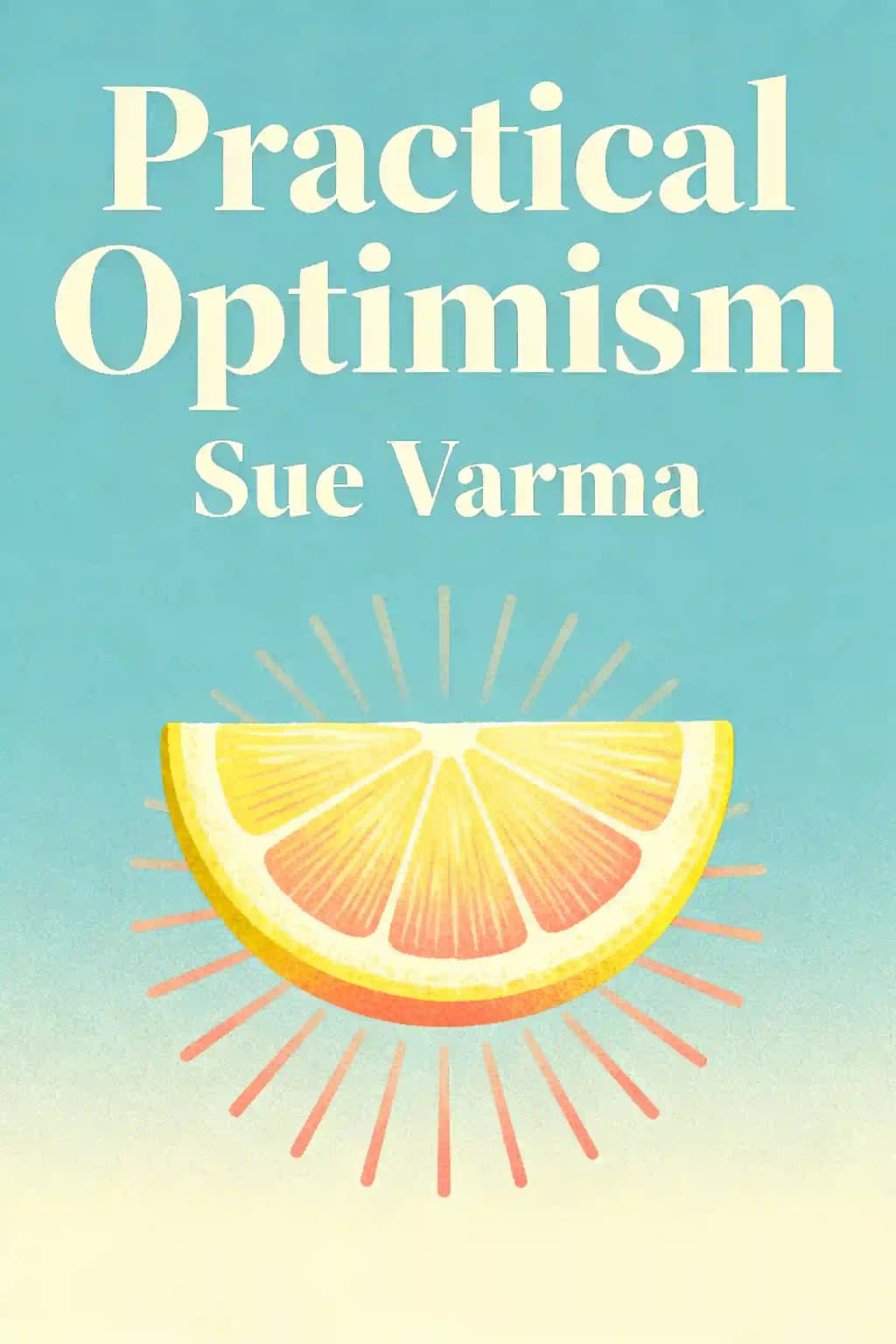
In "Practical Optimism," trauma expert Dr. Sue Varma reveals eight science-backed pillars to exceptional well-being amid life's chaos. First responder at the World Trade Center Mental Health Program, Varma proves optimism isn't innate - it's a learnable skill that transforms resilience, longevity, and success.
Dr. Sue Varma, author of Practical Optimism and a board-certified psychiatrist, combines clinical expertise with real-world insights to help readers cultivate resilience and joy.
A Clinical Assistant Professor of Psychiatry at NYU Langone Health, Varma pioneered the 9/11 Mental Health Program, where her work with trauma survivors inspired the book’s science-backed framework for thriving amid adversity. Her "4 Ms of Mental Health" (mindfulness, mastery, movement, meaningful engagement) anchor this guide to balancing optimism with actionable strategies for stress management and personal growth.
A nationally recognized media commentator, Varma regularly appears on Today Show, CBS Mornings, and Good Morning America, distilling complex mental health concepts into accessible advice. Her two-time Sharecare Emmy Award-winning contributions and recognition as a Global Citizen Top Health Expert underscore her authority. Practical Optimism, translated into multiple languages, merges neuroscience, philosophy, and case studies to empower readers worldwide.
Practical Optimism offers an evidence-based framework grounded in eight pillars—including purpose, problem-solving, and healthy habits—to cultivate resilience, joy, and fulfillment amid life’s challenges. Dr. Varma blends neuroscience, psychiatry, and personal anecdotes to teach readers how to reframe setbacks, manage stress, and build lasting well-being through actionable strategies.
This book suits individuals navigating stress, trauma, or career transitions, as well as mental health professionals seeking science-backed tools. Its mix of self-assessments, exercises, and real-world examples appeals to readers wanting pragmatic approaches to emotional resilience and personal growth.
Yes—it stands out for merging rigorous research with relatable storytelling. Reviewers praise its structured yet adaptable methods for combating pessimism, making it valuable for both self-help enthusiasts and skeptics seeking tangible steps toward sustainable optimism.
The pillars are:
Dr. Varma distinguishes practical optimism from toxic positivity, framing it as a skill that combines hope with realistic problem-solving. It involves acknowledging difficulties while actively seeking solutions—a mindset linked to better health, longevity, and career success.
As a psychiatrist and former 9/11 Mental Health Program director, Dr. Varma draws on 20+ years of clinical experience. Her work at NYU Langone Health and media commentary for NBC/CBS lends authority to her insights on trauma recovery and resilience.
Yes—the book emphasizes optimism as a trainable skill. Techniques include cognitive behavioral exercises, gratitude journaling, and reframing negative thoughts. Dr. Varma provides quizzes and habit trackers to reinforce these practices.
“Start small and build on gains” captures the book’s approach to sustainable change. This philosophy encourages incremental progress in adopting optimistic behaviors rather than overnight transformations.
It offers tailored strategies for workplace burnout, including boundary-setting, prioritizing self-care, and leveraging social support. Case studies show how realistic optimism improves decision-making under pressure.
Some note the program requires consistent effort, which may challenge those seeking quick fixes. However, supporters argue its gradual approach ensures lasting results compared to superficial positivity trends.
While both focus on incremental change, Dr. Varma’s work specifically targets mindset shifts for emotional resilience, whereas Atomic Habits emphasizes behavior systems. They complement each other for holistic personal growth.
Its tools for managing AI-driven workplace changes, climate anxiety, and social polarization resonate with current stressors. The science-backed framework helps readers adapt to uncertainty while maintaining mental health.
通过作者的声音感受这本书
将知识转化为引人入胜、富含实例的见解
快速捕捉核心观点,高效学习
以有趣互动的方式享受这本书
Optimists may be born, but Practical Optimists are made.
Purpose is what gets you out of bed in the morning.
Purpose doesn't need to be 'big'.
The one that wins is 'the one you feed'.
将《Practical Optimism》的核心观点拆解为易于理解的要点,了解创新团队如何创造、协作和成长。
将《Practical Optimism》提炼为快速记忆要点,突出坦诚、团队合作和创造力的关键原则。

通过生动的故事体验《Practical Optimism》,将创新经验转化为令人难忘且可应用的精彩时刻。
随心提问,选择声音,共同创造真正与你产生共鸣的见解。

"Instead of endless scrolling, I just hit play on BeFreed. It saves me so much time."
"I never knew where to start with nonfiction—BeFreed’s book lists turned into podcasts gave me a clear path."
"Perfect balance between learning and entertainment. Finished ‘Thinking, Fast and Slow’ on my commute this week."
"Crazy how much I learned while walking the dog. BeFreed = small habits → big gains."
"Reading used to feel like a chore. Now it’s just part of my lifestyle."
"Feels effortless compared to reading. I’ve finished 6 books this month already."
"BeFreed turned my guilty doomscrolling into something that feels productive and inspiring."
"BeFreed turned my commute into learning time. 20-min podcasts are perfect for finishing books I never had time for."
"BeFreed replaced my podcast queue. Imagine Spotify for books — that’s it. 🙌"
"It is great for me to learn something from the book without reading it."
"The themed book list podcasts help me connect ideas across authors—like a guided audio journey."
"Makes me feel smarter every time before going to work"

免费获取《Practical Optimism》摘要的 PDF 或 EPUB 版本。可打印或随时离线阅读。
In a world where mental health concerns continue to rise, Dr. Sue Varma offers something revolutionary: a framework that bridges the gap between surviving and thriving. Practical Optimism isn't about naive positive thinking - it's a science-backed approach that combines boundless hope with concrete action. As the first medical director of the World Trade Center Mental Health Program, Dr. Varma witnessed firsthand how some people not only survived devastating trauma but emerged stronger. Her question became our opportunity: What allows certain individuals to transform life's deepest wounds into sources of strength? Like the Japanese art of kintsugi - repairing broken pottery with gold to create something more beautiful than before - Practical Optimism doesn't just help us piece our lives back together; it transforms our fractures into our most distinctive strengths. This approach has transformed countless lives, including Dr. Varma's own. When she became a patient in her own hospital during her medical residency, she discovered the profound mind-body connection that would shape her life's work. Her father's philosophy - "I could laugh or I could cry" - captures the essence of this approach: the dignity of choice in how we respond to life's circumstances.