第 1 章
The Alien Intelligence Among Us: A Journey into Cephalopod Minds
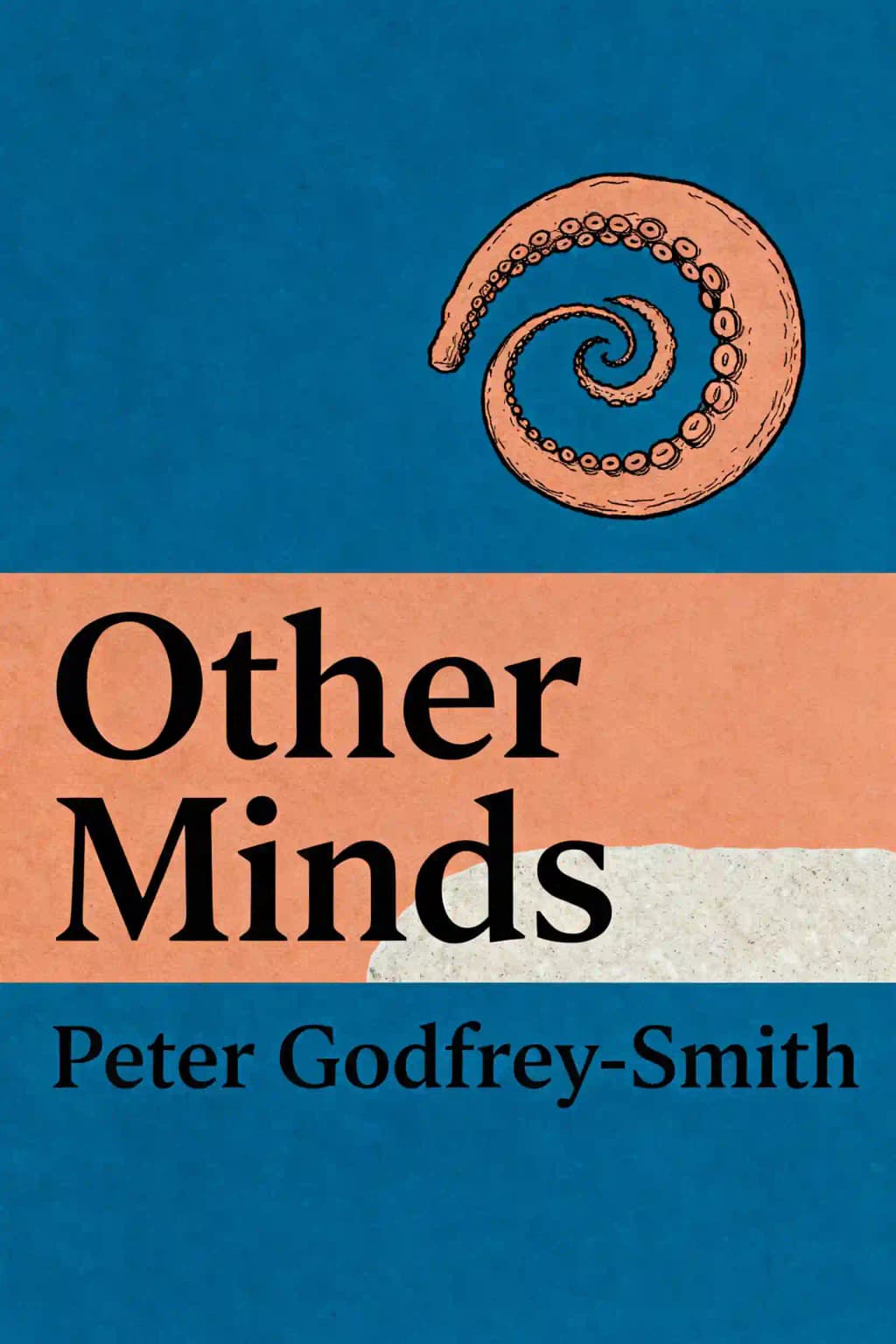
When Jacques Cousteau first encountered an octopus in the Mediterranean, he was struck by its "strange intelligence" and described feeling as though he had met an alien being. This sentiment resonates with anyone who has locked eyes with these remarkable creatures. Peter Godfrey-Smith's groundbreaking work has captivated scientists and philosophers alike, earning praise from figures like Oliver Sacks and becoming a New York Times bestseller. The book's exploration of cephalopod intelligence has fundamentally changed how we understand consciousness, challenging our human-centric view of intelligence. As Sy Montgomery, author of "The Soul of an Octopus," noted: "It's not every day you're invited to imagine yourself into the mind of an octopus or a cuttlefish. But that's what this book does, and it's a fascinating journey."
第 2 章
Two Evolutionary Paths to Intelligence
Six hundred million years ago, a simple worm-like creature crawled along the ancient seafloor. This unremarkable animal would become the last common ancestor between humans and octopuses before our evolutionary paths diverged forever. While our lineage developed backbones and eventually complex brains, cephalopods took a radically different route to intelligence. This ancient divergence represents one of the most dramatic examples of convergent evolution - where two separate lineages independently evolved similar traits, in this case, sophisticated intelligence.
This evolutionary fork created what might be our closest approximation to meeting an alien intelligence. Octopuses and their relatives represent an independent experiment in the evolution of large brains and complex behavior-a second data point in our understanding of how minds can evolve. While we share fundamental biological processes with all animals, cephalopods developed their sophisticated nervous systems entirely separately from vertebrates, using different architectural principles and solving cognitive challenges in unique ways.
The octopus brain contains roughly 500 million neurons-comparable to some mammals like dogs, though far fewer than our 100 billion. More remarkably, most of these neurons aren't even in the brain but distributed throughout their eight arms, creating a fundamentally different relationship between body and mind than anything in our vertebrate lineage. Each arm contains approximately 40 million neurons, allowing for complex local processing and sensory integration. This neural architecture enables capabilities like camouflage, where skin color changes can occur locally without central brain control.
This distributed nervous system allows each arm to function semi-autonomously, creating what scientists call "embodied cognition." When an octopus reaches toward something, it might "send an arm out deliberately and hope the local fine-tuning goes right." An octopus can even recognize objects with a severed arm, and the arms can continue to respond to stimuli even when disconnected from the central brain. This creates a blurred distinction between self and environment that must profoundly shape octopus experience-a truly alien form of embodied cognition that challenges our vertebrate-centric understanding of intelligence.
What makes cephalopods particularly fascinating is that their intelligence evolved despite lacking many factors we associate with complex minds. Unlike social mammals or birds, most octopuses live largely solitary lives, with minimal parental care and no apparent cultural learning. Their brief lifespans-typically just 1-2 years-also challenge our assumptions about intelligence, which we often associate with long-lived, social species capable of cultural transmission. This suggests that intelligence can evolve under very different selective pressures than those that shaped our own cognitive abilities. Their problem-solving abilities, including tool use and escape artistry, emerged through the demands of predator-prey relationships and complex foraging challenges rather than social interactions.
第 3 章
From Peaceful Garden to Evolutionary Arms Race
For most of Earth's history, life consisted of single-celled organisms floating in ancient seas, a period spanning roughly 3 billion years. Even these primitive beings demonstrated remarkable capabilities to sense and respond to their environment. Bacteria like E. coli developed sophisticated chemotaxis systems, using molecular receptors to detect chemical gradients and adjust their flagellar motors to move toward nutrients or away from harmful substances. Single-celled eukaryotes evolved even more sophisticated sensing mechanisms, including primitive "eyespots" containing light-sensitive proteins similar to those found in modern animal eyes.
The crucial innovation came when some cells began coordinating with others, eventually forming multicellular organisms. This transformation required repurposing existing molecular signaling pathways that once operated between organisms for internal communication. These ancient cell-to-cell communication systems, using molecules like calcium ions and cyclic AMP, became the foundation for the first nervous systems. The development of specialized adhesion proteins allowed cells to stick together permanently, while gap junctions enabled direct communication between adjacent cells.
The first animals likely appeared around a billion years ago, though fossil evidence from this period remains sparse. By 635-542 million years ago, during the Ediacaran period, a remarkably peaceful underwater ecosystem existed. This ancient garden hosted bizarre creatures like Dickinsonia, Charnia, and Spriggina - mostly stationary organisms that absorbed nutrients directly from microbial mats covering the seafloor. These organisms showed little evidence of interaction or predation, lacking obvious weapons, defensive structures, or complex sensory organs. Their primitive nervous systems likely focused on coordinating basic body functions rather than environmental sensing.
This tranquility ended dramatically with the Cambrian explosion 542 million years ago. Within just 20-25 million years - a mere blink in geological time - most major animal body plans suddenly emerged. This revolutionary period was driven by intense evolutionary feedback loops as animals became part of each other's selective pressures through predation, triggering unprecedented arms races. The fossil record suddenly reveals an explosion of sensory and defensive innovations: compound eyes, sophisticated antennae, hardened exoskeletons, powerful claws, and swift swimming appendages - all adaptations for a world newly divided into predators and prey.
This sensory revolution transformed animal relationships fundamentally: behavior became directed at other animals through watching, pursuing, seizing, and evading. The first image-forming eyes appeared in trilobites, allowing animals to detect distant objects and movement. This massive influx of sensory information required increasingly sophisticated neural processing for complex decisions about hunting, escape, and social interaction. The development of bilateral symmetry enabled directed movement and the concentration of sensory organs at one end of the body - the beginning of cephalization.
Among the vast diversity of animal body plans that emerged, only three major groups developed what Michael Trestman terms "complex active bodies" - animals capable of rapid, directed movement, sophisticated object manipulation, precise appendage articulation, and distance sensing: arthropods (including insects, crustaceans, and arachnids), chordates (vertebrates like fish, reptiles, and mammals), and cephalopod mollusks (octopuses, squid, and their relatives). These groups independently evolved similar capabilities for active perception and interaction, demonstrating remarkable evolutionary convergence in the solutions to predator-prey dynamics.
第 4 章
The Mischievous Octopus: Intelligence Without a Backbone
The octopus evolved from early mollusks-relatives of today's clams and snails-that developed shells as protection against Cambrian predators. Their revolutionary moment came when some of these animals rose from the seafloor by converting their upward-pointing shells into buoyancy devices filled with gas. This transition transformed a crawling limpet into a marine zeppelin with a foot that evolved into grasping tentacles. This remarkable evolutionary leap occurred over millions of years, resulting in creatures that could actively swim and hunt in three dimensions.
Modern cephalopods emerged when some lineages began reducing or internalizing their shells, trading protection for greater mobility. This evolutionary gamble split into two main branches: an eight-armed group (octopuses) that completely abandoned shells, and a ten-armed group (squid and cuttlefish) that retained internal shell structures. The loss of shells represented a radical departure from their ancestors' defensive strategy, forcing these creatures to develop alternative survival mechanisms including camouflage, ink clouds, and enhanced intelligence.
The octopus, having abandoned all hard parts except eyes and beak, became a body of pure possibility, able to squeeze through holes the size of its eyeball and transform its shape almost indefinitely. Their bodies consist of soft tissue arranged in complex muscular hydrostat systems, allowing them to control their shape with incredible precision. This remarkable flexibility comes with a price-vulnerability to predators-which may explain their short lifespans and extraordinary defensive adaptations, including chromatic cells that enable rapid color changes and pattern mimicry.
Laboratory studies of octopus intelligence reveal a puzzling mismatch between controlled experiments and anecdotal observations. In formal tests, octopuses learn tasks like navigating mazes or unscrewing jars surprisingly slowly, often taking dozens of trials to master simple tasks. Yet anecdotes suggest much greater intelligence, particularly in adapting to captivity. They demonstrate remarkable spatial memory, tool use, and problem-solving abilities in their natural environment.
Peter Dews' 1959 lever-pulling experiment illustrates this perfectly. While two octopuses learned to pull levers for food rewards, the third subject-Charles-bent and eventually broke the lever, attempted to steal the signal light, and repeatedly squirted water at experimenters. This behavior wasn't simple defiance; Charles showed creative thinking by exploring alternative solutions to the challenge. Unlike rats or pigeons that perform identical behaviors in labs, octopuses display striking individual temperaments and creative problem-solving, suggesting a form of consciousness quite different from vertebrates.
More impressively, octopuses in multiple aquariums have learned to short-circuit lights by squirting water at bulbs when unobserved, demonstrating both planning and awareness of cause and effect. They quickly recognize individual human keepers, treating them differently-sometimes targeting specific people for water-squirting based on past interactions. Some keepers report octopuses maintaining grudges against particular staff members for days or weeks. Captive octopuses also seem uncannily aware of when they're being watched, timing escape attempts for moments of inattention and showing sophisticated social awareness despite their solitary nature. Their ability to learn from observation suggests a type of intelligence that evolved independently from the vertebrate brain, raising fascinating questions about the nature of consciousness itself.
第 5 章
The Living Canvas: Cephalopod Communication
Giant cuttlefish possess perhaps the most sophisticated color-changing system in nature. Their skin functions as a layered display screen directly controlled by the brain, with neurons extending from the brain through the body into the skin to control muscles that manipulate millions of pixel-like color sacs.
The skin structure consists of multiple functional layers. Chromatophores-the primary color-control mechanisms-contain sacs of colored chemicals surrounded by muscle cells that can stretch or relax the sac to reveal or hide its color. Since chromatophores alone can't produce blues, greens, or silvers, deeper skin layers contain specialized reflecting cells called iridophores that bounce and filter light through tiny plate stacks, separating wavelengths to create additional colors.
With approximately ten million chromatophores, a giant cuttlefish's skin functions like a ten-megapixel display. This creates a paradox: cephalopods appear to be color-blind, possessing only one type of photoreceptor compared to our three. How can they match colors they cannot see? One promising theory suggests that as chromatophores expand and contract, the animal might track which ones are expanded while monitoring incoming light-similar to a camera with changing filters.
Beyond camouflage, cephalopods use their color-changing abilities for complex signaling during mating and territorial disputes. Giant cuttlefish males engage in elaborate ritualized displays, combining color changes, stretching, and courtly turning movements when competing for females.
Many cuttlefish also appear to express their internal states through continuous, kaleidoscopic color changes disconnected from external stimuli. These may be side effects of neural activity-an inadvertent expression of the animal's inner processes visible as subtle color murmurs across their "face."
Comparing communication systems reveals striking contrasts between primates and cephalopods. Baboons have simple production capabilities (just three or four distinct calls) but sophisticated interpretation abilities. They construct meaningful narratives from sequences of calls, recognizing individual voices and interpreting social significance based on dominance relationships.
Cephalopods represent the opposite extreme: their skin provides extraordinary expressive capacity-millions of pixels capable of expressing almost anything-but their social lives appear much simpler, with most of this expressive potential going unnoticed or uninterpreted. Caribbean reef squid, among the most social cephalopods, can produce approximately thirty ritualized displays and complex pattern sequences, yet many of these occur outside clear social contexts, creating a genuine puzzle about why squid seem to "say" so much when their behavioral interactions appear relatively simple.
第 6 章
The Evolution of Experience: From White Noise to Consciousness
What does it feel like to be an octopus? This question connects to a deeper puzzle: how did subjective experience evolve? While capacities like perception and memory clearly exist on a continuum with smooth transitions from simple to complex forms, subjective experience-the raw feeling of being alive-presents a deeper puzzle. How can something either feel like something or not? How can there be intermediates?
The author distinguishes between subjective experience (the most basic phenomenon needing explanation) and consciousness (one particular form of experience). Using the older term "sentience" to describe beings for whom life feels like something, he rejects both dualism (experience as a non-physical substance) and panpsychism (experience pervading all nature). Instead, he suggests sentience emerges from the evolution of sensing and acting systems that create a point of view on the world.
A crucial factor appears to be feedback loops between sensing and acting. For humans, what we sense affects what we do next, and what we do affects what we'll sense next. This interconnection fundamentally shapes how things feel. The author cites tactile vision substitution systems for the blind as evidence-these devices transform camera images into tactile sensations on the skin, but users only experience objects in space (rather than just skin sensations) when they can actively control the camera, creating a sensory-motor feedback loop.
The author contrasts two views of consciousness evolution. The "latecomer" view argues that subjective experience emerges only in complex brains with sophisticated features like global workspaces or working memory, limiting it to mammals, some birds, and perhaps dolphins. The alternative "transformation" view suggests that basic subjective experience predated these complex features, with primordial emotions like pain, thirst, and breathlessness existing in simpler animals.
Studies showing fish, chickens, and hermit crabs making flexible choices to avoid pain suggest pain perception exists in animals with very different brains from ours. The author speculates that subjective experience began as a kind of undifferentiated "white noise" that gradually became organized, arising not from mere biological processes but from tracking events that matter and require responses.
第 7 章
Language and Thought: The Inner Voice
Inner speech profoundly shapes human subjective experience, creating a rich internal landscape where we can perform countless invisible actions. This mental chatter is so prominent that many people use meditation specifically to quiet it. From rehearsing conversations and solving problems to making decisions and processing emotions, this internal dialogue serves as a constant companion throughout our waking hours. Research suggests that people spend between 30-50% of their waking hours engaged in some form of inner speech.
David Hume's famous 1739 introspective search for the self found only "a rapid succession of images" and sensations with no enduring presence. Yet his inventory missed two crucial aspects of consciousness: our experience forms integrated scenes combining multiple sensations simultaneously, and most people experience inner speech-an internal monologue accompanying conscious life. These integrated scenes include not just visual and auditory elements, but also emotional states, bodily sensations, and abstract concepts, all woven together into a coherent experience.
Soviet psychologist Lev Vygotsky developed theories suggesting that inner speech emerges as children's language "branches" into inner and outer forms, creating an organizational tool for complex thought. He observed that young children often engage in "private speech" - talking aloud to themselves while playing or problem-solving - which gradually becomes internalized as inner speech around age 7. This developmental process transforms language from a purely social tool into a psychological instrument for self-regulation and higher-order thinking.
Language provides a crucial tool for organizing and manipulating ideas, but it isn't the exclusive medium of complex thought. Evidence from animal cognition contradicts the view that speech is necessary for complex thought-baboons with just three or four calls can construct complex social narratives internally, tracking relationships and hierarchies among dozens of individuals. Birds like jays can remember hundreds of food storage locations with different contents and expiration times, demonstrating sophisticated mental mapping abilities without language. Recent studies with dolphins and elephants have revealed similar capabilities for complex social cognition and problem-solving without linguistic structures comparable to human language.
Language's internalization represents the second great evolutionary internalization in the history of cognition. The first occurred hundreds of millions of years earlier when cell-cell signaling became repurposed to build multicellular animals and nervous systems. In both cases, mechanisms originally evolved for communication between organisms became tools for communication within them. This parallel demonstrates how evolution often repurposes existing mechanisms for new functions, creating increasingly sophisticated internal processing systems.
Inner speech functions like reafference (sensory input resulting from one's own actions) but confined inside the mind, enabling silent experimentation. While human minds feature countless such loops, allowing us to simulate actions and their consequences before executing them, cephalopod expression through skin patterns lacks this feedback potential, limiting their cognitive evolution compared to humans. This difference highlights how the development of internal feedback systems, particularly those involving language, has been crucial in shaping human consciousness and cognitive capabilities.
第 8 章
Life in the Fast Lane: The Paradox of Cephalopod Mortality
The discovery that intelligent cephalopods live such brief lives-typically just one or two years-comes as a profound shock. These complex animals with their large brains seem to race through existence, raising fundamental questions about the purpose of investing in intelligence when there's so little time to apply what's learned. This puzzle becomes more acute when contrasting cephalopods with other sea creatures like certain rockfish that can live for centuries, or even with nautiluses-less cognitively impressive cephalopods that live over twenty years.
Why do cephalopods live such short lives while other organisms like bristlecone pines survive thousands of years? The intuitive explanation that bodies simply "wear out" doesn't hold up to scrutiny. Our bodies constantly replace cells with new ones, so there's no inherent reason why organisms should deteriorate with age.
The evolutionary explanation for aging developed through contributions from Medawar, Williams, and Hamilton rejects the idea that aging offers some hidden benefit to the species. Instead, the theory begins by imagining a species with no natural senescence, where individuals reproduce throughout their lives until killed by external causes at a constant rate. In such a population, harmful mutations affecting only older individuals would face minimal selection pressure since most carriers die from other causes before experiencing the mutation's effects. This creates a fundamental asymmetry in how natural selection acts on age-specific mutations.
Most octopuses and cuttlefish are semelparous-reproducing just once or in a single season. Female octopuses typically die after laying and tending a single clutch of thousands of eggs. Cuttlefish reproduce during one breeding season before rapidly deteriorating.
This reproductive strategy makes evolutionary sense when adult life is highly risky. If the chances of surviving to another breeding season are slim, natural selection favors organisms that invest everything in a single reproductive effort, even at the cost of physical breakdown afterward.
The loss of protective shells in cephalopod evolution created both their remarkable behavioral possibilities and their vulnerability. Their soft bodies allowed for distributed nervous systems and extraordinary capabilities, but also made them perpetual targets for predators. This vulnerability compressed their lifespans through the Medawar-Williams effects while simultaneously driving the evolution of their complex nervous systems for hunting and evading predators-explaining their paradoxical combination of intelligence and brevity.
第 9 章
Octopolis: The Social Experiment
Fifty feet below Australia's east coast lies "Octopolis," a site discovered in 2009 where unusually large numbers of octopuses congregate in a small area. Unlike typical solitary octopus behavior, this site consistently hosts multiple individuals-sometimes more than a dozen-interacting in various ways.
The author and colleagues studied the site using underwater cameras to observe natural behaviors without human interference. Their observations revealed complex social dynamics including territorial behaviors, with dominant males policing the site, chasing away some octopuses while tolerating others (likely females). The octopuses engage in arm-probing interactions that sometimes appear confrontational and other times seem like recognition gestures. Their communication includes sophisticated color changes-turning dark when aggressive, often assuming a threatening "Nosferatu" pose with raised mantle, while displaying pale or blotchy patterns when submissive or non-aggressive.
This unusual social gathering likely developed around a single metal object dropped onto the sandy seafloor. This object became valuable real estate in an area with abundant food (scallops) but few suitable den sites. Initial octopuses made dens near this object and brought scallops to eat, discarding shells that accumulated and created materials for additional dens. This triggered a positive feedback loop-more octopuses brought more shells, enabling more dens to be built.
The octopuses at Octopolis recognize individuals and remember interactions, suggesting social cognition despite their evolutionary distance from vertebrates. This site offers a rare glimpse into what happens when these typically solitary animals are brought together by environmental circumstances-a natural experiment in cephalopod sociality.
The mind evolved in the sea. Water made possible life's origin, the birth of animals, nervous systems, and complex bodies. When animals ventured onto land, they took the sea with them-all basic life activities occur in water-filled cells, tiny containers whose insides are remnants of the sea. The octopus isn't truly alien; Earth's oceans made both us and them.
While marine sanctuaries show remarkable recovery potential, the seas face enormous threats from overfishing, pollution, and climate change. The author draws a parallel with bee colony collapse, where accumulated small stresses eventually reached a critical point. Similarly, the ocean absorbs numerous stresses until it can't anymore, resulting in expanding "dead zones" where no animals survive. When we dive into the sea, we're diving into our own origins-and the future of these remarkable minds depends on our stewardship of their watery world.