第 1 章
The One Decision That Changes Everything
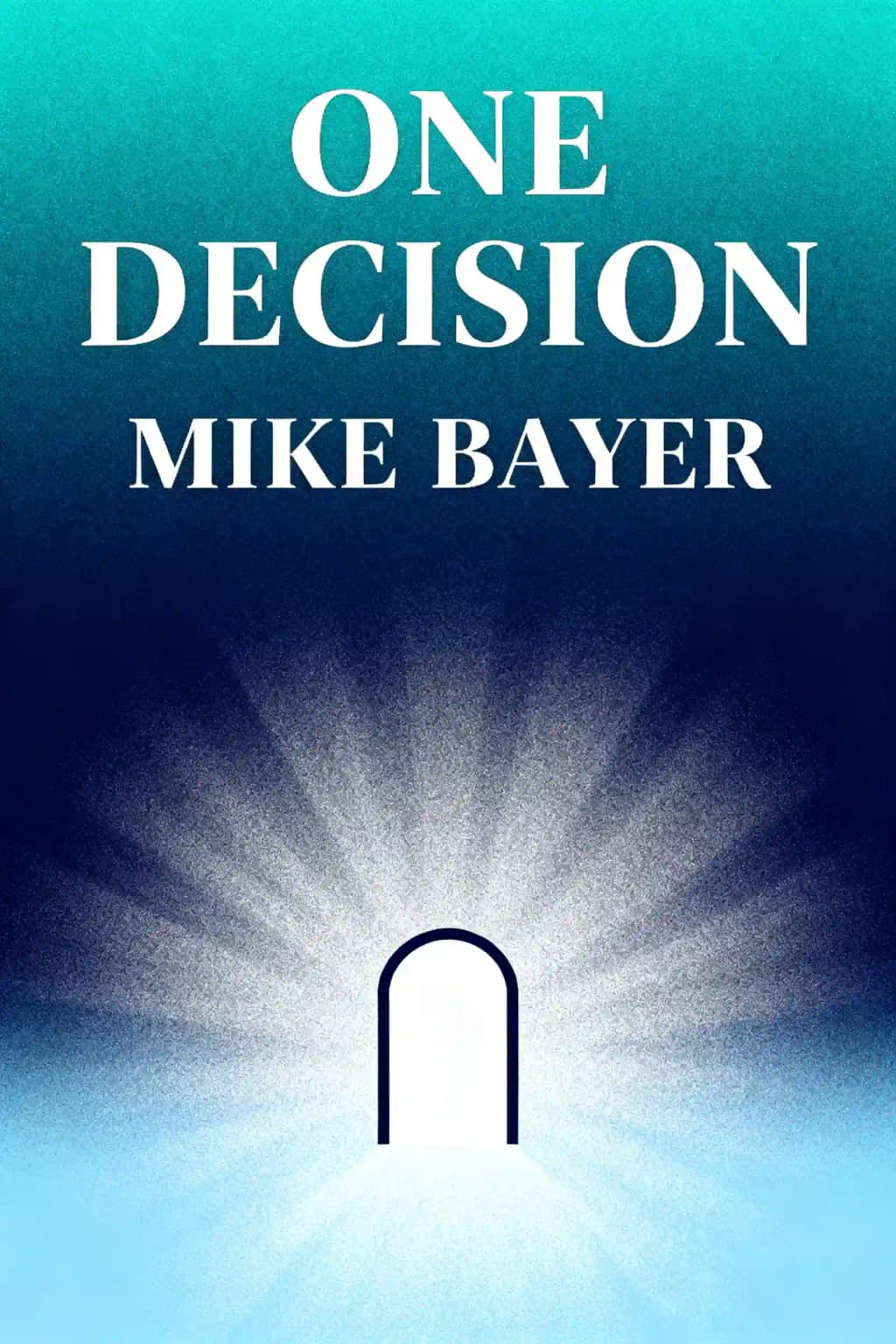
Have you ever wondered why some people seem to effortlessly create fulfilling lives while others remain stuck in cycles of frustration? What if I told you that the difference often comes down to a single authentic choice? Mike Bayer's "One Decision" has become a phenomenon among celebrities and business leaders alike, with Dr. Phil McGraw calling it "a partnership that helps readers create an action plan to stop living less than they deserve." The book has resonated deeply across industries from entertainment to healthcare, offering a refreshingly actionable approach in a sea of theoretical self-help titles. Unlike many personal development books that merely inspire without providing concrete steps, Bayer's framework has transformed thousands of lives through its practical, immediately applicable methodology. Whether you're feeling stuck in your career, relationships, health journey, or simply seeking greater purpose, this book provides the roadmap to authentic living that has made it a staple on bestseller lists and in therapy offices nationwide.
第 2 章
The Foundation: Being Your Authentic Self
At the core of Bayer's philosophy lies the concept of the "Best Self" - the authentic version of you that makes decisions aligned with your true nature rather than fear, people-pleasing, or societal expectations. This isn't about perfection but about authenticity and spiritual alignment. When we make choices from this place, we experience clarity and confidence rather than doubt and anxiety. The Best Self represents our highest potential, free from the constraints of past trauma, limiting beliefs, and external pressures.
The journey to authentic decision-making requires recognizing that our Best Self exists beneath layers of conditioning and fear-based thinking. These layers often accumulate through childhood experiences, cultural expectations, and survival mechanisms that may have once served us but now hold us back. Bayer illustrates this through his own transformative experiences, including coming out, getting sober, and starting his business - three pivotal authentic decisions that transformed his life. He visualizes his Best Self as a wizard named Merlin (even tattooing this image on his arm as a constant reminder), but encourages readers to identify their own authentic self-image, whether that's a warrior, healer, teacher, or other archetypal figure that resonates deeply.
The text presents several compelling examples of authentic decision-making in action. Renowned tattoo artist Nikko Hurtado's story stands out particularly. When Nikko's grandmother won the lottery, family conflicts erupted over the money. Rather than participating in the toxic situation, Nikko made the One Decision to walk away from the inheritance entirely, choosing integrity over wealth. Despite having no backup plan, he trusted his inner guidance and eventually built a successful career as a pioneering tattoo artist. His story demonstrates how rejecting negative patterns and making authentic choices leads to a fulfilling life aligned with one's Best Self.
This foundation of authenticity isn't a one-time choice but requires daily recommitment through both major and minor decisions. Each day presents countless opportunities to either align with or deviate from our authentic path - from how we respond to workplace conflicts to whether we honor our personal boundaries in relationships. The cumulative effect of these choices creates either a life of fulfillment or one of quiet desperation. Bayer suggests practical exercises for strengthening this authentic decision-making muscle, such as morning reflection practices, regular journaling, and "pause and check" moments throughout the day where we ask ourselves, "What would my Best Self do?"
The text emphasizes that living authentically often requires courage to face short-term discomfort for long-term alignment. This might mean declining lucrative opportunities that don't align with our values, setting boundaries with family members, or pursuing a passion despite financial uncertainty. However, the rewards of authentic living - deeper relationships, meaningful work, and inner peace - far outweigh the temporary challenges of breaking free from inauthentic patterns.
第 3 章
The Four Os: A Framework for Decision-Making
Have you ever felt stuck in patterns that don't serve your best interests? Bayer introduces the "Four Os" as a framework for understanding how we get trapped in cycles of poor decision-making and how to break free. This elegant model reveals why we often feel overwhelmed by possibilities or make choices that don't align with our authentic selves.
The first O is "Obstacle" - something we perceive as blocking our way or hindering progress. When we view life through an "obstacle lens," everything appears as a problem to be solved or overcome. This perspective leads us to blame others, make excuses, complain, adopt a victim mentality, and experience negative emotions like fear, anxiety, and resentment. Imagine wearing sunglasses that make everything look problematic - that's the obstacle lens in action.
The second O is "Opportunity" - the ability to see possibilities where obstacles once stood. Unlike temporarily wearing rose-colored glasses, viewing life through the opportunity lens leads to concrete decisions and actions. When we adopt an opportunity mindset, we become optimistic, solution-oriented, emotionally balanced, responsible, creative, and open to learning and growth. This mindset feels authentic because our Best Self consists only of positive attributes.
Consider weight loss as an example. Through the "obstacle optic," we focus on limitations: lack of time, money, or past failures. This perspective leads to inaction, complaining, and self-criticism. But through the "opportunity optic," we see possibilities: consulting friends who've succeeded, finding free activities, researching small changes, and maintaining positivity. This shift in perspective opens up actionable decisions rather than excuses.
The third O is "One Decision" - a conclusion or resolution made from within our authentic self after viewing a situation as an opportunity. Following through requires making many "uniting decisions" that support and strengthen our primary choice. The quality of this decision depends entirely on whether we're viewing the situation as an obstacle or opportunity.
The final O is "Outcome" - the way something turns out, a consequence over which we ultimately have no control. While we can control the One Decision we make, once made, we must surrender control because "the universe decides" the outcome. Bayer cautions against using the word "should," calling it a "curse word" that keeps us stuck in regret. Instead of second-guessing decisions, we should find peace in choices made from our Best Self.
This framework reveals why so many of us get stuck in cycles of indecision or poor choices. When we approach life's challenges as obstacles rather than opportunities, we make decisions from fear rather than authenticity, leading to outcomes that reinforce our negative beliefs. Breaking this cycle begins with changing our perspective.
第 4 章
Envisioning Your Better Life
What do you truly want? Most people don't actually know because they focus externally rather than internally. Surface desires (like wanting more money or a better job) often mask deeper needs (like security or purpose). Creating a better life starts with developing a realistic vision - understanding where our natural momentum lies rather than forcing ourselves in directions that don't suit us.
To create this vision, Bayer provides a Life Assessment chart where you rate each area of your life (career, health, relationships, etc.) on a scale of 1-5, from problematic to operating well. Beyond just rating, you must determine your motivation to change each area. This isn't about guilting yourself into action, but identifying where you're genuinely ready to make changes.
The assessment helps uncover the real issues beneath surface-level wants. Someone might think they need more money when they're actually seeking security. Another might rate romantic relationships poorly because they're single, without questioning if a relationship is truly important to them. By addressing the heart of what's troubling us rather than chasing external solutions, we create lasting change.
Even if multiple areas need improvement, Bayer recommends focusing on changing just one area first. One Decision in a key area can shift everything else. When we stabilize the most troublesome part of our life, other areas often improve as a result. Success builds confidence, creating a positive chain reaction.
The REP Scale helps determine the degree of change needed in your focus area:
• REINVENT: A complete overhaul where life looks completely different (like getting sober)
• EVOLVE: Growing up and glowing up to match the changing world around you (such as making health decisions as you age)
• PIVOT: Creating big change with small steps in a new direction (like spending less time on social media)
Think about it - what area of your life, if improved, would create the greatest positive ripple effect? That's where your One Decision should focus. And remember, the decision itself isn't about the outcome (like "I will lose 30 pounds") but about the authentic choice ("I will honor my body by prioritizing health").
第 5 章
The FORCE: Understanding What Drives Your Decisions
Have you ever wondered why you keep making the same mistakes despite knowing better? Bayer introduces the concept of the "FORCE" - a pattern of thinking that drives our perception of life and ultimately dictates whether we make decisions leading to a better life or causing more stress. FORCE is an acronym where each letter represents opposing mindsets - one negative (obstacle-focused) and one positive (opportunity-focused).
The F stands for Fortune-telling versus Fact-finding. Fortune-telling involves guessing outcomes without sufficient information - predicting how a supervisor will respond about a promotion or assuming a friend's reaction without asking. These guesses are based on stories rather than facts. Fact-finding counteracts this by determining the actual facts in any situation. Rather than guessing reactions, we gather logical evidence and present it.
Mike, an elite personal trainer with specialized experience working with clients who have severe mental health issues, was selling himself short due to fortune-telling. Despite his impressive 22 years of experience, he hesitated to charge appropriate rates because he feared rejection and carried a "who do you think you are?" mindset from his blue-collar upbringing. By shifting to fact-finding - acknowledging his expertise, unique skill set, and value - he gained confidence to charge appropriate rates. When he finally did raise his rates with a new client, they didn't hesitate, proving his fears unfounded.
The O represents Overgeneralizing versus Objective thinking. Overgeneralizing means drawing broad conclusions from isolated incidents - thinking "I'm a horrible parent" after occasionally yelling at your children, or labeling entire political groups without nuance. Objective thinking examines all aspects of a person or situation rather than letting preconceived notions guide our opinions. It allows us to be curious, set aside assumptions, and remain open to new ideas.
The R stands for Rigid mindset versus Relaxed mindset. Like an unbending oak tree that can be uprooted by strong winds versus a flexible palm tree that survives hurricanes by bending with the force, our mindset determines our resilience. When rigid, we believe we can control outcomes or other people, displaying "my way or the highway" thinking. When relaxed, we adapt better while maintaining our authenticity.
I witnessed rigidity's limitations during my work as an interventionist helping families address loved ones' addictions. While the company I worked for insisted on following a strict intervention script with inflexible rules, real-life situations demanded adaptability. In one pivotal case, I broke protocol by following an angry alcoholic named Bill to speak with him privately rather than staying with the family. This flexible approach succeeded where rigid adherence to rules might have failed. Bill went to rehab and remains sober today.
The C represents Confused purpose versus Clarified purpose. Confusion manifests as overthinking, obsessive research without conclusions, seeking multiple opinions from unqualified people, and people-pleasing behaviors. The antidote is clarifying your purpose through exploration and curiosity. Confusion can only exist where there's no purpose.
I recently coached Austin, a 31-year-old stuck in an unfulfilling job for seven years. Despite his Japanese studies and international business dreams, he remained in a furniture company position that offered travel but no fulfillment. Our conversation revealed his paralysis stemmed from confusion about his purpose. After addressing his underlying depression and anxiety, he began seeing his work and lifestyle didn't need to be separate. When he unexpectedly got laid off, instead of seeing it as a setback, he viewed it as an opportunity to pursue his lifelong fascination with aviation. Now Austin is working toward becoming a pilot, finally aligned with his authentic purpose.
The E stands for Emotional reasoning versus Evidence-based reasoning. Emotional reasoning involves believing feelings are facts - making decisions based solely on how we feel rather than objective reality. Evidence-based reasoning is the antidote - gathering all relevant facts before forming opinions, just as a detective would.
I personally experienced this transformation with public speaking, which I avoided for years despite running a charity with events in over 75 cities. When I finally examined the evidence instead of my emotions, I realized I'd been honing these skills for two decades through my work at CAST Centers. Now I regularly appear on Dr. Phil, speak at global corporate events, and host my podcast. The more I embraced evidence over emotion, the more confident I became.
By identifying which negative FORCEs are driving your decisions, you can consciously shift to their positive counterparts, transforming obstacles into opportunities.
第 6 章
Your Decision-Making Team
Success in any area of life depends on the people surrounding you. No one achieves greatness alone, and building an effective decision-making team is crucial for making authentic choices. These team members don't just help with specific decisions but support your emotional and spiritual well-being, enabling better decision-making overall.
The key is identifying the right people for different types of decisions before urgency arises. What matters most isn't their expertise but their ability to know and support your authentic self - teammates who help you make decisions as your Best Self rather than just giving "good advice."
Consider Deacon's powerful life story as an example of transformation supported by the right team. After his initial recovery from addiction, he faced another challenge when dating someone who used drugs, causing him to relapse and lose his job. This time, he recognized his two choices before hitting rock bottom again. Having experienced both the emptiness of addiction and the fulfillment of meaningful work, he chose sobriety, ended the toxic relationship, and rebuilt his life. Now traveling globally in a career he loves, Deacon attributes his success to learning from everyday role models around him - nurses, bartenders, and others whose kindness inspired him.
When building your own decision-making team, look beyond obvious confidants like spouses or siblings. Consider less conventional influences like podcast hosts or social media figures who regularly impact your thinking. Your authentic team should help you stay aligned with your Best Self both while making decisions and experiencing their outcomes.
Some team members will provide accountability when you're tempted to abandon good decisions during moments of weakness - like a nurturer who talks you through loneliness after leaving an unhealthy relationship, a big-picture thinker who reminds you why you changed careers, or a motivator who joins your fitness journey when results seem slow.
When seeking advice, consider the advisor's agenda. A mother desperate for grandchildren might think any partner will do, while a lifelong friend genuinely wants what's best. When feeling vulnerable during decision-making, be mindful of others' agendas, asking "What might this person's agenda be, and does it align with my own?" before seeking their counsel.
Remember that you're likely on other people's teams too. You don't need to be all things to all people - identify which specific role suits you best. The goal is to love others for who they truly are and help them stay on that path. Everyone wins when we help others feel seen for who they truly are.
第 7 章
Taking Authentic Action
By now, you understand how the FORCE works in your life and can recognize when you're driven by its negative aspects. You've learned to hack negative forces into positive ones, seeing obstacles as opportunities. With your support team helping you stay aligned, you're empowered to take action as your Best Self - not just focusing inward but getting your whole life into alignment with your authentic self.
Whether you're tired of your current situation, need to protect yourself, enhance your life, or create more love and peace - it always begins with your One Decision to act as your Best Self. When we get out of alignment, it's often because we aren't following our truth, heart, or destiny. But making decisions as your Best Self ensures your next steps align with your authenticity.
To create change, we must first make a decision and then behave our way to success. Start by identifying behaviors that aren't working for you. For example, if you want to lose weight, investigate current behaviors keeping you overweight. These behaviors often form a cycle - one leads to another, keeping you stuck going in circles. By writing out these patterns rather than just thinking about them, you can clearly see which daily decisions need to change to support your goals.
When we stop behaviors preventing positive change, we must replace them with ones that move us forward. We never truly "break" habits; we simply replace them with new ones. Your One Decision is surrounded by many uniting decisions - the actions you need to take or behaviors you need to adopt to reach your goals.
For instance, if improving your social life is your goal, instead of meeting people at bars, you might join a running club or art class where you'll connect through shared interests. For weight loss, preparing meals in advance prevents impulsive unhealthy choices when you're hungry, carrying water helps avoid snacking, and choosing a realistic workout routine supports your goal.
Once we implement supportive behaviors, they develop natural momentum. As you act on supporting decisions moving you toward your goal, these activities become easier. Before long, your daily behavior naturally supports your One Decision without much effort.
After identifying behaviors to stop and start, get your One Decision team involved. Depending on your goal, you may need just one team role or several, especially when first starting out. Creating a flowchart for your One Decision action plan helps you see how everything connects. Start with your One Decision, then add "Create Decision Team" and "Stop This, Start That" as overarching steps.
After making your One Decision as your Best Self, the final step is surrendering control of the outcome. There's profound freedom in "letting go and letting God" because the universe might have something planned that's infinitely better than what you expected. Your job is to feel confident that you carefully made decisions from your Best Self, viewed through the lens of opportunity.
第 8 章
Living Unapologetically Authentic
If you've gotten this far in exploring Bayer's philosophy, you've accomplished something remarkable that many people don't - you've done the challenging work of deep self-examination. The most important lesson is that who you are is exactly who you should be. This isn't about complacency, but rather about acknowledging your inherent worth while continuing to grow and evolve.
Living authentically is a daily decision, and we won't always succeed. Bayer shares his own missteps throughout the book, like times he caught himself people-pleasing or making decisions from fear rather than conviction. He acknowledges that perfection isn't the goal - consistency and self-awareness are. When we make mistakes or fall into old patterns, we now have tools to find our way back, tap into positive FORCEs, and make decisions as our Best Self. This might mean pausing before reacting, checking in with our values, or reaching out to our support system.
What would change if you decided to never give up on yourself, embrace your uniqueness, silence excuses, be solution-focused, see past struggles as signs of resilience, spend time on what lifts you up, lift others, love unconditionally, tell your story, and love yourself? These aren't just platitudes but actionable decisions that, when made authentically, transform not just our own lives but the lives of everyone around us. For example, when you choose to share your story honestly, it gives others permission to do the same. When you prioritize activities that energize you, you show up more fully in all your relationships.
The journey to authenticity isn't always easy - it requires courage to face our fears, honesty to acknowledge our patterns, and vulnerability to open ourselves to new possibilities. This might mean having difficult conversations, setting boundaries with loved ones, or leaving situations that no longer serve our growth. Bayer emphasizes that discomfort is often a sign we're moving in the right direction. The alternative - living a life dictated by fear, others' expectations, or societal pressure - is far more painful in the long run. As Bayer reminds us, we have limited time on this earth. The question isn't whether we can afford to live authentically, but whether we can afford not to.
Consider the ripple effects of your authentic choices: how showing up as your true self inspires others, how honest vulnerability creates deeper connections, how aligned decisions lead to unexpected opportunities. Each authentic choice builds momentum toward a more fulfilling life. What One Decision, if made from your Best Self today, would set you on a path toward the life you truly desire? Whatever it is, that's your next step. Remember that authenticity isn't about dramatic gestures - it's about small, consistent choices that align with your values and truth.