第 1 章
The Art of Living Fully: Time's Most Precious Currency
Time is the one resource we can never recover, yet we squander it as if it were infinite. In Seneca's timeless masterpiece "On the Shortness of Life," the Stoic philosopher delivers a wake-up call that resonates as powerfully today as it did two thousand years ago. This work has influenced countless modern thought leaders, from Silicon Valley executives to mindfulness advocates. Ryan Holiday, bestselling author and modern Stoic, credits this text as "life-changing," while Tim Ferriss considers it required reading for anyone seeking to live intentionally. Written during Rome's tumultuous imperial period, Seneca's message transcends its ancient context to address our modern epidemic of busyness and distraction. As we scroll through social media and rush between commitments, his words challenge us: Are we truly living, or merely existing? The shortness of life, Seneca argues, is not a natural condition but a self-inflicted wound-one that we can heal by reclaiming our relationship with time.
第 2 章
The Paradox of Time: Abundant Yet Squandered
Life is long enough for the greatest accomplishments if we use it wisely. This is Seneca's provocative opening claim-a direct challenge to our common complaint that life is too short. The problem isn't that we have too little time, but that we waste so much of it. We squander our most precious resource as if it were infinitely abundant, yet guard our material possessions with jealous care. "We do not receive a short life," Seneca declares, "we make it short."
Consider how we distribute our time. We readily give it away to money-lenders, mistresses, patrons, and pointless social obligations. We surrender hours to domestic quarrels, frivolous entertainment, and mindless socializing. When someone asks for our money, we carefully consider the request, but when they take our time-something infinitely more valuable-we give it freely without thought.
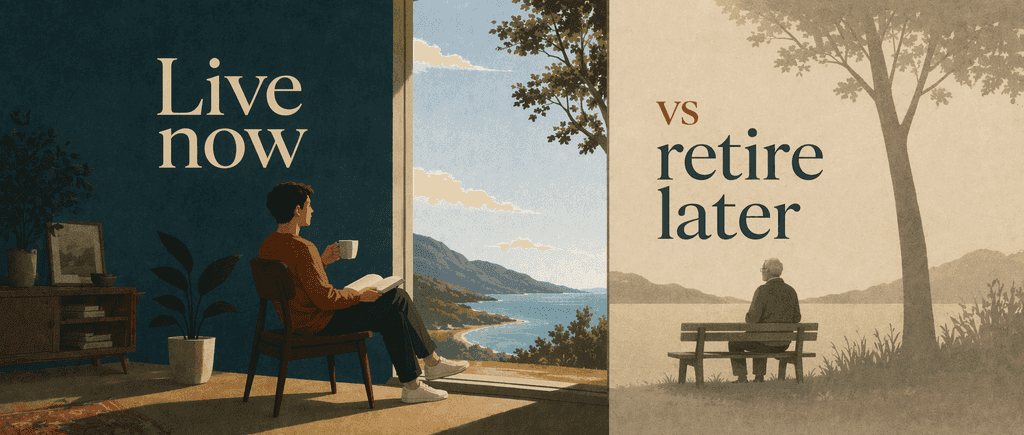
Our behavior reveals a profound contradiction: we live as if immortal while fearing death like mortals. We postpone meaningful living until some future retirement, foolishly saving wisdom for our final years when our faculties may be diminished. Even the most powerful succumb to this delusion. Augustus Caesar, despite commanding the known world, constantly longed for leisure, writing that he anticipated its delights through words alone. His life was consumed by civil wars, conspiracies, and family troubles-a cautionary tale that power doesn't exempt one from time's constraints.
Think about your own relationship with time. How many hours have you lost to activities that added no value to your life? How often have you said, "I'll focus on what matters when I have more time"? The uncomfortable truth is that we rarely achieve our purposes or remain at our own disposal, instead allowing others to plunder our lives through groundless emotions and societal distractions. Time cannot be recovered-it glides quietly forward without pause. The wise person organizes each day as if it were their last, while the foolish postpone living through endless expectancy.
第 3 章
The Preoccupied Life: Busy Yet Barren
The preoccupied person-Seneca's "occupati"-lives in a peculiar state of contradiction. Despite constant activity, they accomplish nothing of lasting value. These individuals include not just those harried by public duties but even those whose leisure is merely "idle preoccupation." They obsess over Corinthian bronzes, wrestling matches, or arranging their hair with absurd precision. They compose frivolous songs or host ostentatious banquets where "wretched little slaves wipe up the spittle of drunkards."
Some are so disconnected from themselves they need servants to tell them whether they're sitting down. These men aren't merely un-leisured but practically dead-breathing corpses going through the motions of life. Others waste time accumulating pointless knowledge: who first won naval battles, who first included elephants in triumphs, or how Pompey exhibited eighteen elephants in brutal spectacles. Such trivial pursuits neither enhance private knowledge nor serve public good.
In our modern context, we might recognize these preoccupied types in different forms: the executive who fills every minute with meetings yet never addresses fundamental problems; the social media addict constantly scrolling but never connecting; the person who knows every celebrity gossip detail but remains ignorant of their own inner life. The preoccupied mistake movement for meaning and activity for achievement.
The worst offenders, Seneca notes, are those devoted to drinking and lust, but even the ambitious waste their lives in trivial activities. Learning to live takes a whole lifetime, yet the preoccupied never master this art. They rush through life without direction, constantly busy yet accomplishing nothing of substance. They reach the end of their days having never truly lived.
This preoccupation creates a cruel irony: those who seem most active in society are often the least alive in the philosophical sense. They've surrendered their time to external demands without ever developing their inner resources. As Seneca pointedly asks, "Can anything be more idiotic than certain people who boast of their foresight? They keep themselves very busily engaged in order that they may be able to live better; they spend life in making ready to live!"
第 4 章
The Philosophy of Presence: Expanding Life Through Wisdom
Only those who make time for philosophy truly live. This bold claim forms the cornerstone of Seneca's solution to life's brevity. The philosopher expands their life by annexing all ages to their own through study. "We are excluded from no age," Seneca writes, "but we have access to them all." While social climbers exhaust themselves visiting the powerful-who often avoid them through back doors-philosophers commune with immortal minds, drawing from an inexhaustible well of wisdom that spans centuries.
Zeno, Pythagoras, Democritus, and other "high priests of liberal studies" are always available, never too busy, never dangerous to befriend. Unlike living mentors who might be capricious or unreliable, these ancient teachers offer consistent guidance through their enduring works. We can choose these noble intellects as our spiritual parents and inherit their wisdom, learning from their triumphs and mistakes without the constraints of time or space. Their works, unlike monuments or material achievements, resist time's destruction, speaking to us across millennia with undiminished clarity and relevance.
The philosopher's life "extends widely," embracing past, present, and future simultaneously, while others live anxiously, forgetting the past, neglecting the present, and fearing what's ahead. This temporal expansion occurs through both study and contemplation. When we engage with philosophical texts, we're not merely reading words but participating in a grand conversation that spans human history. Each philosophical work becomes a gateway to different epochs, perspectives, and ways of understanding the world.
Consider how this principle might apply today. When you read Marcus Aurelius's Meditations, you're not just consuming information; you're engaging in conversation with a Roman emperor across millennia, understanding how he grappled with power, responsibility, and mortality. When you contemplate Plato's dialogues, you're participating in discussions that shaped Western thought, experiencing firsthand the development of critical thinking and ethical reasoning. This intellectual communion doesn't merely distract from life's brevity-it fundamentally expands our experience of living by connecting us to the collective wisdom of humanity.
The philosophical life also brings presence to our daily experience. Most people, Seneca observes, live divided lives-regretting the past, anxious about the future, never fully inhabiting the present moment. They fragment their existence across time, never achieving the unity of purpose that characterizes a well-lived life. The philosopher, by contrast, integrates all temporal dimensions. They learn from history without being trapped in regret, plan for the future without anxiety, and fully engage with present circumstances. This integration creates a sense of wholeness that transcends time's limitations.
Through philosophical study, we gain not just knowledge but a transformed relationship with time itself. Each hour spent in contemplation of wisdom becomes multiplied, as we absorb the experiences and insights of countless thinkers. This practice of philosophical engagement offers a practical solution to life's brevity - not by extending our physical years, but by deepening and enriching our experience of the time we have.
第 5 章
Exile and Inner Freedom: Lessons from Banishment
Seneca's own exile provides powerful lessons about freedom and constraint. Banished to Corsica by Emperor Claudius, he experienced firsthand how external circumstances test philosophical principles. Rather than viewing exile as punishment, Seneca reframes it as an opportunity to demonstrate that true freedom comes from within.
"I have decided to conquer your grief, not cheat it," he writes to his mother Helvia, showing how philosophy provides not escapism but genuine resilience. He argues that he suffers nothing that makes him wretched-these circumstances others think crushing can be borne. External goods have trivial importance, as prosperity doesn't elevate the sage nor adversity depress him.
Exile, Seneca argues, is merely a change of place. This perspective reveals how much of our suffering comes not from circumstances themselves but from our judgments about them. He observes that most of Rome's inhabitants came from elsewhere-drawn by ambition, duty, studies, or opportunity. The human spirit possesses an inborn restlessness and urge to change abode. Throughout history, nations and peoples have changed their abodes-Greeks in barbarian territories, Achaeans on Pontus shores, Athenians in Asia.
To the wise person, every place can be their country. Marcellus, another famous exile, endured his banishment with equanimity, consoling himself that "being without one's country is not misery" and that the wise man finds his country everywhere. Even Caesar was absent from Rome for ten years expanding Roman domains.
This philosophical perspective on exile extends to all external circumstances. Poverty, which often accompanies exile, holds no true evil for those not consumed by greed and luxury. The body's needs are remarkably few-protection from cold and nourishment to satisfy hunger and thirst. Everything beyond these necessities serves our vices, not our needs.
The mind creates our true wealth and accompanies us in exile. In the harshest places, it finds sufficient nourishment and enjoys its own goods. Material possessions-marble, gold, silver-are mere earthly burdens to the pure soul, which is free, divine, and encompasses the universe. While the body may suffer exile's physical limitations, the soul remains holy and eternal, beyond all constraints.
第 6 章
Consolation Through Connection: The Power of Human Bonds
When facing life's hardships, our connections with others provide essential consolation. Seneca demonstrates this principle in his letter to his mother Helvia, showing how relationships sustain us through difficulty. Despite his exile, he reminds her of immediate consolations: her other sons, with their contrasting virtues-one distinguished in public office, the other wise in retirement-both devoted to her comfort. He mentions her charming grandson Marcus, whose playfulness could soothe any heart, and her granddaughter Novatilla, who needs her guidance.
These relationships don't merely distract from suffering; they give life meaning even in adversity. Seneca points to his aunt who nursed him through illness and overcame her natural shyness to support his career. This sister, who once bore the loss of her husband during a shipwreck yet bravely recovered his body for burial, exemplifies the strength Helvia must now show.
The consolation extends beyond immediate family to the broader human community. Seneca reminds us that we're never truly alone when connected to others through bonds of love and shared humanity. Even in exile, he maintains these connections through correspondence and philosophical dialogue.
This perspective offers profound wisdom for our increasingly isolated modern lives. Despite unprecedented technological connectivity, many experience deep loneliness. Seneca's emphasis on meaningful human bonds reminds us that genuine connection-not just digital interaction-sustains us through hardship.
He also highlights the importance of carefully choosing our associates. We must select those worth devoting our time to, as some people fail to value our services. Nothing delights the mind like loyal friendship-having trusted confidants whose conversation soothes distress, whose advice helps decision-making, whose cheerfulness dissolves sorrow. Choose friends free from strong desires, Seneca advises, as vices spread like disease through close contact.
These relationships must be cultivated with intention. Just as we wouldn't dine with someone who wouldn't feel indebted to us, we shouldn't invest our emotional energy in those who take without reciprocating. True friendship involves mutual growth and support-a shared journey toward wisdom.
第 7 章
The Tranquil Mind: Finding Stability in Turbulence
Mental tranquility-what the Greeks called "euthymia"-represents the ultimate goal of Seneca's philosophy. This isn't passive contentment but a dynamic stability that withstands life's inevitable turbulence. The tranquil mind maintains its equilibrium regardless of external circumstances.
Serenus, Seneca's friend, describes his troubled mental state-a condition where some vices appear clearly while others hide in the depths, leaving him in a middle state neither fully free of vices nor completely subject to them. Though he genuinely loves frugality, he finds himself dazzled when exposed to luxury. His ambitions in writing similarly fluctuate between simplicity and grandeur. This weakness in good intentions pursues him in every sphere, leaving him feeling like someone perpetually on the edge of falling.
Seneca compares this condition to someone recovering from serious illness-physically healed but not yet accustomed to health. What Serenus needs is confidence rather than harsh self-discipline. The dissatisfaction with oneself arises from mental instability and unfulfilled desires. When efforts go unrewarded, people become trapped in repentance, fear, and stagnation.
To achieve tranquility, we must first practice self-assessment. Before undertaking any activity, we must carefully evaluate ourselves, our intended actions, and those with whom we'll work. People frequently overestimate their capabilities-some trust too much in their eloquence, others make excessive financial demands, while some tax frail bodies with strenuous work. We must match our strength to our tasks, avoiding undertakings that spawn endless new obligations.
Managing possessions also contributes to tranquility. Private possessions cause the greatest human misery-the pain of losing money far outweighs other sufferings. Better to never acquire wealth than to lose it, as those never favored by Fortune maintain more cheerfulness than those she abandons. Diogenes exemplified this by arranging that nothing could be taken from him, achieving a position of invulnerability.
The ideal amount of wealth neither falls into poverty nor far exceeds it. Thrift makes any amount sufficient, while no sum satisfies without it. We should abandon ostentation, measuring things by function rather than display. Let food satisfy hunger, drink quench thirst, and sex fulfill natural needs.
第 8 章
Embracing Mortality: The Key to Authentic Living
Our fear of death paradoxically prevents us from truly living. By accepting mortality as our condition from conception, we guarantee no events take us by surprise. Foreseeing troubles softens their onslaught-disease, imprisonment, disaster, and fire fall heavily only on those carelessly expecting all will be well. This acceptance isn't mere resignation but a powerful tool for living more fully in the present moment.
The value we place on life often becomes its own prison. Like a miser clutching gold too tightly to spend it wisely, we sometimes grip life so fearfully we forget to live it. We must strip off this excessive value we set on life and reckon breath as something cheap - not worthless, but natural and transient. Like gladiators who earn favor by showing contempt for life, we often paradoxically die because we fear death. Those who face mortality directly free themselves to live authentically in the present moment, unburdened by the constant anxiety of loss.
Ancient wisdom provides compelling examples of this philosophy in action. Consider Zeno, the founder of Stoicism, who when told his possessions had sunk at sea, said "Fortune bids me be a less encumbered philosopher." His response demonstrates how material loss becomes meaningless when we understand life's temporary nature. Theodorus, when threatened with death and denied burial, replied with philosophical detachment that it mattered not whether he rotted above or below ground - recognizing that the body's fate after death holds no real significance. Perhaps most striking is Julius Canus, who faced execution by Emperor Caligula with such serenity that he spent his final hours playing draughts, even expressing curiosity about whether he might observe the truth about soul's immortality in his moment of death.
These figures demonstrate remarkable serenity amid life's hurricanes-not because they denied death's reality but because they fully accepted it. Their acceptance freed them from anxiety and allowed them to live with integrity even in their final moments. This wasn't mere stoic endurance but a profound understanding that death gives life its shape and meaning.
This perspective transforms how we view human suffering and heroic deaths. When good men face terrible fates-Socrates calmly drinking hemlock in prison, Rutilius maintaining dignity in exile, Pompey and Cicero facing political assassination, Cato choosing death over tyranny-we should observe carefully how each bore his fate. Their examples teach us that courage in facing death matters more than the death itself. If they were brave, we should long for similar spirit; if cowardly, nothing of value died with them. Those who die bravely achieve a kind of immortality through their example, while those who look back toward life with tears prove themselves unworthy of the life they had.
By embracing our mortality, we gain a clearer perspective on what truly matters. Trivial concerns and petty anxieties fall away when measured against life's finitude. We recognize that living well means living intentionally-using our limited time for what genuinely matters rather than postponing authentic living to some imagined future. This acceptance of death becomes not a morbid preoccupation but a clarifying lens through which we can better appreciate life's beauty and urgency.
第 9 章
The Balance of Solitude and Society: Rhythms of Engagement
The wise person understands the need for both solitude and social engagement. We must often withdraw into ourselves, as associating with unlike minds disturbs our calm and rekindles passions. Yet solitude and crowds should be balanced-each remedies the other. Solitude cures our distaste for crowds, while crowds cure our boredom with solitude.
This balance reflects the natural rhythm of human experience. Even the most contemplative philosopher needs social interaction to test ideas and maintain perspective. Conversely, the most socially engaged person requires periods of solitude for reflection and renewal.
Seneca also emphasizes the importance of relaxation. The mind requires amusing diversions rather than constant concentration. Socrates played with children, Cato refreshed himself with wine, and Scipio danced in the manly old-fashioned style. Our minds must relax to rise keener afterward. Like fertile farmland that exhausts with uninterrupted productivity, constant mental effort leads to dullness.
Though play brings natural pleasure, excessive indulgence destroys mental gravity. Sleep restores but becomes death if prolonged endlessly. We must slacken our hold occasionally without severing the link entirely. Even great men like Asinius Pollio divided their days between work and leisure, refusing to read letters after the tenth hour.
Sometimes we must even abandon sober restraint, for as the Greek poet says, "Sometimes it is sweet to be mad." Plato observed that "A man sound in mind knocks in vain at the doors of poetry," while Aristotle claimed "No great intellect has been without a touch of madness." Only a deeply stirred mind can utter something noble beyond ordinary powers. When it scorns commonplace thoughts and rises on divine inspiration, it sounds notes no mortal voice could otherwise utter.
This balance between discipline and release, solitude and society, work and leisure creates the conditions for genuine tranquility. Rather than rigidly adhering to a single mode of being, the wise person moves fluidly between different states as circumstances require.
第 10 章
Living Authentically: Against Pretense and Toward Wisdom
Another considerable source of anxiety comes from assuming a false pose and never revealing your true self. Living behind a mask is agonizing-constantly fearing being caught when your mask slips. Even if successful, such a life lacks pleasure and peace. How much more delightful is honest, natural simplicity that hides nothing!
Though authenticity risks contempt through overfamiliarity, virtue never becomes cheap through close observation. Better to be despised for simplicity than tortured by constant pretense. Still, moderation is key-there's a vast difference between living simply and living carelessly.
Authenticity extends beyond social interaction to our relationship with ourselves. We must avoid wasting energy on pointless activities-neither longing for what we cannot achieve nor pursuing what proves futile once gained. Many people rush aimlessly between houses, theaters, and forums, intruding into others' affairs while appearing busy. Like ants crawling purposelessly over bushes, they live in busy idleness, rushing to events of no importance-funerals of strangers, trials of constant litigants, or betrothals of serial brides.
All activity should have purpose and end in view. It's not industry that makes men restless but false impressions driving them mad. The safest policy is to engage in few activities when no binding duty summons us, rarely tempting Fortune while keeping her always in mind.
We should become flexible, not pinning hopes too much on set plans, able to move toward what chance brings without dreading change. Both obstinacy and fickleness are enemies of tranquility. The mind must withdraw from external objects into itself-trusting itself, rejoicing in itself, admiring its own things.
When gripped by hatred of humanity-seeing simplicity's rarity, innocence unknown, loyalty conditional, and successful crimes abundant-we must learn to regard common vices as ridiculous rather than hateful. We should imitate Democritus who laughed at human folly rather than Heraclitus who wept over it. Making light of life is more civilized than bewailing it; laughter expresses our gentlest feelings and recognizes nothing in human existence is truly great or serious.
The path to tranquility requires constant vigilance. None of these methods is strong enough to preserve something so fragile unless the wavering mind receives constant and attentive care. By living authentically, balancing engagement with withdrawal, and maintaining perspective on human folly, we create the conditions for genuine peace of mind-not as a permanent state, but as an ongoing practice of wisdom.