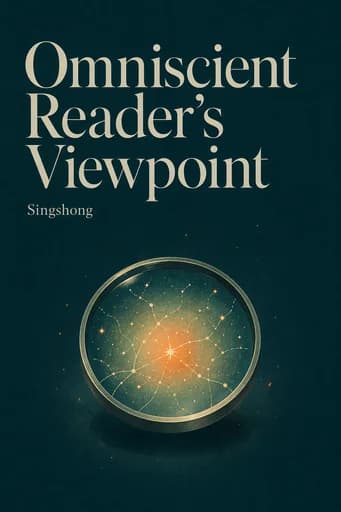
《全知读者视角》摘要概述
当一名书虫发现他最喜欢的末世网络小说变成了现实时,他是唯一知道接下来会发生什么的人。凭借全球 3.6 亿次的浏览量,以及 ITZY 的申留真(Ryujin)极力推荐——“你一定要看!”——这部元叙事杰作重新定义了故事创作。
下载《全知读者视角》摘要
免费获取《全知读者视角》摘要的 PDF 或 EPUB 版本。可打印或随时离线阅读。
当一名书虫发现他最喜欢的末世网络小说变成了现实时,他是唯一知道接下来会发生什么的人。凭借全球 3.6 亿次的浏览量,以及 ITZY 的申留真(Ryujin)极力推荐——“你一定要看!”——这部元叙事杰作重新定义了故事创作。
免费获取《全知读者视角》摘要的 PDF 或 EPUB 版本。可打印或随时离线阅读。
由哥伦比亚大学校友创建 | 源自旧金山
平均评分
7,840+ 条 App 评分
BeFreed 社区
说真的,我还没把这个 app 完全摸透,但用了这几天已经被惊艳到了… BeFreed 和我用过的任何学习类 app 都不在一个层级。它让人特别投入,还能实实在在地提升专注力,对刷手机停不下来的人来说太合适了!
@ladyInfinity
我买 BeFreed 正好 23 天,从那以后每天都在用。它已经完全融入了我的日常工作流和学习习惯。
@jayallen
说实话,这个 app 超出了我所有的预期。我可以让它就任何主题生成音频,无论是什么,效果都很惊艳。我的专业领域是心理治疗方向,而且是多学科交叉的,但它给出的内容非常准确。
@Raguipa
我最感激的是它大大减少了我刷手机的时间——花在搜索上的时间少了,吸收信息的时间多了。完整有声书、播客加上学习计划的组合,真的很出色。
@colonyofcreatorsNGO
我做 PhotoReading 快速学习讲师已经 24 年了… 书籍、阅读和学习就是我的本行,而 BeFreed 用一种创新的方式,把知识变得特别容易吸收,做得非常出色。
@BeFreed user
它不只是一个书籍摘要 app。我用过「有趣」这个阅读模式,比传统方式的摘要好得多,理解观点也更容易,光这一点就值回票价。
@austinakon
我爱这个 app。用了几天,完全停不下来。作为开始,再好不过了。
@jcrules328
我真的很喜欢这个产品;已经试用了大概一个月,感觉挖到宝了。它特别好用,因为我可以用 BeFreed 创建自己想学的主题,声音也很棒,旁白选择多到用不完。
@DanielCZ
我特别喜欢它能把有用的信息和想法浓缩成 8-15 分钟的播客式音频。我本来不太爱听播客,因为废话太多,但它把这些全都去掉了。
@BeFreed user
我正在读博士的最后阶段,需要读大量不熟悉的材料… 用 BeFreed,只要输入一个提示,app 就会帮你找到源材料并生成一期音频播客。我觉得 BeFreed 的流程比 NotebookLM 更顺畅。
@Brad
我经常在做早餐、散步、通勤的时候上 YouTube 找点东西听,而 BeFreed 提供了更有针对性的选择,没有广告,也没有废话!
@BeFreed user
这个平台最棒的地方是它的多面性。真的没有任何主题是它讲不了的,你丢给它什么它都能处理… 很少能找到一个毫无限制、又真正兑现承诺的学习工具。
@jayallen
BeFreed 太棒了。界面好用,让我花在找功能上的时间更少,花在学习上的时间更多。有声书、播客和学习计划的组合是天才设计,彻底改变了我的日常。
@BeFreed user
一开始我花了点时间才弄明白怎么生成意大利语的播客,然后就——哇!太棒了!我可以让它讲解任何一个话题,它讲得又好又聪明!
@matteo77
BeFreed 已经成了我每天都用的有声书 app… 我最喜欢的是,把自己的文字放进去,它就能生成随时随地都能听的音频。
@kotanzu1



来自《全知读者视角》的相同理念。选择适合你的声音、深度和节奏,随时切换。
Imagine waking up to discover that your favorite novel has suddenly become reality-with you as the only person who knows how the story ends. This is the premise of "Omniscient Reader's Viewpoint," a web novel that has captivated millions with its unique blend of apocalyptic fiction, game mechanics, and meta-storytelling. Originally published online by the writing duo singNsong, this Korean web novel has grown into a global phenomenon, inspiring a wildly popular webtoon adaptation and amassing a dedicated fanbase across continents. What makes this story particularly fascinating is how it explores the thin boundary between fiction and reality, reader and protagonist-a theme that resonates deeply in our increasingly digital world where stories shape our understanding of reality itself.
Kim Dokja embodies the quintessential everyman - a 28-year-old office worker trapped in the endless cycle of contract renewals at a mid-tier company, his desk adorned with stacks of reports he routinely ignores in favor of his true passion: web novels. His name carries a clever double meaning in Korean, simultaneously translating to "only child" and "reader" - a linguistic coincidence that becomes prophetic. In a society that values career advancement and social connections, Dokja stands apart, finding solace in the digital pages of stories others have long abandoned. For exactly ten years, three months, and twenty-seven days, Dokja has been the sole faithful reader of an obscure web novel titled "Three Ways to Survive the Apocalypse" (TWSA). Despite its sprawling 3,149 chapters and consistently low ratings, he's persevered where countless others dropped off. His dedication goes beyond casual reading - he's created detailed character analyses, mapped intricate plot connections, and even memorized specific dialogue exchanges. His colleagues mock his obsession, his family worries about his social isolation, but Dokja persists, finding meaning in a story the rest of the world has dismissed. This seemingly futile investment in fiction becomes Dokja's salvation when reality fractures on an otherwise ordinary evening. During his usual subway commute on line 3716, precisely at 7:00 p.m., a mechanical voice shatters the monotony: "The free trial period for planetary system 8612 has ended. The main scenario has begun." In that moment, fluorescent lights flicker and die, smartphones go dark, and the familiar world dissolves into the apocalyptic landscape he knows intimately from TWSA. What sets Dokja apart in this new reality isn't any special power or physical ability - it's his comprehensive knowledge of the narrative now unfolding around him. While others scramble to understand the sudden appearance of mythological creatures and deadly game-like scenarios, Dokja possesses an invaluable script of future events. This advantage, however, comes with its own complications. He's still physically unremarkable, susceptible to the same dangers as everyone else, and his knowledge, while extensive, doesn't guarantee survival. Each deviation from the original story creates ripples of uncertainty, forcing him to constantly adapt his strategies. The premise masterfully subverts the common reader's daydream of entering their favorite story. While many imagine such a scenario as empowering, Dokja's reality is far more complex. His knowledge becomes both a blessing and a curse - he can anticipate major threats and guide others to safety, but he's also haunted by the weight of his responsibilities. Should he try to save everyone? Can he change the darker parts of the plot? And most crucially, what happens when his actions begin to alter the very story he's relied upon? These questions transform what could have been a simple power fantasy into a nuanced exploration of knowledge, responsibility, and the price of being unique.
轻松跟读,《全知读者视角》摘要中的每个词都会随音频实时高亮。
The apocalyptic world of "Omniscient Reader's Viewpoint" operates on a chilling premise-humanity has become entertainment for cosmic beings called "Constellations." These god-like entities watch human struggles through channels managed by goblin moderators, donating "coins" to humans (now called "incarnations") they find interesting. These coins become literal currency for survival in the new world order. This system manifests through "scenarios"-deadly challenges with specific requirements and time limits. The first scenario Dokja encounters sets the tone for this merciless new reality: kill at least one living creature within 30 minutes or die. As passengers in Dokja's subway car panic and turn on each other, he cleverly identifies a loophole-the scenario requires killing "living creatures," not necessarily humans. By crushing grasshopper eggs from a child's bug cage, Dokja saves most of the passengers while earning his first achievement as a "Mass Murderer" for killing 124 living creatures. The scenario system creates a fascinating moral landscape where survival often conflicts with humanity. Characters must decide how far they'll go to stay alive, with some immediately abandoning their moral codes while others cling desperately to their pre-apocalypse ethics. The system rewards both approaches in different ways-ruthlessness often brings immediate survival benefits, while maintaining humanity can attract certain Constellations who value such traits. This gamification of survival adds multiple layers to the story. Characters must not only overcome physical challenges but also navigate complex rules, manage resources (primarily coins), and consider how their actions might appeal to watching Constellations. The system creates a constant tension between short-term survival and long-term strategy, between acting on impulse and carefully planning each move. What makes this world particularly disturbing is the realization that humanity has always been entertainment for these cosmic beings-the "free trial" has merely ended, forcing humans to "pay" for their continued existence through participation in these deadly games. This premise cleverly comments on our own consumption of disaster entertainment and reality television, turning the tables by making humans both the participants and the unwilling audience of their own apocalypse.
In this brutal new reality, Dokja's seemingly useless hobby becomes his greatest weapon. His comprehensive knowledge of "Three Ways to Survive the Apocalypse" gives him insights no one else possesses-he knows which scenarios will appear, what monsters will emerge, and which characters will become crucial to the story's progression. This knowledge manifests through his unique skill "Omniscient Reader's Viewpoint," allowing him to see the thoughts and intentions of characters from the original novel. Dokja's advantage is immediately apparent when he encounters Hyeonseong Lee and recognizes him as a major character from the novel. Later, when faced with the novel's protagonist, Junghyeok Yu (a "Regressor" who has lived through multiple apocalyptic cycles), Dokja knows details about him that no one should possibly know. This knowledge allows Dokja to navigate dangerous situations with uncanny precision, like when he defeats a powerful "warden of the dark" by anticipating its attack patterns perfectly. However, Dokja's knowledge isn't perfect. The story has already deviated from the original novel-characters appear earlier than expected, and events unfold differently. These changes create tension as Dokja must constantly reassess whether his foreknowledge remains reliable. He must balance between trusting what he knows and adapting to unexpected developments. This premise brilliantly explores how readers engage with fiction. We often feel we "know" fictional characters intimately, understanding their motivations and predicting their actions. Dokja's situation takes this reader-character relationship to its logical extreme-he literally knows characters better than they know themselves. Yet the story also acknowledges the limitations of such knowledge; fictional characters, when brought to life, develop in ways even the most attentive reader couldn't predict. Dokja's knowledge also creates moral dilemmas. Should he save everyone possible, potentially altering the storyline in unpredictable ways? Or should he allow certain deaths to ensure the overall plot proceeds as he knows it must? These questions transform Dokja's reading experience from passive consumption to active participation with life-or-death consequences.
What makes "Omniscient Reader's Viewpoint" particularly fascinating is how it blurs the boundary between reader and character. Dokja begins as the ultimate reader-someone who has consumed the entire story and knows its conclusion. Yet when the fiction becomes reality, he's forced to become an active participant in the narrative. This transition isn't easy for Dokja. He initially approaches apocalyptic events with analytical detachment, viewing other survivors through the lens of their fictional counterparts. When he encounters Namwoon Kim, a student who becomes violent in the first scenario, Dokja coldly allows him to die because he knows Namwoon becomes a villain in the original story. Yet when Namwoon returns as a reanimated corpse and makes a final plea not to die, Dokja feels unexpected sorrow-the character has become a real person to him. This tension between reading and experiencing defines Dokja's character development. He must reconcile his knowledge of characters as fictional constructs with their new reality as living, breathing people. This creates a fascinating meta-narrative about how readers engage with fiction-we know characters aren't real, yet we form emotional attachments to them as if they were. The story further explores this theme through Dokja's unique skill "The Fourth Wall," which creates a psychological barrier between him and the world around him. This skill allows him to maintain emotional distance from traumatic events, viewing them almost as scenes in a novel rather than lived experiences. Yet this same skill isolates him, making it difficult to form genuine connections with others. As the story progresses, Dokja must navigate his dual identity as both reader and protagonist. He uses his reader's knowledge strategically while gradually accepting his role as an active participant in the narrative. This journey reflects how stories shape our understanding of reality-we all carry fictional narratives that influence how we interpret and engage with the world around us.
One of the most engaging aspects of "Omniscient Reader's Viewpoint" is how Dokja survives not through brute strength or combat prowess, but through his clever exploitation of the system's rules. Unlike traditional apocalyptic heroes who triumph through physical might, Dokja succeeds by finding loopholes and thinking creatively within the constraints of each scenario. This approach is evident from the very first scenario, where Dokja realizes that killing insects satisfies the requirement to "kill living creatures." Later, when swallowed by an angler dragon, he purchases seemingly worthless items-Hammer Seahorse's Mucus and Stone Hog's Thorns-and combines them in an ingenious way. By coating the thorns with mucus for protection against digestive acids, then stabbing them into the dragon's stomach glands, he creates a slow but effective method of killing the monster from within. Dokja's strategic thinking extends beyond immediate survival to long-term planning. He carefully manages his coins, investing them in ways that will yield future benefits rather than immediate power. When offered the chance to select a powerful sponsor, he makes the shocking decision to reject all options, refusing to become any constellation's "plaything." This independence, while risky, preserves his autonomy and attracts different kinds of support. This emphasis on cleverness over strength creates a refreshing protagonist who succeeds through intelligence rather than innate power. Dokja isn't special because of extraordinary abilities or chosen-one status-his advantage comes entirely from his knowledge and how he applies it. This makes his victories particularly satisfying, as readers can follow his logical process and appreciate the creativity of his solutions. The story also explores how different characters approach survival in this rule-based apocalypse. Some, like Inho Cheon, exploit others and hoard resources. Others, like Hyeonseong Lee, rely on combat skills and straightforward approaches. Each strategy has advantages and drawbacks, creating a complex ecosystem of survival methods that reflects different human responses to crisis.
轻松跟读,《全知读者视角》摘要中的每个词都会随音频实时高亮。
The apocalyptic setting of "Omniscient Reader's Viewpoint" creates a fascinating moral laboratory where characters' ethical boundaries are constantly tested. The story doesn't shy away from showing how quickly social norms collapse under survival pressure, yet it also highlights moments of surprising humanity amid the chaos. This moral complexity is evident at Geumho Station, where survivors quickly establish new power hierarchies. Inho Cheon emerges as a manipulative leader who exploits the desperate, while the Cheoldu Gang uses violence to steal coins from weaker survivors. When a daily "survival fee" is imposed, with death as the consequence for non-payment, the station descends further into moral compromise as people become willing to do anything for coins. Dokja observes that "people's ethics erode at different rates during the apocalypse." Some characters, like Myeongoh Han, quickly abandon their principles when threatened. Others, like Huiwon Jeong, maintain their moral compass even in dire circumstances, eventually evolving her "Crouching Figure" attribute into "Judge of Evil (Heroic)" as she fights against exploitation. Dokja himself occupies a morally ambiguous position. He often makes calculated decisions that seem cold or manipulative-allowing certain characters to die because he knows their fate, or engineering situations to benefit his long-term goals. Yet he also shows compassion, particularly toward young Gilyeong, whose mother died in the first scenario. When Gilyeong asks if completing all scenarios will grant wishes-clearly thinking of his dead mother-Dokja gently confirms this is true, offering comfort rather than harsh reality. The story's moral framework is further complicated by the watching Constellations, who reward different types of behavior based on their own values. Some Constellations favor violence and bloodshed, while others appreciate cleverness or moral integrity. This creates a system where any action, however noble or despicable, might find approval from some cosmic audience member-a disturbing reflection of how media consumption can normalize or glorify various behaviors. Through these complex moral scenarios, the story explores fundamental questions about human nature: How much of our morality is situational? What principles would we abandon to survive? Can ethical behavior exist in a system designed to reward its opposite? These questions have no easy answers, and the story respects readers enough to leave them unresolved.
At its core, "Omniscient Reader's Viewpoint" is a story about stories-how narratives shape our understanding of reality and how the boundary between fiction and fact is more permeable than we might think. This meta-narrative aspect gives the story its unique flavor and philosophical depth. The premise itself is a powerful metaphor-a fictional world literally becoming reality. This transformation raises questions about the nature of fiction and its relationship to lived experience. If a story can become real, was it ever truly fictional? If reality can be predicted by a novel, is our own world perhaps someone else's fiction? The relationship between Dokja and Junghyeok Yu (the original protagonist of TWSA) particularly explores this theme. Junghyeok has lived through multiple "regressions" of the apocalypse, trying different approaches each time to save his companions. Yet he remains trapped in a narrative structure he cannot escape-until Dokja's knowledge from outside the story creates new possibilities. Their uneasy alliance represents the tension between author's intent and reader's interpretation, between predetermined narrative and the freedom to change the story. The cosmic structure of the world further reinforces this theme. The Constellations who watch human struggles are essentially readers consuming a story, while the goblin moderators function as publishers or platforms distributing that content. Humans caught in scenarios are simultaneously characters in a narrative and authors of their own stories through the choices they make. This layered storytelling creates a rich commentary on how we consume and create narratives in our own lives. Perhaps most poignantly, the story suggests that fiction has real power-not just metaphorically but literally. Dokja's reading of TWSA wasn't just entertainment; it became vital knowledge that saves lives. This validates the often-dismissed activity of reading fiction as something of profound value and potential impact. In their afterword, authors singNsong reflect on how "the boundary between writer and reader is thin, with each reader creating their own version of the story." This sentiment encapsulates the central theme of "Omniscient Reader's Viewpoint"-that stories exist not just on the page but in the space between writer and reader, and that this collaborative creation has the power to transform reality itself.
In most apocalyptic stories, physical strength, combat skills, or special powers determine who survives. "Omniscient Reader's Viewpoint" subverts this trope by presenting a world where knowledge - specifically, literary knowledge - becomes the ultimate advantage. This creates a uniquely satisfying narrative where the bookish protagonist outmaneuvers physically stronger opponents through superior understanding of the world's mechanics. The story demonstrates how intellectual preparation can outweigh raw power, especially in a system where understanding the rules becomes more crucial than brute force application of them. Dokja's comprehensive knowledge of TWSA gives him insights that even the most powerful characters lack. When he encounters Junghyeok Yu, the original protagonist with numerous high-level skills, Dokja still maintains an advantage because he knows future events that Junghyeok hasn't experienced yet. This dynamic inverts typical power hierarchies, placing the reader above the traditional hero. The relationship between Dokja and Junghyeok becomes particularly fascinating when Dokja uses his foreknowledge to prevent tragic events from the original novel, effectively rewriting the narrative while navigating the complex implications of changing established storylines. The story further explores this theme through its skill and attribute system. While physical attributes like strength and stamina matter, the most valuable skills often relate to information or perception. Dokja's "Omniscient Reader's Viewpoint" allows him to read others' thoughts, while "The Fourth Wall" protects his mind from similar intrusions. These meta-cognitive abilities prove more valuable than raw combat power in many situations. For instance, during the early subway scenario, Dokja's understanding of narrative mechanics allows him to identify key players and potential allies before they even realize their own importance. This emphasis on knowledge over strength creates a refreshing power fantasy for readers who may identify more with intellectual pursuits than physical prowess. It validates the often-undervalued activity of reading fiction as something that could, in the right circumstances, become a survival skill. When Dokja defeats powerful monsters by applying knowledge from the novel, it's a vindication of every reader who has ever been told they're wasting time with fiction. The story particularly shines when Dokja uses his literary knowledge to predict and manipulate story developments, turning seemingly impossible situations into opportunities through careful application of genre awareness and narrative understanding. The story also explores how different types of knowledge have value in crisis situations. Sangah's language studies become crucial in scenarios involving international survivors and ancient texts, while Gilyeong's insect collection hobby proves invaluable when dealing with certain monster types. This suggests that diverse forms of knowledge - not just mainstream or practical ones - have potential value that may not be immediately apparent. The narrative repeatedly demonstrates how seemingly useless information can become critical in unexpected ways, whether it's understanding ancient mythologies to predict deity behaviors or using modern pop culture references to solve complex puzzles within the system. Moreover, the story examines how knowledge itself transforms into a form of currency within the apocalyptic setting. Characters trade information about upcoming scenarios, sponsor benefits, and system mechanics, creating an entire economy based on knowledge rather than traditional resources. This dynamic adds another layer to the theme of knowledge as power, showing how information gathering and sharing become essential survival strategies in their own right.
"Omniscient Reader's Viewpoint" achieves something remarkable-it creates a narrative where the act of reading itself becomes heroic. In a world where fiction has become reality, Dokja's decade of faithful reading transforms from a seemingly wasted hobby into the most valuable preparation possible for the apocalypse. This premise speaks directly to avid readers who have experienced the feeling that fictional worlds sometimes seem more real than actual reality. For anyone who has ever been so immersed in a story that they feel they know the characters personally, Dokja's situation represents the ultimate validation-what if that deep knowledge of a fictional world could actually save lives? The story cleverly plays with the relationship between author, text, and reader. The original author of TWSA personally thanked Dokja for being their only faithful reader, creating a connection that transcends the normal author-reader relationship. When fiction becomes reality, this connection takes on new significance-did Dokja's faithful reading somehow contribute to the story becoming real? Was he chosen specifically because of his comprehensive knowledge of the text? These questions remain tantalizingly unresolved, but they highlight how "Omniscient Reader's Viewpoint" celebrates the act of reading as something profound and potentially world-changing. In an era where reading for pleasure is often dismissed as unproductive, the story argues that deep engagement with fiction develops valuable skills: pattern recognition, character analysis, strategic thinking, and moral reasoning. Perhaps most powerfully, the story suggests that readers are never truly passive consumers of fiction. By interpreting texts, imagining scenarios, and emotionally engaging with characters, readers actively co-create the stories they consume. As the authors note in their afterword, "each reader creates their own version of the story." Dokja's journey from reader to protagonist literalizes this process, transforming him from observer to participant in a narrative he thought he merely consumed. In this way, "Omniscient Reader's Viewpoint" offers the ultimate meta-fictional experience-a story about how reading stories shapes reality, presented as a story for readers to shape through their own interpretation. This recursive literary structure creates layers of meaning that reward close reading and thoughtful analysis-exactly the skills the protagonist himself used to survive his apocalyptic reality.
“坚持使用 23 天了,我每天都会打开它。它现在已经成为我的日常习惯。”
jayallen


The Evolution of Gothic and Epic Storytelling
This path is essential for literature enthusiasts and writers who want to understand how narrative traditions shifted from heroic epics to psychological horror. It offers a deep dive into the human psyche, making it perfect for those interested in cultural history and the mechanics of atmospheric storytelling.

Read high-concept sci-fi exploring extremes
High-concept science fiction pushes the boundaries of imagination, challenging readers to confront radical ideas about humanity's future and the nature of reality itself. This learning plan is ideal for readers seeking to move beyond conventional sci-fi narratives into more intellectually demanding works that explore consciousness, technological transcendence, and the outer limits of speculative thought.

Stick with reading as a restless Gen Z
In an era of endless scrolling and short-form content, maintaining focus on long-form reading has become a modern challenge. This plan is designed for restless readers who want to bridge the gap between digital chaos and deep literary engagement.

The Logic of Simulated Realities
As we approach the threshold of artificial superintelligence, understanding the structural logic of our reality becomes essential for future-proofing our ethics. This plan is designed for technologists, philosophers, and futurists who want to explore the profound implications of living in a world defined by bits rather than biology.

The Deep Reader's Comeback
In an era of digital fragmentation, this plan is designed for anyone struggling to focus on long-form content. It provides the behavioral tools and cognitive strategies needed to transform reading from a chore into a high-leverage skill for personal growth.

Raven's Revenge: The Complete Narrative Deconstruction
This learning plan is essential for writers and literary analysts seeking to master the mechanics of high-stakes conflict and redemption arcs. It provides a deep dive into narrative framing and the structural requirements of a compelling counterattack, making it ideal for storytellers focused on the thriller or drama genres.

Secrets of a Strange Earth
This plan is designed for curious minds who want to look beyond conventional knowledge to understand the anomalies of our universe and species. It is perfect for lifelong learners and trivia enthusiasts seeking to bridge the gap between science, history, and psychology.

The Culture: AI Minds and Human Purpose
This plan explores the intersection of advanced technology and social philosophy through the lens of Iain M. Banks's universe. It is ideal for sci-fi enthusiasts, futurists, and ethicists interested in the long-term implications of AI governance.