第 1 章
The Legacy of Leadership: How Alfred P. Sloan Transformed an Industry
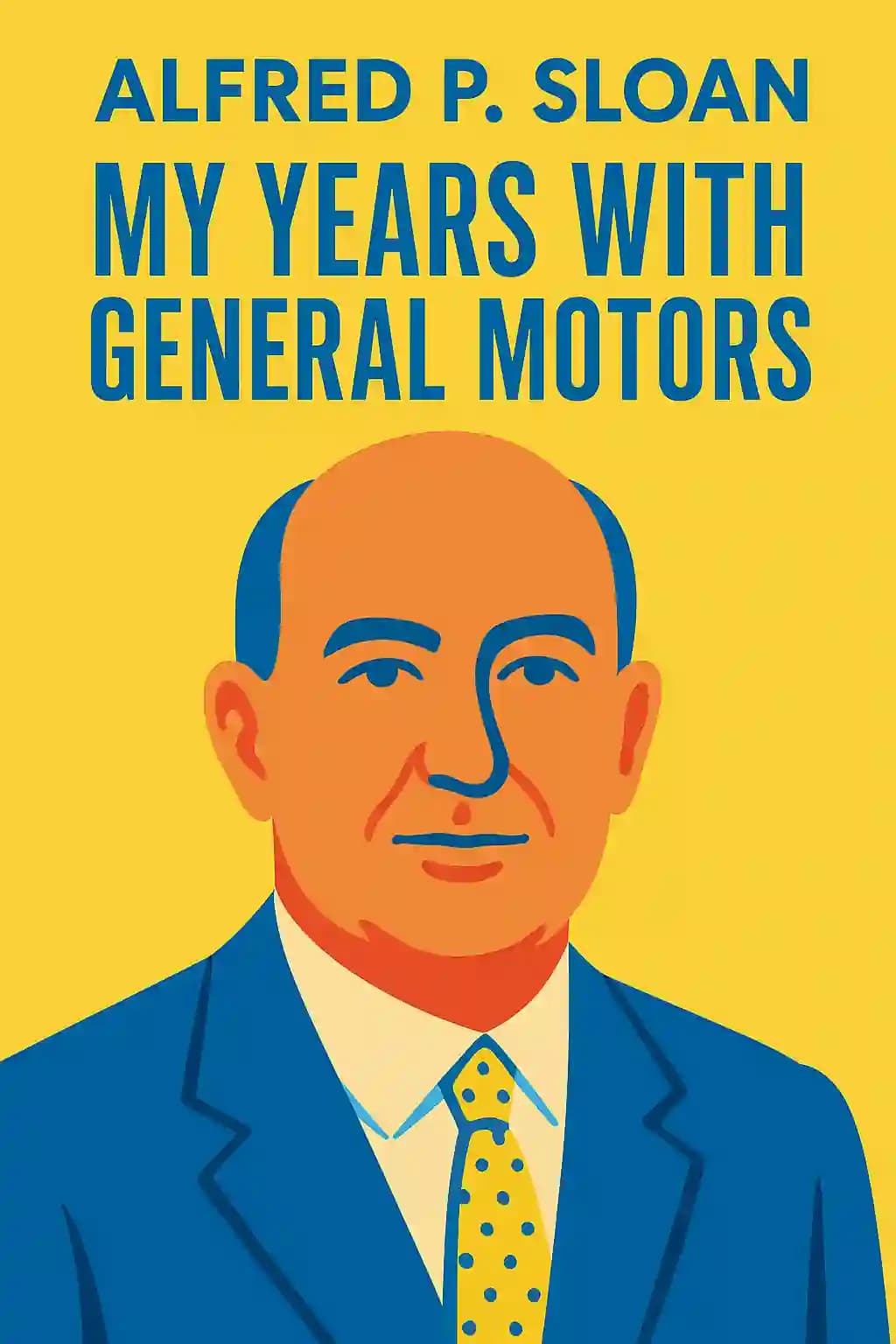
In the pantheon of business literature, few works have shaped corporate America as profoundly as Alfred P. Sloan's "My Years with General Motors." This masterpiece, published in 1964 after years of careful preparation, offers an unprecedented window into the mind of one of the 20th century's most influential business leaders. The book quickly became required reading at Harvard Business School and has influenced generations of executives, including legendary figures like Jack Welch and Andy Grove. Even today, tech titans like Elon Musk cite Sloan's management principles as foundational to modern corporate governance.
What makes this memoir extraordinary isn't just its historical significance but its remarkable prescience. Written by a man who transformed a struggling collection of automotive companies into what would become, for a time, the world's largest corporation, the book reveals how Sloan's revolutionary concepts of decentralized management with coordinated control created the template for the modern multinational corporation. Warren Buffett once remarked that understanding Sloan's approach to capital allocation alone was worth the price of the book. Perhaps most fascinating is how this unassuming engineer-turned-executive, through methodical analysis and organizational innovation, outmaneuvered the seemingly invincible Henry Ford, forever changing not just an industry, but the very fabric of American business.
第 2 章
The Birth of Modern Management: Sloan's Early Years
The journey of Alfred P. Sloan with General Motors began against the backdrop of early 20th-century industrial transformation. After establishing himself at Hyatt Roller Bearing Company, Sloan found himself navigating the burgeoning automotive landscape. The dawn of the automobile age presented unprecedented opportunities, with Hyatt's bearings becoming integral to the emerging giants of the industry. Engineering ingenuity positioned Sloan's company as a crucial supplier, crafting bespoke solutions for nascent auto manufacturers.
Visionaries like Henry Leland of Cadillac set quality benchmarks that would later influence Sloan's management philosophy. The interconnections formed during this period were pivotal, as Sloan's Hyatt developed relationships with key figures in automotive manufacturing. Charles Mott's strategic move to Flint epitomized the proactive industry engagement that would later characterize GM's approach. These early connections with figures like Walter Chrysler expanded Sloan's insights into automotive manufacturing and fortified industry associations that would prove valuable in later years.
By 1915, General Motors had stabilized financially under William Durant's leadership, declaring a cash dividend that surprised the financial community. Durant, who had previously lost control of GM, orchestrated his return through Chevrolet, demonstrating the entrepreneurial spirit that defined the era. Meanwhile, the du Pont family intensified their involvement, initiating a pivotal era of cooperation with a strategic 25 million-dollar investment that eventually grew to 43 million by 1918.
This period saw GM's expansion into real estate, with acquisitions in Detroit leading to the construction of the General Motors Building, transforming the city's landscape. However, Durant's informal business practices, while successful in this formative phase, created structural weaknesses. The absence of unified management across divisions hindered GM's potential, with compromised relationships exemplified by Chrysler's departure exposing weaknesses in the organizational fabric. This expansion without cohesive management policies led to operational conflicts and systemic inefficiencies that would later require Sloan's systematic approach to resolve.
第 3 章
Crisis and Opportunity: Forging a New Corporate Vision
By late 1920, General Motors faced a perfect storm of challenges. The economic slump unmasked flaws in GM's financial strategies as unchecked inventories far outpaced realistic market demand. Attempts to stabilize capital amidst declining sales led to urgent financing measures, including substantial short-term bank loans. This economic downturn signaled the end of an era at GM, demanding a cohesive financial response that the current leadership seemed unable to provide.
Plants stood idle, burdened by expensive inventories and a confused product line, while financial controls were virtually non-existent. Despite industry-wide troubles, confidence in the automobile's future remained strong. The urgent need for a stabilizing figure as president led to Pierre S. du Pont emerging as the prime candidate. His reputation for leadership at du Pont Company and his influential shareholder status in GM made him an ideal choice to navigate these turbulent times.
Du Pont was reluctant but accepted the presidency to steer the company through its crisis, supported by a newly composed Executive Committee that included John J. Raskob, J. Amory Haskell, and Alfred P. Sloan. This interim leadership launched a reorganization reflective of industrial best practices, emphasizing decentralization, which would become a cornerstone of GM's operational philosophy.
It was during this critical juncture that Sloan's 'Organization Study' outlined principles that would revolutionize corporate management. The study stressed maintaining divisional independence while centralizing critical control - asserted through five key objectives - to facilitate leadership focus on broad corporate strategy. This balance between autonomy and coordination initiated modern GM's organizational strategy, harmonizing divisional operations within a coordinated central framework.
As GM confronted increasing financial pressures in 1921, it became apparent that a coherent product strategy was essential. The Executive Committee established a special committee to recommend a new product policy, focusing on penetrating the low-price field dominated by Ford. The recommendations included developing two lines of cars in lower price ranges while maintaining the established positions of Buick and Cadillac. This policy aimed to transform GM with a competitive multilevel product strategy, challenging Ford's market dominance and setting the framework for upcoming business models.
第 4 章
The Copper-Cooled Engine: A Lesson in Innovation Management
Between 1921 and 1922, General Motors faced one of its most instructive internal conflicts over Charles Kettering's revolutionary air-cooled engine. This episode would become a case study in the challenges of managing innovation within a large corporation. The clash between research and production divisions, as well as top and divisional management, centered on replacing conventional water-cooled engines with this innovative design that promised to reduce weight, cost, and improve performance.
Kettering's copper-fin design sought to surpass existing iron-fin air-cooling technology, but turning principle into practicality proved complex. Despite his confidence, the company wisely decided thorough testing was needed before commitment. The Executive Committee, led by du Pont, endorsed the air-cooled engine for Chevrolet's line, with testing emphasized to adapt designs. However, organizational blurring of responsibilities between research and production divisions presented significant management challenges.
Chevrolet's resistance heightened divisional struggles, and by 1921, differing attitudes across divisions complicated progress. Test failures delayed the air-cooled car's rollout, despite a planned introduction in 1922. The initial rollout faced a severe setback when test cars failed at the Oakland Division, leading to disappointment and doubt across several key production centers. Kettering faced skepticism from both divisional and general managers, leading to an official cancellation of the project timeline.
In response to these setbacks, the Executive Committee showed unwavering support for Kettering's vision amidst corporate skepticism. They bolstered his resolve with a letter of encouragement, emphasizing their belief in his capability to overcome technical hurdles. Strategic decisions were made to reassess air-cooled engine strategies, with continued backing for Kettering while contemplating an alternate course of action by focusing parallel developments on conventional water-cooled engines.
By early 1923, Chevrolet planned a rapid production schedule for the air-cooled model, but unforeseen technical difficulties led to significant setbacks, forcing dependence on the old water-cooled models which sustained sales amidst booming demand. Despite the initial excitement, the copper-cooled engine's development faced insurmountable technical challenges. Resistance within General Motors led to an impasse, at which point it was decided to focus on water-cooled models.
This experience highlighted the necessity for organized cooperation and strategic coordination within engineering and management divisions. The copper-cooled engine saga became a pivotal learning moment for GM, setting the stage for future corporate restructuring and innovation management approaches that would prove more successful.
第 5 章
Stabilization and Coordination: Building the Modern Corporation
In the spring of 1923, a pivotal leadership change occurred at General Motors with Pierre S. du Pont resigning as president, a role in which he had stabilized the corporation following the 1920 slump. His strategic guidance had allowed the company to regain strength and laid down the foundations of a strong organizational structure. His resignation came unexpectedly after a board meeting but was part of a broader plan to transfer leadership to automobile industry experts.
This move ushered in a period marked by the adoption of sound organization and product strategies, liquidating unprofitable divisions, and introducing innovative financial incentive plans. The emphasis was on creating a robust team of management capable of navigating the evolving market landscape. The fall of 1923 was an exciting time for General Motors, with prospects for a booming car market. This period necessitated reconciliation of organizational issues highlighted by the copper-cooled engine experiences.
Coordination within the company became a focal point, seen through efforts to align the company's diverse divisions with central management policies. Emphasizing decentralization, yet maintaining a balance with strong executive oversight, became crucial. A clear delineation of responsibilities between the Executive Committee and the operational divisions was established, ensuring that while policy was decided by the Committee, its execution lay with responsible individuals.
Through initiatives in purchasing and advertising, GM crafted a decentralized model that provided unity while preserving divisional autonomy, leading to increased standardization and efficiency. The General Purchasing Committee represented a critical step in organizational coordination. While centralized purchasing was a recognized industrial efficiency, it faced the challenge of integrating diverse divisional needs with corporate objectives. By involving divisional representation in the committee, GM ensured decisions reflected both divisional and corporate interests.
An Institutional Advertising Committee was formed to enhance GM's public image by promoting the parent company. This initiative involved securing approval from all divisions for any advertising message impacting them, underscoring GM's commitment to respecting divisional autonomy while pursuing a unified corporate image. The effort facilitated greater coordination across divisions, reinforcing a cohesive GM ethos.
Perhaps most significantly, the General Technical Committee emerged as a pivotal advisory body championing engineering integration and innovation within GM. Comprised of divisional and staff engineers with general officers, the committee fostered a collaborative spirit aimed at resolving conflicts and advancing automotive development. The Committee also oversaw the new Proving Ground at Milford, Michigan, establishing standardized testing procedures and comparison metrics.
第 6 章
Financial Controls: The Backbone of Corporate Success
Financial controls emerged as a cornerstone of GM's management advances in the 1920s, shaped by new methodologies in the wake of 1920's economic turmoil. Spearheaded by Donaldson Brown from du Pont, these reforms centered on financial discipline and statistical controls, integral to GM's strategic stability and operational coherence. These initiatives underscored the importance of capital turnover, comprehensive financial reporting, and precise resource allocation.
Before the 1920 collapse, control over capital spending lacked rigor. In June 1920, the Committee on Appropriation Request Rules was formed to address this weakness. Four principles guided project propriety: logical necessity, technical development, corporate interest alignment, and comparative value. An impartial review outside divisions was mandated, leading to the development of an appropriations manual, ultimately employed for systematic, centralized financial control and judgment.
The 1920 cash crisis highlighted the lack of central control, with each division managing its own cash, creating inefficiencies. The new system centralized cash management, employing depository accounts nationwide. A consolidated control allowed quick, automated fund transfers where needed, establishing a credit line and improving capital use. Cash was now actively balanced against projections, increasing overall financial efficacy.
Uncontrolled inventory purchases had peaked at $209 million by 1920, a stark reminder of the lack of oversight. The Inventories Committee assumed control, halting purchases and implementing budget-based releases. This control lowered inventory levels significantly by mid-1922. Emphasizing skepticism towards sales forecasts as a solution, GM refined its policy to ensure primary operating responsibility, balancing financial policies with operations.
By 1925, a sophisticated system was established, linking production schedules closely with sales data collected every ten days. This system allowed for quick adjustments, aligning production and sales more effectively, minimizing excess inventory, and improving dealer profits. Despite some persisting challenges, notably seasonal demand variations, the system marked a substantial stride in advancing financial and operational alignment within General Motors, rooted in precise data and timely adjustments.
Emphasizing financial metrics from return on investment to cost and pricing standards, General Motors established a system of decentralized management that allowed each division to self-regulate while adhering to corporate goals. This strategic focus ensured resilience during economic downturns, buffering GM during crises such as the Depression, bolstered by a foundational rate of return system that emphasized open communication and objective fact analysis.
第 7 章
Market Transformation: Responding to Consumer Evolution
Reflecting on the 1920s, the automotive industry witnessed profound transformation, marking the end of one era and the beginning of another. The market, initially limited to a select few, gradually opened up to more people with the introduction of the affordable Model T. At the heart of this major shift were four key elements - installment selling, the used-car trade-in, the closed body, and the annual model - that redefined the industry's landscape.
General Motors recognized these emerging trends and played a pivotal role in adapting and leading rather than just reacting to market developments. By embracing and shaping these factors, GM positioned itself to exploit a new landscape, leveraging its strategic planning and product innovation to gain a significant advantage over its competitors. This era reflected the dynamic interplay between consumer capability and aspirational buying, driven by a robust and ever-expanding American economy.
As the automobile market evolved through the 1920s, new financing methods such as installment selling emerged, revolutionizing consumer access to cars. This allowed buyers to spread payments over time, making it feasible for a broader segment of the population to purchase vehicles. The inception of installment selling before World War I, and its rapid growth post-war, played a vital role in escalating car ownership from exclusive luxury to a more democratized commodity.
Facing competitive pressures and an evolving market, General Motors explored coordinating the manufacture of one car with another, a novel approach that defied the conventional notion championed by Ford - that mass production necessitated uniformity. The Pontiac's development marked this pivotal shift, demonstrating that diversity within production was achievable through physical coordination. By aligning the Pontiac with models in different price classes, General Motors pursued economies of scale across its line-up.
The automotive industry's transition towards closed-body vehicles during the mid-1920s transformed market dynamics and had a significant impact on General Motors' strategic planning. The Essex coach's pricing innovation highlighted the potential for closed cars to assert dominance even in the low-price sector, prompting General Motors to pivot its production focus. The shift saw closed cars' production ratios soar from 40% to nearly 80% in a matter of years, influencing internal production strategies deeply.
The introduction of the Pontiac filled a strategic gap in General Motors' price line-up, positioning itself between Chevrolet and Olds. This move consolidated the company's hold across varied price points, fostering a competitive edge against rivals Ford and the rising Essex. The closure of this gap was crucial, as it ensured market coverage from entry-level through to luxury segments. The decisive embrace of closed-body production further fortified this strategic pivot, enabling GM to preemptively counter Ford's market maneuvers and ultimately usurp its leadership.
第 8 章
Navigating the Great Depression: Adaptation and Resilience
By 1929, the automobile market transformation was complete, and with Chrysler's ascension, General Motors' decentralized yet controlled management philosophy proved its worth. Ford's dominance was more of a temporary surge than a trend. The period marked the peak of the national economy before the 1930s depression, leading to a shift in GM's focus towards increased coordination and economy.
The economic backdrop of the Great Depression prompted a deep introspection within General Motors. The company faced gigantic drops in revenue, pressing the need for an examination of organizational structures. A critical phase ensued with efforts to address problems effectively, ensuring adaptability during such unparalleled economic downturns. The onset of 1931 invited deliberate reflection on internal inefficiencies. Courage was needed to tackle weak personnel, and fact-based decisions were essential.
Tensions emerged between division autonomy and central control. Memoranda flooded in, exposing diversifying opinions. Some advocated for decentralization to empower divisional policy-making, while others pushed for increased standardization and coordination, revealing the complexity of the corporate structure amid crisis. Multiple executives voiced conflicting views on how best to navigate the economic storm. While some warned against over-centralization, others saw value in it, stressing enhanced alignment across divisions.
A strategic move to institute advisory groups aimed at fostering dialogue and insight between general officers and divisions. These groups were designed to advise without overpowering divisional authority, presenting a balanced response to the need for greater overarching connectivity. Amidst the economic maelstrom, GM revised manufacturing and sales strategies, consolidating and reducing divisions to ensure sustainability. This reconfiguration allowed the corporation to maintain its market position despite catastrophic global automotive industry declines.
Introducing diversity in the low-price field became a central tenet of GM's policy, recognizing the varied appeals to different market sectors. This diversification required a shift in coordination, drawing a clearer distinction between policy creation and administration. Policy creation became a specialized function, with policy groups established to handle specific functional areas like engineering and distribution, enabling GM to progress with decentralized operations under coordinated control.
The establishment of policy groups marked a pivotal moment in GM's organization, channeling expertise from a broad array of executive talents including top officers and staff in pivotal functional and operational areas. These policy groups, initially tested in engineering and distribution, offered recommendations that influenced high-level decision-making. They presented a sophisticated mechanism for bridging the gap between the decentralized model and unified strategic control, allowing GM to respond adeptly to market demands while maintaining a cohesive operational direction.
第 9 章
Financial Growth Through Strategic Evolution
General Motors' growth trajectory surpassed the auto industry's after 1918, fueled by the commitment of shareholders willing to reinvest earnings. Despite inherent risks and market pessimism, GM's long-term gains validated their decisions. Both industrial strategy and financial prudence underlined GM's evolution into an industry leader.
The corporate growth during 1918-1920 involved substantial investment in infrastructure and subsidiary companies, quadrupling assets. Despite some missteps, the focus remained on core automotive production, avoiding peripheral industries. This established GM's foothold in direct automobile-related manufacturing, enhancing its capacity exponentially. The post-expansion period witnessed a strategic contraction and consolidation. Bank debts were addressed, and the scaling back set the foundation for future production capabilities.
From 1923 through 1925, General Motors strengthened organizationally, optimizing prior expansions. Despite holding back on new capital outlays, productivity soared due to existing infrastructure and enhanced controls. Profitability increased markedly, reinforcing financial stability during this consolidation phase. A new expansion phase from 1926 through 1929 saw General Motors doubling car production capacity, fueled by reinvested earnings. Significant overseas ventures and diversification marked this period, yet financial controls ensured expansion was sustainably funded, maintaining high payouts to shareholders.
The 1930s saw General Motors navigate the Great Depression with remarkable resilience. Despite a massive contraction in the market, GM's ability to maintain orderly reductions in dividends and smart cost management allowed the company to remain profitable each year. Swift action in controlling inventory and spending led to financial stability, and by the mid-decade, GM was again experiencing rapid recovery. Key efforts included limiting plant investments and strategic inventory management, aligning production capacities with market demands, and addressing labor challenges.
During World War II, General Motors shifted from car manufacturing to becoming a leading defense contractor, producing nearly $12.5 billion in war materials while maintaining limited commercial production. Despite increased sales to $4.262 billion in 1944, profit margins remained modest due to a policy of minimizing profits on military contracts. The corporation ensured liquidity, enhancing capital reserves as war-induced material shortages curtailed normal equipment replacement.
As the postwar era unfolded, General Motors embarked on substantial growth and expansion, driven by pent-up consumer demand. Planning and foresight led to investments totaling over $7 billion for plant renovations and updates to meet this surge. Retaining a significant portion of earnings, GM raised additional funds through capital markets and stock issuances to finance expansion. The company adapted its strategies to the evolving market, emphasizing long-term study of consumer demand and economic conditions, ensuring GM's continued prominence in the automotive industry.
第 10 章
Technical Innovation: The Heart of Automotive Progress
In the infancy of the automobile industry, achieving reliability was the primary focus. Enthusiastic buyers unwittingly funded the development of reliability through their purchases, transforming the once experimental machines into dependable modes of transport. Initially crude vehicles, often requiring assistance from a horse, evolved into integral parts of modern life, though the basic mechanics remained unchanged over decades.
Enhancements from the 1920s saw engines grow more efficient, transmissions become automatic, and suspensions evolve for an unparalleled ride quality. Complex advancements in material and component integration marked a leap from the rudimentary assemblages of the past. With roads and highways improving alongside vehicles, this technological synergy transformed transportation forever.
A crucial challenge in automotive engineering was harmonizing the relationship between fuel and engine to minimize engine knock and maximize power. Higher compression ratios were key, but this led to the issue of detonation. General Motors spearheaded revolutionary research led by Charles F. Kettering, alongside Thomas Midgley, Jr., resulting in breakthrough antiknock treatments with Ethyl gasoline, utilizing tetraethyl lead. Despite initial misconceptions about the causes of engine knock, progressive experimentation led to significant advancements.
The transmission, vital for transferring power from the engine to the wheels, underwent significant evolution at General Motors. Initially, electrical transmissions were explored due to the electrical engineering background of many staff, but focus shifted towards automatic transmissions. Experiments with automatic, hydraulic, and synchromesh transmissions led to innovations like the Hydra-Matic and semi-automatic systems. Introduced in the late 1930s, these eased gear shifting and improved driving experience.
Experiments in ride comfort led General Motors to innovate with tire designs and front-wheel suspension systems. From solid to low-pressure balloon tires, the journey marked a burgeoning awareness in tire technology's role in vehicular stability. GM engaged actively in setting tire standards and envisioned superior rides akin to European models. Executing this vision, independent suspension systems flourished in Cadillacs, signaling GM's resolve towards seamless adaptability across varying road conditions.
The intricate process of producing new car models involves multiple phases spanning two years. Beginning with defining styling and engineering objectives, the journey unfolds through collaborative efforts between various divisions, enhancing styling concepts with precise engineering elements. At critical phases, including styling approvals and pilot productions, rigorous evaluations ensure alignment with market sensibilities. Structural coordination mitigates potential discrepancies, ensuring a smooth transition from design to market shelves.
第 11 章
Building a Global Enterprise: Beyond Automobiles
General Motors thrives as an engineering and technological powerhouse, aligned with a relentless ambition to accelerate technological advancements. With a substantial engineering workforce, both in divisional and general technical staffs, the corporation's endeavors accentuate the intertwining of operations with research and development. Initiated in 1923, a significant policy placed research on an equivalent organizational standing as operations to propel technological progress and shorten cycles between development and actual production.
The evolution of research at General Motors traces its origins to early 20th-century endeavors focused on material analysis and pioneering automotive advancements. Charles F. Kettering, a prominent figure, propelled this trajectory with the invention of the electric self-starter before GM ultimately integrated his company, Delco, into its research fold. Throughout his tenure, Kettering's inventive genius and collaborative spirit advanced GM's research frontiers, laying groundwork for sophisticated networked research operations.
The Engineering Staff emerged in 1931 to bridge the efforts of Research Laboratories and divisional engineering activities, tasked with commercializing new engineering concepts. Initially, engineering practices varied significantly across divisions, leading to unequal product quality. The General Technical Committee, established in 1923, unified these disparate efforts and spearheaded initiatives like the General Motors Proving Ground in 1924, setting the benchmark for standardized vehicular testing.
The General Motors Technical Center, completed in 1956, blends architectural beauty with practical functionality across its vast 900-acre camp-like setting outside Detroit. Designed by Eliel and Eero Saarinen, it houses 27 buildings with 5000 specialists across research, manufacturing, engineering, and styling departments, all strategically placed around a central artificial lake. The center was conceived as a response to inadequate wartime facilities scattered across Detroit, with a vision of enhancing technical interactions and fostering innovation.
Styling has become a critical component in the automotive market, driven by the evolving art of automotive engineering and the annual model changes initiated by General Motors in the late 1920s. Originally, engineering dominated car design with little attention to aesthetics. However, by the mid-1920s, market demands began to influence product engineers, leading to a harmonious development of engineering and styling. General Motors foresaw that the post-war era would focus on appearance, automatic transmissions, and high-compression engines.
In expanding its global operations, General Motors grappled with pivotal decisions of whether to manufacture overseas or continue exporting U.S.-made vehicles. During 1928, Executive Committee debates centered on Europe, especially England and Germany, regarding whether to bolster existing operations or affiliate with local manufacturers. In England, expanding Vauxhall was an option, with considerations to launch smaller car models responding to market demands. Germany posed distinct challenges; ultimately, GM favored acquiring Opel, a decision reflecting the potential opportunities within a developing German market.
第 12 章
The Human Element: Personnel and Incentives
After an extended period of peace in labor relations, the enduring absence of strikes over national issues for seventeen years reflects General Motors' robust framework of personnel and labor policies. These milestones were achieved without conceding management's key responsibilities. Contrary to criticism that labor peace was bought at the cost of inflation-inducing contracts, the benefits program predates modern industrial labor setups.
With 635,000 employees globally, General Motors offers advantages such as medical services, insurance, and investment plans, emphasizing employee well-being and financial security. Unique programs include a Savings-Stock Purchase Program, where employee contributions are matched by the corporation, investing in both government bonds and company stock. Approximately 85% of eligible salaried employees participate, evidencing trust in and commitment to the corporation's stability.
Beyond financial perks, General Motors invests in foremen morale, providing salaries above their subordinates' earnings and advocating for their integral management role. A streamlined grievance procedure resolves most issues early on, ensuring labor harmony through proactive personnel management. Postwar labor relations posed challenges due to union strength and internal factional conflicts, but GM maintained a strong stance against unreasonable demands, emphasizing management control and avoiding strikes when feasible.
The groundbreaking 1948 agreement with the UAW introduced longer-term contracts and the General Motors wage formula, aiming for wages tied to living costs and productivity improvements, preventing annual negotiation strains and fostering economic predictability. The General Motors wage formula crafted in 1948 incorporated two key innovations: the 'escalator clause', which automatically adjusted wages with cost-of-living changes, and the 'annual improvement factor', providing employees a share in productivity gains.
The General Motors Bonus Plan, dating back to 1918, forms the core of the company's management ethos, linking executive incentives closely with corporate prosperity. With decentralization providing a platform for individual accomplishments, the Bonus Plan rewards executives proportionally for their contributions to both divisional and corporate profit. Despite changes like the 1957 stock-option expansion, its foundation remains unwavering: bonuses draw from net earnings exceeding a 6% return on net capital, capping at 12% post-tax profits.
The Bonus Plan at General Motors is key to driving executive performance, aligning management's interests with shareholders by creating a shared sense of ownership through stock-based bonuses. While awards depend on corporate success, they aren't guaranteed, fostering a competitive spirit where individual contributions are crucial. Initially, bonuses were linked to divisional profit, but integrating them with corporate success enhanced cooperation across divisions.
第 13 章
The Legacy of Leadership: Sloan's Enduring Impact
Success in management bridges the tension between decentralization and centralized control - 'decentralization with coordinated control'. Decentralization fosters innovation, responsibility, and flexibility, allowing decision-making close to operational realities. Conversely, coordination ensures efficient, economic management. This balance is dynamic, contingent on evolving circumstances and executive capability. General Motors evolved this concept over decades, addressing issues of divisional autonomy versus centralized oversight.
The automotive revolution parallels the rise of large-scale corporations, which have redefined the economy and society. Early pioneers like Ford and Chrysler unknowingly initiated a transportation revolution. General Motors exemplified a growing corporation by efficiently capitalizing on market potential. The journey began with unknowns - disconnected data on sales, market trends, and consumer patterns. Adaptation was key, demonstrated through the concept of 'a car for every purse and purpose'.
Withstanding market challenges required readiness for change, evidenced by the evolving product lines. The post-WWII era demanded dexterous adaptability amid increased competition and shifting economic conditions. Current executive leadership emphasizes foresight in aligning products with discerning consumer demands, ensuring timely market responses. The narrative champions progressive strategies that embrace market evolution, empowering GM to navigate and shape the industry's future.
Alfred P. Sloan's legacy at General Motors extends far beyond the company itself. His innovative management principles transformed not just an automotive giant but set the template for modern corporate organization. The balance he struck between decentralized operations and coordinated control became the gold standard for large enterprises across industries. His emphasis on financial discipline, strategic planning, and market responsiveness created a blueprint that continues to influence business leaders today.
Perhaps most remarkably, Sloan demonstrated that systematic management could triumph over even the most formidable competition. By developing a comprehensive approach that addressed product strategy, organizational structure, financial controls, and market responsiveness, he built a corporate machine that ultimately outperformed Henry Ford's seemingly invincible enterprise. This victory of system over personality, of strategic thinking over industrial intuition, marked a turning point in business history - one whose lessons remain as relevant in today's digital economy as they were in the industrial age.