第 1 章
The Ripple Effect: How Today's Choices Echo Through Generations
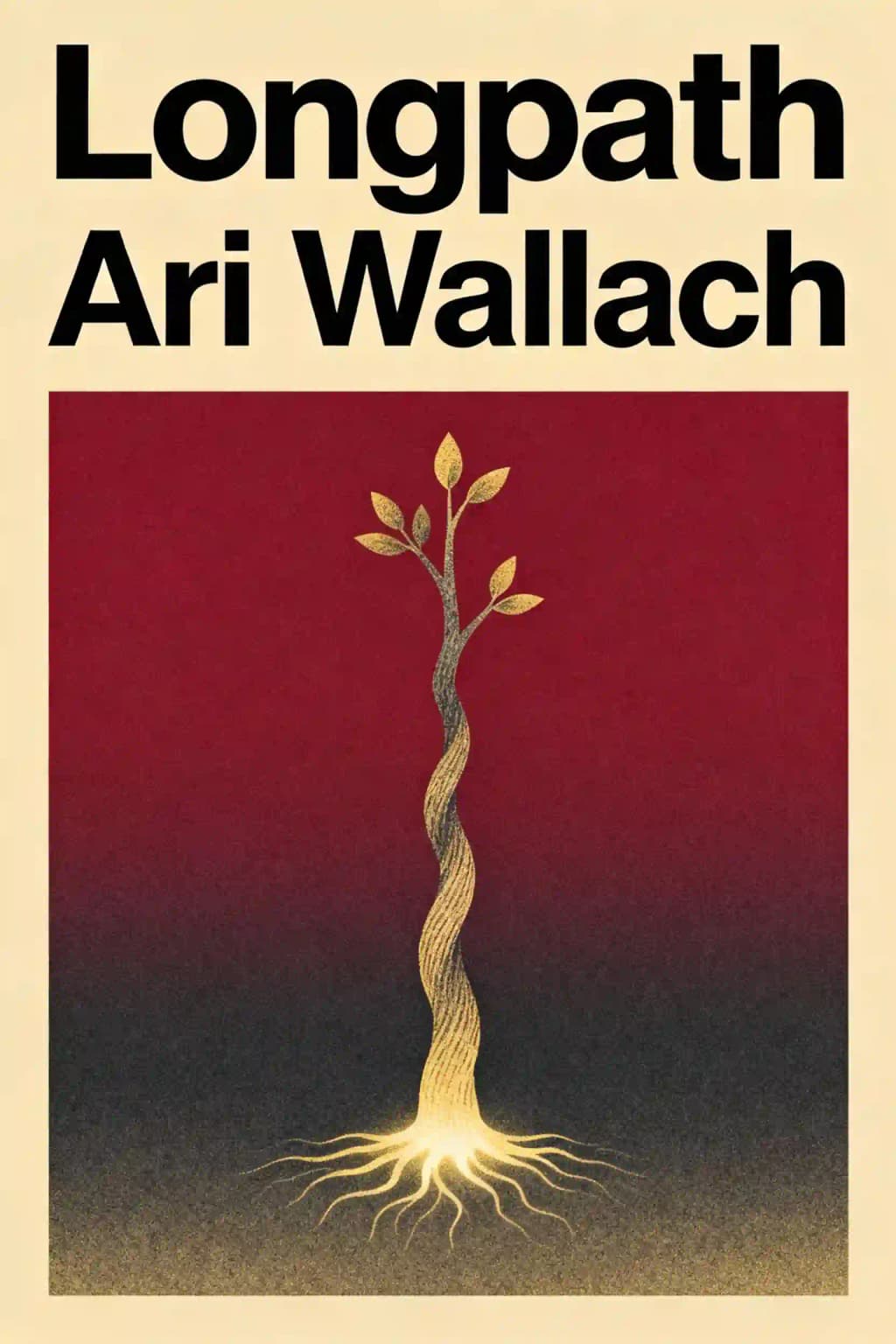
Imagine waking up one day and realizing that your smallest decisions-from how you respond to your child's mistake to whether you recycle that plastic bottle-could impact thousands of people centuries from now. This isn't science fiction; it's the premise behind Ari Wallach's groundbreaking book "Longpath." Named one of the most important books of 2022 by Adam Grant and endorsed by luminaries across fields, this work has become required reading in leadership circles from Silicon Valley to Wall Street. Wallach, whose TED talk on the subject has garnered over 2.5 million views in 19 languages, doesn't just theorize-he founded Longpath Labs to help organizations and individuals implement this revolutionary approach to decision-making. What makes this book particularly resonant in our era of constant crisis is its practical framework for finding meaning and purpose during chaotic times, whether you're religious or not. It challenges us to become what Wallach calls "great ancestors"-people whose actions today create positive ripples through the centuries ahead.
第 2 章
Standing in the Intertidal: Why We Need a New Approach to Time
We're living in what Wallach calls an "Intertidal period"-a dramatic transition phase where old systems are failing while new ones emerge. Like the oceanic zone where land meets water, the ground beneath our feet feels unstable. This metaphor is particularly apt as we witness established institutions, from democratic systems to economic models, showing signs of strain. Previous Intertidals included the Agricultural Revolution, which transformed nomadic societies into settled civilizations, and the Industrial Age, which mechanized production and urbanized populations. However, our current Intertidal features an unprecedented convergence of challenges: exponential population growth, climate-driven mass migration, resource depletion, and transformative technologies like CRISPR, AI, and quantum computing that could fundamentally redefine humanity's capabilities and limitations.
These chaotic moments historically offer tremendous opportunities for transformation. The Agricultural Revolution, for instance, not only changed how humans produced food but led to the development of writing, complex social hierarchies, and the first cities. However, positive outcomes aren't guaranteed. After Rome's collapse, Europe entered centuries of darkness, losing technological knowledge and social sophistication that took generations to recover. The direction we choose now - toward innovation or regression - will depend on our ability to learn from these historical patterns.
Our brains evolved for short-term thinking-eating all available berries made sense for hunter-gatherers whose primary concern was immediate survival. This evolutionary adaptation served us well for millennia but has become problematic in our complex modern world. We've built entire incentive structures around this short-termism: quarterly earnings reports driving corporate behavior, two-year political cycles influencing policy decisions, and social media metrics shaping cultural discourse. Digital technology exacerbates this tendency, with dopamine-driven feedback loops training our brains to perpetually await the next notification rather than consider long-term consequences. Studies show that average attention spans have decreased significantly in the digital age, making strategic long-term thinking even more challenging.
We're also trapped in what Wallach calls "presentism"-a Hall of Mirrors version of the present where everything happens simultaneously with no history or future. This phenomenon is amplified by 24/7 news cycles and social media feeds that collapse time into an endless now. This temporal myopia robs us of the ability to imagine different tomorrows or understand our place in the grand scale of time, making it difficult to address long-term challenges like climate change or societal inequality.
The sandbag strategy metaphor perfectly illustrates our approach to problems: buying a house in a flood-prone area and addressing flooding with temporary fixes rather than confronting underlying issues like floodplain development and climate change. This pattern repeats across domains - from treating symptoms rather than causes in healthcare, to implementing quick-fix solutions in education, to applying band-aid solutions to systemic social issues. We do this everywhere from parenting to corporate decision-making, consistently prioritizing immediate solutions over addressing root causes.
What makes this moment unique is our unprecedented connectivity and technological capability. For the first time in human history, we possess both the ability to imagine and implement non-exploitive futures through global cooperation and advanced technology, and the capacity for collective self-destruction through nuclear weapons, climate change, or biological engineering. The choice between these paths hinges on whether we can transcend our short-term, reactionary thinking and embrace what Wallach calls "Longpath"-a mindset that connects our present actions to their impacts centuries from now, requiring us to think in terms of generations rather than quarters or election cycles.
第 3 章
The Three Pillars: Building a Bridge to the Future
Longpath isn't just abstract philosophy-it's a practical framework built on three foundational pillars that work in concert: Transgenerational Empathy, Futures Thinking, and Telos (ultimate purpose). Each pillar reinforces the others to create a comprehensive approach to long-term thinking and action.
Transgenerational Empathy involves maintaining acute awareness of your place in a vast chain of being that extends both backward and forward through time. This requires honest reckoning with inherited history while making conscious adjustments to improve the future. Wallach shares a personal example where he once snapped at his wife over grocery bags-a seemingly minor incident that, upon reflection, he traced to his father's relationship with his Holocaust-surviving mother. By recognizing these inherited patterns, we can consciously disrupt cycles that might otherwise continue for generations. The concept extends to inherited trauma, learned behaviors, and cultural patterns that shape our actions in subtle yet profound ways.
This principle scales dramatically beyond individuals to communities and nations. South Africa's Truth and Reconciliation Commission demonstrated how a country could confront its apartheid past without being consumed by vengeance. Germany's Holocaust memorials and documentation centers serve as permanent reminders of historical accountability. The Equal Justice Initiative's lynching site soil collection project in America preserves physical connections to painful history while creating spaces for healing. These initiatives show how societies can acknowledge difficult pasts without being defined by them, using honest recognition to build foundations for genuine reconciliation that enable better futures.
The second pillar, Futures Thinking, involves developing the capacity to imagine different possible futures and actively shape the one we want to create. We're naturally primed to envision dystopias-from The Handmaid's Tale to Terminator to climate catastrophe-but rarely discuss what we want to move toward. The Voros cone (or futures cone) provides a powerful visual framework illustrating how we can move beyond the "Official Future"-the straight-line path from present to expected outcome-to explore broader possibilities. This tool helps expand our thinking from probable outcomes to possible ones, and ultimately to preferable futures we can work toward.
Consider "Tim" from Russell, Kansas, whose official future includes marrying locally, working a stable job, and following his community's conservative traditions. By expanding the cone to "plausible futures," Tim might become a NASCAR driver to escape his town. Opening further to "possible futures," he could pursue cooking, medicine, or music. The most important step is creating "examined, desired futures" by understanding the historical forces that shaped one's assumptions. When Tim analyzes his fourth-generation identity and unquestioned beliefs, he discovers his true desire: working outdoors helping others, perhaps teaching skiing to people with physical limitations. This process of examining inherited assumptions and expanding possible futures can be applied at individual, organizational, and societal levels.
The third pillar, Telos, provides the ultimate aim guiding our decisions across time. Just as Odysseus had Ithaca as his destination through all his wanderings, and Viktor Frankl found survival strength in his manuscript-rewriting mission during the Holocaust, we need a civilizational telos-a purpose that guides us regardless of circumstances. Wallach's vision centers on "collective flourishing"-not a static utopia but sustained well-being serving all peoples and ecologies with equity, goodness, growth, connection, meaning, and vitality. This telos acts as a north star, helping align daily decisions with long-term aspirations while remaining flexible enough to adapt to changing circumstances. It provides continuity of purpose across generations while allowing each era to contribute its unique interpretation and implementation.
第 4 章
The Emotional Foundation: Cultivating Our Prosocial Capacities
While rationality has been the gold standard since the Enlightenment, Longpath reintegrates emotions as essential guides for decision-making. From Stoics to Descartes' "I think, therefore I am," Western culture has dismissed feelings as counterproductive or irrelevant. While scientific progress brought many benefits, we've lost respect for our emotional lives, stifling empathy, compassion, and intuition-attributes often socially ascribed as feminine and lesser. This imbalance has led to decision-making frameworks that prioritize data and logic while overlooking crucial emotional intelligence that could inform better choices for long-term wellbeing.
Research shows that prosocial emotions like empathy, gratitude, and awe can be deliberately cultivated like muscles. Studies demonstrate that meditation fosters compassion, gratitude makes us less likely to consume finite resources, and empathy strengthens through practice. For instance, research at Stanford University found that just two weeks of daily compassion meditation increased prosocial behavior by 50%. Similarly, studies of gratitude journaling show participants making more environmentally conscious choices and experiencing stronger social connections. These emotional capacities, when developed consistently, create neural pathways that make prosocial responses more automatic and natural over time.
Self-compassion plays a crucial role in this emotional foundation. Organizations like Starbucks and NASA have institutionalized self-compassion through practices like anti-bias training and the "Pause and Learn Process," which allow them to acknowledge mistakes without defensiveness. At NASA, this process transformed their culture from blame-oriented to learning-focused, resulting in better innovation and safer operations. Starbucks' comprehensive bias training program has helped create more inclusive environments while improving customer service. Wallach offers a guided exercise called "Pause, Learn-and Realign," which helps process difficult experiences through loving-kindness techniques. This practice involves three steps: acknowledging the challenge without judgment, identifying lessons learned, and consciously choosing a more aligned path forward.
Acknowledging our mortality gives meaning to our lives. Confronting death can lead to deeper goals and richer emotional lives-not about taking more risks but about living in alignment with our values so our impact reverberates through time, transforming "You Only Live Once" into "Your Life Is Bigger Than You." Research in terror management theory suggests that when people consciously process their mortality, they make more prosocial choices and invest in legacy-oriented projects. This awareness can shift focus from immediate gratification to meaningful long-term impact, whether through mentoring others, environmental stewardship, or creating lasting positive change in communities.
The integration of emotional intelligence with rational thinking creates a more complete decision-making framework. This balanced approach helps individuals and organizations navigate complex challenges while maintaining connection to their deeper values and the broader human community. Through consistent practice of prosocial emotional skills, we can build a culture that naturally considers long-term consequences and collective wellbeing in its choices.
第 5 章
Making the Future Tangible: Practical Approaches to Longpath Thinking
Empathy for descendants becomes concrete through simple yet powerful practices. Research conducted across multiple organizations shows that having designated representatives for future generations dramatically increases sustainable decision-making, with 60% making long-term beneficial choices compared to only 28% without such representation. Wallach suggests several practical applications to make future generations more present in our daily lives: placing empty picture frames on mantels labeled with future dates, setting a place at Passover for descendants (similar to Elijah's cup), and establishing "Future Departments" in government and business institutions with budgets and authority equal to defense departments. These physical reminders serve as constant prompts to consider long-term impacts.
At Longpath Labs, they've developed sophisticated exercises where participants actively engage with the future through structured imagination. Participants name and envision the next four generations (2010-2175), creating detailed personas and life scenarios for their potential descendants. They consider specific questions: What technologies will they use? What challenges will they face? What values do we hope they'll maintain? What environmental conditions will they inherit? The exercise extends to writing letters to these future generations, sharing wisdom, hopes, and apologies. This practice has shown remarkable success in shifting participants' decision-making frameworks from short-term to long-term thinking.
Buckminster Fuller's trim tab concept provides a powerful metaphor for creating systemic change through minimal intervention. During World War II, Fuller tackled the challenge of maneuvering massive ships efficiently. His solution was the trim tab - a small metal strip attached to the rudder that, by strategically positioning itself against water resistance, generates enough force to turn the entire vessel. This innovation became Fuller's life philosophy, so meaningful that he had "Call me Trim Tab" inscribed on his headstone. The concept demonstrates how small, well-placed actions can redirect enormous systems through leverage points.
Our contemporary human experience resembles a massive battleship seemingly headed toward environmental and social catastrophe, but trim tabs - small, meaningful actions aligned with examined desired futures - can help redirect our collective course. These actions range from conscious consumer choices (supporting sustainable businesses, reducing waste) to fundamental human interactions that preserve our social fabric: making eye contact with strangers, engaging in meaningful conversation, practicing active listening, and participating in community activities. Each small action, when strategically placed and consistently executed, creates ripples of change that can influence larger systems.
The implementation of Longpath thinking requires both institutional and individual commitment. Organizations have successfully incorporated future-thinking through practices like transgenerational councils, where young employees mentor older executives about emerging trends while receiving traditional wisdom in return. Communities have established time capsule projects that require regular updates and reflection, creating ongoing dialogue between present and future generations.
第 6 章
Finding the Others: Collective Action for Collective Flourishing
Despite America's motto "Out of many, one," our culture prizes individualism over cooperation. Instead of thinking of our efforts as rigidly stacked Lincoln Logs, we need to think like a geodesic dome, distributing stress across interconnected structures. This relational tension creates resilience, adaptability, and creativity-like the cultural fusions that produced the cronut or Lin-Manuel Miranda's Hamilton.
"Finding the Others" isn't about identifying like-minded people but recognizing that we're all part of a collective "we" despite our fractures. Research shows commonalities can be intentionally cultivated; in one experiment, simply tapping the same rhythm made strangers more willing to help each other. History demonstrates our capacity for connection even in extreme circumstances, like the Christmas Day truce of 1914 when German and British soldiers sang carols together and played soccer in no-man's-land.
We all possess a sphere of influence-colleagues, family, friends, community-where we can communicate Longpath thinking. Wallach outlines four key approaches:
Through vision: Visionaries come in all forms-artists creating new worlds, political scientists imagining new governance, business leaders translating vision into structure. Science fiction like Star Trek has powerfully shaped reality-from inspiring technology like iPads (predicted by the show's PADDs) to normalizing social progress through characters like Uhura, whose presence helped pave the way for Mae Jemison's real-life space journey.
Through conversation: Productive dialogue means accepting others' truths without trying to convert them to your thinking. While understanding the past matters, guide conversations toward "Where are we going?" and "Where do we want to be?" Longpath thinking can be applied without using the term-like Horatio redirecting his law firm's discussion about flexible schedules from logistics to values and vision.
Through facilitation: Creating safe spaces for meaningful conversation requires intentional facilitation. Psychological safety-where people can speak without fear of punishment or humiliation-is essential, as Google discovered when researching effective teams. Environment matters: equal power distribution, diverse perspectives, and co-created ground rules foster creative solutions.
Through ways of being: Our everyday actions communicate our values through nonverbal signals-an open stance, attentive listening, or putting a phone down during conversation. Wallach shares Rena Boone's story, a meditation teacher whose life exemplifies Longpath. After finding peace through Transcendental Meditation, she transformed her own life and then dedicated forty years to teaching others, creating ripple effects across interconnected spheres of influence.
第 7 章
The Examined, Desired Future: Questioning Our Assumptions
Extending Socrates' claim that "the unexamined life is not worth living," Wallach argues that "the unexamined future is not worth fighting for." The goal isn't just thinking beyond our lifespans but pressure-testing our desired futures to determine if they're truly our own or unwittingly internalized from others. This requires us to challenge not just what we want, but why we want it, and whether those desires stem from genuine personal values or societal conditioning.
He illustrates this through ADHD treatment, a complex case study in how societal norms shape our vision of the future. The "official future" for a child with untreated ADHD suggests academic struggles, social difficulties, and potential career limitations, while the "desired future" leads parents to medication like Adderall or Ritalin. But an "examined desired future" requires deeper analysis: the child's father and grandmother likely had similar traits but weren't diagnosed because societal expectations were different. They may have even excelled in certain environments that valued their unique thinking patterns. Looking forward, future generations may have even more tools to enforce "peak performance" - from cognitive enhancement drugs to neural implants - but we must question: Who defines what peak performance means? Is the truly desirable future one where everyone is neurotypical, or one that embraces neurodiversity and creates systems that accommodate different cognitive styles?
Applied to industries, this framework reveals how limited our imagination often is. A car company's official future might focus on electric vehicles with longer range and better batteries, but an examined desired future would question whether individual car ownership is even necessary. It might envision "fifteen-minute cities" where daily needs are accessible by foot or bike, or explore entirely new transportation paradigms like autonomous pods or underground tunnel networks. Similarly, nonprofits addressing hunger or poverty often plan within existing systems, but an examined desired future would question these systems entirely, envisioning a world where structural changes eliminate the root causes of these issues.
At a civilizational level, an examined desired future challenges us to reimagine fundamental power structures and societal organizations. Rather than tweaking existing systems, it asks us to envision entirely new ways of organizing society that could create environments where everyone can maximize their talents while remaining happy and well-resourced. This might include alternative economic models, new forms of governance, or radical approaches to education and work. The key is moving beyond incremental improvements to question our basic assumptions about how society should function.
The process of examining desired futures also requires acknowledging potential downsides and unintended consequences. Every vision of the future carries implicit trade-offs and ethical considerations that must be carefully weighed. This examination process helps us create more nuanced and thoughtful visions of the future, rather than simply accepting conventional wisdom about what progress looks like.
第 8 章
The First Page of Humanity's Novel: Our Responsibility to the Future
If humanity reaches just a typical survival point for mammalian species, we have approximately 200,000 years ahead-"If humanity's saga were a novel, we would be on the very first page." This striking metaphor helps frame our current moment in the vast expanse of potential human history. Rather than finding this daunting, Wallach encourages readers to recognize the power of "micro-interactions" in steering humanity's future, emphasizing how small actions today ripple through generations.
While policy, government, and popular culture matter significantly, it's the thousands of small daily interactions that collectively determine our trajectory. These include a police officer's patient response during a tense situation, an engineer's careful consideration of bias when designing AI systems, a teacher's dedication to inspiring environmental awareness, or a parent's mindful attention to instilling values of empathy and long-term thinking. Each interaction, though seemingly minor, contributes to the broader tapestry of human development.
The book's epilogue presents a powerful exercise: readers are invited to write their own note to the future, sharing the wisdom they most want to pass on. This isn't merely a theoretical exercise - it's a call to "live that note" by becoming "the great ancestor the future needs you to be." The exercise helps bridge the gap between abstract long-term thinking and concrete present-day actions.
Meaningful Longpath interactions often begin one-to-one, spreading slowly but sustainably through small conversations and daily habits that gradually shift cultural norms. Examples abound: environmental scientists engaging local communities in conservation efforts, business leaders incorporating multi-generational impact assessments into decision-making, parents teaching children about sustainable practices, or professionals consistently raising long-term implications in strategic planning meetings. Each person practicing Longpath becomes a node in a growing network of future-conscious thinking.
In a world increasingly defined by short-term thinking, quarterly reports, and immediate gratification, Longpath offers a radical alternative: decisions made with awareness of their ripple effects through centuries. This approach draws inspiration from various cultural traditions, from Native American seven-generation thinking to Japanese forest management practices spanning centuries. By embracing this perspective, we don't just improve our own lives-we potentially impact thousands of descendants we'll never meet.
As Wallach illustrates through the ancient Talmudic story that opens his book: just as our ancestors planted carob trees knowing they would take 70 years to bear fruit, we must plant the seeds of a better world for those who will live long after we're gone. This might mean investing in sustainable infrastructure, preserving biodiversity, developing ethical AI frameworks, or simply teaching children to think beyond their immediate circumstances. Every action taken with future generations in mind becomes part of humanity's ongoing story, contributing to a legacy that extends far beyond our individual lifespans.