第 4 章
Control Issues: Body Image and Mental Health
You have to shake the toilet handle at my mom's house to stop it from running-something my dad still hasn't fixed. During visits home, she reminds me of this when I'm in the bathroom, unaware I'm washing away evidence of what I've just done: forcing myself to vomit.
I've perfected a system over time-drinking just enough while eating to make purging easier, turning on both faucets to drown out the sound, minimizing my vomiting volume to avoid detection. I wonder if my mom ever hears me during these longer-than-normal bathroom visits, though she's never confronted me directly. My discomfort with my weight was never a secret.
My appetite increased dramatically around fifth grade, progressing from Happy Meals to twenty-piece Nugget orders and supersized Double Quarter Pounders. This higher calorie intake coincided with becoming less active as I withdrew into isolation, coping with my father's alcoholism and anger that affected our entire family. In high school, my poor eating habits caught up with me-extreme sausage sandwiches for breakfast, fried foods for lunch, and Jack in the Box feasts after school. By senior year, my weight had ballooned, and I started making myself throw up. I didn't want to return to being fat.
In college, I lost weight from depression, walking everywhere, and not eating much. Though I've never been consistently bulimic, purging has been an intermittent habit throughout my life. My financial frustrations triggered my return to emotional eating and purging. I realized I used purging not for weight control but to feel in control of some aspect of my life when money problems overwhelmed me.
This pattern of seeking control extends to other areas of my life. Back in Houston for the second time, I faced my father's knowing smile when he caught the glaze in my eyes after I'd been drinking. I'd moved back temporarily after leaving my LA apartment, planning to save money before moving to New York. Living with my parents rent-free was financially strategic but emotionally costly, especially navigating my relationship with my alcoholic father. As the child of an alcoholic, I'd started drinking later than most friends and prided myself on my self-awareness and control, believing I was different from my father.
第 5 章
Relationships Deferred by Financial Anxiety
After encountering bed bugs and Megyn Kelly enthusiasts during terrible hookup attempts, I refused to believe I couldn't become at least a semi-decent ho. Following Aaliyah's wisdom to "dust it off and try again," I attempted another casual encounter. Unfortunately, my hookup violated the golden rule: "When it's all over, please get up and leave." Instead, he lingered, asking personal questions and expressing pity when I revealed I'd never had a boyfriend-a fact that already concerned my friends of all orientations.
In my defense, queer people often experience in our thirties what straight people experience in their teens and twenties. We're learning to date and figure out what we need much later in life. While some immediately find partners after coming out, others like me take different paths. Straight people start dating as teens, while I didn't date people I was attracted to until my twenties, so the timelines aren't comparable.
I've sabotaged my romantic life while drowning in debt, feeling I couldn't hold my weight in a relationship. A BuzzFeed quiz rated me only "5 percent dateable" with the consolation: "You're focused on living your best life right now, which is pretty awesome. All good things come to those who wait."
Meeting Chance triggered all my insecurities. His CrossFit-sculpted physique highlighted my undisciplined diet habits. Though smarter than me-something his southern modesty wouldn't let him admit-I enjoyed being challenged by his thoughtful debates. He was my ideal: handsome, brilliant, southern, Black, funny, amazing in bed-someone who made me want to improve.
Yet I choked every time I was with him. Despite enjoying each other's company, I kept freezing up, feeling myself shrink in his presence. He triggered my anxieties about where I should be at this age. While I've accomplished things I'm proud of, my life still revolves around the $1,000+ monthly student loan payments that prevent me from investing in retirement, better insurance, or home ownership.
Instead of addressing my insecurities with Chance, I created reasons not to like him. When I finally built up enough nerve to reconnect, he had left his high-paying job for something more fulfilling but less lucrative. I admitted how much he intimidated me, and he surprised me by saying he thought I was "braver" for my career choices. When he asked how important money was to my future, my answer was immediate: "It's everything. I am not trying to struggle anymore."
第 6 章
Social Media and the Comparison Trap
I have a morning routine: wake up at 6 a.m., watch Morning Joe (despite how quickly it enrages me with its political discourse), then inevitably turn to Instagram as I prepare for my day. While Twitter has become a professional obligation that feels like work to me now, Instagram remains my sanctuary - a space where I don't need to be "on" as a writer, where I can mindlessly scroll through a visual feast of other people's carefully curated lives.
I've noticed a particularly toxic pattern in my browsing habits: I can't stop checking the profiles of two specific people. One flaunts his wealth shamelessly-posting designer shopping sprees at Gucci and Louis Vuitton, broadcasting his six-figure salary, and documenting every aspect of his high-end lifestyle from first-class flights to Michelin-starred restaurants. He's a label whore without much aesthetic sense, cramming luxury logos into every outfit like a walking billboard, reminding me of "Lifestyles of the Rich and Famous" - that plutocratic propaganda I now recognize as an adult for what it was, though I'd still sleep with him despite his tackiness.
The other is physically perfect but insufferably corny-clearly someone who wasn't popular growing up and now overcompensates with every post. He's attractive, smart and cultured, posting about gallery openings and obscure foreign films, but stuck in that "Mike Jones" mentality of "Back then they didn't want me, now I'm hot." Every caption reads like revenge against his high school bullies. I know I should unfollow both, but like a car crash, I can't look away. Plus, unfollowing people you know in real life can create unnecessary drama in shared social circles.
I'm well aware that most Instagram users present carefully curated versions of their lives, showing only their highlight reel. Some are outright lying about their perfect relationships or financial stability, posting rented designer bags and staged photos in business class seats. Others technically tell the truth but strategically exaggerate (like flight attendants bragging about world travel when they're just working long hours in different cities with barely enough time to see beyond their hotel rooms). Even understanding this intellectually - that these are manufactured narratives - doesn't prevent Instagram from affecting my mental health and self-worth.
My friend dre once avoided Instagram entirely because "it was the greatest hits of everyone's life" that made him feel insecure about everything from his career trajectory to his dating life to his vacation choices. Through therapy and self-reflection, I've learned to implement boundaries: spending less time on the platform, stopping the late-night stalking of exes' profiles, and constantly reminding myself that I'm essentially watching commercials of other people's lives, not documentaries. Instagram has even introduced a "Take a Break" timer feature for those of us with self-control issues, acknowledging the addictive nature of social comparison.
第 7 章
Healthcare: Another Financial Burden
I was not raised to be one of those Black men who avoid the doctor at all costs. My mama, a nurse, ensured we had whatever the health care equivalent of "nails done, hair done, everything did" was.
I vividly recall all my childhood doctors. Dr. Stevens helped me through my tonsillectomy at six. Dr. Michaels reminded me of comedian Robin Harris. My dentist, Dr. Richards, had a weird smile my mother attributed to him being a Black Scientologist. Not wanting to mix Dianetics with dentistry, we eventually stopped going.
By high school, I had my first white doctor: Dr. B, who was genuinely interested in me beyond pandering. I saw numerous specialists before graduating, particularly for my incredibly thin ear canals which caused painful infections requiring ENT visits. Despite these issues, I never feared doctors, as my mother's good insurance ensured proper care.
When I aged out of my mom's plan, it took less than a month to get another excruciating ear infection. Though I initially maintained insurance post-college, Obamacare eventually became my nemesis. Without a public option, my reasonably priced plans kept disappearing as insurers left the market. Now I pay $350 for a shitty HMO with high deductibles and poor coverage.
I've become what I never wanted to be-that Black man avoiding doctors. My aging body has turned against me with digestive issues and possible arthritis from years hunched over keyboards. When pain becomes unbearable, I resort to urgent care, where doctors inexplicably try diagnosing me with syphilis despite my explanations to the contrary.
I try to lead a holistic approach amid health insurance woes-eating healthy enough, praying over my food, and avoiding activities that might lead to injury. Dr. Choi once suggested therapy for my stress and depression, but I could only afford generic Celexa. My previous attempt at therapy at age nineteen was unsuccessful with a dismissive white therapist. I've lost health insurance twice due to inability to pay-ironically, once during the week I became a New York Times bestselling author.
第 8 章
Family Relationships and Inherited Anger
Mom, I worry this whole experience has been another way of disappointing you. I care too much about what you think, even as a grown man. You can be mean sometimes-efficient at making people feel small-but I don't fault you for it. People made you mean.
Unlike many Black parents of your generation who used corporal punishment, you never hit me. Your worst punishment was making me stand in a corner while you finished watching "The Young and the Restless." Maybe you sensed the resentment I carried wasn't just for Dad but sometimes extended to you too. Like you, I don't have a poker face-people always know what we're thinking.
I need to apologize for something I've never had the nerve to say in person. I'm sorry for scratching "DIE MOM AND DAD" into the walls of my bedroom. You must have seen it when making up my old bed during my visits. It was disgustingly impulsive-a trait I fear I inherited from him. I was angry you kept me in that hostile house without letting me socialize, not realizing that everything I witnessed there created most of my character flaws.
We share a quiet anger, you and I. While Dad's rage commands attention like a town crier, we simmer and stew. We fear that once we allow ourselves to get truly angry, it becomes uncontrollable, carrying a lifetime of residual fury. This explains my childhood fights-with Chris who called you gay, with Jarick, Gilberto, Gregory, and even Ebony who punched me over notebook paper. Each fight coincided with Dad's frequent outbursts. No matter how sweet I tried to be, the anger was always there.
You've always been there for me, even when disapproving of my choices. Since I was eighteen, you've been the only person to pick me up from the airport, rearranging your work schedule to do so. I understand your suspicion of white people. As a Black woman from the South born in the 1950s who helped integrate a high school and was attacked for it, you've seen many people propped up only to be taken down. Yet you've always judged people individually, extending compassion to all as both a nurse and a Christian.
第 9 章
The Politics of Student Debt
In the midst of writing this book about student loan debt consuming one's life, I witnessed contrasting approaches to the crisis. Billionaire Robert F. Smith stunned 396 Morehouse College graduates by announcing, "My family is going to create a grant to eliminate your student loans!" This $34 million act of generosity, the largest single donation to eliminate student debt, stood in stark contrast to former President Obama's 2013 Morehouse address, where he lectured graduates that "there's no longer any room for excuses" despite persistent systemic barriers like wealth gaps, hiring discrimination, and predatory lending.
While I admired Obama for many reasons, including his historic presidency and healthcare reforms, his tendency to scold Black people about individual responsibility while speaking less boldly about systemic disadvantages always irked me. At places like Morehouse, Howard, and other HBCUs, he repeatedly emphasized personal accountability over addressing institutional racism. Smith's gesture, meanwhile, sparked criticism from those who felt it taught "the wrong lesson" about personal responsibility. The Pittsburgh Post-Gazette editorial board complained about students not "holding up their end of a bargain," failing to recognize that Black folks aren't offered a fair bargain to begin with, facing higher interest rates, less family wealth, and fewer opportunities for high-paying jobs.
This same mindset glorifies wealthy white men like Donald Trump, who received an estimated $413 million from his father through tax schemes and repeatedly failed to repay loans, yet is celebrated for his "freedom to experiment" and "business acumen." If Trump were Black, he'd be condemned as irresponsible and reckless with money. By 2017, Trump and Republicans passed a $1.5 trillion tax bill benefiting corporations and the wealthy - another money grab by the privileged, proving once again how the system works differently for different people.
In the midst of our broken economic system, I reflect on the stark realities of wealth inequality. The GOP tax bill has proven to be exactly what opponents predicted - a money grab for the wealthy that dropped corporate tax revenue by 31% without generating meaningful economic growth or wage increases for workers. Meanwhile, those making under $25,000 face audit rates 5.5 times higher than those making $200,000-$500,000, reinforcing structural inequities. The IRS admits to targeting low-income workers because it's "easier and cheaper" than pursuing wealthy tax evaders, creating a two-tiered system of enforcement that mirrors broader societal inequities in education financing, housing, and economic opportunity.
第 10 章
Finding Hope Beyond the Debt Sentence
I've carried immense shame about my financial struggles. Society demonizes people for not having money, making it harder to discuss than even intimate sexual experiences. I'm frustrated by those inspirational stories about people who paid off massive student loans in record time-tales that ignore privilege and present unrealistic solutions like "make more money" or forgoing health insurance and housing.
Despite trying every side hustle imaginable and working multiple jobs, I still owe "like shit." Of my six-figure debt, the $80,000 private loan consolidation will be paid off by 2021-2022, but my smaller government loans have ballooned due to interest after periods of deferment. I joke about finding alternative solutions-meeting a billionaire, playing the lottery, finding a "magic white man" to help, or switching to tech like some friends.
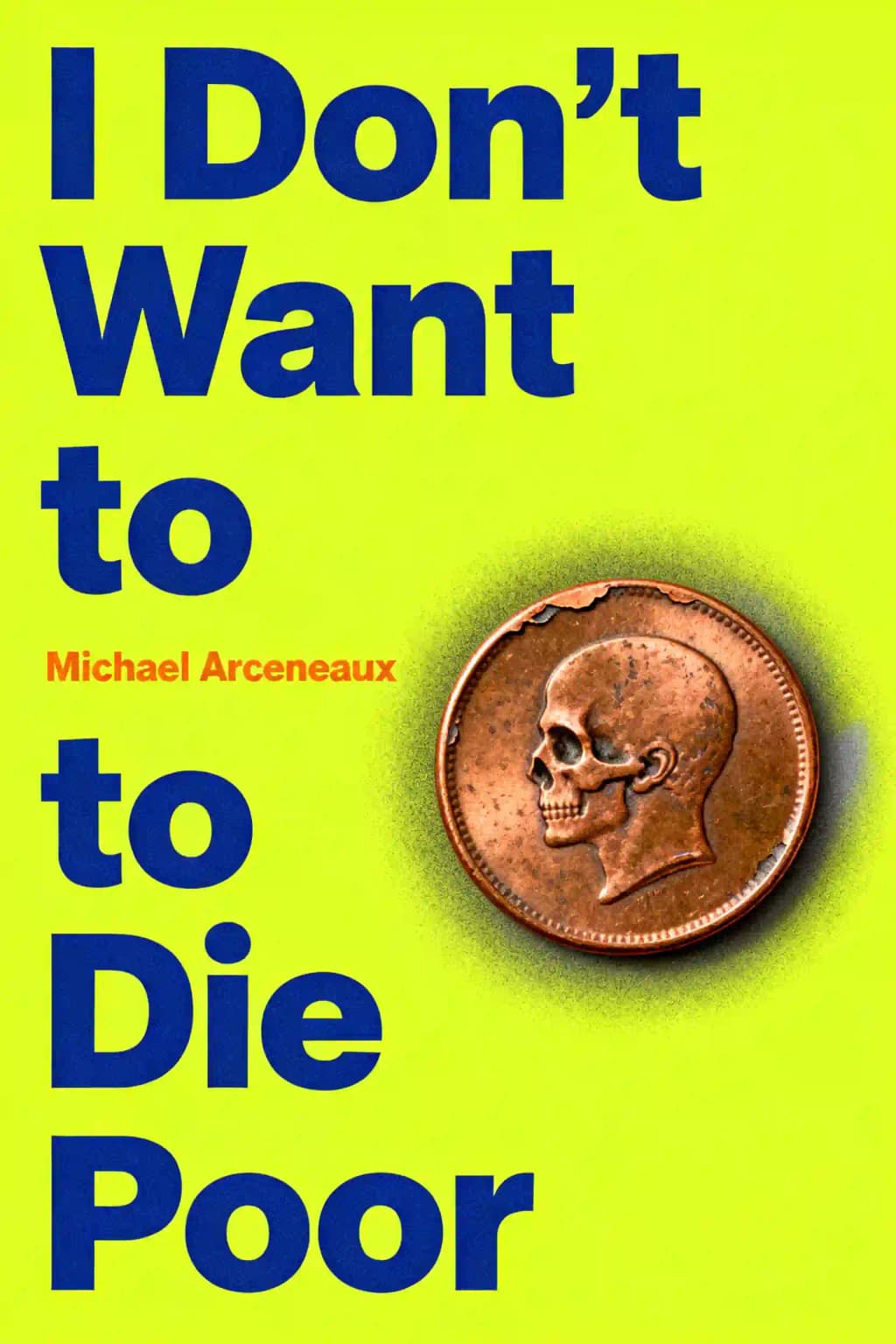
Whatever happens, I refuse to be among the 3 million Americans over sixty still paying off student loans, having their Social Security benefits garnished to satisfy $86 billion in lingering educational debt. I don't want to die poor.
I've denied myself vacations and many pleasures in the name of fiscal responsibility. For over a decade, I let my loans control my thinking far more than necessary. My advice now: forgive yourself. You did what you thought was best at the time. The system is designed for your failure. Pay what you can, but allow yourself joy meanwhile. Millennials aren't killing industries-we're simply less well-off than previous generations, facing lower earnings and fewer assets despite similar consumption preferences.
Elizabeth Warren's plan would forgive significant debt for those making under $100,000, while Bernie Sanders would cancel all $1.6 trillion without eligibility limitations. Though my private loans might be mostly paid off by the time any legislation passes, I don't begrudge others getting relief. I just want people to never feel as low as I've felt dealing with this debt-to have the freedom to invest in themselves, care for families, buy homes, and escape the crushing weight of payments that bury their futures.