第 1 章
Breaking the Broke Cycle: A Financial Revolution for the Young
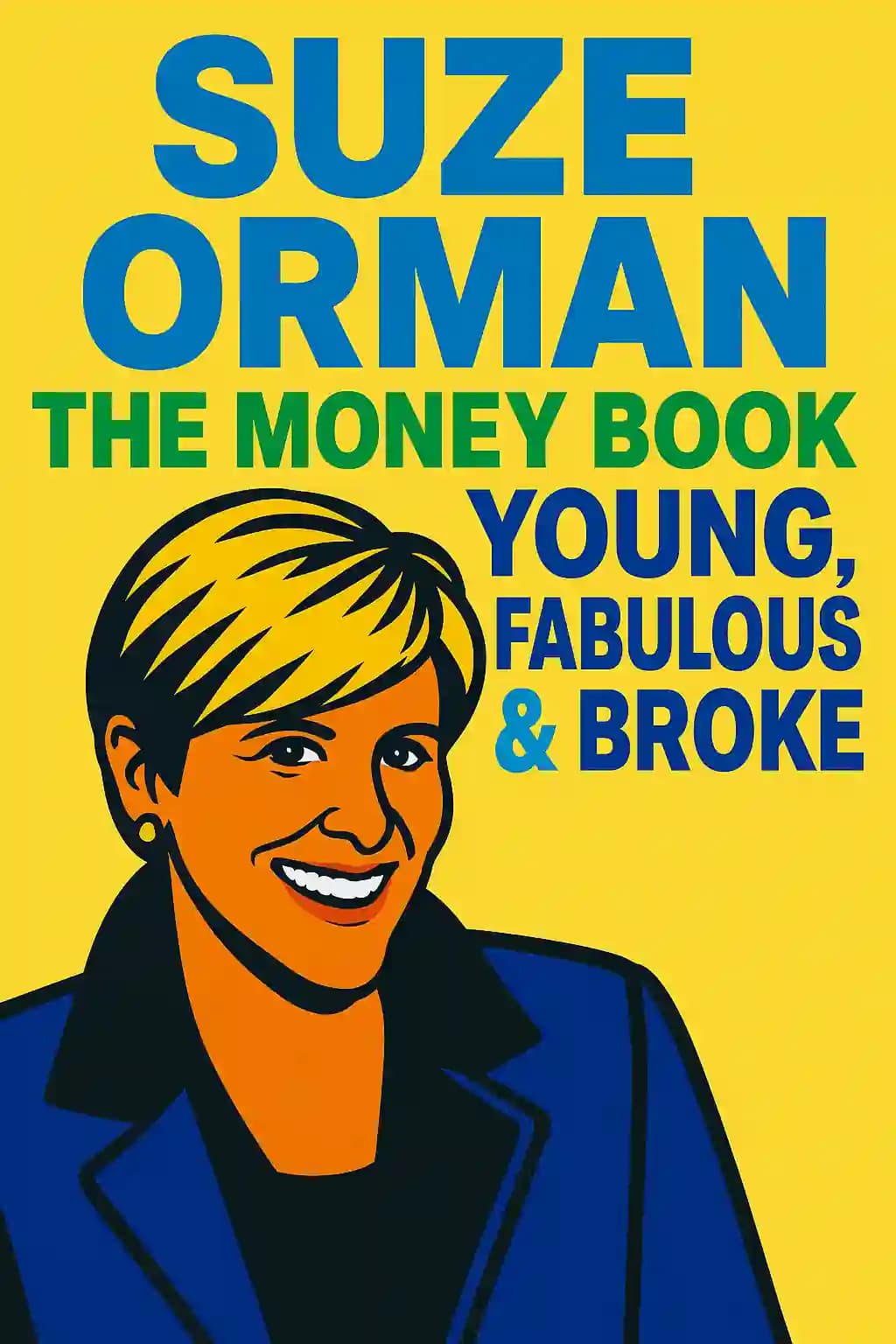
Imagine waking up one day and realizing you've been playing a game without knowing the rules. That's essentially what financial life is like for millions of young adults today. Suze Orman's "The Money Book for the Young, Fabulous & Broke" has become something of a financial bible for millennials navigating the complex world of personal finance. Since its 2005 release, this groundbreaking guide has sold over 1.5 million copies and remained on bestseller lists for years. Even celebrities like Oprah Winfrey have praised its practical approach to money management. What makes this book so revolutionary isn't just its financial advice, but how it acknowledges the unique challenges facing young professionals today-crushing student debt, stagnant wages, and skyrocketing housing costs-while providing actionable solutions rather than judgment. Unlike traditional financial advice that assumes you have money to manage, Orman starts with the reality that many young people are broke and builds from there.
第 2 章
Your FICO Score: The Three Digits That Rule Your Financial Life
Your FICO score is arguably the most important number in your financial life, yet roughly 90% of young people have no idea what their score is or how it impacts them. This three-digit number, ranging from 300 to 850, determines everything from whether you'll be approved for an apartment lease to the interest rate on your car loan.
Think of your FICO score as your financial SAT score-it's how businesses evaluate your application and determine what terms to offer you. The higher your score, the better the deals you'll receive. To the financial world, you essentially are your FICO score.
Fair Isaac calculates this critical number using five key factors: your payment history (35%), how much of your available credit you're using (30%), the length of your credit history (15%), new credit applications (10%), and your mix of credit types (10%). Understanding these components is essential for improving your score.
The practical impact of your score is staggering. On a $20,000 three-year car loan, someone with a poor score (500-559) will pay about $75 more per month than someone with an excellent score (720+). That's $2,700 wasted over the life of the loan-money that could have funded a Roth IRA or paid down student loans.
Your first step toward financial health should be checking all three credit reports (Equifax, Experian, and TransUnion). Each bureau maintains separate information, and errors are shockingly common-studies show 25% contain serious mistakes that could be costing you money. You're entitled to one free report annually from each bureau through annualcreditreport.com.
After correcting any errors, get your actual FICO score from myfico.com. Don't waste money on cheaper alternatives that can be off by 50-100 points-those inaccuracies could cost you thousands in higher interest rates.
To improve your score, focus on what matters most to the algorithm. Pay at least the minimum balance on time-not on the due date, but several days before. Reduce your debt-to-credit-limit ratio by paying down balances or requesting higher limits (without spending more). Protect your credit history by keeping old accounts open, even if you don't use them. Apply for new credit sparingly and maintain a good mix of credit types.
Remember that your FICO score isn't just about qualifying for loans-it affects your ability to rent an apartment, get a cell phone contract, and even influences your insurance rates. In today's financial world, those three digits open doors that might otherwise remain firmly closed.
第 3 章
Career Strategy: Building Wealth Through Meaningful Work
Building a satisfying career rather than settling for just any job is crucial for your long-term financial health and happiness. While finding well-paying work can be challenging, resigning yourself to a career path that makes you miserable is a dangerous trap. The longer you stay in an unfulfilling job, the harder it becomes to change direction as financial obligations mount.
You are an undervalued asset with education, skills, and energy. If you don't believe in your own potential, you'll never have the confidence to pursue what truly makes you happy. Use your youth to your advantage-now is the time to pay your dues in a field that genuinely excites you, even if it means temporary financial sacrifices.
If your dream career doesn't pay enough during these early years, consider using credit cards strategically to cover necessary expenses. With proper knowledge, you can secure initial rates as low as zero percent that adjust to under 10 percent-essentially giving yourself a career loan while pursuing your passion. This isn't about financing a lavish lifestyle but about investing in your future earning potential.
Early in your career, focus on gaining responsibility and exceeding expectations rather than fixating on salary. Your goal should be to make yourself indispensable. Lauren, a design school graduate, turned down a $65,000 job to take an entry-level position at half the salary in a company with a shoe-design division. By throwing herself into her work and consistently exceeding expectations, she was promoted to shoe designer within a year and received a significant raise without having to ask for it. The key is to switch the balance of power by becoming so valuable that your employer depends on you.
When negotiating raises, let your work make your case. Before meeting with your manager, submit a written record of your responsibilities and achievements over the past year. Focus solely on your job performance, not personal financial needs. If your boss refuses a raise, ask for specific feedback and a timeline for revisiting the issue. Consider creative alternatives like additional vacation time or education benefits.
Remember that your job as a young professional is to make your boss look good-even a difficult one. Though frustrating, this is part of paying your dues. Colleagues still notice your contributions, and you're building a reputation throughout the organization. Channel any frustration into a promise to treat your future staff with the respect you wish you'd received.
When job hunting, prioritize face-to-face interactions over online applications. Like Blair, who landed three job offers after personally delivering resumes to school principals, you need to make personal contact. Approach with confidence-timidity won't capture anyone's interest. When cold calls aren't feasible, leverage your network to find contacts inside target companies, asking for informational interviews rather than directly requesting jobs.
Trust your instincts about when to leave a position. If Sunday evenings give you stomach knots or you spend weekdays just counting down to Friday, it's time to move on. You're at the perfect stage of life to make a change-especially if you haven't started a family or taken on a large mortgage. Don't resign yourself to decades of drudgery.
第 4 章
Strategic Credit: Using Debt as a Financial Tool
For the Young, Fabulous & Broke generation, the traditional advice about avoiding credit card debt doesn't always apply. While running up debt for an indulgent lifestyle remains unwise, using credit strategically to make ends meet during your early career can be a necessary lifeline. Today's young adults face unprecedented challenges: a tough job market, substantial student loan debt (averaging $19,000 for bachelor's degrees), and skyrocketing living costs, especially housing.
Credit card debt can serve as a temporary bridge during your broke years-a tool to fix your financial situation while building a meaningful career. This strategy isn't permission to pile on debt carelessly. It's strictly for necessary expenses when you've already minimized your living costs but still come up short each month. Keep charges to less than 1% of your annual gross income (e.g., $300 monthly on a $30,000 salary). After two years, this would total about $7,200-the upper limit of "safe" debt given your earnings.
Before using your card, pause and ask: "Is this a good use or bad use?" Good uses include buying groceries or gas to get to work. Bad uses include restaurant meals, weekend getaways, or expensive clothes. With high interest rates, purchases can end up costing double or triple their original price if you only make minimum payments.
If you're using credit cards to cover living expenses, you need cards with the best possible terms. Many young adults still use whatever card they got during college orientation, potentially paying excessive interest and fees. With a FICO score above 760 and steady income, you shouldn't pay interest above 10%. Shop around for better offers, particularly cards offering low introductory rates for balance transfers.
Watch your grace period carefully-this is the time between your statement closing date and payment due date. If you pay in full during this period, you won't owe interest on next month's purchases. But carrying any balance eliminates your grace period, meaning you'll pay interest on new purchases immediately. Shop for cards with longer grace periods (25 days is better than 20 days), and check each statement's due date as companies may change it without obvious notification.
Late payments are the fastest way to lose your low interest rate. Card companies actively look for ways to raise your rates, and being late even once can trigger a hike from 4% to 21%. Never wait until the due date to send payment, as any delay could trigger late fees, damage your credit report, and lower your FICO score.
For those needing to tackle existing credit card debt, focus on the card with the highest interest rate, not the highest balance. Call every card company to negotiate lower rates or consider balance transfers. Then list your cards from highest to lowest interest rate and pay the minimum on all except the highest-rate card, where you should pay at least $50 extra monthly. Once that card is paid off, roll that payment amount into the next highest-rate card. This "debt snowball" method dramatically reduces your payoff time.
Avoid dangerous credit practices like cash advances (which charge interest immediately with no grace period), using home equity to pay off credit cards (which transforms unsecured debt into debt secured by your home), or considering bankruptcy before exploring alternatives like credit counseling or direct negotiation with creditors.
第 5 章
Managing Student Loans: Your Investment in Yourself
Student debt may feel overwhelming, but it's actually a terrific investment in your future. Census Bureau calculations show a college education nearly doubles your earning potential compared to a high school diploma-translating to $2.1 million in lifetime earnings versus $1.2 million. Even with $30,000 in loans at 7.14% interest paid over twenty years (totaling $56,000), you're looking at potential excess earnings of $900,000-a 1,500% return on investment over your career.
While your degree will pay off financially in the future, that doesn't help with your current loan payments. The good news is that lenders offer numerous flexible payment options-you just need to understand what works best for your situation.
After graduation, your Stafford loans (the most common type) enter a six-month grace period before repayment begins. With subsidized loans, the government covered your interest while in school, but with unsubsidized loans, that interest gets added to your principal. If you've lost track of your loans, use the National Student Loan Data System at nslds.ed.gov to find your lender.
Though outright loan cancellation is rare, you have options to postpone payments. Deferment allows you to delay payments under qualifying circumstances like unemployment or returning to school. With subsidized loans, interest won't accrue during deferment, but it will with unsubsidized loans. If you don't qualify for deferment, forbearance is another option where payments are delayed but interest continues to accrue on all loan types.
Consolidation combines all your loans into one and locks in a fixed interest rate for the life of the loan. The current consolidation rate (as of publication) is 7.14%, and consolidating during your six-month grace period can secure an even lower rate. However, be careful as consolidation may affect deferment eligibility and Perkins loan forgiveness options.
Consolidation offers several repayment options: the standard plan (fixed monthly payments over ten years), extended plans (12-30 years for larger loans), graduated plans (payments increase every two years), and income-sensitive plans (based on your salary). While longer repayment periods reduce monthly payments, they significantly increase total interest paid. For example, a $20,000 loan at 7% costs $13,950 in interest over 30 years versus just $7,860 over 10 years.
Lenders reward reliable borrowers with interest rate reductions. Setting up automatic payments can lower your rate by 0.25%. Making on-time payments for 36 consecutive months can reduce your rate by 1%, and some lenders offer up to 2% reduction after 48 months of on-time payments.
You may qualify for a tax deduction of up to $2,500 annually on student loan interest payments. This benefit is available to singles earning under $50,000 and married couples filing jointly earning under $100,000, with phase-outs for higher incomes.
When deciding between paying off student loans or investing, prioritize a 401(k) with employer matching first-that's free money you shouldn't pass up. After that, if your student loan rate is lower than 8% and you qualify for tax deductions on interest payments, keep up with required payments and invest extra cash in a Roth IRA.
Unlike credit card and auto loans, student loans stay with you until death unless you qualify as a hardship case through permanent disability. Defaulting leads to serious consequences: tax refund seizures, wage garnishment, and court action. However, if you commit to a repayment plan and pay on time for twelve months, your default status can be removed from your credit report.
第 6 章
Building Savings: From Broke to Financial Security
Congratulations on reaching this stage in your journey out of broke! Now we shift focus from managing debt to building savings for big-ticket goals like buying a car, a home, and creating an emergency cash fund. But I understand the challenge-your salary might be rising, yet your bank account isn't growing proportionally. Success isn't just about making more money; it's about knowing where your money goes.
I'm not pushing strict budgeting here-those fail like fad diets. Instead of financial crash-dieting, we need reasonable changes that direct money toward savings goals. The issue isn't always overspending-many young people simply don't earn enough to cover basic needs. Our approach focuses on freeing up money by reducing costs without sacrificing your lifestyle.
Start by examining your bank statements for unnecessary fees and unauthorized charges. ATM and bounced-check fees add up significantly over a year. Avoid bounced checks by understanding that deposits can take 2-5 days to clear while checks process immediately. Use direct deposit whenever possible since it clears immediately. Be wary of "free" overdraft protection-it typically costs $25 per check plus additional daily fees until repaid.
Consider these practical ways to find extra cash: Adjust your W-4 withholding to stop getting tax refunds; cancel unnecessary life insurance if you're single with no dependents; raise insurance deductibles to lower premiums; consider using only your cell phone and dropping your landline; and carefully review credit card statements for double billing or phantom fees.
Small changes can add up to significant monthly savings: Extend time between haircuts and beauty treatments; wash more clothes instead of dry cleaning; choose less expensive drinks when out; brown-bag lunch once or twice weekly; use public transportation instead of taxis; and buy sports equipment used or off-season.
For more substantial savings, consider these lifestyle changes: Cut movie outings from weekly to twice monthly (saving $60 monthly or $720 annually); get a roommate to share housing costs; look for up-and-coming neighborhoods rather than paying premium prices for trendy areas; and drive your car longer-keeping it for 6-8 years gives you several years without car payments, freeing up hundreds monthly for savings.
When building an emergency fund, start small and consistent. Ideally aim for six to eight months of living expenses, built gradually over time. Use the three-second trick before purchases: ask if it's a good or bad use of money. Unspent money will grow your bank account, allowing you to start saving.
Always prioritize 401(k) contributions if your employer offers a match-this is free money you shouldn't pass up. For example, if your employer matches 50% up to $1,500, your $3,000 contribution instantly becomes $4,500. Do this regardless of credit card debt, then focus on personal savings.
Distinguish between saving (short-term goals within 5 years) and investing (long-term). For savings, avoid stocks and choose safer options like CDs (certificates of deposit), money-market deposit accounts (MMDAs), or money-market mutual funds. These typically earn 3-5% with minimal risk, perfect for goals like house down payments.
第 7 章
Retirement Planning: Your Youth Is Your Greatest Asset
Unlike previous generations who could rely on pensions and Social Security, today's young people must take full responsibility for funding their own retirement through 401(k)s and IRAs. Though retirement may seem distant when you're struggling to pay monthly bills, time is your greatest asset for building wealth through the power of compounding.
The reality is stark: unlike your grandparents with their company pensions and reliable Social Security, you're on your own for retirement funding. But you have one massive advantage: time. Through the power of compounding, investing $300 monthly from age 25-40 (just $54,000 total) can grow to over $1 million by age 70 with an 8% average annual return. Wait until 40 to start, and you'd need to invest twice as much money for half the result. Your youth is literally your most valuable financial asset.
For retirement investing, focus on two primary options: a 401(k) with company matching contributions and a Roth IRA. Ideally, you should invest in both, but if you must choose, prioritize the 401(k) with matching (essentially free money), then the Roth. These plans offer significant tax advantages while allowing your money to compound over decades.
Your employer's matching contributions to your 401(k) typically come with strings attached through vesting schedules. While your own contributions are always 100% yours, company matches usually vest over several years-often 20-25% annually. This serves as a retention tool; leave before full vesting and you forfeit the unvested portion of the match.
While your 401(k) investments grow tax-deferred (meaning no taxes on earnings while invested), Uncle Sam eventually wants his cut. When you withdraw funds-allowed starting at 5912 and required by 7012-you'll pay ordinary income tax on every dollar. Touch your money before 5912, and you'll typically face income tax plus a 10% early-withdrawal penalty. On a $10,000 withdrawal in the 15% tax bracket, that's $2,500 gone-leaving you with just $7,500.
Some employers now offer Roth 401(k)s alongside traditional plans. Unlike traditional 401(k)s, Roth contributions are made with after-tax dollars, but withdrawals in retirement are completely tax-free. For young, fabulous and broke people, this is an incredible deal worth choosing over traditional 401(k)s when available.
Once you've maximized your employer's 401(k) match, turn your attention to a Roth IRA-my favorite investment vehicle for young people. Unlike 401(k)s, Roth contributions are made with after-tax dollars, offering no immediate tax break. But the payoff is huge: after five years and age 5912, all withdrawals-including investment gains-are completely tax-free. Forever.
With today's historically low tax rates and your current low tax bracket, the upfront tax breaks of traditional retirement accounts aren't worth sacrificing tax-free withdrawals later. Investing $4,000 annually in a Roth (increasing to $5,000 from 2008) for 29 years at 8% growth would yield $552,100-all tax-free. The same amount from a 401(k) might face 30% in taxes, leaving you with just $387,000. Better to pay taxes now when rates are low than later when they'll likely be higher.
Unlike 401(k)s, Roth IRAs allow you to withdraw your original contributions (but not earnings) at any time without taxes or penalties-making them perfect emergency funds. For example, if you contribute $4,000 annually for three years ($12,000 total) and it grows to $14,000, you can withdraw up to $12,000 penalty-free.
When changing jobs, never cash out your 401(k)-you'll face taxes, penalties, and lose decades of growth potential. Even a modest $5,000 could grow to over $50,000 in 30 years at 8% returns. Instead, do an IRA rollover, which transfers your money tax-free into an account with vastly more investment options than your employer's limited selections.
第 8 章
Investing Fundamentals: Simplicity Beats Complexity
For young investors with limited funds, focus on two key areas: what to invest in your 401(k) and what to put in a Roth IRA or IRA rollover. Investing isn't complicated-financial experts just want you to think it is to profit from your fear. No one will care more about your money than you will.
Mutual funds are essentially "suitcases" holding dozens or hundreds of individual stocks, providing instant diversification even when buying just one fund. They come in different styles: growth funds (companies with rapidly increasing earnings), value funds (undervalued companies with potential), and blend funds (combining both characteristics). They're also categorized by company size: small-cap funds (newer, fast-growing companies with higher risk/reward), mid-cap funds (more stable but still growing companies), and large-cap funds (established multinational corporations with lower risk).
Index funds track market indices like the Standard & Poor's 500, and they historically outperform most actively managed funds largely due to their lower fees. They are the best investment choice for young investors, offering simplicity, diversification, and strong long-term performance potential.
Fund expense ratios critically impact your returns. Investing $3,000 annually for 30 years with an 8% return would yield $276,000 in a fund charging 1.5% versus $354,000 in one charging just 0.18%-a $78,000 difference that should matter to every young investor.
Focus on a fund's performance over three, five, and ten years rather than short-term results. For actively managed funds, investigate how long the current manager has been in charge, as stellar past performance means little if a new manager is at the helm.
Strongly avoid purchasing load funds that charge sales commissions. The three main fund structures are: A-share funds (upfront sales commission), B-share funds (hidden fees with surrender charges for early withdrawal), and no-load funds. Only choose true no-load funds that never charge fees to buy or sell, regardless of when you exit.
You don't need big money to start investing-small, consistent contributions work magic through compounding. Dollar cost averaging (DCA)-investing fixed amounts regularly regardless of market conditions-turns market volatility into an advantage. When prices fall, your fixed contribution buys more shares; when prices rise, it buys fewer. Many fund companies encourage DCA by allowing small initial investments (as little as $50) with regular contributions.
For your portfolio allocation, emphasize diversification across different types of stock funds (large-, mid-, and small-cap, growth and value). While index funds should form the core of your portfolio, you can add actively managed funds if you're willing to monitor them closely. These recommendations are for your young, fabulous and broke years-bonds become more important later in life, but while in your twenties and thirties, focus heavily on stocks to maximize long-term returns.
Don't worry about market downturns-dollar cost averaging actually benefits from lower prices as you accumulate more shares. Avoid the "disposition effect" of holding losing investments until breaking even; investment decisions should be forward-looking. Conduct semi-annual fund checkups to evaluate performance against peers and indices, and take immediate action if fund managers change or scandals emerge.
第 9 章
Smart Decisions for Big Purchases: Cars and Homes
When buying a car, understand that it's a depreciating asset, not an investment. Cars lose 20% of value immediately and a third within three years. Strongly avoid leasing, which creates an endless cycle of payments. Instead, buy a car with a loan, then continue driving it after it's paid off. Through a comparison with "Katie," buying saves thousands over leasing in the long run, as ownership eventually eliminates monthly payments while leasing creates an endless payment cycle.
Check your FICO score before car shopping, as it dramatically affects loan rates. Shop around for loans at banks, credit unions, and websites like LendingTree before visiting dealerships. For cash-strapped young people, consider "new used cars"-particularly Certified Pre-Owned vehicles with manufacturer warranties.
If you insist on buying new, focus on the invoice price rather than MSRP. Research manufacturer incentives and holdbacks on sites like Edmunds to negotiate effectively. Settle on the "out-the-door" price before discussing financing options, and always compare dealer financing with pre-arranged loans from other sources.
Don't skimp on car insurance, recommending coverage of 100/300/50 rather than minimal state requirements. To save money, bundle home and auto insurance, shop online through comparison sites, and opt for a higher deductible ($1,000) to reduce premiums by 15-30%.
Home ownership, unlike car buying, is the best big-ticket purchase you'll ever make. Even with modest 4% annual appreciation, homeownership offers excellent returns through leverage. For example, a $100,000 home with a $10,000 down payment that appreciates 4% ($4,000) actually provides a 40% return on your investment.
Down payments are crucial when buying a home, with 20% being ideal. However, most young buyers won't have $40,000 for a $200,000 home, so lenders offer options with as little as 3% down. Strongly avoid zero-down mortgages, viewing the ability to save at least 3% as a "self-administered litmus test" of financial responsibility.
When putting down less than 20%, you'll pay Private Mortgage Insurance (PMI)-about $43 monthly per $100,000 borrowed with 10% down. Closing costs typically run 2-3% of the mortgage amount, including various fees that average $3,000+ on a $150,000 mortgage.
On a $150,000 mortgage at 6%, you'll pay $174,000 in interest over 30 years versus just $78,000 over 15 years. Early mortgage payments go primarily toward interest rather than principal-after 15 years of a 30-year loan, you've only paid off about 30% of the principal.
Lender approval amounts don't necessarily reflect what you can truly afford. Add about 40% to your basic mortgage payment to account for property taxes, home insurance, potential PMI, and repair funds. For example, a $150,000 home with 10% down and a $855 mortgage payment could actually cost $1,239 monthly with all expenses.
To test if you're financially ready for homeownership, try a six-month "play house" test: calculate your estimated total housing cost, subtract your current rent, and deposit the difference into a separate account monthly. If you consistently make these payments on time, you're ready to buy.
第 10 章
Money and Relationships: Building Financial Intimacy
Money issues are a leading cause of divorce, making financial intimacy essential for lasting relationships. This means developing a shared approach to spending, saving, and investing despite different financial personalities. Young couples must talk openly about money before moving in together or marrying, especially when resources are limited.
Financial intimacy is as crucial as emotional and physical intimacy. Money decisions affect you daily for life, and financial incompatibility often contributes to divorce. It's not about making equal amounts but developing a shared approach to finances. Complete openness about finances is essential, regardless of who earns more.
Couples should merge some finances while maintaining independence. Create a joint checking account for shared expenses while keeping separate personal accounts and individual credit cards. Calculate fair contributions to joint expenses based on income percentages, not equal dollar amounts. For example, with $3,000 monthly expenses and combined income of $4,000, each partner contributes 75% of their take-home pay.
Before marriage, consider the financial implications alongside wedding plans. For young, broke couples, expensive weddings are questionable financial decisions. Financing a $30,000 wedding on credit cards could take over forty years to pay off with minimum payments. Consider more modest celebrations to avoid debt, or if parents are paying, discuss redirecting some funds toward a home down payment instead.
Life insurance becomes essential once someone is financially dependent on you. Buy term life insurance only-ignore whole life, universal life, or variable life policies despite what agents might push. Term insurance provides coverage for a specific period with guaranteed level premiums at a fraction of the cost of permanent insurance. Use the savings for better purposes like investing in a Roth IRA.
When dating someone whose financial behavior troubles you-excessive debt, bounced checks, and reckless spending-recognize that money management reflects character. Don't compartmentalize these issues. Instead of attacking with "I hate how you handle finances," open conversation with non-confrontational questions like "Do you ever worry about your credit card debt?" Someone who can't respect money will ultimately struggle to respect you.
Your retirement savings must take priority over your children's college funds. While loans and scholarships exist for education, there are no loans for retirement. Paying for college at the expense of your own financial security isn't good parenting-it could leave you financially dependent on your children later. Instead, save what you can for retirement first, then contribute what's possible to college funds.
A living revocable trust is better than a will for leaving property to heirs. Wills require probate-a costly, time-consuming court process that can force asset sales to cover legal fees. With a trust, assets transfer to beneficiaries without probate upon death. Trusts also provide protection through incapacity clauses if someone becomes unable to manage their affairs.