第 1 章
The Dream Weavers: Mastering the Art of Fiction
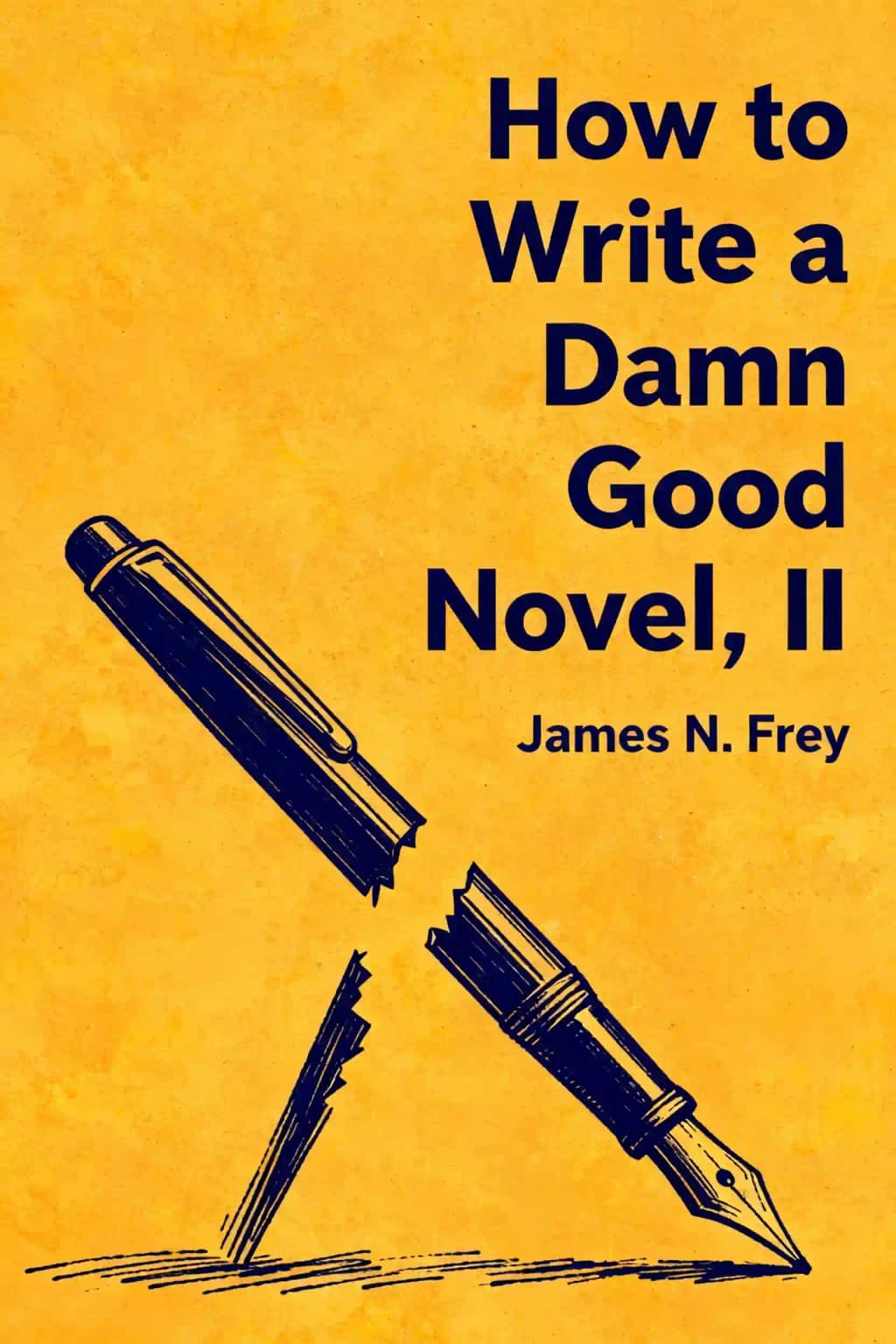
When Stephen King was asked why his novels captivate millions, he didn't cite technical skill or plot mechanics. Instead, he described fiction as "a uniquely powerful form of hypnosis" - a way to transport readers into an alternate reality so vivid they forget they're reading. This ability to induce what James N. Frey calls the "fictive dream" separates merely competent writers from masters of the craft. The book you're about to explore has influenced countless bestselling authors, from Gillian Flynn to Andy Weir, who credit it with transforming their understanding of fiction writing. Beyond the writing community, Hollywood screenwriters regularly consult it when crafting characters that resonate with audiences. What makes this guide so enduring? Unlike academic approaches that dissect literature like laboratory specimens, Frey treats fiction as a living, breathing entity - revealing the psychological mechanisms that make stories come alive in readers' minds.
第 2 章
The Fictive Dream: Fiction's Hypnotic Power
Fiction isn't merely entertainment - it's transportation to another world. Unlike nonfiction writers who inform, fiction writers induce an altered state of consciousness in their readers. This "fictive dream" operates at the subconscious level, making readers temporarily forget reality as they live within your story world. When readers are fully transported, the real world evaporates around them.
The techniques for inducing this dream state mirror those used by hypnotists. Both rely on specific sensory details that appear on the viewing screen of the mind. When you write "He walked into the silent garden at sundown and felt the soft breeze blowing through the holly bushes and found the scent of jasmine strong in the air," you're creating vivid physical details that pull readers into your story world. This is why "showing" rather than "telling" is crucial - telling forces readers to think rather than feel, pushing them out of the dream state.
Fiction writing is essentially a service business. What you're providing is transportation to another world through fraudulent events and people who never existed. The transported reader dreams the fictive dream through your power of suggestion. When I provide vivid details in fiction, those objects appear on the viewing screen of your mind. This is why physical detail is the lifeblood of fiction - it provides the proof that makes readers believe.
The path to reader transportation begins with sympathy. Contrary to popular belief, characters don't need to be admirable to win sympathy - they need to evoke pity. Moll Flanders, Fagin, Jake LaMotta, and countless other unsavory characters garner tremendous sympathy despite their flaws. The key is making readers feel sorry for them. Place characters in situations of suffering - poverty, humiliation, danger, loneliness - and readers will sympathize. This is why great novels introduce characters at vulnerable moments: Jean Valjean starving, Carrie bullied, Elizabeth Bennet snubbed, Raskolnikov in poverty.
Beyond sympathy lies identification - when readers actively support the character's goals. A reader might pity a condemned criminal without identifying with his escape plans. Identification happens when readers want the character to succeed: Brody killing the shark in Jaws, Carrie attending the prom, Elizabeth finding love in Pride and Prejudice. Even despicable characters can win reader identification through noble goals. In The Godfather, Puzo brilliantly transforms Don Corleone from reprehensible criminal to sympathetic figure by introducing him as a dispenser of justice when the legal system fails.
The deepest connection comes through empathy - making readers feel what characters feel. Writers create empathy through sensuous, emotion-provoking details that let readers experience the character's reality: Sam wiping his runny nose on his sleeve after gambling away millions; Carrie feeling "half shame and half defiant excitement" in her prom dress; Brody in Jaws sitting "hot and sticky" with sunburned neck while fish guts nauseate him. These sensory details place readers directly in the character's skin.
The ultimate goal is transporting readers into a bubble where the real world evaporates - what hypnotists call the "plenary state." The key to achieving this transportation is inner conflict - the storm raging inside characters: doubts, misgivings, guilt, remorse, indecision. Inner conflict functions as a battle between two competing voices within the character that rise toward a climactic decision. For maximum transportation, place characters on the horns of a dilemma with two equally desirable but competing choices.
第 3 章
The Art of Suspense: Keeping Readers Frozen to the Page
Suspense is the novelist's tool for freezing "quivering and helpless" readers to the book, making them "worry and wonder" about characters and outcomes. It exists when something remains "undecided or undetermined" - specifically, a story question.
Strong opening hooks raise immediate curiosity: "It was well after midnight when the rector heard loud banging on the door" makes readers wonder who's knocking and why. Unlike beginners who open with mere description ("Ginger's bedroom had striped wallpaper"), masters like Hugo, Spielberg, Kafka, Austen, and King immediately plant compelling questions.
Beyond mere curiosity, true suspense creates anxiety and apprehension by placing sympathetic characters in situations of menace - whether physical danger like Mary reaching for a boiling pot, or social consequences like Prudence and Freddy's barn encounter witnessed by Aunt Matilda. Every great novel establishes this dynamic: Henry facing death in Red Badge of Courage, Carrie facing torment at school, Elizabeth and Darcy's thwarted romance.
The most potent technique is "lighting the fuse" - establishing that something terrible will happen at an appointed time unless characters can prevent it. This technique appears in classic scenarios like Pauline tied to the tracks with the 12:10 train approaching, Jane clinging to a log heading for rapids, or Batman facing weekly death traps.
Creating "lit fuse" scenarios is straightforward: Lisa sneaking out must return before midnight when her parents arrive home, but her boyfriend's car breaks down; Black Bart refuses to leave town by sundown despite the sheriff's warning; a family camping trip becomes desperate when their car won't start as a forest fire approaches. Thriller writers like Forsyth, Follett, and le Carre masterfully employ this technique, as do authors across genres from Jaws to Gone with the Wind to Pride and Prejudice.
Ultimately, suspense means making readers worry about characters they care about.
第 4 章
Creating Characters Worth Knowing: Beyond Wimps and Wackos
Literary agents, editors, and writing teachers dread the "wimpy housewife story" where a naive, ignorant protagonist suffers under a callous, philandering spouse for most of the narrative before finally taking action. The male equivalent is the "wimpy accountant" story. These stories fail because readers cannot sympathize with characters who merely suffer and wallow in self-pity.
The problem isn't that characters start as wimps - Shirley Valentine successfully portrayed a wimpy housewife who was interesting because of her insights and because she took action by fleeing to a Greek island. The real issue is "constipated" characters who cannot move or grow. To write a damn good novel, characters must be dynamic - driven by desperate wants with conflicting emotions and desires that tear them apart, creating inner fires that push them into action and story conflict.
Truly memorable characters possess "the uniqueness of real people" with "contrasts of inconsistent behavior" that make them three-dimensional. Great characters are so extraordinarily interesting that meeting them at a cocktail party would make you want to tell others about them. What makes people interesting? Their travels, deep thoughts, strong opinions, unusual experiences, and spiritual quests.
Readers are drawn to characters who are "effective" at what they do. Detectives should excel at detecting, cowboys at shooting or tracking, and so on. Homer understood this when creating Ulysses, who was not only daring but also a great sailor and bowman. In Jaws, Brody is an excellent sheriff, Hooper a brilliant marine biologist, Quint a masterful shark hunter, and even the shark excels at attacking humans.
Great characters often possess a "wacky" quality - they're exaggerated, flamboyant, colorful, or slightly unhinged. Literary history abounds with memorable eccentrics: Ahab obsessively hunting Moby Dick, Zorba the Greek living recklessly, Don Quixote jousting with windmills, Moll Flanders the pickpocket and bigamist. Detective fiction gives us Hercule Poirot with his hair net and waxed mustache, Nero Wolfe who never leaves home, and Sherlock Holmes with his violin and morphine habit.
Characters should contrast not only with each other but also with their settings. This creates immediate dramatic tension: the rube in the city, the socialite in prison, a Connecticut Yankee in King Arthur's court, a spoiled rich kid on a fishing boat, a hip street punk in an insane asylum, a Kansas farm girl in Oz. In Jaws, Sheriff Brody hates water and can't swim, yet hunts a massive shark at sea. Placing characters where they don't belong forces them to confront new and frightening circumstances, creating immediate dramatic potential.
A character's ruling passion is their central motivating force - the sum total of all drives within them. It defines the character and brings them to life, determining how they'll react to story dilemmas. This passion might be specific (to commit the perfect crime, become a great preacher) or general (to be a good husband, to be left alone). Importantly, ruling passions can change during a story, forcing dramatic decisions that drive character growth.
The most unforgettable characters often possess dual natures - essentially two distinct personalities inhabiting one body. Jekyll and Hyde exemplifies this, but so do Frankenstein's monster (both ferocious killer and gentle philosopher), Long John Silver (cold-blooded pirate and loving father figure), and Carrie (awkward teenager and psychokinetic avenger). These internal contradictions create rich dramatic possibilities when the character's dual natures come into conflict.
第 5 章
The Power of Premise: Your Story's Blueprint
Premise is the fiction writer's essential tool - as fundamental to novel-building as the chisel was to constructing the Egyptian pyramids. Simply put, premise is a statement of what happens to characters as a result of the story's core conflict. Despite its simplicity, many writers struggle with this concept, perhaps intimidated by the technical-sounding term.
Some resist using a controlling principle, preferring to let characters "write the story." However, without a premise, writers lack a blueprint - they're like travelers heading to Kansas from New York while blindfolded. The chances of creating a damn good novel by simply letting characters do as they please is about one in a hundred.
A well-articulated premise contains character, conflict, and conclusion, allowing writers to test each complication against it and ensure everything in the story serves a purpose. The first step toward finding a premise is answering the fundamental question: "What is this story about?" Once answered, the premise becomes the writer's truth - their statement about human nature and how particular characters change through particular conflicts.
Fiction writers often confuse premise with moral or theme. A moral teaches something specific, like "don't trust strangers" in fairy tales or "crime doesn't pay" in detective novels. Modern fiction rarely aims to teach morals. Theme, by contrast, is a recurring fictional idea or aspect of human existence being explored. For our purposes, themes are recurring fictional ideas being tested in the novel, while premise is a statement about what happens to characters as a result of the story's actions.
To understand premises in action, consider "The Three Little Pigs." The premise is "Foolishness leads to death and wisdom leads to happiness." The story isn't about home construction - that's merely the arena where the story unfolds. The building of houses is the text, while wisdom versus foolishness is the subtext - the true subject. Every action in the story proves this premise, with nothing irrelevant included.
Without a clear premise, stories often disintegrate into random events without development, leaving readers frustrated and lost. When a story lacks a subject, its incidents can typically be reordered without changing the narrative - a clear sign of poor development. A strong premise provides structure for creativity, like a cannon that focuses the gunpowder of imagination.
There are three types of premises: chain reaction, opposing forces, and situational. In chain reaction premises, an unexpected event triggers a series of consequences leading to resolution - like a man finding $3 million, becoming famous, growing arrogant, losing everything, and ultimately finding true happiness in his original life. The opposing forces premise pits two elements against each other with one ultimately prevailing, such as "love defeats patriotism." A situational premise examines how a particular situation affects different characters, like how being a cop or experiencing war transforms people in various ways.
By changing a story's premise, we completely transform its nature and outcome. Starting with just a germinal idea - like a nightmare about committing murder - isn't enough to create a story. The premise must include what happens to characters as a result of the story's actions.
A damn good novel may contain multiple stories, each with its own premise. Novels like Anna Karenina, War and Peace, and Gone with the Wind contain multiple storylines. When a novel has multiple stories, the novel itself becomes a vessel containing these stories rather than having a single overarching premise.
第 6 章
Finding Your Voice: The Who Who Tells the Tale
The "I" of a narrator is not the same as the author's true self but rather a persona - an idealized projection. While I might have bad days and moods, the narrator of a book maintains a consistent voice. This doesn't mean authors don't believe what they're writing; it simply means they adopt a consistent persona when writing. Writers have multiple narrative voices in their repertoire - from scholarly to conversational - created through word choice, tone, and style.
A strong narrative voice creates trust with readers, allowing them to relax their critical faculties and follow the flow of words. In fiction, this comes from tone and command of detail. Weak narrative voices use bland, generalized language, while strong voices use specific details and distinctive language. Harold, for example, "busted his hump six days a week at Kensington Machine Shop" rather than simply being "a good worker."
The opening of Gone with the Wind exemplifies this strong voice through its precise characterization of Scarlett O'Hara, with concrete details that show the narrator is sure-footed. Stephen King's narrator in Carrie similarly uses vivid specifics, like Momma's feet "always seemed on the point of overflowing her shoes."
Far from being invisible, the best narrators have personality - whether Dostoevsky's sympathetic voice in Crime and Punishment, Jane Austen's judgmental tone in Pride and Prejudice, or Tom Wolfe's satirical perspective in The Bonfire of the Vanities.
The supposed limitation that first-person narrators can't show scenes where they aren't present is easily overcome with simple narrative techniques. Using Stephen King's Carrie as an example, a third-person passage describing Margaret White's thoughts can be effectively translated to first person by having Carrie imagine her mother's thoughts after leaving for the prom: "After I was gone, the house was no doubt completely silent. I know Mother would linger in her bedroom thinking only one thought: She is gone."
Developing a strong narrative voice is crucial for writers but often challenging for beginners who've been conditioned by the American educational system to write in academic, impersonal styles. School writing emphasizes grammar and structure while actively discouraging personality, colloquialisms, and strong ideas. Students are rewarded for producing banal, toneless prose that matches an ideal of well-organized but lifeless writing.
To develop a strong voice, writers should study authors with distinctive voices, copy their work word-for-word, then write imitations in those styles. With daily practice, you'll soon master multiple voices. Try rewriting the same passage in different voices - standard neutral, cynical, or first-person - to strengthen your range.
第 7 章
The Author-Reader Contract: Promises and Expectations
A contract represents an exchange of promises - you promise a damn good novel, and your reader pays good money for it. Beyond this basic transaction, readers expect your novel to fit within a general type: genre, mainstream, or literary.
Genre novels (also called "category," "pulp," or "trash" novels) are typically sold as rack-sized paperbacks in supermarkets, drugstores, or the back sections of bookstores. They're organized by type: mystery, science fiction, fantasy, horror, romance, Gothic, western, political thriller, and others. Readers of genre fiction expect entertainment that conforms to established conventions - in mysteries, there's a murder that someone solves, with the criminal ultimately facing justice.
Some genres like romance are strictly formulaic, with publishers providing specific requirements for character ages, appearances, and plot developments. The best way to learn conventions is to read dozens of novels in your chosen genre and join professional organizations like Mystery Writers of America.
Mainstream novels have less rigid conventions than genre fiction and are typically displayed prominently in bookstores, often with substantial promotional backing. They include glitzy melodramas featuring high society and naked ambition, immigrant experience narratives that examine American culture through outsiders' eyes, and "women's fiction" focusing on marital problems, divorce, or mother-daughter relationships.
Unlike genre fiction, mainstream novels feature more moral ambiguity, more fully developed characters, larger casts, and glamorous industry settings like high finance or fashion. Characters typically have elite educations and considerable wealth, and endings are almost always happy.
Literary novels do have conventions, contrary to popular belief. Written for the cultural elite, they demand "fine writing" - smooth, polished prose without the adverbs and clumsiness sometimes tolerated in mainstream and genre fiction. Current popular literary forms include magical realism (imitating South American fabulists), low-life novels, suburban dysfunction narratives, and ethnic experience stories, while metafiction (self-conscious fiction that acknowledges its own artifice) is fading.
Readers attempt to discern your premise from the beginning, and your obligation is to prove it. The reader will recognize the type of story early on - whether it's a love story being tested by obstacles like patriotism or family opposition. The contract extends to formal aspects as well, including viewpoint consistency. If you need to switch viewpoints, establish this pattern early or use formal section breaks to signal the change.
Your contract requires giving readers all necessary information - clues in mysteries, believable obstacles in romances - and maintaining verisimilitude through proper research. Characters must act at maximum capacity, not stupidly for plot convenience. Most importantly, deliver on the climax you've promised - the most common contract violation is failing to provide a satisfying confrontation between protagonist and antagonist.
第 8 章
Avoiding the Seven Deadly Mistakes
Edwin A. Peeples notes that fiction writing is "no career for the timid." Despite personal bravery in other areas of life, many writers find themselves trembling when facing criticism. The solution is to tough it out - attend honest workshops, read your stories, and take criticism without defending your work.
Writers also can't be timid in their work - they must embrace dramatic situations, not pull back from difficult scenes, and take risks like Hitchcock did with Psycho. Timid writers often truncate powerful scenes, retreat into flashbacks to avoid conflict, or fear exploring painful emotions.
The second deadly mistake is attempting to be "literary" before mastering the fundamentals of storytelling. New writers who try to emulate literary giants like Joyce or Woolf often ignore basic principles of dramatic fiction. When criticized for lacking rising action or character motivation, they claim to be avant-garde. The biggest problem with imitative work is that no one likes an imitator - writers should master storytelling principles before attempting to break the rules.
The third deadly mistake is "ego-writing" - putting the author's vision above the reader's experience. Successful writers are "reader-writers" who consider their audience. An 80-year-old writer who had published hundreds of stories and novels shared his secret: "When I write, I think of my reader sitting in an easy chair, bone weary after a hard day's work. My job is to make sure she stays in that chair until the book is done."
Many writers fail because they can't "re-dream" their work during revision. The key difference between successful and unsuccessful writers is the ability to reimagine stories differently during revision, rather than seeing scenes as fixed "memories." Start scenes earlier and give characters different objectives to help re-dream effectively.
Countless writers lose faith in themselves after years of rejections, small encouragements, and near-breakthroughs. Many quit just as they're building their launching pad, before their rocket launches. The true rewards come from touching readers and creating something lasting.
Becoming a damn good novelist requires the same time commitment as becoming excellent in any profession. Writers must organize their lives around writing, making it the center rather than a secondary concern. This means sacrificing other activities and establishing firm boundaries. Faulkner is quoted saying "Everything goes by the board: honor, pride, decency... to get the book written."
Writers fail to produce through time slippage - allowing distractions like coffee breaks, newspapers, phone calls, household chores, and errands to consume writing time. "Writer's block" is "a subconscious wish to be a martyr" rather than fear of failure or success. The solution is treating writing as a job with production goals (three pages daily yields a 270-page draft in three months) and separating the writing and editing processes.
第 9 章
Writing with Passion: The Path to Success
There has never been a better time to be a fiction writer than right now. Word processors and high-speed printers have revolutionized editing and rewriting. More creative help exists than ever before through writing classes, self-help groups, how-to books, and workshops. Markets are proliferating across all genres, with small presses thriving due to affordable laser printing technology.
Self-publishing has become viable and potentially profitable. Global economy creates opportunities for foreign sales, while cable TV, video cassettes, and new networks are hungry for story material. Beyond financial opportunities, fiction writing offers profound rewards: affecting readers' lives, transmitting cultural values, teaching life lessons, and improving the writer's own observational skills and tolerance through vicarious experiences.
The "novelist's high" - that exhilarating state when a scene flows from the subconscious and characters act on their own "like magic" - becomes addictive, reinforcing the compulsion to write even before any publishing success. Anyone with passionate desire will succeed if they fully commit, master the craft, work hard, learn from good teachers, revise based on criticism, and actively pursue selling their work in a businesslike manner.
To write a damn good novel is to attempt a masterpiece, which requires confronting truth with courage. Writers who create masterpieces write with commitment and passion, showing human beings and behavior honestly. When you write fiction, you're saying to readers: "Given these characters and this situation, human nature is such that it will end up this way." This is your truth - what you must feel strongly about to write a damn good novel.
Writing is not "just entertainment" but an act of sharing experience and transformation that has profound emotional and spiritual effects on readers. To write powerfully, you must reach deep inside yourself to tap the root of your passions; that's where you'll find your power to potentially write a masterpiece that will affect readers for generations to come.