第 1 章
From Hardwood to Boardroom: Mark Cuban's Playbook for Business Victory
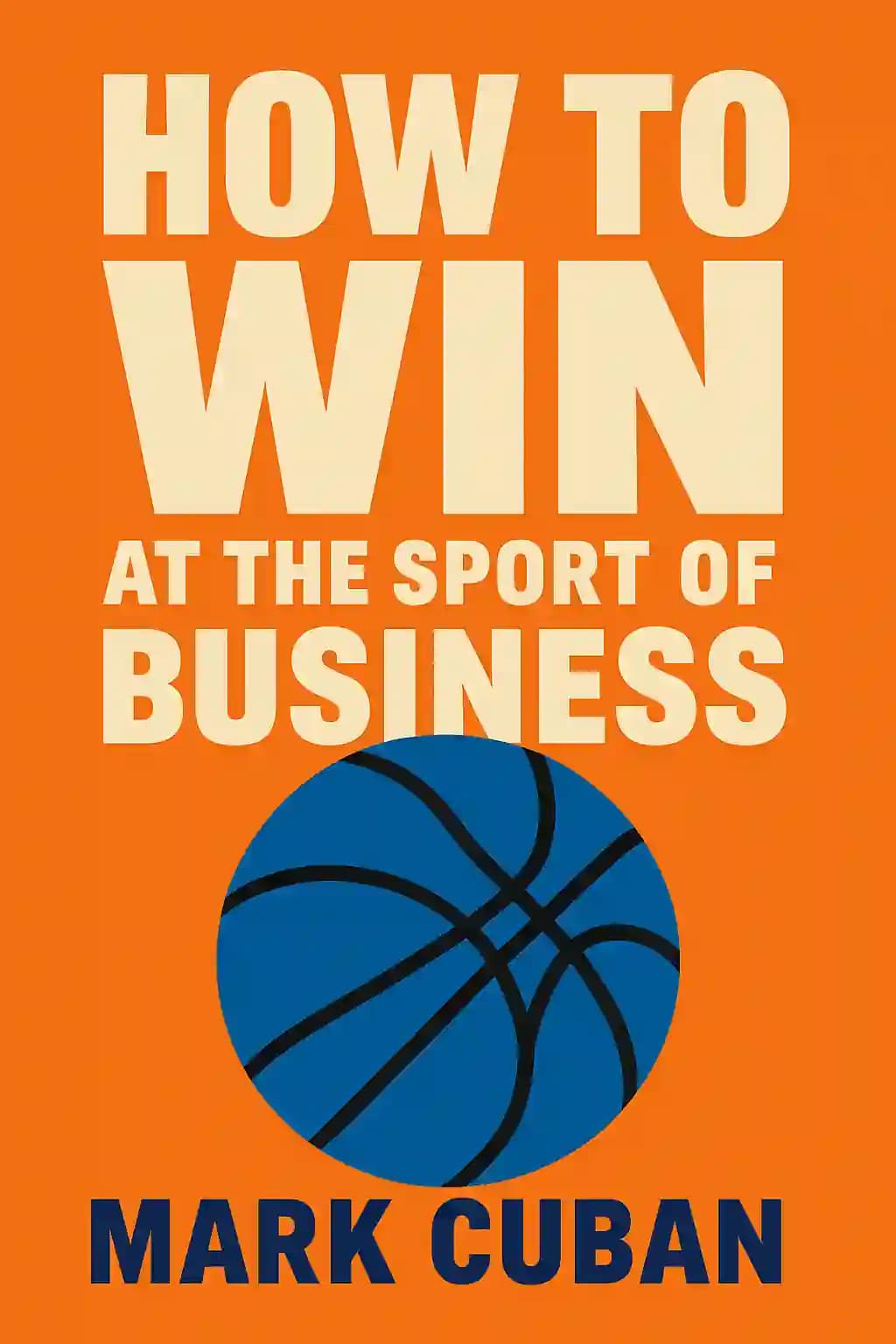
Mark Cuban's "How to Win at the Sport of Business" is not just another entrepreneurship book-it's a raw, unfiltered look into the mind of one of America's most recognizable billionaires. The Dallas Mavericks owner and Shark Tank star has become a cultural icon, with his book becoming required reading at top business schools nationwide. What makes Cuban's perspective particularly valuable is how he frames business as the ultimate competitive sport-one without timeouts or scheduled games, but with higher stakes than any championship. Celebrities from Elon Musk to Serena Williams have cited Cuban's pragmatic wisdom, particularly his "sweat equity" philosophy. Unlike most business authors who write from theoretical perspectives, Cuban's advice comes from someone who started selling garbage bags door-to-door at age 12 and lived on bar food while sleeping on the floor of a six-person apartment before building his fortune. His story isn't just about success-it's about the gritty reality of what it takes to win when the game never stops.
第 2 章
The Unlikely Journey: From Fiat with a Hole to Billion-Dollar Success
Mark Cuban's path to success reads like a classic American dream story with a distinctly modern twist. After graduating from Indiana University, Cuban took a job at Mellon Bank to learn about computers-a decision driven by curiosity rather than career planning. His early twenties found him in Dallas, driving an oil-guzzling Fiat with a hole in the floorboard, crashing on his friend's floor in a six-person apartment, and living off happy hour food. This wasn't just temporary discomfort; it was a lifestyle that added 30 pounds to his frame while he searched for meaningful work.
The turning point came when he landed an $18,000-a-year job selling PC software at Dallas's first software retail store. Despite having zero experience with IBM PCs, Cuban committed to learning everything he could, reading software manuals every night after work. This diligence transformed him into the store's top salesperson, with customers specifically requesting his help. Within six months, he was building a clientele and earning consulting fees on the side.
"I finally saved $1,500-the most money I had ever accumulated in my life," Cuban recalls. His first luxury purchase? Not a car or fancy clothes, but plush towels to replace his ratty ones-a small indulgence that represented enormous progress in his mind.
The pivotal moment in Cuban's career came when his boss fired him for choosing to close a sale with a client instead of opening the store. Rather than panicking, Cuban saw an opportunity. He called everyone he'd worked with and secured his first clients through creative no-money-down deals. He found office space with Martin Woodall of Hytec Data, forming a partnership where Cuban's hustle balanced Woodall's attention to detail.
That first year, Cuban made just $15,000 but loved every minute of it. MicroSolutions grew steadily, and within two years, he had accumulated $85,000 in the bank-a fortune to someone who had been living on bar food not long before. Then disaster struck: his secretary embezzled $83,000, nearly wiping him out. When the bank manager laughed him out of his office, Cuban made a critical decision: instead of seeking revenge, he went back to work.
What separated Cuban from others was his knowledge advantage-gained by reading everything he could about technology while others wouldn't put in the time. "I read every manual of every software product that we sold. Every night I would take home a different software manual, and I would read it. Of course, the reading was captivating," he jokes. But this dedication gave him an edge that competitors couldn't match.
This pattern of turning setbacks into opportunities would define Cuban's career. When he eventually sold MicroSolutions for millions, people called him "lucky." The same happened when he parlayed that money into successful technology stock trades. What they didn't see were the countless hours of preparation that made that "luck" possible-a theme that would become central to Cuban's business philosophy.
第 3 章
Business as the Ultimate Competition: No Timeouts, No Offseason
While many entrepreneurs draw parallels between business and sports, Cuban sees business as a fundamentally different and more demanding competition. "In basketball, you know when the game starts. You know how many games you'll play. You know how to keep score," Cuban explains. "Business is the ultimate competition because it's 24/7/365, and there are no defined games, no practice times, and no real rules."
This perspective shapes Cuban's entire approach to entrepreneurship. Unlike sports with known opponents and game durations, business requires relentless focus and effort without clear boundaries. "I'm always thinking about how to gain an edge," he admits. This obsession manifests in practical ways-reading business materials instead of fiction, avoiding casual socializing that doesn't advance his goals, and working obsessively on projects until they're complete.
What Cuban calls "the edge" is that intense passion where you work 24 hours straight without noticing time passing. It's preparing to be the smartest person in meetings, prioritizing business over casual relationships, and learning from failure rather than being defined by it. It means ignoring critics, maintaining balance by spending time with "regular people," doing thorough homework before making decisions, and admitting mistakes quickly when they happen.
The most revealing insight into Cuban's competitive mindset comes when he discusses preparation: "While everyone is talking about business, only a small percentage truly excel at this ultimate competition." The difference, he believes, is in the preparation that happens when no one is watching. While competitors are socializing or relaxing, Cuban is studying, learning, and planning his next move.
This approach extends to how he evaluates business opportunities. Cuban learned crucial lessons watching Microsoft outmaneuver industry giants in the software market. When software was prohibitively expensive ($495 for WordPerfect and Lotus 1-2-3) and required special authorization to sell, Microsoft revolutionized the market by bundling Excel, Word, and PowerPoint as a $99 upgrade suite. This brilliant strategy taught Cuban two fundamental rules: First, always anticipate how competitors might preempt your products or services-whether through price, service, or ease of use. Second, always operate as if competing with the biggest technology companies in your industry, regardless of whether they're currently competitors or vendors.
For Cuban, business isn't just a way to make money-it's the ultimate competitive arena where preparation determines success, and the game never stops.
第 4 章
Effort: The Only Variable You Truly Control
At 27, after spending his entire $7,500 savings on an engagement ring that was subsequently lost (followed by the relationship ending), Cuban found himself with zero savings but still had his business, MicroSolutions. During an industry slump, he realized a fundamental truth that would become central to his business philosophy: effort is the only thing you can truly control.
"I recommitted myself to working harder than ever," Cuban explains. This meant rising early, staying late, and maximizing every customer-facing hour for sales. When customers were sleeping, he prepared to make more sales and improve his company the next day. Most importantly, he learned that true effort isn't measured by hours worked but by results achieved.
Cuban's approach to effort is remarkably practical. Success requires asking targeted questions: What do I need to do to close this account? How can I understand this technology better than anyone? Where will I find an edge? These questions focus energy on productive outcomes rather than busy work.
This philosophy extends to his advice for young people. To a college student struggling with focus and craving adventure, Cuban offered this perspective: "Being focused at 21 is overrated." Youth is the perfect time to explore different paths before committing to one direction. The critical task during college isn't finding your singular passion but building a knowledge foundation-learning accounting, finance, statistics, and business fundamentals while reading biographies of successful businesspeople.
Cuban's concept of effort also includes the recognition that preparation creates opportunity. "You have to prepare for when you do find your passion," he advises. This preparation ensures you're ready when opportunity arrives, even if that opportunity turns out to be in a field you never expected.
Perhaps most importantly, Cuban believes that effort should be directed toward discovering what truly makes you happy, not just what makes you money. "The greatest obstacles to following your destiny are obligations-both personal and financial," he warns. Debt becomes "the ultimate dream killer," forcing people to prioritize possessions over discovering their true calling.
For Cuban, effort isn't just about working hard-it's about working smart, preparing thoroughly, and directing your energy toward goals that align with your values and interests. It's the one variable in the success equation that you can control completely, regardless of your circumstances.
第 5 章
You Only Need to Be Right Once: Embracing Failure as the Path to Success
In sports, consistency is everything-basketball players need to shoot 50% and baseball players need 30% hit rates to be considered stars. But Cuban reveals a liberating truth about entrepreneurship: in business, you only need to be right once to succeed for life.
"I've started numerous ventures," Cuban admits, recounting his early entrepreneurial experiments-selling garbage bags at 12, opening Motley's Pub before he was legally allowed to drink, working at banks and software stores. What's fascinating is that people only ask about his successes, never his failures. "With each effort, including failures, I learned valuable lessons about what works and what doesn't."
When MicroSolutions succeeded after seven years of work and Cuban sold it, people called him "lucky." The same happened when he used that money to trade technology stocks in areas he understood deeply. What people overlooked was the countless hours he spent reading manuals and testing technologies-the preparation that made his "luck" possible.
"The truth is that nobody remembers your failures-they only care about your successes," Cuban observes. This insight removes the pressure of perfection that paralyzes many would-be entrepreneurs. All that matters in business is getting it right once, and then everyone calls you lucky.
Cuban's approach to failure is pragmatic rather than romantic. He doesn't glorify failure as some business gurus do, but he recognizes its value as a teacher. Each failed venture taught him something that contributed to his eventual success. The key is to learn quickly and move forward rather than being defined by setbacks.
This philosophy connects directly to advice Cuban received from legendary basketball coach Bobby Knight: "Everyone has got the will to win; it's only those with the will to prepare that do win." Cuban has applied this wisdom before starting any business, after failures, and when choosing partners or hiring employees.
For entrepreneurs, this means reframing how we think about success and failure. Instead of seeing each venture as a make-or-break proposition, Cuban suggests viewing your career as a continuous learning process where each experience-successful or not-builds toward eventual success. The pressure isn't to succeed immediately but to keep learning, preparing, and positioning yourself for that one breakthrough that changes everything.
第 6 章
Focus: Winning the Battles You're Already In
Starting a business brings intoxicating emotions-fear, adrenaline, excitement, hope-that can lead to a dangerous feeling of invincibility. Through years of business experience, Cuban developed three critical rules about focus that have guided his success.
First, "everyone's a genius in a bull market." Entrepreneurs must honestly recognize when they've added value versus just riding industry trends. Cuban points to sports leagues as an example, noting how their rising values often came from market forces like cable competition and TiVo-resistance rather than brilliant management. Smart business owners recognize these market realities while seeking ways to enhance value within them.
Second, "win the battles you're in before taking on new ones." Every business faces make-or-break challenges-for Cuban's film business, it was generating more box office than marketing costs; for the Mavericks, creating compelling entertainment experiences; for HDNet, finding distinctive programming. Cuban learned to delegate most strategic elements while focusing intensely on these core challenges.
Third, "you can drown in opportunity." When facing challenges, entrepreneurs often seek new ventures rather than addressing core problems. Cuban sees this as running away or giving up. "Focus on your core competencies instead of chasing distractions," he advises.
This philosophy extends to how Cuban evaluates his own strengths and weaknesses. Don Nelson taught him something eye-opening as coach and GM of the Mavericks: "The worst evaluator of talent is a player trying to evaluate himself." This wisdom applies perfectly to entrepreneurs, who often deceive themselves about their strengths and weaknesses.
Cuban admits his personal weakness was organization-he was a procrastinator with a "shoebox accounting system." He excelled at sales and programming, but his business grew chaotically. Fortunately, he partnered with Martin Woodall, who was detail-oriented to a fault. Despite their fights, they complemented each other perfectly.
"The choice was simple," Cuban explains. "Continue lying to myself about becoming a details person, or accept my limitations and find a partner with complementary strengths." Every entrepreneur faces similar choices about who they truly are and where to focus their energy.
For Cuban, focus isn't about doing everything-it's about doing the right things and finding the right people to handle the rest. It's about winning the battles you're already in before seeking new ones, and being honest about your own strengths and limitations.
第 7 章
The Power of Sweat Equity: Building Without Outside Capital
Through MicroSolutions' success, Cuban developed "Rules of Success" that distinguished thriving businesses from failing ones. His first and most important rule: "Sweat equity is the best startup capital."
"The greatest businesses in entrepreneurial history started with minimal funding in dorm rooms and garages," Cuban observes. Rather than creating elaborate business plans, he focused on simple spreadsheets of expenses to calculate break-even points and clear overviews of his value proposition.
Before launching AudioNet (later Broadcast.com), Cuban tested his concept with industry experts and potential customers, getting valuable feedback that cost nothing. This validation process doubled as sales calls, with many early contacts becoming customers once the business launched.
Cuban believes most entrepreneurs mistakenly think money is the missing ingredient for success. "But raising capital shifts leverage to investors who care only about returns, not your dreams," he warns. "When you take outside money, you risk losing control of your company." The only reasonable funding sources, in Cuban's view, are your own pocket and your customers'.
This philosophy stands in stark contrast to today's venture-capital-obsessed startup culture. Cuban argues it's perfectly acceptable to start small and grow slowly-most businesses need "more brains, not more cash." This approach preserves ownership and control while forcing entrepreneurs to focus on creating real value for customers rather than burning through investor money.
Cuban's belief in sweat equity extends to how he evaluates opportunities. When considering whether to pursue something, he asks himself: "When I'm 90 and look back, would I regret having done this, or not having done it?" This question guided him through starting Motley's Pub in college, selling MicroSolutions, buying a lifetime American Airlines pass at 29, purchasing the Mavericks, and appearing on shows like Dancing with the Stars and WWE Raw.
For Cuban, true success means creating a unique life that fits who you are, not what others expect you to be. Sweat equity isn't just about saving money-it's about building something that truly reflects your values and vision, uncompromised by outside investors' demands.
第 8 章
Customer Connection: The Ultimate Competitive Advantage
Cuban lives by customer service mantras that might sound cliched if he didn't back them up with action: "Treat your customers like they own you. Because they do" and "You have to re-earn your customers' business every day." But what sets Cuban apart is how he puts these principles into practice.
"The only way to truly connect with customers is to put yourself in their shoes," Cuban explains. Unlike most billionaire owners who experience their businesses from a privileged perspective, Cuban makes himself a customer of his own businesses. At Landmark Theaters, he waits in line and buys tickets like everyone else. At Mavs games, he sits in publicly available seats, sometimes even in the nosebleeds to experience what regular fans do.
This approach extends to how Cuban handles customer service issues. Unlike CEOs who isolate themselves with security teams and handlers, Cuban makes his email available to everyone and reviews customer service complaints personally. "In the internet age, an unhappy customer doesn't just tell 20 people-they start blogs, create viral videos, and launch campaigns against your business," he warns. "Proactive communication is always easier than damage control."
Cuban's customer-centric philosophy also shapes how he thinks about product development. He cautions against the common practice of asking customers what features they want and delivering exactly that. "The best way to predict the future is to invent it," he argues. While customers can tell you what's broken, they can't envision revolutionary approaches they've never seen before.
"Entrepreneurs must remember that customers don't know what they don't know," Cuban explains. "Your customers are busy doing their own jobs-they don't spend time reinventing their industries." It's the entrepreneur's job to invent the future and "kick your own ass" before someone else does.
This seemingly contradictory advice-listen to customers but don't let them dictate your product roadmap-reflects Cuban's nuanced understanding of customer relationships. The key is understanding customers' problems deeply, even experiencing them yourself, while maintaining the vision to solve those problems in ways customers haven't imagined.
For Cuban, customer connection isn't just about satisfaction surveys or focus groups-it's about genuine empathy combined with visionary leadership. It's treating customers like owners while recognizing that true innovation often means showing them possibilities they couldn't articulate themselves.
第 9 章
The Whiner's Advantage: How Complaining Creates Opportunity
Perhaps Cuban's most counterintuitive business philosophy is his celebration of whining-not as pointless complaining, but as the first step toward meaningful change. "Looking back at my life, I've realized I'm a whiner-and that's been key to my success," he admits with characteristic candor.
Cuban recounts how whining shaped his journey: In high school, he whined about not being able to take business classes and ended up studying at the University of Pittsburgh. At Indiana University, he complained about unchallenging classes and snuck into MBA courses as a freshman. When his software sales job required him to sweep floors, he whined and got fired-which led to starting MicroSolutions.
"I complained about the lack of PC networking companies, so we became one of the first Novell integrators," Cuban continues. "Later, Todd Wagner and I whined about not being able to listen to Indiana Basketball in Dallas, which sparked the creation of AudioNet (Broadcast.com)." Even his purchase of the Dallas Mavericks began with complaints about the lack of energy at games.
What makes Cuban's perspective valuable is how he reframes whining as constructive dissatisfaction. "Whining isn't negative-it's the first step toward change, the moment when you realize something is wrong and take initiative," he explains. People who don't whine are "just punching bags who believe they can't effect change."
This philosophy connects directly to Cuban's understanding of human behavior and business opportunity. He observes that people naturally take the path of least resistance, which explains why companies like Amazon, Apple, and Google have thrived. "Amazon eliminates the need to visit stores, iTunes makes music purchasing instant, and Google simplified search when Yahoo was forcing users through complex directories," he notes.
For entrepreneurs, this means your product must be the easiest to experience and buy. "When retailers force customers through multiple lines, they lose business to competitors offering simpler experiences," Cuban warns. The future belongs to businesses that remove friction rather than adding features.
Cuban's whining philosophy isn't about complaining without action-it's about identifying problems and then solving them. It's about seeing inefficiencies, frustrations, and gaps in the market that others accept as inevitable, and then building businesses that address those pain points. In Cuban's world, the best entrepreneurs aren't just innovators-they're constructive whiners who turn dissatisfaction into opportunity.
第 10 章
The Ultimate Cuban Playbook: Rules for Startup Success
Throughout his entrepreneurial journey, Cuban has distilled his experience into practical rules for success-both for founders and those considering joining startups. These rules aren't theoretical concepts but battle-tested principles that have guided his own ventures.
For startups, Cuban's first rule is foundational: "Don't start a company unless it's an obsession and something you love." This isn't just motivational fluff-it's practical advice based on the reality that building a business requires intense dedication that's sustainable only when fueled by genuine passion. His corollary, "If you have an exit strategy, it's not an obsession," challenges the venture-capital mindset that focuses on quick exits rather than building enduring companies.
Cuban's operational advice is equally practical: "Sales Cure All-know how your company will make money" and "Focus on core competencies-pay top dollar there, go cheap elsewhere." He advises against common startup indulgences like espresso machines and logo polo shirts, arguing that resources should be directed toward growth and customer acquisition instead.
His organizational philosophy emphasizes flat structures and open communication: "No offices-open spaces keep energy up and prevent empire builders" and "Keep the organization flat-managers reporting to managers creates politics." These principles reflect Cuban's belief that bureaucracy and hierarchy stifle innovation and agility.
For individuals seeking success, Cuban offers mantras that balance ambition with perspective: "Time is more valuable than money-productivity matters more than wealth" and "Commit random acts of kindness-success requires giving back." These principles recognize that true success encompasses more than financial achievement.
Perhaps most importantly, Cuban emphasizes resilience and action: "No balls, no babies-once prepared, you must take action" and "Everyone gets down; the key is how soon you get back up-fight through bad days quickly." These mantras acknowledge the inevitable challenges of entrepreneurship while providing a framework for overcoming them.
Cuban's final mantra encapsulates his entire philosophy: "You only have to be right once-I've been fired countless times and started doomed businesses, but none of that matters." This perspective liberates entrepreneurs from the fear of failure by recognizing that success isn't about avoiding mistakes but about persisting until you find your breakthrough.
What makes Cuban's rules compelling isn't just their practical wisdom but how they reflect his own journey-from sleeping on friends' floors to building billion-dollar businesses. They're not theoretical concepts from a business school professor but hard-earned insights from someone who has experienced both crushing failure and extraordinary success. In Cuban's world, business isn't just about making money-it's about building something meaningful, treating people well, and enjoying the journey along the way.