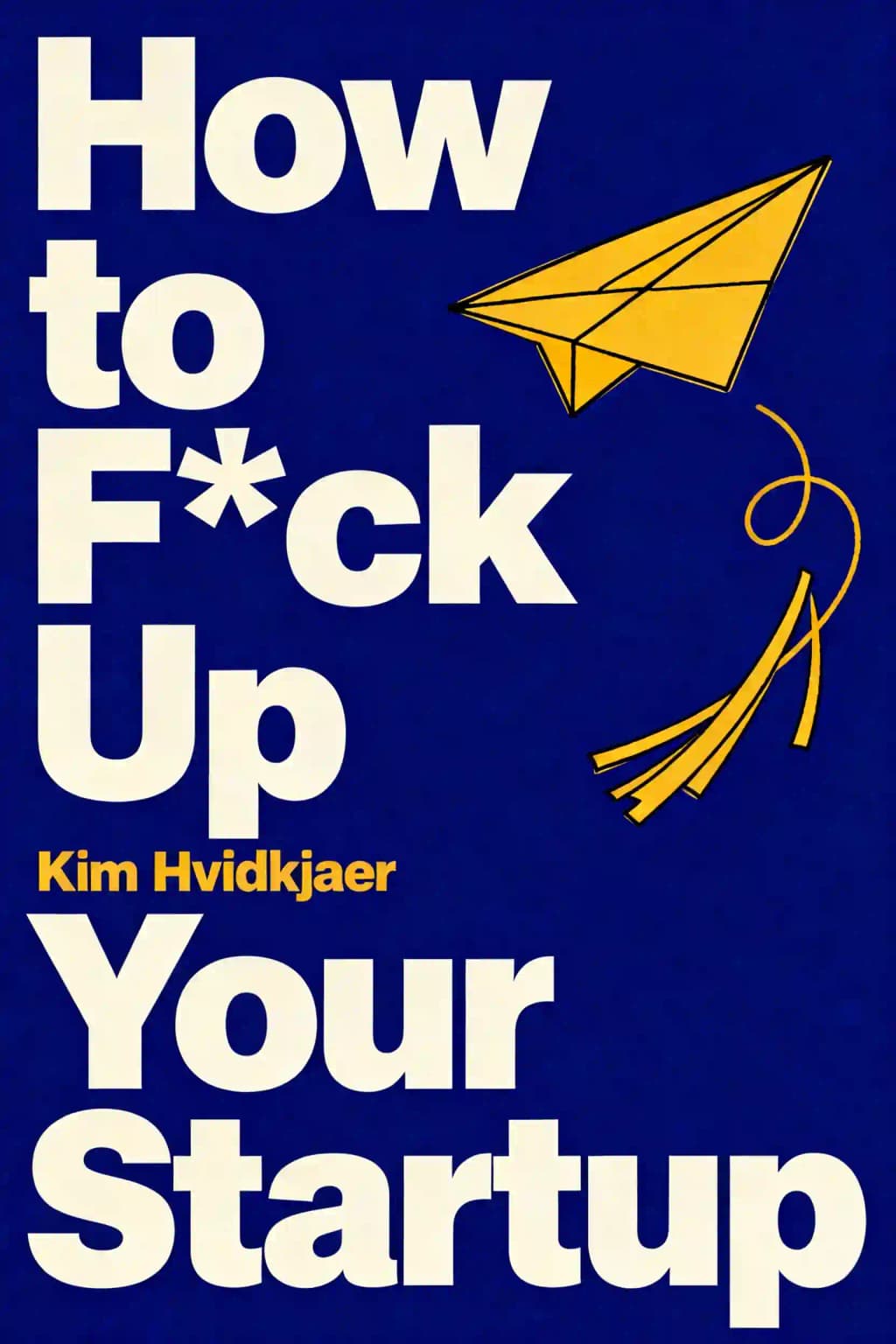
Millionaire at 29, broke at 31. Kim Hvidkjaer's Wall Street Journal bestseller reveals why 90% of startups fail - and how to avoid their fate. Learn from someone who's actually been there, lost everything, and rebuilt smarter.
通过作者的声音感受这本书
将知识转化为引人入胜、富含实例的见解
快速捕捉核心观点,高效学习
以有趣互动的方式享受这本书
Let go of the notion that failure is shameful-failure demonstrates courage.
将《How to F*ck up Your Startup》的核心观点拆解为易于理解的要点,了解创新团队如何创造、协作和成长。
将《How to F*ck up Your Startup》提炼为快速记忆要点,突出坦诚、团队合作和创造力的关键原则。

通过生动的故事体验《How to F*ck up Your Startup》,将创新经验转化为令人难忘且可应用的精彩时刻。
随心提问,选择声音,共同创造真正与你产生共鸣的见解。

"Instead of endless scrolling, I just hit play on BeFreed. It saves me so much time."
"I never knew where to start with nonfiction—BeFreed’s book lists turned into podcasts gave me a clear path."
"Perfect balance between learning and entertainment. Finished ‘Thinking, Fast and Slow’ on my commute this week."
"Crazy how much I learned while walking the dog. BeFreed = small habits → big gains."
"Reading used to feel like a chore. Now it’s just part of my lifestyle."
"Feels effortless compared to reading. I’ve finished 6 books this month already."
"BeFreed turned my guilty doomscrolling into something that feels productive and inspiring."
"BeFreed turned my commute into learning time. 20-min podcasts are perfect for finishing books I never had time for."
"BeFreed replaced my podcast queue. Imagine Spotify for books — that’s it. 🙌"
"It is great for me to learn something from the book without reading it."
"The themed book list podcasts help me connect ideas across authors—like a guided audio journey."
"Makes me feel smarter every time before going to work"

免费获取《How to F*ck up Your Startup》摘要的 PDF 或 EPUB 版本。可打印或随时离线阅读。
A mansion in Denmark's wealthiest neighborhood. A portfolio worth over $2 million. Features in glossy magazines celebrating you as a rising star. Then, two years later, it's gone - not just the money, but more than most people earn in their entire lives. This wasn't a cautionary tale from the 2008 financial crisis. This was Kim Hvidkjaer's lived reality, and it became the foundation for understanding why 90% of startups collapse. What's remarkable isn't the fall itself - it's what came after. Instead of hiding in shame, Hvidkjaer dissected over 160,000 failed companies across fifteen years, searching for patterns in the wreckage. The result challenges everything we think we know about entrepreneurship. We celebrate founders who "believed in themselves" and "never gave up," but what if those very qualities are destroying promising ventures? What if the mindset that gets you started is the same one that leads you off a cliff? Think about the last time you had a brilliant business idea. Maybe you were in the shower, or stuck in traffic, or lying awake at 3 a.m. You felt that electric surge of possibility. Then what happened? If you're like most people, you filed it away under "someday" and returned to your stable job, your predictable income, your comfortable routine. Here's the uncomfortable truth: the biggest failure isn't losing money or shutting down - it's never starting at all. We create elaborate excuses dressed up as practical concerns. Too young. Too old. Family obligations. Market timing. But age is fiction in entrepreneurship. Mark Pincus launched Zynga at 41. Arianna Huffington built HuffPost at 54. Colonel Sanders was 62 when KFC finally succeeded. The "right time" is a mirage that keeps receding as you approach it. Yet starting requires more than blind optimism. There's a simple litmus test: the Toilet Test. If you think about your idea as often as you use the bathroom, if it makes everything else fade into background noise, if your pulse quickens when you imagine it coming to life - that's your signal. Not market research. Not financial projections. Your body already knows. But here's where it gets tricky. Once you start, impostor syndrome arrives like clockwork. You'll climb what researchers call "Mount Stupid" - that early peak of confidence when you don't yet know what you don't know. Then comes the crash into the "Valley of Despair," where increased wisdom reveals how little you actually understand. Most founders quit here, mistaking growing competence for incompetence. The ones who survive reach the "Slope of Enlightenment," where wisdom and confidence finally align. The antidote isn't waiting until you feel ready - you'll never feel ready. It's strategic self-deception: fake it till you make it. Start calling yourself an entrepreneur, not someone who "just started a company." Strike power poses before important meetings. Keep an accomplishment journal. These aren't empty affirmations; they're rewiring your brain's threat response system. And please, stop plate-spinning. That brilliant secondary idea can wait. Create a "not-to-do list" to capture inspiration without fragmenting your focus. Accomplish more by doing less. It sounds paradoxical until you try it.