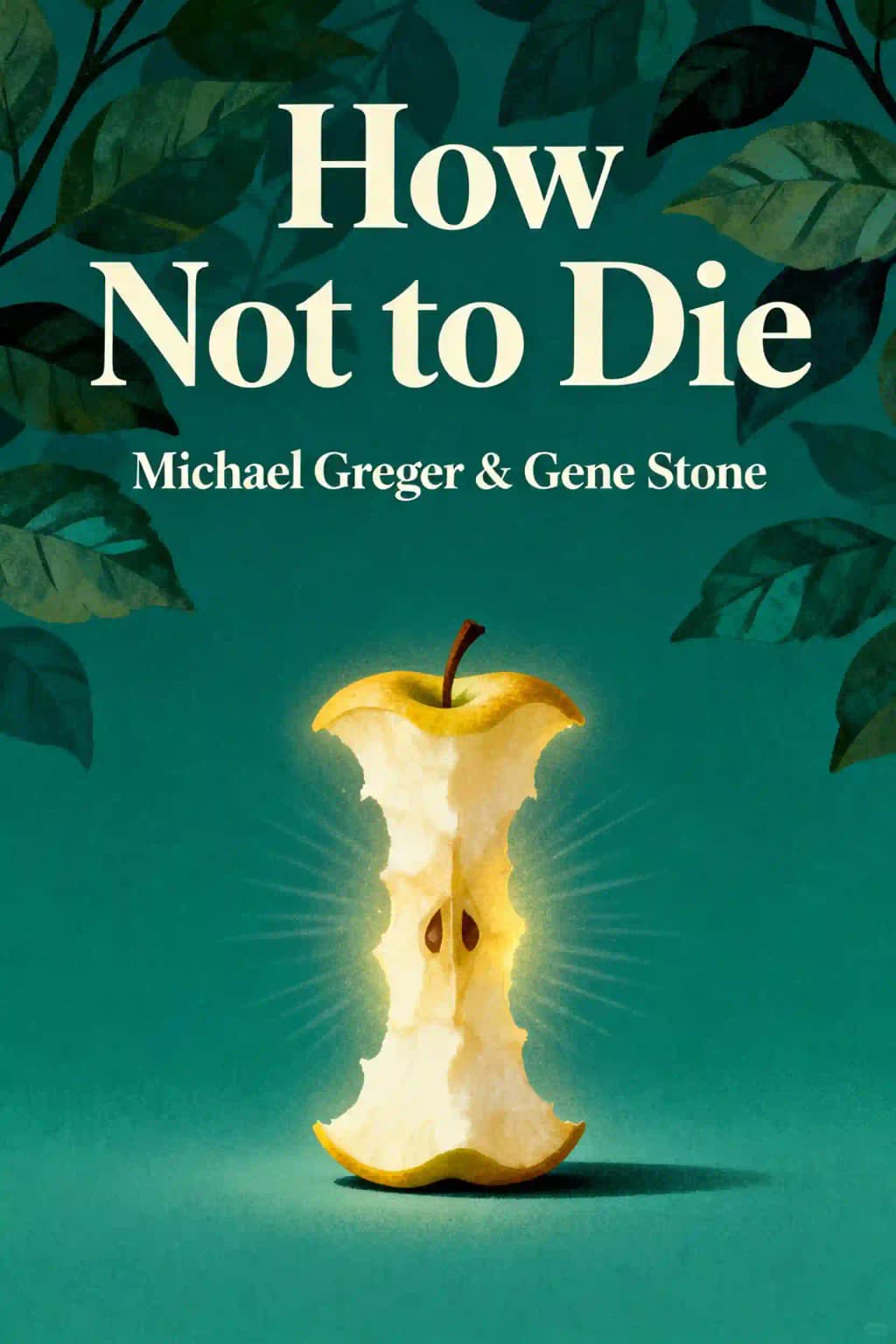
Discover why the Dalai Lama endorses this New York Times bestseller that reveals how simple dietary choices prevent disease. Dr. Greger's "Daily Dozen" checklist has revolutionized plant-based nutrition. Can food really save your life? His grandmother's heart disease reversal suggests yes.
Michael Greger, M.D., and Gene Stone are the New York Times bestselling authors of How Not to Die, a groundbreaking nutrition and preventive medicine guide that merges scientific research with actionable health strategies.
Dr. Greger, a Cornell- and Tufts-trained physician specializing in clinical nutrition, founded the evidence-based platform NutritionFacts.org and rose to prominence after testifying in Oprah Winfrey’s 1998 "meat defamation" trial.
His expertise in plant-based diets and disease prevention is complemented by Stone’s prolific career as a writer and collaborator on over 50 books, including #1 bestsellers like Start Something That Matters (with TOMS founder Blake Mycoskie) and Forks Over Knives.
Together, they’ve expanded the How Not to Die series with The How Not to Die Cookbook and How Not to Diet, translating complex nutritional science into accessible advice. The original book has sold over 1 million copies worldwide and been translated into multiple languages, with all author proceeds donated to charity.
How Not to Die explores how a whole-food, plant-based diet can prevent and reverse chronic diseases like heart disease, cancer, and diabetes. Dr. Michael Greger analyzes the top 15 causes of premature death, offering evidence-based dietary strategies and his "Daily Dozen" checklist of nutrient-rich foods to optimize health.
This book is ideal for individuals seeking science-backed nutrition advice, those with family histories of chronic illnesses, or anyone interested in longevity. It’s also valuable for healthcare professionals and plant-based diet advocates looking to deepen their understanding of preventive medicine.
The "Daily Dozen" is Dr. Greger’s checklist of 12 food categories to consume daily, including beans, berries, whole grains, and spices. These foods are chosen for their proven roles in reducing inflammation, fighting cancer, and supporting cardiovascular health, based on thousands of peer-reviewed studies.
Yes, the book cites over 3,000 studies to support its recommendations. For example, hibiscus tea is highlighted as more effective than some hypertension medications, while flaxseed is recommended for prostate cancer prevention.
Dr. Greger argues heart disease can be reversed through diet, emphasizing oats, nuts, and legumes to lower cholesterol. He critiques mainstream medicine’s reliance on drugs over dietary interventions, citing studies where plant-based diets unclogged arteries.
While focused on nutrition, the book stresses combining diet with regular exercise for maximum longevity benefits. Activities like brisk walking enhance the anti-inflammatory effects of plant-based foods, synergistically reducing disease risk.
Both emphasize plant-centric eating, but How Not to Die provides granular, disease-specific protocols (e.g., soy for breast cancer survival) versus Blue Zones’ broader lifestyle focus. Greger’s work is more data-dense, while Dan Buettner’s highlights cultural habits.
Some reviewers note the strict dietary guidelines may feel overwhelming. Others argue it underemphasizes factors like genetics or environmental toxins. However, most praise its thorough research and actionable advice.
Yes, the book advocates legumes, leafy greens, and vinegar to stabilize blood sugar. Studies cited show plant-based diets reducing HbA1c levels more effectively than standard diabetic diets.
His grandmother’s recovery from end-stage heart disease through a plant-based diet motivated his career. Her 31-year remission after adopting Nathan Pritikin’s program became the foundation for his research.
Yes, its focus on preventive nutrition aligns with growing interest in food-as-medicine. Updated editions and Greger’s ongoing work at NutritionFacts.org keep recommendations current with new research.
Turmeric, cinnamon, and cumin are highlighted for their anti-inflammatory and antimicrobial properties. For example, turmeric’s curcumin is linked to reduced arthritis pain and Alzheimer’s risk.
“Our diet is the No. 1 cause of premature death and disability” and “Why rely on drugs when dietary choices can reverse disease?” The Dalai Lama endorsed it as a tool for preventable illness.
通过作者的声音感受这本书
将知识转化为引人入胜、富含实例的见解
快速捕捉核心观点,高效学习
以有趣互动的方式享受这本书
Eat your greens!
We eat "as if the future doesn't matter".
The weapon against it isn't a vaccine or antibiotic but simply a fork.
For anyone over ten, the question isn't about preventing heart disease but reversing what likely already exists.
Medical organizations are similarly compromised.
将《How Not to Die》的核心观点拆解为易于理解的要点,了解创新团队如何创造、协作和成长。
将《How Not to Die》提炼为快速记忆要点,突出坦诚、团队合作和创造力的关键原则。

通过生动的故事体验《How Not to Die》,将创新经验转化为令人难忘且可应用的精彩时刻。
随心提问,选择声音,共同创造真正与你产生共鸣的见解。

"Instead of endless scrolling, I just hit play on BeFreed. It saves me so much time."
"I never knew where to start with nonfiction—BeFreed’s book lists turned into podcasts gave me a clear path."
"Perfect balance between learning and entertainment. Finished ‘Thinking, Fast and Slow’ on my commute this week."
"Crazy how much I learned while walking the dog. BeFreed = small habits → big gains."
"Reading used to feel like a chore. Now it’s just part of my lifestyle."
"Feels effortless compared to reading. I’ve finished 6 books this month already."
"BeFreed turned my guilty doomscrolling into something that feels productive and inspiring."
"BeFreed turned my commute into learning time. 20-min podcasts are perfect for finishing books I never had time for."
"BeFreed replaced my podcast queue. Imagine Spotify for books — that’s it. 🙌"
"It is great for me to learn something from the book without reading it."
"The themed book list podcasts help me connect ideas across authors—like a guided audio journey."
"Makes me feel smarter every time before going to work"

免费获取《How Not to Die》摘要的 PDF 或 EPUB 版本。可打印或随时离线阅读。
A sixty-five-year-old woman sits in a wheelchair, sent home to die from end-stage heart disease. Her doctors have given up. Then she sees a television program about plant-based nutrition and decides to try one last thing. Weeks later, she walks out of Nathan Pritikin's center on her own two feet. She lives another thirty-one vibrant years. That woman was Dr. Michael Greger's grandmother, and her story sparked a medical revolution hidden in plain sight-the science showing that what we eat determines whether we live or die. Here's the uncomfortable truth: the standard American diet scores about one out of ten for health, with only 11 percent of calories coming from whole plant foods. We're literally eating ourselves to death, one meal at a time. Yet four simple habits-not smoking, maintaining healthy weight, thirty minutes of daily exercise, and eating better-can slash diabetes risk by 90 percent, heart attacks by 80 percent, and strokes by 50 percent. The CDC found that people following just three basic behaviors reduced their mortality risk by 82 percent over six years, essentially becoming fourteen years younger biologically. The most remarkable discovery? A whole-food, plant-based diet doesn't just prevent disease-it can reverse the fifteen leading causes of death in America.