第 1 章
The Quest for Eternal Life: A Journey Through Mortality and Immortality
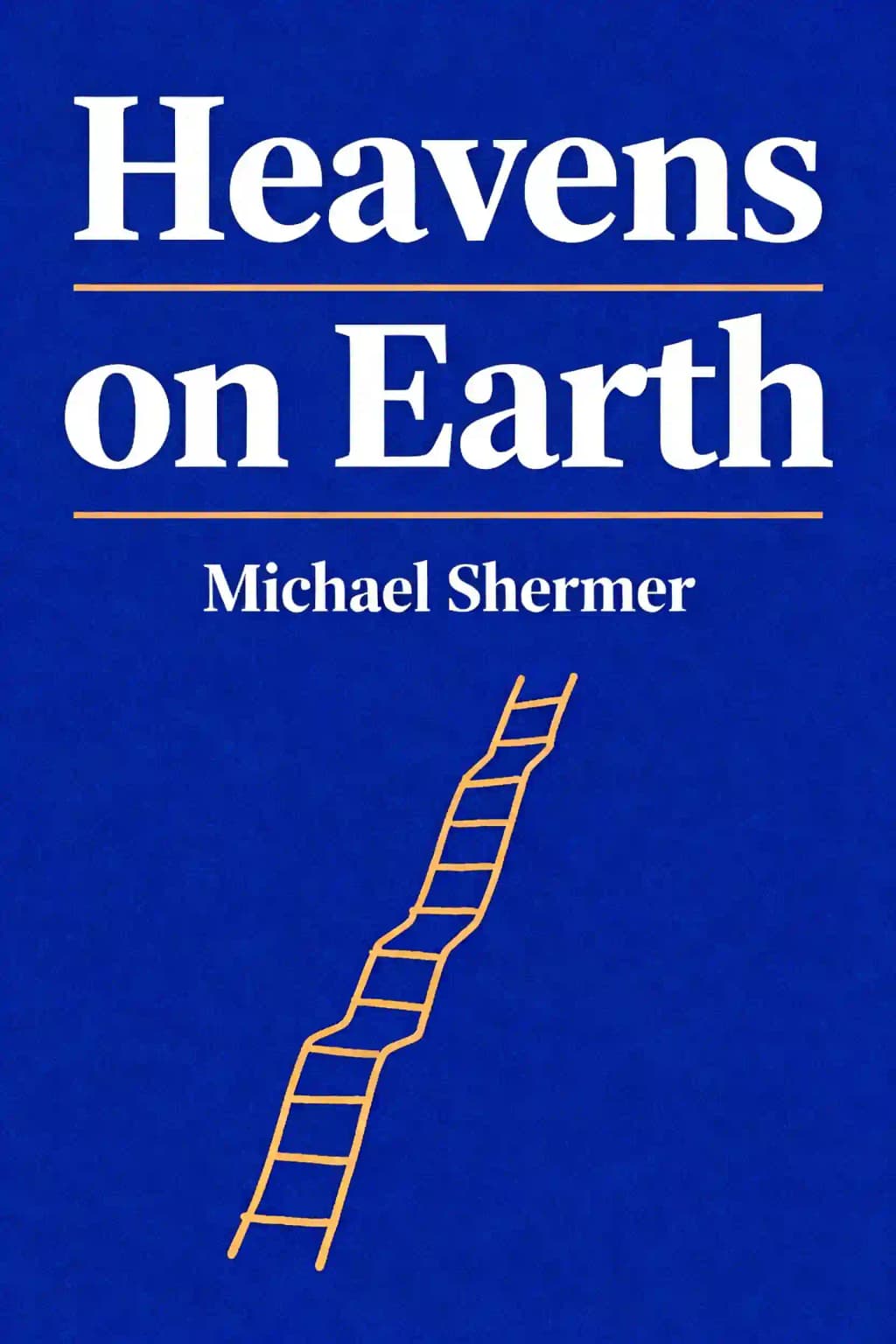
Have you ever wondered what happens after you die? This question has haunted humanity since we first became aware of our mortality. In "Heavens on Earth," Michael Shermer takes us on a fascinating journey through humanity's quest to transcend death-from religious afterlives to scientific immortality projects. The book has become a cornerstone text in discussions about mortality, earning praise from luminaries like Neil deGrasse Tyson who called it "a scientific exploration into humanity's obsession with the afterlife and quest for immortality." Shermer's background as both a scientist and former fundamentalist Christian gives him unique insight into this universal human concern. As we face our inevitable mortality, Shermer asks: Can science offer what religion has promised for millennia? The answer may surprise you.
第 2 章
The Mortality Paradox: Knowing Yet Not Comprehending
We humans face a fundamental paradox: we know intellectually that we will die, yet we cannot truly imagine our own nonexistence. As Goethe noted, it's impossible for a thinking being to imagine nonbeing, which paradoxically provides a sense of immortality. When we try to visualize our death, we inevitably survive as spectators in our imagination, watching our own funeral or floating above our lifeless body. This creates what Shermer calls the "mortality paradox"-we know death is inevitable yet cannot personally experience it in our consciousness. This cognitive limitation may have evolved as a protective mechanism, allowing us to function despite knowledge of our mortality.
To resolve this paradox, humans have developed four distinct immortality narratives: Staying Alive (physical immortality through medical advancement and life extension), Resurrection (rising again physically after death), Soul (surviving as a spiritual entity separate from the body), and Legacy (extending ourselves through reputation, achievements, or offspring). Each narrative has significant limitations: staying alive indefinitely faces biological barriers and entropy; resurrection encounters philosophical problems of identity and consciousness continuity; the soul concept struggles against neuroscientific evidence showing consciousness requires a functioning brain; and legacy, while meaningful, offers only symbolic immortality through others' memories.
When confronting mortality directly, people often demonstrate remarkable clarity and emotional depth rather than terror or despair. Analysis of 425 Texas death row inmates' final statements reveals surprisingly positive emotional content, with 68.2% expressing love for family and friends, 42.3% seeking forgiveness, and 32.1% offering spiritual reflections. This contradicts Terror Management Theory, which suggests death awareness primarily drives defensive behavior and cultural worldview protection. Instead, these findings support Emotional Priority Theory-facing death strips away superficial concerns and prioritizes our most meaningful emotions, particularly love and connection.
Children's understanding of death follows a fascinating developmental trajectory. Before age 5, most children see death as temporary and reversible, like sleep. Between ages 5-9, they gradually grasp its permanence, irreversibility, and universality. Research by developmental psychologists shows young children naturally attribute continued psychological functioning to dead agents, suggesting we have cognitive architecture predisposed toward afterlife beliefs. This creates a challenging paradox where children must integrate their growing understanding of death's finality while often receiving cultural messages about afterlife continuation.
This mortality awareness extends beyond human consciousness. Numerous species demonstrate behaviors suggesting death awareness: dolphins support dead podmates for days, preventing them from sinking; elephants show particular interest in their species' bones, often touching them with their trunks in apparent recognition; chimpanzees exhibit altered behavior patterns when groupmates die. Archaeological evidence reveals Neanderthals buried their dead with implements and flowers as early as 100,000 years ago, suggesting sophisticated mortality concepts. These behaviors across species indicate the deep evolutionary roots of death awareness and possibly early religious or spiritual thinking about mortality.
第 3 章
Heaven Through the Ages: From Physical Place to Spiritual State
Religious conceptions of heaven have continuously evolved alongside scientific understanding. In monotheistic traditions, heaven represents three broad conceptions: a physical part of the universe, God's residence, and the afterlife destination. The Hebrew word "shamayim" (heaven) originally referred to the firmament-a dome-shaped canopy separating heavenly waters from earthly waters.
By the fourth century BCE, Hebrew cosmology incorporated Greek ideas of concentric celestial spheres surrounding a spherical earth. Biblical interpretations have adapted to changing cultural contexts-essentially making the Bible "a wiki, edited for centuries" before being canonized.
Judaism traditionally focused more on this world than the next-the covenant with God promised earthly blessings and descendants rather than heavenly rewards. The "world to come" (Olam haba) traditionally referred to establishing a just society on earth, not an afterlife destination. Early Hebrew scripture described Sheol as a shadowy underworld of nothingness, distinct from the Christian concept of hell.
Christians believe Jesus' resurrection made him our savior and pathway to eternity. While many Christians interpret Jesus' physical resurrection as evidence humans will be physically reincarnated in heaven, others believe only the soul is eternal. In 1999, Pope John Paul II redefined heaven not as a physical place but as "a living, personal relationship with the Holy Trinity," though Protestants rejected this interpretation.
In Islam, a Muslim's soul is judged based on adherence to three tenets: the Qur'an's authority, monotheistic belief in Allah, and recognition of Muhammad as God's prophet. After physical resurrection, judgment determines one's fate in paradise or hell. Islamic cosmology includes seven heavens corresponding to visible "planets," and paradise is described as a garden with flowing water, milk, wine, and honey-understandable desires for desert-dwelling peoples.
Heaven has evolved from an exclusivist belief (only adherents go to heaven) toward inclusivism, with a 2008 Pew survey showing most Christians now believe many religions can lead to eternal life. The desirability of heaven itself is questionable-Julia Sweeney wondered about getting back unwanted body parts; Inuits rejected a heaven without seals; and Christopher Hitchens compared it to a "celestial North Korea" of "endless praise and adoration."
第 4 章
The Scientific Search for Immortality: Consciousness and the Brain
A fundamental distinction in worldviews is between dualism and monism. Dualists believe we consist of two substances-body and soul, brain and mind-while monists contend there's just one substance (the body and brain) from which consciousness emerges. Most people are intuitive dualists-it feels as if something else exists inside us. Psychologist Paul Bloom calls us "natural-born dualists," evidenced by phrases like "my body aches" rather than "I ache," suggesting separation between "I" and "body."
Deepak Chopra, a prominent mind monist, argues that mind produces matter when experiences trigger physical reactions. He quotes physicists to support his view that "consciousness is fundamental" and "the ground state of existence." Mind monists compare the brain to a television set receiving broadcast signals of consciousness-when the brain dies, consciousness continues but reception is lost.
This view contradicts neuroscience, which shows that minds reside in brains. Brain damage studies reveal that specific neural regions control distinct mental functions-damage to the fusiform gyrus causes face blindness, while prefrontal cortex damage leads to risk-taking behavior. Neural activity directly correlates with conscious experience, as confirmed by brain scans and thousands of experiments.
Near-death experiences (NDEs) are often cited as evidence for consciousness surviving without the brain. These typically include out-of-body experiences, separation from the body, entering darkness through a tunnel, seeing a bright light, and encountering the "other side." While most NDEs are positive, 9-23% are negative experiences characterized by fear, emptiness, or hellish visions.
However, multiple lines of evidence suggest NDEs originate in the brain rather than representing pathways to heaven. A crucial point about NDEs is that experiencers are not actually dead-they're near death. In this state, the brain may undergo stress, oxygen deprivation, or release neurochemicals mimicking hallucinatory experiences. The "tunnel" effect may result from hypoxia interfering with visual cortex firing patterns, as demonstrated in Air Force studies where pilots experiencing G-force induced loss of consciousness report tunnel vision with bright light, floating sensations, and euphoria-remarkably similar to NDEs.
第 5 章
The Identity Problem: Can We Really Be Resurrected?
The philosophical identity problem raises fundamental questions about resurrection and the afterlife, touching on ancient paradoxes that remain relevant today. The classic Ship of Theseus paradox asks: if every wooden plank in a ship is gradually replaced over time, is it still the same ship? This thought experiment extends beyond ships to human identity - our bodies completely replace their atoms every seven to ten years, yet we maintain a continuous sense of self. Even our memories, personality, and consciousness seem to persist despite the constant molecular turnover.
Shermer proposes that identity consists of three interconnected components: pattern, material, and personal perspective (POV). Pattern refers to the specific arrangement and organization of our physical and mental attributes. Material encompasses the actual physical substance making up our bodies. The POV-self represents our unique subjective experience and consciousness. Each sentient being possesses their own distinct POV-self, which creates an autonomous identity even in cases where beings might share identical memories or genetic makeup, as with identical twins or theoretical duplicates.
This tripartite model of identity creates significant complications for proposed resurrection scenarios. Shermer illustrates this through a thought experiment: Imagine he died in a cycling accident, but had previously stored his DNA with a cloning company and backed up his consciousness to cloud storage. A perfect replica could theoretically be created, matching his memories and personality up to the backup point. However, if Shermer had actually survived in a coma and returned home to find his wife living with this replica, the philosophical distinction would become starkly clear - the replica, despite its identical memories and appearance, would be fundamentally different from the original. It would be Michael II, a distinct entity, rather than a true continuation of Michael I's consciousness and identity.
The computational requirements for true resurrection present another massive obstacle. Physicist Frank Tipler calculated that an Omega Point computer would need 10^(10^123) bits to resurrect everyone who has ever lived - a number so vast it exceeds a googol googolplexes. Yet even this incomprehensibly large computing capacity would prove insufficient, as it couldn't capture the entire universe and its history that shaped each individual's development. Every person is the product not just of their memories and experiences, but of countless subtle interactions with their environment, other people, and the broader cosmos.
This raises deeper questions about the nature of consciousness, continuity of identity, and what exactly would need to be preserved or recreated for genuine resurrection to occur. The problem extends beyond mere physical or informational recreation to fundamental questions about the essence of personal identity and consciousness itself.
第 6 章
Technological Immortality: The New Afterlife for Atheists
The second half of the twentieth century witnessed an unprecedented surge in movements dedicated to extending human lifespan into centuries, millennia, or beyond. These groups - cryonicists, extropians, transhumanists, Omega Point theorists, singularitarians, and mind uploaders - represent a paradigm shift from religious to technological solutions for mortality. Unlike traditional faith-based approaches, these movements ground their aspirations in scientific possibilities, however speculative they may be.
Cryonics, perhaps the most tangible of these approaches, aims to preserve people until future technology can revive them. Ralph Merkle, a pioneer in the field, presents compelling arguments that modern cryopreservation methods can maintain synaptic structures and preserve human memory in an "information theoretic sense." This involves sophisticated vitrification processes using cryoprotectants to prevent ice crystal formation. However, leading neuroscientists and cryobiologists, including Dr. Mehmet Toner at Harvard Medical School, remain deeply skeptical. Their primary concern centers on the warming process - when large organs like the brain are thawed, ice inevitably forms, shattering delicate neural networks and their vital connections. Current statistics show that fewer than 500 people worldwide are in cryopreservation.
Extropians represent a more philosophical approach, actively opposing entropy through lifestyle interventions. Their comprehensive framework includes five core principles: perpetual progress, self-transformation, practical optimism, intelligent technology, and spontaneous order. Extropians engage in rigorous dietary regimens, exercise programs, and cognitive enhancement techniques, hoping to survive long enough for technological breakthroughs. Notable figures like Max More have developed detailed protocols for life extension, combining supplements, hormonal treatments, and cutting-edge medical interventions.
Transhumanists take a more graduated approach to human enhancement. Their roadmap begins with lifestyle modifications, progresses through cybernetic augmentations and organ replacements, and culminates in genetic engineering to take control of human evolution. They point to existing technologies like CRISPR gene editing, advanced prosthetics, and brain-computer interfaces as precursors to more dramatic transformations. Organizations like Humanity+ actively promote research into these technologies while addressing ethical considerations.
Ray Kurzweil, a leading singularitarian, has developed detailed timelines for technological advancement. His predictions for the 2030s include nanobots that will interface our biological brains with cloud-based synthetic neocortices, effectively expanding human intelligence exponentially. These nanobots would also serve as internal maintenance systems, destroying pathogens, removing cellular debris, correcting DNA errors, and reversing aging processes. To bridge the gap until this technological salvation (projected around 2040), Kurzweil maintains an intensive regimen of 250 daily supplements and weekly biochemical treatments, meticulously documented in his books and lectures.
The philosophical crux of these efforts centers on consciousness and identity. The fundamental question persists: does preserving the MEMself (memories and personality) also preserve the POVself (subjective consciousness)? Kenneth Hayworth argues that psychological continuity is sufficient for personal survival, but critics like Michael Shermer contend that duplicating memories doesn't transfer consciousness. Shermer argues that if his connectome (complete neural wiring diagram) were uploaded to a computer, his personal perspective would not transfer, as death fundamentally breaks the continuity of self. This debate touches on deep questions about the nature of consciousness, identity, and what exactly constitutes "survival" in a technological context.
第 7 章
The Pull of the Past and Future: Utopias and Dystopias
Despite unprecedented global progress in health, wealth, and technology, polls consistently show most people believe the world is getting worse. A 2015 YouGov poll found 71% of respondents thought the world was deteriorating, with only 5% seeing improvement. This perception gap is driven by six fundamental cognitive distortions: relative inequality (focusing on gaps rather than absolute gains), zero-sum thinking (believing one person's gain must be another's loss), media bias (negative news generating more attention), loss aversion (losses feeling twice as impactful as equivalent gains), endowment effect (overvaluing what we already have), and negativity bias (giving more weight to negative information).
Our pessimistic bias exists for good evolutionary reasons, deeply rooted in our survival instincts. Progress typically occurs incrementally through small steps - better crops, improved medicines, technological advances - while catastrophic regress can happen in a single calamitous event like a natural disaster or war. In our ancestral environment, the fitness cost of overreacting to threats was far less than the cost of underreacting to genuine dangers, creating an asymmetry of payoffs that favored pessimistic thinking. This "better safe than sorry" programming remains active in our modern world.
This longing for mythical Golden Ages isn't unique to modern times but represents a persistent human tendency. The ancient Greeks believed they lived in the inferior Age of Iron, preceded by superior Ages of Bronze, Silver, and Gold where humans lived closer to the gods. Similar myths appear across cultures - the Chinese concept of the "Great Unity," Hindu beliefs about the Satya Yuga, and Native American stories of harmony with nature. The Garden of Eden represents perhaps the most persistent paradisiacal fantasy, where humans lived in perfect harmony with God and nature until Eve's pursuit of knowledge brought about the fall.
Fictional utopias reflect impossibility in their very name-"utopia" meaning "no place"-as coined by Thomas More in 1516. Historical attempts at creating perfect communities repeatedly demonstrate their unsustainability. From New Harmony, Indiana to Brook Farm to modern communes, most intentional communities require outside support to survive. Most catastrophic were 20th-century utopian political experiments like Soviet Russia, Fascist Italy, and Nazi Germany, which killed tens of millions pursuing their versions of perfection through forced collectivization, cultural purification, and racial supremacy.
The fundamental flaw in utopian thinking is the belief in human perfectibility and the dangerous assumption that we can design flawless systems. As Barry Goldwater noted, "those who seek absolute power, even though they seek it to do what they regard as good, are simply demanding the right to enforce their own version of heaven on earth." This pursuit of perfection often leads to totalitarian control and the suppression of individual liberty.
The communities and societies that truly succeed embrace what futurist Kevin Kelly calls "protopian" progress: incremental improvements rather than revolutionary perfection. Protopia represents a state slightly better than yesterday, though containing as many new problems as benefits. This approach acknowledges human limitations while maintaining hope for gradual betterment through science, democracy, and open discourse. Examples include the slow but steady improvements in public health, education, and living standards seen in stable democracies.
第 8 章
Finding Meaning in a Meaningless Universe
How do mortal beings find meaning in an apparently meaningless universe? Our existence is astonishingly brief when viewed against cosmic timescales. A human century represents just 0.0000000073 percent of the universe's lifespan. In the face of such vastness, can we really believe this entire cosmological multiverse was designed for one tiny subgroup of a single species on one planet?
Awe emerges from being humbled before something grander than oneself. While many find this in God, others discover it in the cosmos itself. When long-distance swimmer Diana Nyad told Oprah she was an atheist who could "weep with the beauty of this universe," Oprah responded, "I don't call you an atheist then," revealing the soft bigotry of those who cannot conceive of awe without supernatural belief.
Science reveals that your "soul" is the pattern of information representing your body and brain-your thoughts, memories, and unique point of view. Since this pattern cannot exist separately from your physical form, your body and soul are one. Our uniqueness in the cosmos gives us meaning-through gratitude for life, through love given and received, through engagement with courage and integrity.
Why must we die at all? The answer involves both the Second Law of Thermodynamics (entropy) and evolutionary logic. The evolutionary explanation is captured in the disposable soma theory: "We die so that the world may continue to live." Once humans pass prime reproductive age, there's little evolutionary advantage in maintaining the body when resources are better invested in offspring.
While individuals die, species can achieve a form of immortality through expansion. Elon Musk's vision for Mars colonization represents a crucial step toward making humanity multiplanetary, ensuring our survival should Earth face catastrophe. This form of species immortality doesn't satisfy individual desires for eternal life, but it serves a greater purpose.
Facing mortality brings our deepest truths into focus. Research shows that mortality salience actually improves health behaviors and relationships. Studies reveal that death awareness leads people to devalue extrinsic goals like fame and wealth while emphasizing intrinsic values like personal relationships. Most significantly, reminders of mortality intensify people's desire to have and care for children-our only proven form of immortality.
Ultimately, facing death with courage and honesty brings out our best qualities: gratitude for our brief but unique existence, and love-the soul of life and our heaven on earth. Heaven isn't above us but around us-si requires caelo, circumspice. We create our own purpose by fulfilling our nature and being true to ourselves.
第 9 章
The Courage to Face Mortality
Our quest for immortality-whether through religion, science, or legacy-reflects our deep discomfort with mortality. Throughout history, humans have created elaborate belief systems, pursued scientific breakthroughs, and built lasting monuments, all in an attempt to transcend death. Yet Shermer suggests that accepting our finite nature may be the key to living meaningfully. When we acknowledge our brief time in this vast universe, we focus on what truly matters: love, connection, contribution, and wonder.
The evidence suggests that neither religious afterlives nor technological immortality projects will deliver eternal life. Religious promises of heaven remain unverified, while scientific attempts at radical life extension face enormous biological and practical challenges. Cryogenic preservation, digital consciousness uploading, and other technological solutions remain speculative at best. But perhaps immortality isn't the point. As we face our mortality with clear eyes, we discover that meaning emerges not from endless existence but from how we live our limited time-with courage, integrity, love, and awe at the remarkable universe that produced us.
This acceptance of mortality can paradoxically lead to greater life satisfaction. When we stop pursuing impossible dreams of eternal life, we can channel our energy into making our actual lives richer and more meaningful. Studies have shown that people who come to terms with their mortality often report deeper relationships, more purposeful work, and greater appreciation for life's simple pleasures.
The finiteness of life creates its value, much like a limited edition artwork is more precious than an infinite reproduction. Our mortality gives urgency to our choices, depth to our relationships, and poignancy to our experiences. It drives us to create, to connect, and to contribute while we can.
In the end, heaven isn't somewhere else-it's the wonder and love we create here, now, in this brief but precious existence. Our mortality doesn't diminish life's value; it enhances it. As Shermer concludes, the true heaven on earth is found not in eternal life, but in living this one fully, with gratitude and purpose. This perspective allows us to embrace each day as a gift rather than living in constant fear of its end, transforming our relationship with death from one of dread to one of acceptance and even inspiration.