第 1 章
A Timeless Tale of Ambition and Redemption
Great Expectations stands as one of Charles Dickens' most beloved masterpieces, a novel that continues to captivate readers more than 160 years after its publication. Written during a tumultuous period in Dickens' personal life, the book emerged from what he called a "very fine, new, grotesque idea" in 1860. Its enduring popularity is evidenced by countless adaptations across film, television, and stage, with directors from David Lean to Alfonso Cuaron reimagining its timeless themes. The novel has influenced generations of writers and remains a staple in educational curricula worldwide. Even Oprah Winfrey selected it for her book club in 2010, introducing it to millions of modern readers. What makes this Victorian coming-of-age story resonate so powerfully across centuries? Perhaps it's the universal experience of discovering that our greatest expectations often lead us down unexpected paths.
第 2 章
The Chains That Bind Us: Pip's Fateful Beginning
The novel opens with one of literature's most memorable scenes - young orphan Pip visiting his parents' graves in a desolate churchyard when a terrifying escaped convict seizes him. "Hold your noise!" the man growls, threatening the boy with graphic violence if he doesn't comply with demands for food and a file. This chance encounter forms what Pip later calls "the first link" in a chain that would forever alter his life's course. The raw terror of this moment is heightened by Dickens's masterful description of the setting: the marshes stretching toward the sea, the distant prison ships looming like specters, and the wind whipping through the bare branches of churchyard yews.
The metaphor of chains runs throughout the novel, both literal and figurative. Magwitch's leg irons represent the physical constraints of the criminal justice system, while Pip finds himself bound by invisible chains of social expectation, class consciousness, and unrequited love. These social chains prove just as confining as any physical restraints - from his apprenticeship to Joe's forge to his later entanglement with Miss Havisham and Estella. "Pause you who read this," Pip reflects, "and think for a moment of the long chain of iron or gold, of thorns or flowers, that would never have bound you, but for the formation of the first link on one memorable day."
Dickens brilliantly establishes the Kent marshes as a liminal space where boundaries blur - between land and water, freedom and imprisonment, innocence and guilt. The mists that shroud the landscape mirror Pip's own confusion about his place in the world, creating an atmosphere of moral ambiguity that persists throughout the novel. The marshes themselves become a character, their treacherous nature reflecting the social quicksand into which Pip will later sink. When he returns with stolen food for Magwitch, everything in nature seems to accuse him: "The gates and dykes and banks came bursting at me... and the cattle came upon me... as if they knew that I was a young thief." This personification of the landscape emphasizes how deeply Pip's guilt has penetrated his consciousness.
This opening sequence establishes the novel's central themes of guilt, identity, and the inescapable consequences of our actions. Even after Magwitch disappears into the mists, he remains shackled to Pip's conscience, a ghostly presence that haunts the boy's moral development. At Christmas dinner, surrounded by moralizing adults who preach about the evil nature of criminals, Pip is so consumed with anxiety that he "move[s] the table, like a Medium of the present day" - a perfect metaphor for how Magwitch's unseen hand will continue guiding Pip's destiny long after their initial encounter. The dinner scene, with its parade of hypocritical adults passing judgment, further emphasizes how young Pip is caught between competing moral forces: compassion versus duty, loyalty versus self-preservation, and the law versus human empathy.
The atmospheric opening chapters also introduce the novel's preoccupation with social class and identity. Pip's encounter with Magwitch represents his first real confrontation with the wider world beyond his sister's forge, forcing him to question the rigid social hierarchies that define Victorian society. The convict's desperate humanity challenges the simplistic moral categories that Pip has been taught to accept, setting the stage for his later moral evolution and social awakening.
第 3 章
Miss Havisham's Twisted Design: The Making of Estella
Miss Havisham stands as one of Dickens' most unforgettable creations - a spectral figure frozen in time at twenty minutes to nine, the moment she received the letter that shattered her wedding day. Her decaying mansion, Satis House, becomes a physical manifestation of her psychological state: a place where clocks have stopped, where a rotting wedding cake sits covered in cobwebs, and where a once-white dress has yellowed with age.
When Pip first visits this strange domain, he encounters both the eccentric Miss Havisham and her beautiful ward Estella, whose cold demeanor immediately captivates and wounds him. "She looked at me with the utmost contempt," Pip recalls, describing how Estella mocks his "coarse hands" and "thick boots." Yet even as she humiliates him, he finds himself enchanted by her beauty and sophistication.
What Pip cannot yet understand is that Estella is not merely cruel by nature - she is the product of Miss Havisham's deliberate design. Having been jilted on her wedding day by a con man who collaborated with her half-brother to steal her fortune, Miss Havisham has raised Estella as an instrument of revenge against all men. "I stole her heart away and put ice in its place," she later confesses to Pip, revealing the calculated cruelty behind her project.
The relationship between Miss Havisham and Estella contains its own painful ironies. Though Miss Havisham has molded Estella to break men's hearts, she herself becomes increasingly desperate for Estella's affection. "Love her, love her, love her!" she commands Pip in a frenzied moment, defining love as "blind devotion, unquestioning self-humiliation, utter submission" - revealing her own warped understanding of affection.
When Estella finally confronts her adoptive mother about her inability to love, the exchange is devastating in its clarity: "Who taught me to be proud?" Estella asks. "Who taught me to be hard?" The scene exposes the fundamental contradiction in Miss Havisham's expectations - having systematically trained Estella to reject affection, she cannot reasonably expect to receive it in return.
This twisted dynamic serves as a powerful commentary on how trauma perpetuates itself across generations. Miss Havisham's broken heart has led her to create another heart incapable of love - a cycle that will continue as Estella enters a doomed marriage with the brutish Drummle, ensuring more suffering will follow.
第 4 章
The Gentleman Project: Pip's Social Transformation
When a mysterious benefactor provides Pip with "great expectations," his life undergoes a dramatic transformation that serves as the novel's central journey. Convinced that Miss Havisham intends to make him a gentleman worthy of Estella, Pip eagerly abandons his apprenticeship at Joe's forge and departs for London. His journey from blacksmith's boy to gentleman-in-training reflects the Victorian era's complex attitudes toward social mobility and self-improvement, while highlighting the period's rigid class distinctions and the often painful process of moving between social spheres.
Dickens, who himself rose from humble beginnings to become England's most celebrated author, approaches this theme with nuance rather than simple moralizing. While Pip's ambition isn't inherently wrong, his shame about his origins reveals a moral corruption that accompanies his social elevation. "It is a most miserable thing to feel ashamed of home," Pip confesses, acknowledging the painful truth that he now sees Joe's honest forge as "coarse and common." This internal conflict manifests in numerous ways: his reluctance to visit his home village, his embarrassment when Joe visits him in London, and his growing tendency to judge others by their social standing rather than their character.
In London, Pip's education as a gentleman unfolds under the guidance of Matthew Pocket and his son Herbert. While he acquires the superficial trappings of gentility - fine clothes, elegant lodgings, membership in "The Finches of the Grove" dining club - he simultaneously accumulates debts and develops expensive habits that reveal the hollow nature of his transformation. His periodic attempts to "look into our affairs" with Herbert become comical exercises in self-deception, giving him "an admirable opinion of myself" while solving nothing. The novel meticulously details the cost of maintaining genteel appearances, from the burden of maintaining a personal servant (the vengeful Orlick) to the crushing weight of mounting debts at the tailors and wine merchants.
Dickens skillfully contrasts different models of gentlemanliness throughout the novel, each representing a different facet of Victorian society's complex relationship with class and character. Joe Gargery, though lacking education and refinement, embodies true nobility of character through his unfailing kindness and integrity, demonstrated repeatedly in his forgiveness of Pip's snubs and his steadfast care during Pip's illness. Bentley Drummle, though born to wealth and title, proves himself a "sulky, disagreeable" brute whose treatment of both Pip and Estella reveals the emptiness of inherited position. Herbert Pocket, despite his limited means, displays genuine gentility through his warmth and consideration, offering a middle path between Joe's natural goodness and Drummle's aristocratic corruption.
The novel's critique of social climbing reaches its sharpest point when Pip discovers that his benefactor is not Miss Havisham but the convict Magwitch, who has made a fortune in Australia. "I had deserted Joe for this!" Pip laments, realizing that his grand expectations were built on criminal money. The revelation forces him to confront the hollow nature of his social aspirations and the true worth of the humble connections he abandoned. This discovery initiates Pip's moral redemption, as he learns to value character over class and to recognize that true gentility lies not in social position but in how one treats others.
第 5 章
The Prodigal Returns: Pip's Moral Education
Great Expectations is fundamentally a story of moral education - a journey through which Pip must unlearn his false values and rediscover what truly matters. This process begins with the shocking revelation of Magwitch as his benefactor, which shatters Pip's romantic illusions about his destiny and forces him to confront uncomfortable truths about himself.
Pip's initial reaction to Magwitch's return is one of horror and revulsion. Despite owing everything to the convict's generosity, he can see only "the abhorrent creature who had terrified me in my childhood." This visceral rejection reveals how thoroughly Pip has internalized society's prejudices. Yet gradually, as he works to save Magwitch from recapture and execution, Pip undergoes a profound transformation.
"I only saw in him a much better man than I had been to Joe," Pip reflects, beginning to recognize his own moral failings. As he tends to the injured Magwitch during their failed escape attempt, Pip's feelings evolve from reluctant duty to genuine devotion. By the time of Magwitch's trial and death, Pip has completely reversed his initial judgment, seeing not a criminal but a man of profound loyalty and sacrifice.
This moral awakening extends to Pip's other relationships as well. When Joe travels to London to nurse Pip through a life-threatening illness, Pip finally recognizes and appreciates Joe's unwavering goodness. "O God bless this gentle Christian man!" Pip thinks as Joe tenderly cares for him, finally seeing clearly what he had been blind to for so long.
Dickens structures Pip's redemption arc with beautiful symmetry. Just as Pip once nursed the wounded Magwitch, Joe now nurses the wounded Pip. Just as Magwitch crossed oceans to see what his money had made of Pip, Pip now plans to travel to the forge to make amends with Joe. The novel suggests that true growth comes not from rising in social status but from recognizing one's moral obligations to others.
When Pip finally returns to his village, he discovers that Joe has married Biddy. Though initially disappointed that his own plans to propose to Biddy have been thwarted, Pip genuinely celebrates their happiness. "Dear Joe, dear Biddy, you must both take it as if, when you did get married, I was the child who had kept up with you," he tells them, symbolically accepting his place as their spiritual child rather than clinging to fantasies of being their savior.
第 6 章
The Shadow of Crime: Justice and Punishment
Throughout Great Expectations, the shadow of crime and punishment looms large. The novel opens with an escaped convict and closes with a reformed one, with numerous encounters with the justice system in between. Through these elements, Dickens offers a penetrating critique of Victorian criminal justice while exploring deeper questions about guilt, redemption, and the nature of true justice.
The prison hulks anchored in the marshes near Pip's home serve as a constant reminder of society's approach to criminality - floating warehouses of human misery that inspire both fear and fascination. When young Pip first encounters Magwitch, he sees only a terrifying criminal. Later, as he learns Magwitch's story, he begins to understand how social circumstances and class prejudice shape who becomes labeled as criminal.
Magwitch's account of his early life reveals a system stacked against him from birth: "In jail and out of jail, in jail and out of jail... that's my life pretty much." Without education, family support, or legitimate opportunities, Magwitch drifted into crime as his only means of survival. His partnership with the gentlemanly Compeyson further exposes the justice system's class bias - when both are caught, Compeyson receives a lighter sentence solely because of his more "respectable" appearance and education.
Mr. Jaggers, the formidable criminal lawyer, embodies the system's moral ambiguities. With his ceremonious handkerchief and intimidating manner, Jaggers maintains professional detachment while defending clients he knows are guilty. His office, decorated with death masks of executed clients who brought him "a world of credit," stands as a monument to his peculiar professional ethics. Yet even Jaggers shows glimpses of humanity, particularly in his rescue of Estella from her murderous mother and placement with Miss Havisham.
Perhaps most poignant is Dickens' portrayal of Magwitch's final judgment. Despite having committed no new crimes in England beyond returning from transportation, Magwitch receives a death sentence. Though ill health claims him before the execution date, the scene of his sentencing powerfully illustrates the system's mechanical cruelty: "The sun was striking in at the great windows... and there was a great buzz and hum... as if the whole were striving against its bounds."
Through these elements, Dickens suggests that true justice must consider the social contexts of crime and the possibility of redemption. Magwitch, though legally condemned, achieves moral redemption through his generosity toward Pip and his dignified acceptance of his fate. In the end, it is not the courts but Pip who offers the truest judgment: "O Lord, be merciful to him, a sinner!"
第 7 章
Estella's Inheritance: Nature, Nurture, and Identity
One of the novel's most fascinating subplots concerns Estella's mysterious origins and the question of whether her coldness is innate or created. When Pip eventually discovers that Estella is the daughter of Magwitch and Molly (Jaggers' housekeeper), this revelation adds new dimensions to our understanding of her character and raises profound questions about the influences that shape identity.
Estella's biological parents could hardly be more different from her refined adoptive mother. Her father is a transported convict, her mother a former murder suspect who allegedly killed her own child. Yet Miss Havisham has raised her as the perfect lady - beautiful, accomplished, and coldly superior. The contrast between Estella's rough origins and polished exterior embodies Victorian anxieties about whether character is determined by blood or upbringing.
Jaggers, who arranged Estella's adoption, offers his own perspective on this nature-versus-nurture question. When Pip confronts him about Estella's parentage, Jaggers constructs a hypothetical case about a woman who might have been falsely accused of murdering her child. "Put the case that the child grew up, and was married for money," he says, clearly referring to Estella. His implication is that revealing Estella's true parentage would only harm her, suggesting that her constructed identity as Miss Havisham's ward is preferable to acknowledging her biological heritage.
Yet despite Miss Havisham's careful molding, traces of Estella's parentage occasionally surface. Her hands bear a striking resemblance to her mother's, and her capacity for cold calculation mirrors Magwitch's hardened survival instincts. When she tells Pip, "I have no heart," she is unknowingly echoing her mother's condition - Molly, whom Jaggers describes as having been "tamed" after her trial.
Estella herself seems aware of the forces that have shaped her. "I am what you have made me," she tells Miss Havisham during their confrontation. "Take all the praise, take all the blame; take all the success, take all the failure; in short, take me." This powerful statement acknowledges how thoroughly her identity has been constructed by her adoptive mother's design.
By the novel's end, however, Estella has begun to transcend her conditioning. When Pip encounters her years later at the ruins of Satis House, she has been transformed by suffering in her marriage to Drummle. "I have been bent and broken," she tells Pip, "but-I hope-into a better shape." This suggests that identity is neither fixed by birth nor permanently determined by upbringing, but remains capable of evolution through experience.
第 8 章
The Power of Forgiveness: Healing Broken Connections
At its heart, Great Expectations is a novel about broken connections and the possibility of their repair through forgiveness. Nearly every major relationship in the book suffers some form of rupture - Pip and Joe, Miss Havisham and Estella, Magwitch and his daughter, even Pip and his own better nature. The novel's emotional power derives largely from how these fractured bonds are addressed in its final chapters.
Miss Havisham's arc demonstrates both the destructive power of unforgiveness and the transformative potential of repentance. For decades, she has nursed her grievance against her faithless fiance, allowing it to consume her life and warp her relationship with Estella. When she finally recognizes the damage her bitterness has caused, her remorse is overwhelming: "What have I done!" she repeatedly cries. Her request for Pip's forgiveness - "If you can ever write under my name, 'I forgive her,' though ever so long after my broken heart is dust - pray do it!" - represents her first step toward redemption.
Joe's unwavering forgiveness toward Pip provides the novel's moral center. Despite Pip's snobbery and neglect, Joe never wavers in his affection. When Pip falls ill, Joe travels to London to nurse him back to health, treating him with the same tenderness he showed when Pip was a child. Joe's simple goodness - his ability to love without resentment or conditions - stands as the novel's highest ethical standard.
Pip's own journey toward forgiveness takes multiple forms. He must forgive Magwitch for disrupting his romantic illusions about his benefactor. He must forgive Miss Havisham for allowing him to believe she was his patron. Most importantly, he must forgive himself for his treatment of Joe and Biddy. When he returns to the forge intending to propose to Biddy, only to find her newly married to Joe, Pip demonstrates his growth by genuinely celebrating their happiness rather than dwelling on his disappointment.
The novel's conclusion hinges on the possibility of reconciliation between Pip and Estella. In Dickens' revised ending (which replaced his originally bleaker conclusion), they meet at the ruins of Satis House years after their earlier parting. Estella, now softened by suffering, acknowledges: "I have been bent and broken, but-I hope-into a better shape." Their final walk together through the evening mists, with "no shadow of another parting," suggests the possibility of forgiveness creating new beginnings even from the ruins of the past.
第 9 章
The Enduring Legacy: Why Great Expectations Still Matters
Great Expectations has maintained its powerful grip on readers' imaginations for over 160 years because its themes speak to universal human experiences - the desire for self-improvement, the pain of unrequited love, the complexity of forgiveness, and the search for authentic identity in a world of appearances.
The novel's psychological depth distinguishes it from simpler moral tales. Dickens refuses easy judgments about his characters, presenting them instead in all their complicated humanity. Pip is neither hero nor villain but a flawed individual capable of both selfishness and profound growth. Miss Havisham is both victim and victimizer, worthy of both condemnation and compassion. Even Magwitch, introduced as a terrifying criminal, emerges as a figure of surprising dignity and devotion.
This psychological complexity extends to the novel's narrative structure. By telling the story through Pip's first-person perspective, Dickens creates what critics have called a "double-voiced" narrative - one that merges the limited understanding of young Pip with the reflective wisdom of his older self. This technique allows readers to experience both the immediacy of events and their significance in retrospect, creating a rich layering of meaning.
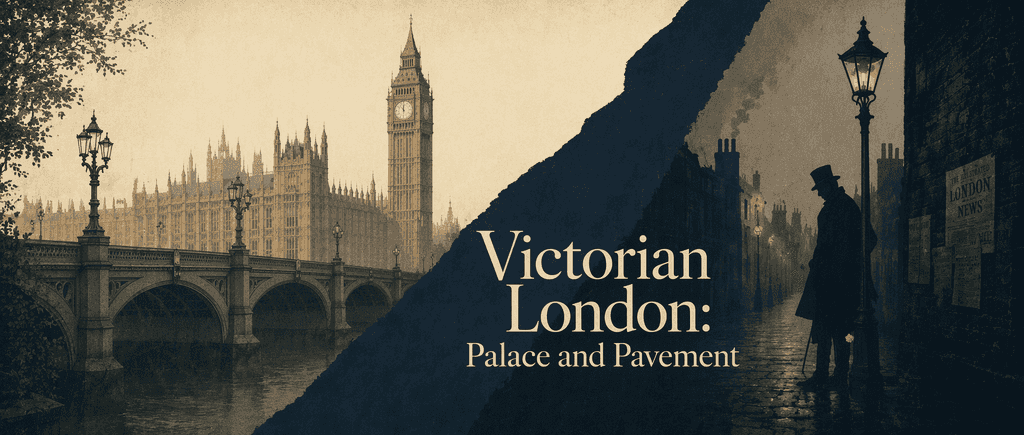
The novel's settings have become iconic in literary history - from the misty Kent marshes to the decaying grandeur of Satis House to the grimy streets of Victorian London. Each location functions as both physical reality and psychological landscape, reflecting the inner states of the characters who inhabit them. Miss Havisham's stopped clocks and rotting wedding cake, for instance, externalize her arrested emotional development, while the prison hulks on the marshes symbolize the constraints that society places on individual freedom.
Perhaps most significantly, Great Expectations continues to resonate because it addresses questions that remain central to modern life: How do we balance ambition with authentic connection? What constitutes true success? How do we reconcile who we are with who we wish to become? In an age of social media personas and carefully curated public images, Pip's struggle to distinguish between superficial status and genuine worth feels remarkably contemporary.
The novel's final image - Pip and Estella walking hand in hand through the evening mists with "no shadow of another parting" - remains deliberately ambiguous. Like all great literature, Great Expectations doesn't offer simple answers but invites readers into a conversation about life's complexities that continues long after the final page is turned.