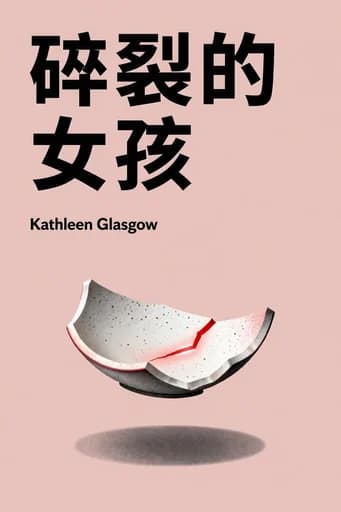
In "Girl in Pieces," self-harm meets raw hope as a shattered teen rebuilds herself. Nine years in the making, this #1 NYT bestseller receives daily gratitude from readers worldwide. As Maggie Stiefvater notes, "Hope persists in even the darkest moments."
Kathleen Glasgow is the New York Times bestselling author of Girl in Pieces and an award-winning voice in young adult contemporary fiction exploring mental health, self-harm, and the journey toward healing. With an MFA in Poetry from the University of Minnesota, Glasgow draws on her own experiences with trauma and recovery to craft raw, authentic narratives that resonate deeply with teen readers struggling with similar challenges. She spent nine years writing Girl in Pieces, creating what would become a Target Book Club Pick and an Amelia Walden Honor book.
Glasgow's other acclaimed novels include How to Make Friends with the Dark (an ILA Honor Book), You'd Be Home Now, and The Glass Girl, which was named Target's Young Adult Book of the Year in 2024. She also co-authored the bestselling mystery series The Agathas and The Night in Question with Liz Lawson.
Based in Tucson, Arizona, Glasgow writes for The Writer's Almanac, and her books have been published in more than 24 countries.
Girl in Pieces follows seventeen-year-old Charlotte "Charlie" Davis, who wakes up in a hospital after a suicide attempt. After treatment at a group home for girls who self-harm, Charlie moves to Tucson, Arizona to rebuild her life. The novel explores her journey through trauma, self-harm, addiction, and abuse as she struggles to heal through art, friendship, and self-acceptance while confronting her painful past.
Girl in Pieces is recommended for readers aged 16 and older who are interested in honest portrayals of mental health struggles and recovery. The book is essential for adolescents and adults seeking to understand depression, self-harm, and trauma, as well as those looking for stories of resilience and hope. However, readers should be prepared for graphic content involving abuse, addiction, and self-destructive behavior.
Girl in Pieces is widely praised as a heartfelt, raw, and beautifully written novel that offers an intimate look into mental health recovery. The book's poetic prose, realistic characters, and unflinching honesty about trauma make it a powerful read. While emotionally challenging, it balances darkness with hope and demonstrates that healing is possible, making it a must-read for those seeking authentic representations of mental health struggles.
Kathleen Glasgow is a contemporary young adult author known for her honest exploration of difficult topics. Girl in Pieces, published by Delacorte Press in August 2016, draws on real experiences and demonstrates Glasgow's deep understanding of mental health challenges. Her writing doesn't judge or make excuses but presents Charlie's story with truth and empathy, allowing readers to connect with the character's journey authentically.
Girl in Pieces explores themes of mental health, resilience in the face of adversity, and the healing power of art and self-expression. The novel emphasizes the importance of community and support networks in recovery, showing how friendship can anchor someone through despair. Additional themes include the challenges of surviving trauma, the role of communication in healing, and the choice between facing pain or sinking into oblivion.
Kathleen Glasgow employs a first-person perspective told from Charlie's point of view, creating intimate access to her thoughts and struggles. The narrative is deliberately fragmented with choppy, erratic prose that mirrors Charlie's broken mental state, then subtly shifts as she heals. Glasgow uses vivid imagery, powerful metaphors, and poetic language to convey emotional depth, making the writing style both unique and reflective of the protagonist's psychological journey.
Girl in Pieces contains several powerful quotes that capture Charlie's struggle.
Girl in Pieces offers a raw, unflinching portrayal of depression, anxiety, and self-harm without romanticizing these struggles. Kathleen Glasgow shows Charlie's selective mutism, cutting, and suicidal thoughts as intrinsic to her identity and trauma response, not mere plot devices. The novel depicts psychiatric treatment, therapy, group homes, and the difficult reality that recovery isn't linear, demonstrating how trauma profoundly impacts a young person's psyche and daily choices.
Art serves as a crucial healing mechanism and form of self-expression for Charlie throughout Girl in Pieces. She uses artistic creation as an outlet for overwhelming experiences and emotions she cannot verbalize. The novel shows how art provides both therapy and a vision for Charlie's future—she envisions herself as an artist living in the desert, representing hope and a healthier identity beyond her trauma and self-destructive behaviors.
Community and friendship are vital lifelines in Girl in Pieces, showing that healing is not a solitary journey. Charlie's relationships with Mikey, who offers his apartment, Riley, Blue, and others at the Creeley Center demonstrate how connections can anchor someone through despair. The novel emphasizes that having people who keep secrets, provide understanding, and share experiences can mitigate loneliness and strengthen recovery efforts.
While Girl in Pieces receives widespread praise, some readers may find the graphic depictions of self-harm, abuse, sexual exploitation, and drug use overwhelming or triggering. The novel doesn't hold back on traumatic content, which can be emotionally intense. Some may critique the fragmented narrative style as difficult to follow initially. However, most reviewers argue this unflinching honesty and raw portrayal are precisely what make the book powerful and authentic.
Readers who appreciated Girl in Pieces might enjoy other contemporary YA novels exploring mental health and trauma with similar honesty. Books addressing self-harm, recovery, and resilience through authentic teen voices would appeal to the same audience. Look for novels that balance darkness with hope, feature strong character development through adversity, and don't shy away from difficult topics like abuse, addiction, and the realities of psychiatric treatment.
通过作者的声音感受这本书
将知识转化为引人入胜、富含实例的见解
快速捕捉核心观点,高效学习
以有趣互动的方式享受这本书
Charlie has "cut all her words out" because her "heart was too full of them."
"We are all here to get better," which Charlie interprets as acknowledging they're all "presently shit."
"That time, I tried so hard to fucking die. But here I am."
"when the blood comes, everything is warmer, and calmer."
The desert setting represents both opportunity and danger for Charlie.
将《Girl In Pieces》的核心观点拆解为易于理解的要点,了解创新团队如何创造、协作和成长。
将《Girl In Pieces》提炼为快速记忆要点,突出坦诚、团队合作和创造力的关键原则。

通过生动的故事体验《Girl In Pieces》,将创新经验转化为令人难忘且可应用的精彩时刻。
随心提问,选择声音,共同创造真正与你产生共鸣的见解。

"Instead of endless scrolling, I just hit play on BeFreed. It saves me so much time."
"I never knew where to start with nonfiction—BeFreed’s book lists turned into podcasts gave me a clear path."
"Perfect balance between learning and entertainment. Finished ‘Thinking, Fast and Slow’ on my commute this week."
"Crazy how much I learned while walking the dog. BeFreed = small habits → big gains."
"Reading used to feel like a chore. Now it’s just part of my lifestyle."
"Feels effortless compared to reading. I’ve finished 6 books this month already."
"BeFreed turned my guilty doomscrolling into something that feels productive and inspiring."
"BeFreed turned my commute into learning time. 20-min podcasts are perfect for finishing books I never had time for."
"BeFreed replaced my podcast queue. Imagine Spotify for books — that’s it. 🙌"
"It is great for me to learn something from the book without reading it."
"The themed book list podcasts help me connect ideas across authors—like a guided audio journey."
"Makes me feel smarter every time before going to work"

免费获取《Girl In Pieces》摘要的 PDF 或 EPUB 版本。可打印或随时离线阅读。
Charlotte Davis arrives at Creeley Center wrapped in a bloodied sheet, her arms and thighs heavily bandaged to cover self-inflicted wounds made with broken mason jar glass. Unlike other girls in the psychiatric facility who freely share their stories, Charlie has "cut all her words out" because her "heart was too full of them." She remains selectively mute, communicating through notes and drawings. The facility runs on rigid schedules-waking at 6 AM, structured meals, group therapy, medications-all under constant supervision. Despite being taunted as "Silent Sue" by another patient, Charlie appreciates having food, warmth, and safety after living on the streets. Her roommate Louisa, with abundant red-and-gold hair, becomes a maternal figure who recognizes Charlie as "one of her people" when she sees her similar scars. As Charlie's bandages come off, revealing "red, ropy scars rivering from wrists to elbows," she begins emerging from her silence. After Nurse Vinnie shaves her matted hair, she finally speaks: "It's Charlie. Charlie Davis." This moment marks the beginning of reclaiming her identity and voice.