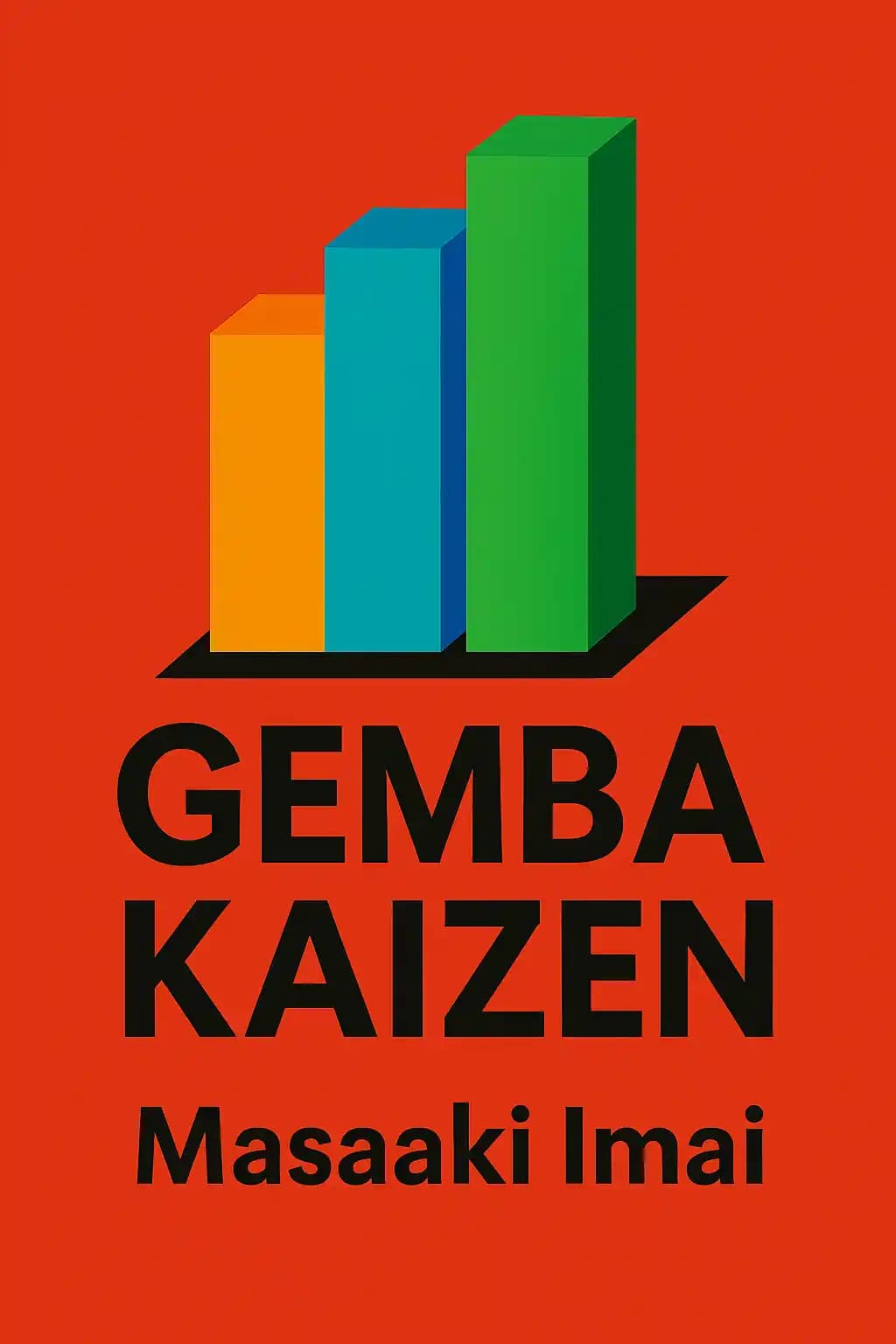
Discover why Toyota and Disney embrace "Gemba Kaizen" - the revolutionary workplace philosophy that transformed global business. Masaaki Imai's bestseller reveals how visiting "where work happens" creates extraordinary results with minimal investment. Even hospitals apply these principles to save lives daily.
Masaaki Imai (1930–2023), author of Gemba Kaizen: A Commonsense, Low-Cost Approach to Management, was a globally recognized management consultant and Lean manufacturing pioneer. A leading authority on operational excellence, Imai founded the Kaizen Institute in 1985, establishing himself as the foremost evangelist of the Kaizen philosophy—continuous, incremental improvement grounded in workplace-level problem-solving. His 1986 bestseller Kaizen: The Key to Japan’s Competitive Success introduced Lean principles to Western audiences four years before the term “Lean production” gained prominence, selling over 300,000 copies across 16 languages.
Trained at the University of Tokyo, Imai’s methodologies emerged from collaborations with Toyota visionaries like Taichi Ohno, shaping frameworks adopted by Fortune 500 firms and manufacturing giants. His work earned accolades including the Shingo Prize and Asia-Pacific Human Resource Development Award.
Imai’s final book, Strategic KAIZEN™ (2021), completed his trilogy on organizational improvement. Gemba Kaizen remains a foundational text in industrial engineering and process optimization, detailing 21 low-cost techniques to boost productivity and quality. Translated into 14 languages, it has guided lean transformations in over 30 countries through Imai’s consulting network.
Gemba Kaizen outlines a continuous improvement strategy focused on optimizing workplace processes through small, incremental changes. The book emphasizes observing the gemba (Japanese for "actual place" where work happens), eliminating waste (muda), and empowering employees to solve problems. Masaaki Imai blends case studies from manufacturing, healthcare, and service industries to demonstrate how kaizen fosters efficiency, quality, and employee engagement.
Managers, operational excellence professionals, and leaders in manufacturing, healthcare, or service industries will gain actionable insights. The book is ideal for those seeking low-cost, commonsense methods to improve workflows, reduce costs, and build a culture of sustained innovation. Frontline employees and Lean practitioners also benefit from its emphasis on employee-driven problem-solving.
Yes. The book remains relevant for its timeless principles like waste reduction, standardization, and employee empowerment—critical in today’s fast-paced, digitally transforming workplaces. Updated case studies and a focus on adapting kaizen to modern challenges (e.g., hybrid work, AI integration) make it a practical guide for achieving operational excellence.
The methodology prioritizes:
Kaizen focuses on incremental, employee-led improvements, while Six Sigma targets defect reduction through statistical analysis, and Lean prioritizes streamlining value streams. Kaizen’s low-cost, participatory approach complements these methodologies but requires sustained cultural buy-in.
Some argue kaizen’s incremental approach is too slow for rapid digital transformation. Others note it requires strong leadership commitment to avoid superficial adoption. Critics also highlight potential employee burnout if improvements are not balanced with workload.
Yes. Examples include:
Its principles align with modern needs like agile adaptation, employee engagement, and sustainable practices. The book’s emphasis on gemba aligns with hybrid work trends, where understanding process pain points remains vital.
Masaaki Imai is a Japanese organizational theorist and founder of the Kaizen Institute. Known as the “father of continuous improvement,” he popularized kaizen globally through his books and consulting work, helping firms like Toyota and Canon achieve operational excellence.
These titles expand on quality management, Lean principles, and systemic improvement.
通过作者的声音感受这本书
将知识转化为引人入胜、富含实例的见解
快速捕捉核心观点,高效学习
以有趣互动的方式享受这本书
Kaizen means improvement. Moreover, kaizen means continuing improvement in personal life, home life, social life, and working life.
Kaizen strategy is the single most important concept in Japanese management.
The message of the kaizen strategy is that not a day should go by without some kind of improvement being made somewhere in the company.
Kaizen insists on putting quality first, before cost or delivery considerations.
The gemba is where two critical activities take place daily: maintenance and kaizen.
将《Gemba kaizen》的核心观点拆解为易于理解的要点,了解创新团队如何创造、协作和成长。
将《Gemba kaizen》提炼为快速记忆要点,突出坦诚、团队合作和创造力的关键原则。

通过生动的故事体验《Gemba kaizen》,将创新经验转化为令人难忘且可应用的精彩时刻。
随心提问,选择声音,共同创造真正与你产生共鸣的见解。

"Instead of endless scrolling, I just hit play on BeFreed. It saves me so much time."
"I never knew where to start with nonfiction—BeFreed’s book lists turned into podcasts gave me a clear path."
"Perfect balance between learning and entertainment. Finished ‘Thinking, Fast and Slow’ on my commute this week."
"Crazy how much I learned while walking the dog. BeFreed = small habits → big gains."
"Reading used to feel like a chore. Now it’s just part of my lifestyle."
"Feels effortless compared to reading. I’ve finished 6 books this month already."
"BeFreed turned my guilty doomscrolling into something that feels productive and inspiring."
"BeFreed turned my commute into learning time. 20-min podcasts are perfect for finishing books I never had time for."
"BeFreed replaced my podcast queue. Imagine Spotify for books — that’s it. 🙌"
"It is great for me to learn something from the book without reading it."
"The themed book list podcasts help me connect ideas across authors—like a guided audio journey."
"Makes me feel smarter every time before going to work"

免费获取《Gemba kaizen》摘要的 PDF 或 EPUB 版本。可打印或随时离线阅读。
Ever wondered how Toyota transformed from a struggling automaker into a global giant? The secret lies in gemba kaizen - a deceptively simple philosophy that has revolutionized business worldwide. "Gemba" means "real place" - where value-creating work actually happens. "Kaizen" means continuous improvement. Together, they form a powerful approach that focuses on making small, incremental changes at the actual workplace that accumulate into remarkable results. Unlike the Western fascination with innovation requiring large investments, kaizen emphasizes human efforts and low-cost approaches that utilize what you already have. This philosophy has spread from Japanese manufacturing to organizations worldwide - from Amazon to healthcare providers - because it works across any industry where work gets done.