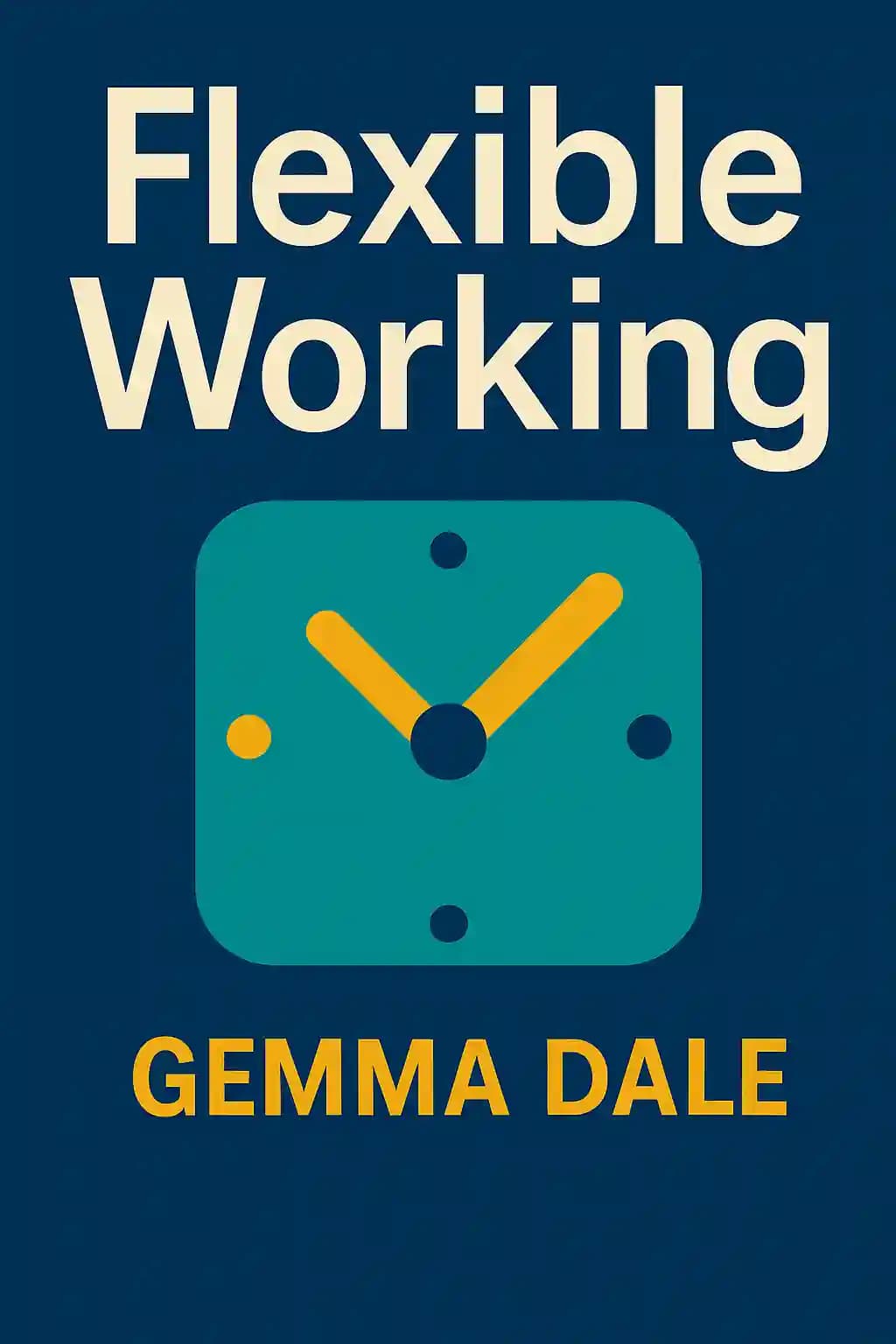
Revolutionize your workplace with "Flexible Working" - the award-winning guide that's reshaping how we work. Endorsed by Professor Sir Cary Cooper, this timely resource offers practical strategies for implementing flexibility that boosts performance while supporting diverse talent pools and reducing carbon footprints.
Gemma Dale, author of Flexible Working: A Practical Guide to Organizing Work Outside the Nine-to-Five, is a leading HR expert, certified management educator, and advocate for modern workplace practices.
With over 20 years of experience in human resources, Dale combines her academic rigor as a lecturer at Liverpool John Moores University with real-world insights from her role as an HR strategist at tech firm Draw & Code. Her expertise spans hybrid work, employee wellbeing, and organizational behavior, themes central to her book, which offers actionable strategies for balancing productivity and work-life integration.
A Chartered Fellow of the CIPD, Dale is also the creator of the award-winning HR blog People Stuff and co-author of How to Work Remotely. She was named one of the UK’s Most Influential HR Thinkers in 2021 and 2022, and her research on post-pandemic work trends has been featured in industry conferences and media outlets. Flexible Working reflects her commitment to reshaping workplace culture, drawing from both academic research and frontline HR leadership.
Flexible Working is a practical guide for HR professionals on implementing workplace flexibility to boost employee engagement, talent retention, and sustainability. It provides actionable strategies for designing policies, training managers, and overcoming barriers, with case studies like Zurich Insurance. The book highlights benefits like reduced workplace stress and a smaller carbon footprint while debunking myths about non-traditional schedules.
HR leaders, managers, and business executives seeking to modernize workplace practices will benefit most. It’s also valuable for diversity officers aiming to attract multigenerational talent (e.g., 37% of millennials reject inflexible roles) and sustainability teams focused on reducing office energy use.
Yes. Shortlisted for the 2021 Business Book Awards, it combines evidence-based frameworks (like MinHash data analysis) with real-world examples. Its focus on post-pandemic trends like hybrid work and Gen Z’s demand for autonomy makes it a timely resource for future-proofing organizations.
Flexible policies improve retention, cut costs, and diversify hiring pools. For employees, they reduce burnout and support caregivers. Environmentally, remote work lowers corporate carbon footprints. Case studies show companies like Zurich Insurance achieved higher productivity through customized schedules.
The book notes 78% of employees over 50 prioritize flexible hours, while Gen Z often rejects roles without hybrid options. It advises tailoring policies: older workers value phased retirement, while younger staff seek location autonomy. This approach prevents “organizational nostalgia” conflicts with traditional 9-5 models.
Dale challenges the stereotype that flexibility is only for mothers, citing data showing demand across genders and ages. She also disputes claims that remote workers underperform, pointing to studies on output consistency and tools for tracking virtual collaboration.
Yes. A 4-stage framework includes:
It links reduced office occupancy to lower energy consumption and commuting emissions. Strategies include “green flexibility” incentives for employees using public transport and aligning remote work policies with corporate ESG goals.
Zurich Insurance’s shift to output-based evaluations (not hours logged) increased productivity by 18%. Other examples include tech firms using AI tools to monitor remote team cohesion and nonprofits offering job-sharing to retain senior talent.
Unlike theory-heavy texts, Dale focuses on executable tactics, like boilerplate-free policy templates and line-manager training scripts. It uniquely integrates environmental metrics, setting it apart from classics like Drive or Atomic Habits.
Post-pandemic, 49% of graduates reject inflexible offers, and remote tools (e.g., AI-driven collaboration platforms) now dominate. The book argues that rigid policies risk alienating top talent and hindering DEI progress amid rising gig economy competition.
Key lines include:
These encapsulate its focus on practicality, fairness, and sustainability.
通过作者的声音感受这本书
将知识转化为引人入胜、富含实例的见解
快速捕捉核心观点,高效学习
以有趣互动的方式享受这本书
Flexibility costs little compared to other perks yet ranks among candidates' top priorities.
Without flexibility, organizations risk losing institutional knowledge.
Research consistently shows demand outstripping supply.
Flexibility has become a crucial differentiator.
将《Flexible Working》的核心观点拆解为易于理解的要点,了解创新团队如何创造、协作和成长。
将《Flexible Working》提炼为快速记忆要点,突出坦诚、团队合作和创造力的关键原则。

通过生动的故事体验《Flexible Working》,将创新经验转化为令人难忘且可应用的精彩时刻。
随心提问,选择声音,共同创造真正与你产生共鸣的见解。

"Instead of endless scrolling, I just hit play on BeFreed. It saves me so much time."
"I never knew where to start with nonfiction—BeFreed’s book lists turned into podcasts gave me a clear path."
"Perfect balance between learning and entertainment. Finished ‘Thinking, Fast and Slow’ on my commute this week."
"Crazy how much I learned while walking the dog. BeFreed = small habits → big gains."
"Reading used to feel like a chore. Now it’s just part of my lifestyle."
"Feels effortless compared to reading. I’ve finished 6 books this month already."
"BeFreed turned my guilty doomscrolling into something that feels productive and inspiring."
"BeFreed turned my commute into learning time. 20-min podcasts are perfect for finishing books I never had time for."
"BeFreed replaced my podcast queue. Imagine Spotify for books — that’s it. 🙌"
"It is great for me to learn something from the book without reading it."
"The themed book list podcasts help me connect ideas across authors—like a guided audio journey."
"Makes me feel smarter every time before going to work"

免费获取《Flexible Working》摘要的 PDF 或 EPUB 版本。可打印或随时离线阅读。
The traditional 9-to-5 office model that has dominated working life since the Industrial Revolution is facing a profound reckoning. This industrial-era approach appears increasingly outdated in our digital age, where 87% of employees desire flexibility but only 15% of job listings offer it. We're witnessing a fundamental disconnect between what workers want and what organizations provide. What if we could reimagine work in a way that benefits everyone involved? What if the future of work isn't about where we go, but what we accomplish? Flexibility isn't just a perk - it's becoming essential to how modern organizations operate, compete for talent, and fulfill their missions in a rapidly changing world. Workplace flexibility encompasses far more than remote work. It represents a fundamental shift in control from employers to employees regarding when, where, and how work happens. This three-dimensional approach includes time flexibility (when work is done), location flexibility (where it's performed), and method flexibility (how tasks are accomplished). While part-time work remains the most common flexible arrangement, numerous other options exist: job-sharing, compressed hours, nine-day fortnights, annualized hours, term-time working, flexi-time, staggered hours, self-rostering, career breaks, and phased retirement. Some organizations also offer flexibility through benefits like purchasing additional leave or taking unplanned "duvet days."