第 1 章
A Chilling Tale of Survival Against All Odds
Stephen King's "Dolores Claiborne" stands as one of his most distinctive works-a novel without chapters, supernatural elements, or his usual horror tropes. Yet it remains one of his most terrifying and compelling stories. When Meryl Streep was asked about her favorite books, she mentioned this novel specifically, praising its unflinching portrayal of a woman pushed to her limits. The 1995 film adaptation starring Kathy Bates earned critical acclaim, with Roger Ebert calling it "a portrait of human complexity rarely seen in mainstream cinema." What makes this story so powerful is not monsters or ghosts, but the everyday horrors that can exist within a marriage, and the lengths to which a mother will go to protect her children.
第 2 章
The Confession of Dolores Claiborne
The novel opens with Dolores Claiborne sitting in the Little Tall Island police station, speaking directly to local authorities. She's not there to confess to the death of her wealthy employer Vera Donovan, who recently died after falling down a staircase - though the entire island community suspects her involvement. Instead, she's there to confess to a different crime: the calculated murder of her husband Joe St. George nearly thirty years earlier, during the total solar eclipse of 1963.
"I didn't kill Vera Donovan," she declares in her distinctive Down East Maine dialect, thick with local expressions and hard-earned wisdom. "But I did kill my husband, Joe, and I don't regret it one bit. Not one single bit." Her voice carries the weight of decades of justified conviction.
Her confession unfolds as a single, uninterrupted monologue - a raw stream of consciousness that pulls us deep into her world on Little Tall Island, a remote community off the coast of Maine where everyone knows everyone else's business, yet the darkest secrets often remain hidden behind closed doors. The authorities recording her statement become our surrogates, silent witnesses to her extraordinary tale of systematic abuse, quiet desperation, and maternal love pushed to its absolute breaking point. Through her words, we experience the isolation of island life, where winter storms can cut off all contact with the mainland and where a woman's options for escape are severely limited.
What makes Dolores such a compelling narrator is her unflinching honesty and self-awareness. She doesn't attempt to paint herself as a saint or even try to elicit sympathy as a victim, though she certainly endured years of victimization. She's tough, profane, and utterly practical - a woman shaped by decades of hard work, both as a domestic servant and as a mother protecting her children. When she tells us she killed her husband, she does so with the same matter-of-fact tone she might use to describe hanging laundry or making dinner. The violence of her action is presented not as an emotional outburst but as a necessary solution to an impossible situation: "Sometimes," she explains, "being a bitch is all a woman has to hold onto."
Through her narrative, we begin to understand the complex web of relationships on Little Tall Island - the gossip, the judgment, and the unwritten rules that govern life in such a close-knit community. Her voice carries both the sharp edge of someone who's had to fight for everything she's got and the deep weariness of a woman who's spent her life in service to others, whether they deserved it or not.
第 3 章
A Life of Hardship and Servitude
Dolores's life has been defined by hard work and difficult circumstances. She began working for the wealthy Donovan family in 1949 as a housekeeper in their summer home. Vera Donovan was notoriously demanding-the kind of employer who insisted sheets be hung with exactly six clothespins, never four, and that they be dried outdoors regardless of weather.
"The only sheet worth having on a decent person's bed is one dried out-of-doors," Vera would insist, "because they smell sweet. They catch the wind that flapped them."
Hanging those sheets in the bitter Maine winter was torture. Dolores describes how her fingers would turn red, then purple, and when she finally got back inside, they would throb with a pain "so deep it's like crying." By February, her skin would crack and bleed. Sometimes her hands would wake her at night, "sobbing like lost children."
Through it all, Vera would watch from her window, tensed up "like it was a hospital operation instead of laundry." Eventually she'd throw open the window and scream, "Six pins! Remember to use six pins!" By March, Dolores would dream of taking the kindling hatchet to her, but part of her knew Vera couldn't help herself-she was trapped in her own rigid patterns.
This relationship between the two women-antagonistic yet oddly symbiotic-forms the backbone of the novel. They are both strong-willed, practical women who understand what it means to endure. As Vera would later tell Dolores in one of the novel's most memorable lines: "Sometimes you have to be a high-riding bitch to survive. Sometimes being a bitch is all a woman has to hold onto."
第 4 章
The Nightmare at Home
While Dolores's work life was difficult, her home life was far worse. Joe St. George was a mean, spiteful man-an abusive husband who drank too much and worked too little. He regularly beat Dolores in the early years of their marriage, something she initially accepted as just "part of the bargain" of marriage, like "cleaning toilets ain't nice, but someone's got to do it."
The turning point came one night in 1960 or 1961. Joe came home after helping a neighbor with his boat. When he bent over, Dolores noticed his pants were split up the back and laughed. While she was checking on dinner, he grabbed a chunk of firewood and struck her in the small of her back. The pain was excruciating-"like my kidneys had turned to hot lead weights."
That night, instead of going to bed, Dolores waited for Joe to doze off in his chair. Then she took a cream pitcher and the short-handled hatchet from above the woodbox. She smashed the pitcher against the side of his face, waking him instantly. When he tried to get up, she showed him the hatchet.
"If you don't want this in your head, Joe, you better sit down again," she told him.
This confrontation marked the end of the physical abuse. Joe never hit her again-he was, at heart, a coward. But it also marked the beginning of something else. Joe became impotent, unable to perform sexually with Dolores. His humiliation turned to resentment, and he began looking elsewhere for satisfaction.
第 5 章
The Unforgivable Sin
In 1962, Dolores noticed a troubling change in her teenage daughter Selena. Once bright and outgoing, she had become withdrawn and depressed. Her appearance deteriorated-unwashed hair, pimples on her usually perfect skin, baggy clothes that hid her figure. She stopped spending time with her friends and barely spoke at meals.
Initially, Dolores attributed these changes to teenage angst or possibly Selena turning against her mother due to Joe's influence. The truth, when it finally emerged during a confrontation on the ferry, was far worse: Joe had been sexually abusing Selena.
"I never wanted to do anything," Selena whispered. "He made me."
In that moment, as Dolores writes, "Joe St. George's days were numbered." The inner eye she describes-a kind of focused rage that wouldn't close until Joe was dead-opened wide. "It was like being in love," she tells us, "only inside out."
What makes this section of the novel so devastating is Selena's shame and self-blame. She had considered telling the school guidance counselor but lost her nerve, afraid the woman wouldn't understand or, worse, would blame her. She feared her mother would think she was "a bad girl." When Dolores assures her she would never think that, Selena breaks down completely.
This moment crystallizes the novel's central theme: the fierce, primal nature of maternal love. Dolores may be rough around the edges, she may clean houses for a living and speak in a coarse island dialect, but her love for her children is absolute and unconditional. And it is this love that will drive her to commit murder.
第 6 章
The Stolen Future
Dolores confronted Joe about the abuse, threatening to see him in prison if he ever touched Selena again. He promised to leave the girl alone, but there was something in his eyes she didn't trust-"a strange half-wise look" that suggested he thought he still held some power over her.
She decided to take the children and move to the mainland. To do this, she needed money-specifically, the children's college savings she had been putting away since they were born. But when she went to the bank to withdraw the funds, she discovered Joe had already emptied the accounts.
This theft represented more than just money-it was the theft of her children's future. Joe Junior might have become something other than the bitter, angry man his father was. Little Pete might have escaped the toxic masculinity he was already absorbing from his father at age four. And Selena-bright, beautiful Selena-might have escaped the island completely, instead of following her mother into a life of domestic service.
The money was still in the bank, Mr. Pease the banker confirmed, but in an account under Joe's name only. Of the original amount, he'd already spent three hundred dollars-money that represented years of Dolores's hard work and sacrifice.
Standing on the ferry back to Little Tall, Dolores knew she was going to get that money from Joe somehow. She just didn't know how.
第 7 章
The Eclipse Solution
The answer came from an unexpected source: Vera Donovan. After her husband Michael died in a car crash in 1960, Vera began spending more time on the island, eventually moving there permanently. She was drinking heavily and growing increasingly isolated, her relationship with her own children strained to the breaking point.
One day in November 1962, while making Vera's bed, Dolores broke down sobbing uncontrollably. When she finally composed herself, Vera insisted she call her by her first name and demanded to know what was wrong.
Dolores spilled everything-Joe's abuse of Selena, the stolen college money, her helplessness. "I'm stuck," she told Vera. "I can't figure out what to do about the son of a bitch."
Vera's response was chilling in its simplicity: "Husbands die every day, Dolores. They die and leave their wives their money. An accident is sometimes an unhappy woman's best friend."
When Dolores tried to question her further, Vera slammed the subject closed. "I'm not saying anything," she declared. But before leaving the room, she added: "Sometimes men, especially drinking men, do have accidents. They fall downstairs, slip in bathtubs, and sometimes their brakes fail."
The implication was clear, and it set Dolores's mind working. Behind their woodshed was an old well that had gone dry years before, covered with rotted boards. At one hundred and twenty pounds, she had almost fallen through when she stepped on it; Joe weighed at least fifty pounds more.
The opportunity came with the total solar eclipse scheduled for July 1963. Vera had become obsessed with the event, even chartering the entire island ferry for an eclipse-viewing excursion. Dolores realized that during the eclipse, the island would be nearly deserted-everyone would be either on the ferry, at the Harborside Hotel's roof observatory, or out on boats in the reach.
It was the perfect moment for an "accident" to happen.
第 8 章
The Day of Darkness
The day of the eclipse dawned hot, muggy, and cloudy, but Vera confidently declared, "The sun will be out by three o'clock," as if she'd put in a work order for it.
After helping with Vera's brunch for her guests, Dolores walked home through eerily empty streets. The village was deserted-everyone was either on the hotel roof, the ferry, or in boats scattered across the reach. She stopped at the store and bought a bottle of Johnnie Walker Red for Joe, knowing it would help loosen his inhibitions.
The afternoon passed with excruciating slowness. Joe sat on the porch drinking and complaining about Democrats while Dolores made him a sandwich in the kitchen, thinking, "Make it good-it's the last thing he's ever gonna eat."
As the eclipse approached, the quality of light changed dramatically. The afternoon yellow faded to a strange rose color, and shadows took on an odd, thin quality. The crickets started singing early, thinking night was falling. The reach turned a darker blue, making all the boats look unreal against the strange dark summer sky.
With everyone on the island focused on the eclipse, East Lane completely deserted, and Joe halfway to being drunk, Dolores knew this was her moment. If she didn't do it right then, she never would.
She told Joe she had transferred all the children's money to herself. He exploded with rage, grabbing her by the throat and threatening to kill her if she didn't return the money. When he finally let go, she told him she'd hidden it in a jar behind the woodshed, in the blackberry bushes.
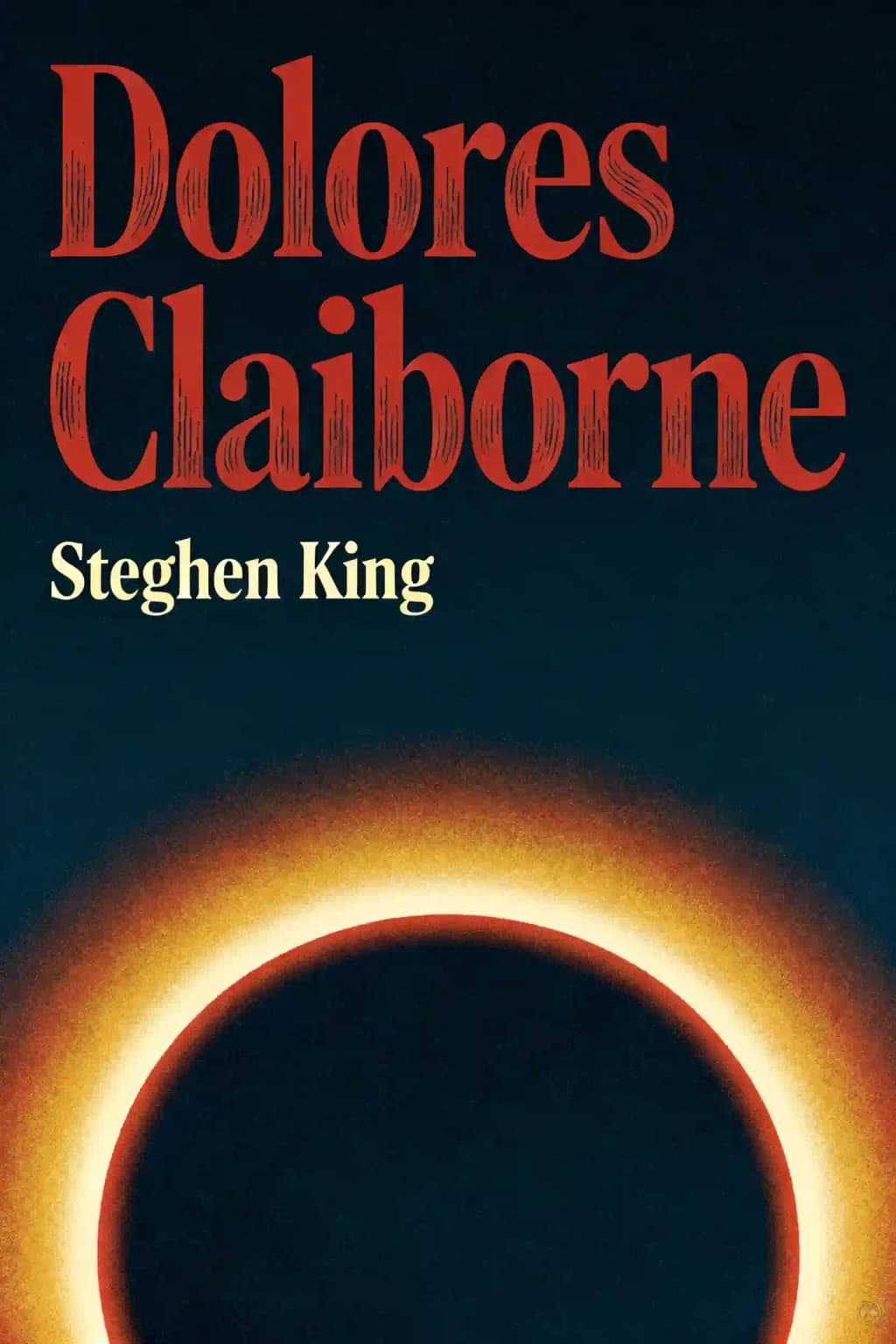
As they walked outside, the eclipse had nearly reached totality-stars were visible and the sun appeared as a black pupil with a fiery veil around it. Dolores led Joe toward the blackberry tangle where she'd tied a handkerchief to mark the covered well. When they reached the brambles, she broke free and ran ahead. Joe followed, grabbing at her dress and slip as she tore through the thorns. She jumped over the wellcap, but Joe stepped directly onto it. With a loud crack, the rotted boards gave way, and Joe fell through.
第 9 章
The Aftermath and Legacy
Joe didn't die immediately. He caught himself with his bleeding hands and looked up at Dolores with eyes that had gone "as black as the eclipse." He begged her to help him, but she refused, watching as his grip weakened and he fell to his death.
For years afterward, Dolores would have nightmares about those eyes looking up at her from the well. But she never regretted what she'd done. "Everything I did, I did for love," she tells us, "a mother's love for her children. That's the strongest and deadliest love there is. There's no bitch on earth like a mother frightened for her kids."
After Joe's death, Dolores continued working for Vera as the wealthy woman's health deteriorated. Following a series of strokes, Vera became increasingly dependent on Dolores, who eventually moved in as her full-time caregiver. Their relationship evolved into something complex-not quite friendship, but a mutual understanding and respect.
"We were like two old bats hanging in the same cave," Dolores says.
Vera's mental state fluctuated wildly. Sometimes she was sharp and mean-spirited, like when she would deliberately soil herself on cleaning days just to make Dolores's job harder. Other times she was terrified and vulnerable, seeing "dust bunnies" under the bed or "wires" coming from the baseboard. During these episodes, only Dolores could calm her.
When Vera finally died-falling down the stairs as the local gossip Sammy Marchant claimed to witness-she left her entire fortune to Dolores. This unexpected windfall, estimated to be worth over ten million dollars, only fueled suspicions that Dolores had pushed her employer down the stairs.
But as Dolores insists throughout her confession, she didn't kill Vera. She had already committed the one murder she needed to commit, and she had made her peace with it.
第 10 章
The Price of Survival
"Dolores Claiborne" is ultimately a story about the price of survival in a world that offers few options to women like Dolores. Without education or resources, trapped on an island with an abusive husband, she did what she had to do to protect her children.
The novel asks difficult questions about morality and justice. Is murder ever justified? If the legal system cannot or will not protect the vulnerable, do they have the right to protect themselves by any means necessary? King offers no easy answers, but he presents Dolores's actions with such empathy and understanding that it's difficult not to side with her.
In the epilogue, we learn that Dolores was cleared of any involvement in Vera's death. We also discover that an anonymous donor-clearly Dolores-gave thirty million dollars to the New England Home for Little Wanderers. And perhaps most significantly, we learn that Selena, who had been estranged from her mother for over twenty years, is finally coming home for Christmas.
This reconciliation suggests that Selena has made peace with her past and with her mother's actions. It offers a glimmer of hope in an otherwise dark tale-the possibility that even after unimaginable trauma and terrible choices, healing is possible.
As Dolores says in the final pages of her confession: "I know exactly who I am: Dolores Claiborne, nearly sixty-six, Democrat, lifelong resident of Little Tall Island." After a lifetime of being defined by others-as Joe's wife, as Vera's housekeeper-she has finally claimed her own identity. And in doing so, she reminds us of Vera's wisdom: "In the end, it's the bitches of the world who abide."
第 11 章
Shadows and Light: The Eclipse as Metaphor
Throughout the novel, the eclipse serves as a powerful metaphor, operating on multiple levels of symbolism and psychological depth. Just as the moon temporarily obscures the sun, casting the world into darkness, so too do the darkest aspects of human nature sometimes eclipse our better selves - a theme King explores through both supernatural and deeply human elements.
For Dolores, the eclipse represents both darkness and revelation, a paradoxical moment where obscurity leads to clarity. It is during those strange minutes of artificial night that she commits her crime, but it is also when she sees most clearly what must be done to protect her children. The eclipse's totality mirrors her total commitment to her children's safety, regardless of the moral cost. The eerie green light of the corona during totality symbolizes the otherworldly nature of her actions - existing in a moral twilight zone between right and wrong.
King masterfully connects this eclipse to another woman experiencing her own moment of darkness - Jessie Burlingame, the protagonist of his novel "Gerald's Game," which takes place simultaneously but in a different part of Maine. Both women are trapped in abusive situations, both find themselves at crossroads during the eclipse, and both must make terrible choices to survive. This parallel narrative structure suggests a cosmic connection between survivors of abuse, highlighting how moments of crisis can unite people across distance and circumstance. The shared timing of their ordeals suggests that their individual struggles are part of a larger pattern of women fighting against oppression.
The eclipse also represents the temporary nature of darkness, a central theme that runs throughout the novel. No matter how complete it seems, the sun eventually returns - just as light always follows darkness in nature's cycle. Similarly, no matter how dark Dolores's life became - through poverty, abuse, or the weight of her secrets - she never lost hope that things could get better, if not for herself, then for her children. The gradual return of light during the eclipse mirrors Dolores's slow but steady journey toward freedom from her abusive husband.
This theme of endurance in the face of seemingly insurmountable odds is what makes "Dolores Claiborne" not just a murder story but a testament to the human spirit. Like the sun emerging from behind the moon, Dolores's strength shines through even the darkest moments of her life. The eclipse becomes a metaphor for transformation - a moment when the natural order is suspended and anything becomes possible. In those brief minutes of darkness, Dolores seizes control of her destiny, proving that sometimes the darkest moments can lead to the brightest possibilities for change.
The astronomical event also serves as a reminder that human dramas, no matter how intense, play out against the backdrop of vast cosmic forces. King uses this juxtaposition to highlight both the insignificance of individual human actions and their profound importance to those whose lives they touch.
第 12 章
The Power of Voice
Perhaps the most remarkable aspect of "Dolores Claiborne" is its narrative structure - a single, unbroken monologue that spans the entire novel. King captures Dolores's distinctive Maine island dialect with remarkable authenticity, from her colorful expressions ("mean as cat-dirt," "sharp as a tack in a brand-new board") to her blunt, unflinching assessments of people and situations. The vernacular flows naturally, never feeling forced or artificial, creating a character whose voice rings true on every page.
This innovative approach creates an unprecedented intimacy between reader and narrator that would be impossible in a more conventionally structured novel. We experience everything through Dolores's unfiltered consciousness - her memories, her justifications, her pain, and her triumphs. The effect is like sitting across a kitchen table, listening to a compelling storyteller share her darkest secrets. By eliminating traditional chapter breaks and maintaining the conversational flow, King pulls readers into Dolores's world with an almost hypnotic power.
Through this powerful first-person voice, King masterfully explores themes of class, gender, and power in American society. Dolores's position as a domestic worker gives her unique insights into the power dynamics between rich and poor, male and female. Her observations about the wealthy Vera Donovan - both employer and unlikely ally - reveal complex layers of dependency and manipulation that exist between social classes. Though Dolores may lack formal education, she possesses a penetrating intelligence and moral clarity that the supposedly "better" people around her often lack.
The authenticity of Dolores's voice serves multiple narrative purposes. It establishes her credibility as she recounts devastating events, helps readers understand her motivations, and creates sympathy for actions that might otherwise seem unforgivable. Her matter-of-fact descriptions of domestic abuse and her eventual response to it are made more powerful through her straightforward, unembellished telling.
In giving voice to a woman like Dolores - someone society would typically overlook or dismiss - King has created one of his most unforgettable characters and one of his most enduring works. Her story continues to resonate because it speaks to universal truths about survival, sacrifice, and the fierce, protective love of a mother for her children. Through Dolores's distinctive voice, King demonstrates how the most profound stories often come from society's margins, told by those who have been silenced for too long.