第 1 章
Where Terror Lurks in the Loneliest Places
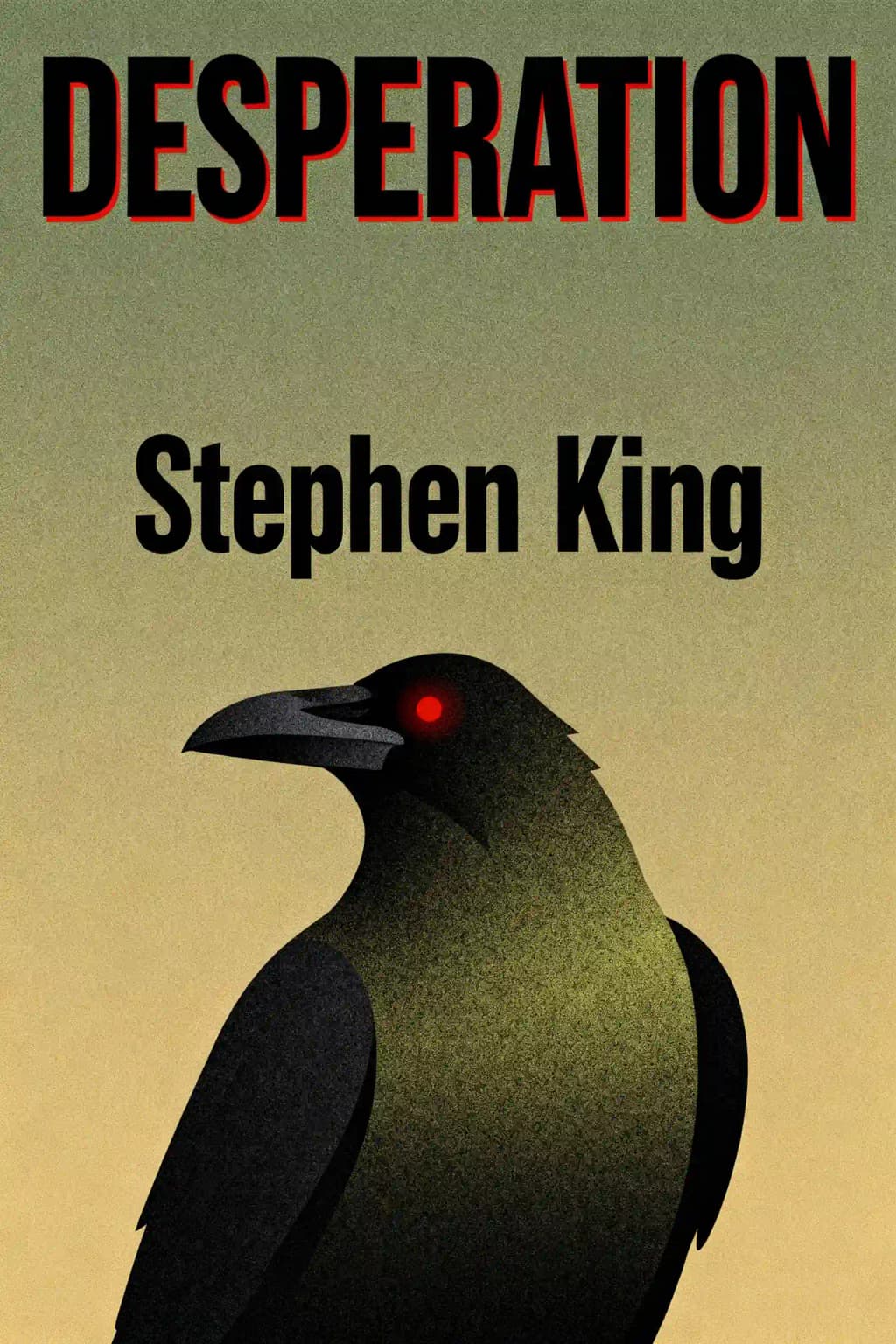
Stephen King's "Desperation" stands as one of his most chilling explorations of evil, faith, and survival. Published in 1996 during King's creative renaissance, this novel became an instant bestseller, captivating readers with its blend of supernatural horror and profound spiritual themes. The book's setting-a remote Nevada mining town-struck a nerve with readers who recognized the particular vulnerability of isolation. Celebrities like filmmaker Eli Roth and author Neil Gaiman have cited it as one of King's most underrated masterpieces. What makes "Desperation" particularly haunting is how it transforms the vast openness of the American desert into a claustrophobic nightmare, where escape routes vanish and salvation comes from the most unexpected sources.
第 2 章
The Desert Highway: Where Nightmares Begin
The journey into terror begins on Highway 50, aptly nicknamed "The Loneliest Highway in America." Peter and Mary Jackson, New Yorkers on a cross-country road trip, notice disturbing signs along the desolate Nevada landscape-a dead cat nailed to a speed limit sign. This macabre discovery foreshadows the horrors awaiting them. When a massive police officer pulls them over for a seemingly minor traffic violation, their vacation transforms into a nightmare. The officer, Collie Entragian, discovers marijuana in their trunk that doesn't belong to them. Despite their protests, he forces them into his cruiser.
What begins as an apparent case of small-town police corruption quickly reveals itself as something far more sinister. During the Miranda warning, Entragian casually inserts "I'm going to kill you" without changing his tone. His behavior grows increasingly erratic-one moment professional, the next spewing antisemitic slurs. As they approach the mining town of Desperation, the landscape grows more disturbing: abandoned vehicles, a hanged German Shepherd, graffiti reading "DEAD DOGS."
Upon arrival at the Municipal Building, the Jacksons discover the body of a six-year-old girl at the foot of the stairs. Before Peter can process this horror, Entragian casually shoots him multiple times in the stomach. Mary is left alone with the realization that this isn't simply a corrupt cop-something is profoundly wrong with Entragian, something beyond human understanding.
Meanwhile, the Carver family-Ralph, Ellen, and their children David and Kirsten-experience a similar fate when their RV suffers multiple blowouts. Entragian arrives, claiming they hit "highway carpet" designed to stop speeders, and insists they evacuate to his cruiser immediately. The family complies, leaving behind Kirsten's beloved doll. At the Municipal Building, Entragian pushes young Kirsten down the stairs, breaking her neck, before imprisoning the rest of the family.
The pattern continues with acclaimed author Johnny Marinville, whose cross-country motorcycle journey is interrupted by the same officer. After planting drugs in Johnny's saddlebag, Entragian brutally assaults him, mocking his literary career and "pinko-liberal" politics. Most disturbing is Entragian's physical deterioration-he sneezes blood and tissue that splatter across the windshield, yet continues as if nothing unusual happened.
第 3 章
Prisoners of Desperation: The Survivors Gather
In the cold, dimly lit jail cells of Desperation's Municipal Building, the survivors find themselves confronting an incomprehensible nightmare. Ralph Carver lies on his bunk, consumed by waves of grief over his daughter Pie's senseless murder on the highway. His anguish deepens with each passing moment as he imagines what horrors his wife Ellen might be enduring at Entragian's hands. The fluorescent lights flicker overhead, casting harsh shadows that mirror the group's darkening hopes.
Mary Jackson sits in stunned silence, her mind replaying the brutal execution of her husband Peter - a moment that transformed their simple cross-country drive into a waking nightmare. Her fingers absently trace the wedding ring on her hand as she struggles to process her new reality. Johnny Marinville, the celebrated author whose arrogance had been literally beaten out of him, leans against the cell wall, his broken nose throbbing in time with his pulse, forced to confront his own vulnerability for perhaps the first time in decades.
Tom Billingsley, his weathered face reflecting decades of life in Desperation, becomes their window into the town's history. The elderly veterinarian shares disturbing details about recent changes - how the town's decline accelerated after the mining company's return, how longtime residents began disappearing, and how the wildlife started exhibiting increasingly strange behavior weeks before Entragian's reign of terror began. His trembling hands betray his fear as he describes the transformation of a place he once loved into something unrecognizable.
On the outskirts of this nightmare, Steve Ames navigates his Ryder truck through the desert heat, accompanied by newly-picked up hitchhiker Cynthia Smith. Their initial casual conversation turns serious when they spot Johnny's Harley-Davidson partially submerged in the desert sand - its chrome reflecting the merciless sun like a distress signal. The motorcycle's condition - hastily abandoned and partially buried - speaks of violence rather than accident. Following the highway into Desperation, they encounter a town that seems to pulse with malevolent energy. Houses become tombs, their interiors revealing families frozen in domestic tableaux of death, while unnaturally organized groups of rattlesnakes, scorpions, and spiders stand guard like macabre sentinels.
David Carver emerges as an unlikely beacon of hope within the jail. Since his best friend Brian's miraculous recovery - an event that transformed David's understanding of faith - he's maintained a unique connection with God. Now, amid the terror and confusion, he hears divine whispers guiding his actions. When God instructs him to use a bar of soap to squeeze through the cell bars, David accomplishes what should be physically impossible, his small frame passing through spaces that defy natural law. After securing a weapon from Entragian's desk, he returns to free his fellow prisoners, his young face set with determination that seems centuries old.
The group's escape becomes a gauntlet of supernatural horror. A massive coyote, its eyes gleaming with unnatural intelligence, launches itself at David when he opens the cell block door. The boy responds with preternatural calm, squeezing the trigger with the precision of a seasoned marksman. As they flee into the desert night, evidence mounts that Entragian represents only one facet of their nightmare - the entire ecosystem seems to have turned against them, with every creature from the smallest spider to the largest predator moving with coordinated purpose, serving an unseen master whose presence looms over the town like a toxic cloud.
第 4 章
The American West: Sanctuary and Revelations
The survivors take refuge in an abandoned movie theater called The American West. There, they're joined by Audrey Wyler, a geologist for the mining company who's been hiding since the massacre began. As they share their experiences, a clearer picture emerges of what's happening in Desperation.
Johnny describes how Entragian seemed to control animals with strange words-"tak ah lah"-and how the cop's face appeared to be deteriorating, as if something else were pushing through from beneath. Tom Billingsley notes that while the man terrorizing them resembles Collie Entragian, he's several inches taller and sixty pounds heavier than the deputy he's known for fifteen years. Most disturbing, the cop shows no sign of Entragian's permanent limp from a mining accident.
Audrey describes witnessing Entragian methodically executing townspeople in the streets, shooting them with an eerie detachment before moving on to his next victim. She recounts hiding in a laundromat while he hunted for her, following the scent of her perfume. The group realizes they're dealing with something beyond human-something ancient and powerful that can transfer between bodies.
Their theories are confirmed when Tom Billingsley is attacked by a mountain lion that enters through a bathroom window. As the survivors fight off the animal, the dying veterinarian makes a crucial observation-Audrey has grown taller since they arrived at the theater, suggesting she's been infected with whatever possessed Entragian. Before they can process this revelation, Audrey attacks David, attempting to strangle him while speaking the same strange language they heard from the cop.
As Audrey's body deteriorates rapidly-her face literally melting off her skull-she manages a final warning: "Don't touch the can tahs." She crawls toward the balcony, which collapses under her weight, taking her corpse to the theater floor below. The survivors now understand they're facing an entity that can transfer between hosts, using human bodies until they deteriorate beyond use.
第 5 章
The Truth About Tak: An Ancient Evil Unleashed
While unconscious after Audrey's attack, David experiences a vision that reveals the truth behind Desperation's horror. He's guided through the supernatural realm by a mysterious figure in a Yankees cap, who shows him the China Pit mine and explains what happened there.
The entity they're facing calls itself Tak-possibly a god, demon, or "dangerous nothing" that has been trapped in an ancient mine shaft for over a century. In 1858, the Rattlesnake Number One mine (later called the China Mine) was established, using Chinese laborers chained together and forced to work in dangerous conditions. When a cave-in trapped forty-two miners, the mining company chose to dynamite the entrance rather than attempt rescue, deliberately burying them alive.
But something was already in that mine-something older than human civilization. Two Chinese brothers, Shih and Ch'an Lushan, discovered Tak's presence and realized the danger it posed. They deliberately collapsed part of the shaft, trapping Tak and sacrificing themselves to prevent its escape. Though the brothers later emerged and killed several townspeople before being killed themselves, Tak remained imprisoned in the mine.
Recently, the reopening of mining operations uncovered the old China Shaft. Cary Ripton, a pit foreman with a grudge against mining regulations, discovered strange artifacts-can tahs, stone carvings with supernatural properties-and became Tak's first modern vessel. Through Ripton, Tak began a chain of possessions: first Brad Josephson, then Collie Entragian, then Ellen Carver. Each body deteriorated quickly under Tak's control, forcing it to seek new hosts.
The can tahs serve as conduits for Tak's power, allowing it to control animals and influence humans. Those who touch them become corrupted, explaining the strange behavior of the desert creatures and how Tak maintains control over the town. David explains that Tak needs "pretexts" to take people-like vampires needing invitations-possibly because remnants of the real people remain within their possessed bodies.
第 6 章
Faith Versus Ancient Evil: David's Spiritual Battle
At the heart of "Desperation" lies a profound spiritual conflict. David Carver, despite his youth, emerges as the primary antagonist to Tak's evil. His deep faith-born from witnessing his friend's miraculous recovery-gives him abilities the others lack. He can sense Tak's presence, communicate with animals, and receive divine guidance.
When Johnny Marinville attempts to use Tak's language to command coyotes, David stops him, warning not to "speak to them in the language of the dead." Instead, David offers a blessing that sends the animals fleeing. This spiritual authority marks him as Tak's primary target.
David's faith, however, isn't simplistic or naive. He struggles with profound theological questions about God's nature and intentions. After witnessing his sister's murder and his mother's possession, he concludes that "God is cruel"-not absent or malevolent, but operating with a harshness beyond human understanding. This mature spiritual perspective allows David to maintain faith while acknowledging the brutal realities around him.
The boy's relationship with God is complex and intimate. He describes prayer as entering "the black" where he listens for divine guidance. Sometimes this guidance comes as clear instructions-like using soap to escape his cell-and other times as cryptic messages he must interpret. David also battles temptation, hearing a mocking voice during prayer that tries to undermine his faith by questioning why he would "pray to a God who kills baby sisters."
David's spiritual journey reveals the novel's central theme: faith requires accepting both God's love and God's cruelty. As Reverend Martin taught him, God operates through the "free-will covenant"-suggesting but never forcing action. This explains why God doesn't simply eliminate Tak but instead works through flawed human vessels like David and the other survivors.
第 7 章
The China Pit: Confronting the Source
After Mary Jackson escapes from the mining office where she was being held, the survivors realize they must confront Tak at its source-the China Pit mine. David reveals that his mother Ellen is already dead, her body now inhabited by Tak, and that they must destroy the ini-the narrow well connecting Tak's dimension to our world.
The group gathers explosives from the mining company's powder magazine, preparing to seal the shaft permanently. Johnny Marinville, who earlier attempted to abandon the group, has undergone a spiritual transformation after David helped him recover buried memories from Vietnam. Now he's ready to make amends for past cowardice.
As they enter the China Shaft, they're attacked by an eagle-Tak's newest vessel after Ellen's body failed. Ralph Carver sacrifices himself to protect his son, throwing his body over David as the eagle tears into his throat and face. In this moment of crisis, Johnny restrains David from continuing deeper into the mine, telling him "It's not your job" to make the final sacrifice.
Johnny reveals the cruel truth to David-sometimes God's cruelty isn't in letting people die, but in making them live with loss. He instructs David to survive, to make Brian his brother, and to create a new life after this tragedy. Then Johnny descends alone into the China Shaft, navigating through ancient mining artifacts and bones, surrounded by can tahs that call to him with voices of madness.
In the an tak chamber, Johnny confronts the ini-the funnel-shaped well between worlds. As brownish-black mist rises from the hole, attempting to enter his body, Johnny protects himself with his motorcycle helmet. He empties bags of ANFO explosive into the narrow opening, preparing to seal it forever despite Tak's desperate offers of healing, success, and power. With a shotgun shell as a detonator, Johnny triggers the explosion, sacrificing himself to permanently trap Tak in its dimension.
第 8 章
Aftermath: Survivors in the Desert
The explosion at China Pit creates a catastrophic cave-in, setting off a chain reaction that collapses the entire mining operation. Steve frantically maneuvers the truck carrying Cynthia, Mary, and David through the disintegrating pit, tires spinning on loose gravel as chunks of earth fall around them. The road literally crumbles away behind their back wheels as they crest the rim, the truck's engine screaming with effort. A massive plume of dust erupts skyward, obscuring the stars and coating everything in a fine red powder that tastes of copper and ancient earth.
At dawn's first light, they return to Desperation and witness the full scope of devastation. The town has become an apocalyptic tableau - streets drifted with red mining sand like blood-colored snow, storefronts with spiderwebbed broken windows reflecting the rising sun, fallen signs creaking in the desert wind. Dead animals litter the sidewalks and streets: dogs, cats, birds, even rattlesnakes, their bodies contorted in unnatural positions. Shop windows reveal glimpses of interior carnage - overturned furniture, scattered papers, and dark stains that none of them want to examine too closely. The town has become a tomb, a stark monument to Tak's brief but devastating reign of terror.
David, his voice cracking with emotion, quotes scripture about not touching the mountain where God dwells, finding eerie parallels to their own encounter with an ancient evil. His words sound hollow as he processes the magnitude of his losses - his mother, father, and sister all slaughtered in less than forty-eight hours. The others watch him with concern, seeing both the weight of grief and surprising strength in his young shoulders.
As they prepare to depart, the survivors collaborate on crafting a plausible story for authorities - a series of flat tires, an encounter with a disturbed police officer, their escape to the theater where they supposedly spent the night hiding. Steve, drawing from his Hollywood experience, suggests the government will likely orchestrate their own cover-up anyway, perhaps attributing the deaths to an industrial accident or leaked poison gas that induced mass psychosis.
Before leaving Desperation behind, they witness one final horrifying spectacle - a massive dust cloud rises from the China Pit, taking shape against the morning sky. The cloud morphs into the distinct form of a wolf, but with something distinctly reptilian protruding from its jaws - a last manifestation of Tak's impotent rage against its imprisonment. Mary's terrified scream pierces the dawn silence, but David gently takes her hand, pointing out how the apparition is already beginning to dissipate in the desert wind. The ancient evil is truly contained, leaving only the desert wind and the survivors' memories as testimony to what occurred in this remote mining town.
第 9 章
The Loneliest Highway: Return to the World
As they prepare to leave Desperation behind, David discovers the shotgun shell missing from his pocket, replaced by his "EXCUSED EARLY" pass from school - the same one he'd left on a nail in a tree months ago after praying for Brian's recovery. This supernatural exchange carries profound significance, as Johnny must have placed it there when taking the shell. The pass now bears a handwritten message referencing 1 John 4:8: "God is love." This moment represents a perfect circle of faith, connecting David's past prayers for his friend with his present trial and ultimate survival.
When Mary, still grappling with the horror they've endured, asks if God truly is love, David's response reveals the depth of his spiritual maturation: "Oh, yes. I guess he's sort of... everything." This simple yet profound statement encapsulates David's extraordinary spiritual journey - from a child's black-and-white view of God as either loving or cruel to understanding that divine nature encompasses all aspects of existence. Like the desert itself, God contains both mercy and terror, nurture and destruction, salvation and sacrifice.
The survivors drive away from Desperation on Highway 50, aptly nicknamed "The Loneliest Road in America." Each carries invisible scars from their encounter with Tak and their brush with forces beyond human comprehension. David, having endured the unthinkable loss of his entire family, has gained wisdom beyond his years. Rather than breaking his faith, the crucible of Desperation has refined it into something more complex and resilient. The town recedes in their rearview mirror, but its impact on their souls remains indelible.
As the vast Nevada desert stretches before them, David leans back in his seat, closes his eyes, and begins to pray. This final image carries multiple layers of meaning - prayer not as a desperate plea for divine intervention, but as an ongoing dialogue with the infinite. David's continued faith despite witnessing horrors that would shatter most adults' belief systems demonstrates extraordinary spiritual strength. He has learned to accept both God's love and God's apparent cruelty, understanding that true faith requires embracing this fundamental paradox.
The novel concludes with this powerful image of prayer and acceptance, suggesting that beneath the surface of our ordinary world lie extraordinary forces - both malevolent and benevolent. These forces wait to be encountered by those who venture into the lonely places, both geographical and spiritual. The survivors of Desperation carry this knowledge with them as Highway 50 unfolds ahead, a reminder that the divine - in all its terrible beauty - is ever-present in the vast empty spaces of both the American West and the human soul.
第 10 章
The Power of Faith in a Godless Universe
"Desperation" ultimately explores how faith functions in a world where evil is real and powerful, delving deep into the complexities of belief in the face of overwhelming darkness. Unlike many horror stories where religion offers only empty rituals against supernatural threats, King presents authentic spirituality as a genuine force capable of confronting ancient evil. David's faith isn't portrayed as naive or delusional but as a legitimate power that allows him to perceive truths others miss and access abilities others lack - from his intuitive understanding of Tak's nature to his ability to channel divine strength in crucial moments.
The novel carefully examines faith through multiple lenses, showing how different characters relate to spirituality. Mary Jackson's skepticism gradually transforms into a tentative belief, while Steve Ames moves from casual indifference to profound respect for David's convictions. Johnny Marinville's journey from cynical atheist to reluctant believer particularly illuminates how extreme circumstances can reshape one's spiritual perspective. Through these varied perspectives, King explores how faith manifests differently across individuals while remaining a potent force against evil.
At the same time, the novel avoids simplistic religious triumphalism. Faith doesn't guarantee safety or happy endings - the Carver family is decimated despite David's devotion, and believers suffer just as horribly as non-believers in Tak's grip. God doesn't simply eliminate evil but works through flawed human vessels who must make difficult choices and sacrifices. The survivors prevail not through miraculous divine intervention but through cooperation, courage, and willingness to sacrifice for others. Even David's most powerful moments of divine connection come at great personal cost.
This nuanced portrayal of spirituality makes "Desperation" one of King's most theologically sophisticated works. It suggests that faith's value lies not in providing easy answers or guaranteed protection, but in offering a framework for confronting evil with courage and purpose. The novel explores how belief can provide strength without becoming a magical solution - faith empowers but doesn't protect, guides but doesn't control. As David concludes, God is "sort of... everything" - present in both the horrors of Desperation and the love that allows the survivors to risk themselves for each other.
In the vast emptiness of the Nevada desert, King finds the perfect setting to explore these profound questions. Highway 50 - "The Loneliest Highway in America" - becomes a metaphor for the spiritual journey itself: isolated, difficult, and fraught with danger, yet ultimately leading toward truth for those brave enough to travel its full length. The desert's stark landscape serves as both literal and metaphorical proving ground where faith is tested against primal evil. The town of Desperation itself becomes a microcosm where the eternal struggle between good and evil plays out in dusty streets and abandoned mines, forcing characters to confront not just external threats but their own beliefs about God, meaning, and survival.