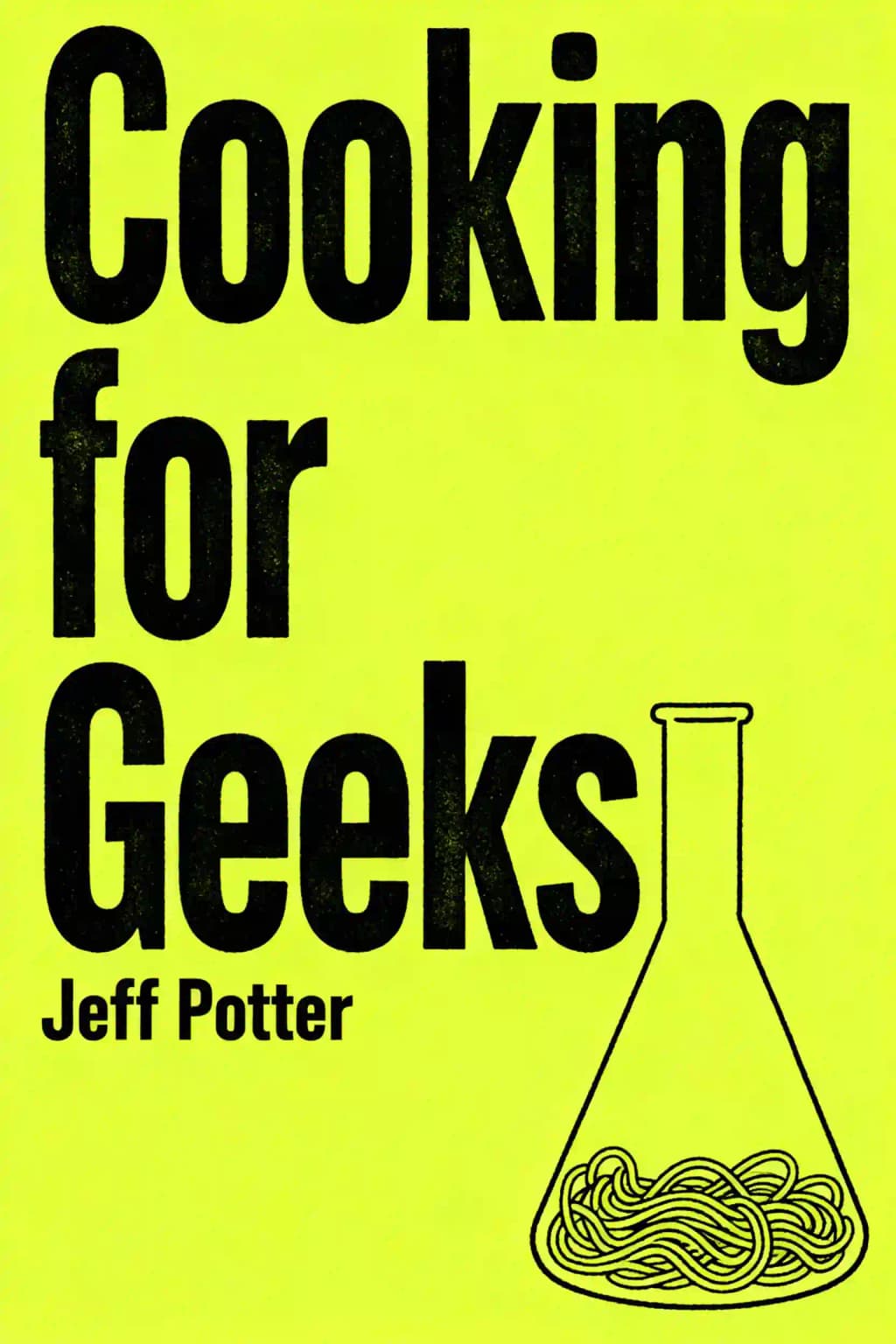
Ever wondered why popcorn pops? "Cooking for Geeks" transforms your kitchen into a laboratory, blending science with culinary art. Featuring MythBusters' Adam Savage, this O'Reilly bestseller reveals the physics behind perfect meals - making molecular gastronomy accessible to everyone.
Jeff Potter is the author of Cooking for Geeks: Real Science, Great Hacks, and Good Food and a tech-industry veteran turned culinary science innovator.
A computer science graduate from Brown University, Potter blends his analytical mindset with a passion for experimentation, demystifying kitchen techniques through physics, chemistry, and hands-on hacking. His book—a hybrid of cookbook and science manual—caters to curious minds, featuring interviews with food science pioneer Harold McGee and MythBusters co-host Adam Savage, who contributed the foreword.
Before writing, Potter navigated startups and corporate roles, channeling his problem-solving skills into redefining how geeks approach cooking. A frequent speaker at tech and food conferences, he has been featured in outlets like Wired and NPR for bridging STEM and culinary creativity.
Cooking for Geeks remains a cult classic, praised for its quirky experiments and practical frameworks, and has been translated into multiple languages since its 2010 release.
Cooking for Geeks blends culinary arts with scientific principles, exploring how ingredients and techniques interact through experiments, recipes, and interviews with experts like Adam Savage and Jacques Pépin. It demystifies cooking for tech enthusiasts by emphasizing curiosity, experimentation, and the science behind processes like the Maillard reaction and protein denaturation.
The book targets "geeks"—makers, hackers, and curious cooks—who want to understand the why behind cooking rather than just follow recipes. It’s ideal for experimenters who enjoy applying logic, creativity, and scientific methods to kitchen challenges.
Yes, reviewers praise its unique approach to teaching cooking through science, calling it "educational and enjoyable" for both novices and experienced cooks. The expanded edition includes over 100 recipes, oven "overclocking" experiments, and practical insights from food scientists and chefs.
Key concepts include protein denaturation (how heat changes meat texture), the Maillard reaction (browning creates flavor), and caramelization. Potter breaks down how these processes impact dishes like steak, cookies, and pulled pork, empowering readers to tweak recipes confidently.
Potter treats recipes as adaptable frameworks, encouraging readers to "hack" them. For example, he data-mines pancake recipes to create a statistically optimized version, showing how small tweaks in ratios (e.g., flour-to-liquid) alter results.
Mise en place (pre-organizing ingredients) is highlighted as critical for efficiency. The book also covers precision methods like sous-vide and pressure cooking, which appeal to geeks seeking controlled, repeatable outcomes.
Potter teaches how to balance sweet, salty, sour, and umami flavors using scientific principles. He provides frameworks for pairing ingredients (e.g., fat with acid) and creating layered tastes, turning cooking into a creative engineering challenge.
Interviews include Adam Savage (MythBusters) on experimentation, Jacques Pépin on classic techniques, and chemist Hervé This on molecular gastronomy. Their insights bridge culinary tradition and modern science.
Yes! Labs include testing oven temperatures (e.g., cooking pizza at 1,000°F/540°C), comparing baking soda vs. powder, and using liquid nitrogen for rapid-freezing desserts. These projects reinforce scientific concepts through tactile learning.
Potter explains why dishes fail (e.g., rubbery eggs from overcooking proteins) and offers fixes using science. For example, adding acid to cheese sauces prevents clumping by altering casein proteins.
Some readers note its playful, tech-centric tone might overwhelm traditional cooks. However, most praise its accessibility and depth, calling it a "resource for inquisitive people who want to master the kitchen".
With rising interest in home cooking science and DIY food trends (e.g., fermentation, sous-vide), the book’s fusion of curiosity and practicality remains timely. Updated editions keep pace with modern kitchens and gadgets.
Unlike recipe-centric books, Potter prioritizes understanding over memorization. It’s closer to a lab manual, teaching readers to diagnose issues (e.g., soggy crusts) and innovate rather than follow rigid steps.
He advocates for time-saving hacks like:
Potter is a computer scientist-turned-food geek who combines analytical thinking with culinary passion. His work has been featured in Wired and The New York Times, establishing him as a bridge between tech and cooking communities.
通过作者的声音感受这本书
将知识转化为引人入胜、富含实例的见解
快速捕捉核心观点,高效学习
以有趣互动的方式享受这本书
The kitchen, like any complex system, can be hacked.
Flavor results from the combination of taste and smell.
Have fun and approach cooking with curiosity.
Equipment isn't the most critical factor for success.
将《Cooking for Geeks》的核心观点拆解为易于理解的要点,了解创新团队如何创造、协作和成长。
将《Cooking for Geeks》提炼为快速记忆要点,突出坦诚、团队合作和创造力的关键原则。

通过生动的故事体验《Cooking for Geeks》,将创新经验转化为令人难忘且可应用的精彩时刻。
随心提问,选择声音,共同创造真正与你产生共鸣的见解。

"Instead of endless scrolling, I just hit play on BeFreed. It saves me so much time."
"I never knew where to start with nonfiction—BeFreed’s book lists turned into podcasts gave me a clear path."
"Perfect balance between learning and entertainment. Finished ‘Thinking, Fast and Slow’ on my commute this week."
"Crazy how much I learned while walking the dog. BeFreed = small habits → big gains."
"Reading used to feel like a chore. Now it’s just part of my lifestyle."
"Feels effortless compared to reading. I’ve finished 6 books this month already."
"BeFreed turned my guilty doomscrolling into something that feels productive and inspiring."
"BeFreed turned my commute into learning time. 20-min podcasts are perfect for finishing books I never had time for."
"BeFreed replaced my podcast queue. Imagine Spotify for books — that’s it. 🙌"
"It is great for me to learn something from the book without reading it."
"The themed book list podcasts help me connect ideas across authors—like a guided audio journey."
"Makes me feel smarter every time before going to work"

免费获取《Cooking for Geeks》摘要的 PDF 或 EPUB 版本。可打印或随时离线阅读。
What if the secret to becoming a better cook isn't memorizing recipes, but understanding why butter browns at exactly 250F? This radical premise has turned "Cooking for Geeks" into a phenomenon that's sold over 500,000 copies and earned recommendations from MIT to Harvard. The book doesn't just teach you to cook-it teaches you to think like a scientist in your own kitchen. Whether you're a Silicon Valley engineer or simply someone who's ever wondered why their cookies spread too thin, this approach transforms cooking from following instructions into genuine problem-solving. The kitchen stops being a place of mysterious failures and becomes a space where curiosity leads to delicious discoveries.
