第 1 章
The Dragon Awakens: China's Consumer Revolution
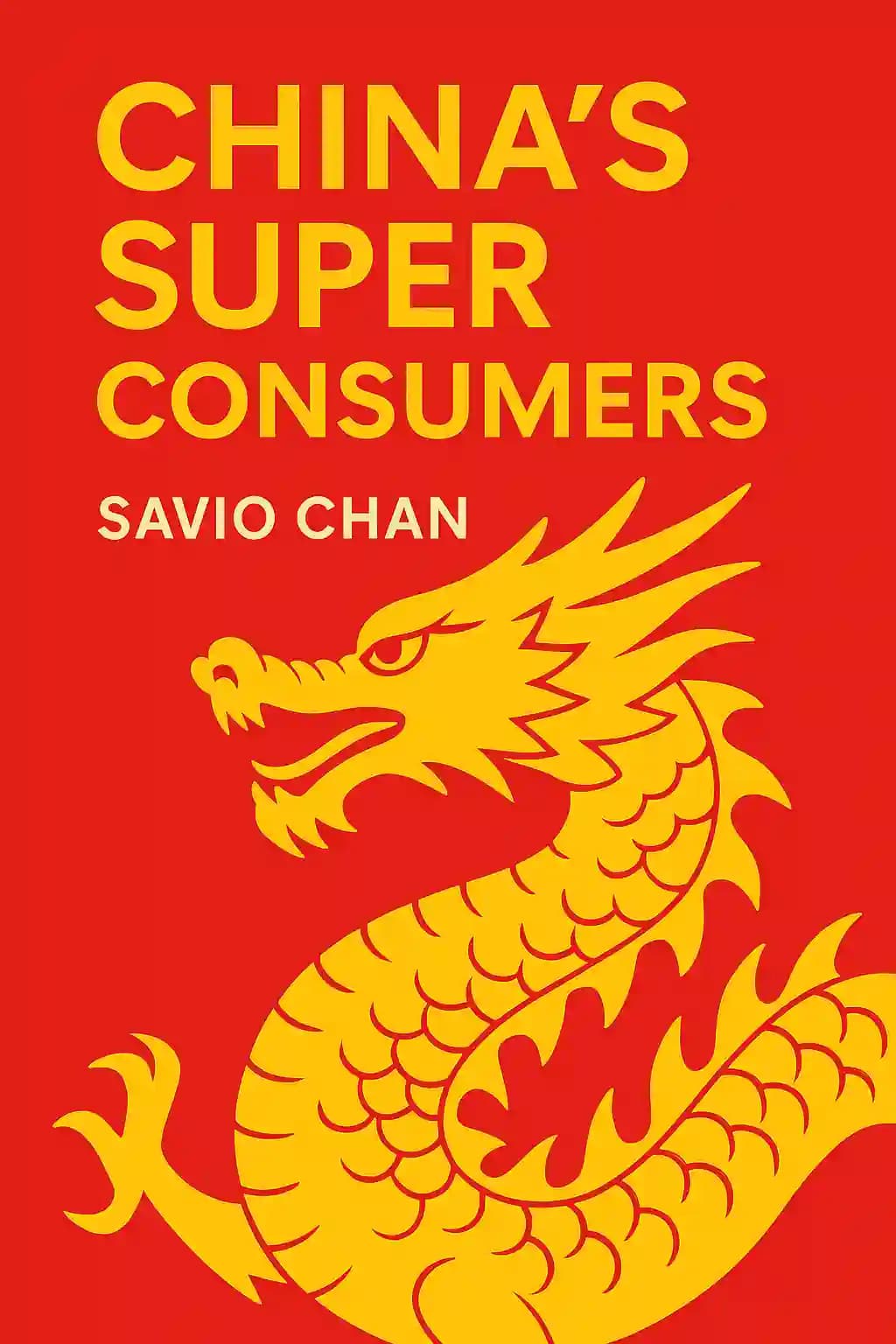
In 2008, Steve Jobs received critical advice that would unlock billions in revenue: partner with China Unicom instead of waiting for China Mobile negotiations. This strategic pivot allowed Apple to access Chinese consumers years earlier than planned, setting the stage for unprecedented success in the world's most populous nation. Such moments of insight have become increasingly valuable as China has transformed from the world's factory into its most dynamic consumer market. "China's Super Consumers" by Savio Chan offers a front-row seat to this economic miracle-a transformation that has occurred at breathtaking speed, compressing a century of consumer evolution into mere decades. The book has become required reading in business schools worldwide and influenced countless corporate strategies toward China. As Warren Buffett famously remarked after reading an early manuscript, "Anyone who ignores China's consumers does so at their own peril."
第 2 章
From Feudalism to Fendi: China's Remarkable Transformation
To understand China's consumer revolution, we must first grasp its historical context. China isn't a newcomer to economic power-it's an ancient civilization returning to its historical position of strength after a century of turmoil and isolation. Throughout most of its 4,000-year history, China was self-contained and inward-looking, the "Middle Kingdom" between Heaven and Earth, developing remarkable innovations from written language to movable type largely without outside influence. The Tang and Song dynasties saw China produce nearly 30% of global GDP, with sophisticated trade networks extending through Asia and beyond via the Silk Road.
Yet until the mid-1980s, consumer culture was virtually nonexistent in China. The state controlled all manufacturing and distribution, with no retail sector to speak of. Citizens received ration coupons through their work units, wore identical clothing, and lived in assigned housing. These work units, known as danwei, controlled every aspect of daily life, from food allocation to marriage approval. Had you visited China then, you would have seen people wearing simple gray or navy clothing, using cloth shoes and canvas bags, consuming only tea, and avoiding makeup to prevent appearing bourgeois. Even basic household items like televisions and refrigerators were considered luxury goods, often requiring years of savings and special purchase permits.
The transformation began gradually in the 1990s as private industry developed and disposable income emerged. Foreign retail pioneers like Nike, Giordano, and Zegna established storefronts despite regulatory prohibitions and complex bureaucratic hurdles. The first KFC opened in Beijing in 1987, marking a symbolic turning point. By 1999, when Starbucks first entered China, major cities had shopping centers with foreign and domestic merchandise, marking the beginning of the transition "from feudalism to Fendi." This period saw the rise of a new middle class, with average urban incomes increasing tenfold between 1990 and 2010.
Today's Chinese super consumers embody this dramatic shift. Consider 28-year-old Yan Wu, an advertising executive from a Yellow River village now working in Shanghai. She arrives at Starbucks in Michael Kors shoes and a Zara blouse, carrying a Tory Burch bag, paying with cash from her Fendi wallet, applying Sephora cosmetics, and taking GNC vitamins. Her parents, former factory workers, could never have imagined such lifestyle choices. This transformation represents what might be called Globalization 2.0, where China increasingly sets standards for distribution, retail, digital marketing, and design. The country now accounts for over 30% of global luxury goods consumption, with mobile payment systems like WeChat Pay and Alipay processing trillions in transactions annually. Chinese consumers have moved from basic necessities to sophisticated preferences, influencing global trends in everything from electric vehicles to social commerce platforms.
第 3 章
The Cultural Code: Understanding the Chinese Consumer Mindset
Western companies often fail in China because they mistakenly assume Chinese consumers behave like Western ones simply because they see superficial similarities-suits, coffee, luxury cars. In reality, Chinese culture has its own deeply established logic built over thousands of years, requiring different approaches to building trust and relationships. This cultural foundation stems from Confucian values, Buddhist philosophy, and centuries of imperial tradition that continue to shape modern consumer behavior.
Chinese social networks, or guanxi, profoundly influence consumer behavior in ways that go far beyond Western concepts of networking. These relationships form intricate webs of mutual obligation and reciprocity. Preserving an image of success through luxury brands and experiences contributes to network well-being, explaining why Chinese consumers might spend several months' salary on a designer handbag or premium smartphone. Problem-solving requires gentleness and indirect approaches, as Chinese culture tends to put issues behind them without direct confrontation. Even Mandarin's linguistic features-lack of tenses, articles, and case distinctions-create ambiguity that requires relationship context to interpret, making communication highly contextual and nuanced.
For businesses, this means persistent follow-up is essential, as Chinese colleagues may not volunteer obstacles directly but rather communicate through subtle hints or intermediaries. Regular face-to-face meetings, informal dinners, and social events become crucial business tools rather than optional extras. For consumers, material expressions of care (gifts, meals, experiences) often replace emotional support, making retail therapy particularly significant in Chinese culture. This explains the popularity of elaborate gift-giving occasions like Chinese New Year and the Mid-Autumn Festival.
China contains profound contradictions that impact consumer markets: simultaneously very rich and poor, hypercapitalist and Communist, government-controlled yet sometimes hands-off. Understanding these paradoxes requires abandoning Western assumptions. Consider the American fleece bedding company that couldn't succeed in China despite the growing bedding market. Three barriers emerged: practical (only 2% of Chinese homes have dryers), belief-based (Chinese consider synthetic fibers unhealthy due to traditional medicine concepts), and traditional (Chinese use comforters rather than blankets, reflecting centuries-old sleeping customs).
Success in China requires aligning with cultural values, understanding both historical context and modern contradictions, and embracing circular Chinese thinking rather than linear Western approaches. Companies must recognize that Chinese consumers often blend traditional values with modern aspirations. For example, young professionals might use WeChat Pay for digital transactions while still consulting feng shui masters for apartment layouts, or purchase both Western luxury brands and traditional Chinese medicine products. Successful brands like Starbucks have adapted by incorporating Chinese elements into their offerings, such as mooncake-flavored lattes and red packet promotions during festivals, while maintaining their core brand identity.
第 4 章
The Historical Arc: From Middle Kingdom to Modern Superpower
China's consumer evolution becomes clearer when viewed through its historical lens. For centuries, China was self-sufficient, with little need for foreign goods. The Silk Road brought limited exchange, but China remained largely isolated by geographical barriers.
This changed dramatically when European powers, seeking Chinese silk, porcelain, and tea, established trading posts in the 18th century. Britain's growing tea imports created an unsustainable trade deficit paid in silver. After failed diplomatic missions to open Chinese markets, the British found their solution in opium from South Asian colonies. What began as controlled imports soon exploded into widespread addiction, leading to the Opium Wars when China attempted to halt the trade.
Britain's military victory forced humiliating concessions including foreign-controlled "Treaty Ports" on Chinese soil. These enclaves became instruments of exploitation and humiliation, symbolizing China's decline. The period saw the disintegration of central authority, with the Taiping Rebellion killing millions. The Qing Dynasty's failure to modernize led to its collapse in 1911.
After Japan's defeat in World War II and four years of civil war, Mao Zedong proclaimed the founding of the People's Republic of China in 1949. Despite some achievements in women's rights, literacy, and infrastructure, the Great Leap Forward and Cultural Revolution would lead to decades of suffering.
The devastating Tangshan earthquake of July 28, 1976-killing at least 250,000 people-came seven months after beloved Premier Zhou Enlai's death and weeks before Mao Zedong's passing. These events created a power vacuum and symbolized the end of a cycle. After decades of failed policies, China ranked near the bottom globally in modernization and economic standing.
Deng Xiaoping emerged as China's de facto leader by 1978, providing the impetus, spirit, and determination that would lead to the historic "Reform and Opening" policies. Throughout the 1980s, tangible changes in Chinese life emerged as these reforms took hold. Foreign brands, luxury items, and hotels began to appear. The 1990s saw massive privatization of state-owned enterprises, unleashing the entrepreneurial spirit with Deng's famous proclamations that "To get rich is glorious" and "It doesn't matter if a cat is black or white as long as it catches mice."
第 5 章
The Birth of the Super Consumer: China's Retail Revolution
The consumer boom in China was driven by an unprecedented convergence of transformative forces. Mass urbanization saw hundreds of millions migrate to cities, creating concentrated markets of eager consumers. Decades of suppressed consumer desire under communism created explosive pent-up demand. Newly acquired wealth demanded visible status symbols, while increasing exposure to Western brands through media and travel shaped sophisticated tastes. The gradual relaxation of retail regulations, combined with aggressive foreign investment and China's 2001 WTO admission, created a perfect storm of commercial opportunity. Domestic brands rapidly evolved from basic manufacturers to lifestyle companies, while the spectacular 2008 Beijing Olympics showcased China's emergence as a modern consumer society.
Nike's journey in China exemplifies the retail transformation. In the 1980s, Nike products were limited to basic shoes sold from under counters in state-owned stores. Facing strict regulations against foreign retail ownership, Nike pioneered creative solutions through complex partner arrangements. They established "technical service companies" that appeared to be manufacturing enterprises but actually controlled retail operations through Chinese partners. This "straw man" approach became a blueprint for other foreign brands entering China. Nike gradually built a network of branded stores that introduced Chinese consumers to modern retail concepts like product displays, fitting rooms, and trained sales staff.
Starbucks' China strategy demonstrated another successful approach. Entering in 1999 through carefully selected joint ventures in Beijing and Shanghai, they adapted their offering while maintaining brand standards. After WTO accession simplified retail ownership rules, Starbucks accelerated expansion across tier-one and tier-two cities. By 2010, international retail brands dominated shopping districts not just in Beijing and Shanghai, but in dozens of Chinese cities. This created a self-reinforcing cycle where increased retail choices stimulated greater consumer sophistication and demand.
The parallel between China's consumer emergence and America's post-WWII boom is striking. Just as the United States leveraged its intact industrial base while Europe and Asia rebuilt, China's economic reforms created a massive new consumer class. The key difference was that China's transformation happened at unprecedented speed and scale, compressed into just three decades rather than evolving over generations.
Historically, Chinese consumerism had deeper roots than commonly recognized. During the Republic period (1912-1949), Shanghai emerged as a cosmopolitan commercial center where wealthy Chinese embraced imported goods and Western lifestyles. Department stores like Wing On and Sincere rivaled their Paris counterparts. This flourishing consumer culture was violently interrupted by war and revolution, lying dormant through the Mao era. When Deng Xiaoping's 1992 Southern Tour signaled approval for market reforms, it awakened consumer aspirations that had been suppressed but never truly disappeared. The 2001 WTO implementation provided the final catalyst, unleashing China's super consumers onto the global stage with an enthusiasm that reflected both their new prosperity and their historical connection to pre-revolutionary commercial culture.
第 6 章
Beyond the Great Wall: The China Global Demographic
As Chinese consumers have evolved beyond sophisticated to "super sophisticated" after two decades of purchasing everything available within China, a new phenomenon has emerged: the China Global Demographic Market. Chinese citizens are increasingly traveling worldwide for business, pleasure, and education, with approximately 200,000 Chinese students enrolled annually at American universities and another 100,000 studying in Europe. This educational migration has sparked entire support industries, from specialized college counseling services to Chinese-language real estate agents in university towns.
Luxury watch retailer Tourneau exemplifies how premium brands are adapting to serve the global Chinese super consumer. During a Chinese New Year celebration at their Madison Avenue flagship store, CEO Ira Melnitsky addressed 800 Chinese consumers in Mandarin while traditional lion dancers performed. Chinese consumers eagerly shop for luxury timepieces abroad to avoid China's 50%+ luxury taxes, creating price differences like a $4,409 Cartier watch in the US versus $5,996 in China. This price arbitrage has led to the emergence of daigou shoppers - professional buyers who purchase luxury goods abroad for Chinese clients - creating an estimated $6.5 billion gray market annually.
Consider the Tang family: Mr. Tang (46), a successful businessman from Suzhou who built a home decoration manufacturing empire and diversified into car dealerships and restaurants; Mrs. Tang (44), daughter of a privatized knitting factory owner who studied in Boston; their son Bo "Bobby" (16); and Mr. Tang's parents. Their typical January trip abroad includes visiting family in Seattle, experiencing VIP treatment at Disneyland, shopping on Rodeo Drive, touring Boston universities for Bo, checking on their $3 million New York apartment, and enjoying experiential luxury like helicopter tours of the Grand Canyon. The Tangs represent a new breed of Chinese global citizens who maintain multiple residences across continents and seamlessly navigate between Eastern and Western cultures.
This pattern demonstrates the key characteristics of the Chinese global demographic: international business connections, family living abroad, engagement with premium brands and services, preparation for overseas education, real estate investment, and a shift from merely buying luxury items to experiencing luxury lifestyles. Major luxury brands have responded by hiring Mandarin-speaking staff, accepting Chinese mobile payment systems like Alipay and WeChat Pay, and creating specialized VIP services for Chinese clients. High-end hotels now offer Chinese breakfast options, Chinese-language materials, and cultural sensitivity training for staff.
With 200 million new Chinese passports expected in the next decade, "China going global has and will continue to disrupt the hospitality industry, global retail, banking, real estate, education, and the service sectors." This transformation is already visible in places like Vancouver, where Chinese investment has reshaped the real estate market, and in European luxury destinations like Paris and Milan, where Chinese tourists now account for over 30% of luxury purchases. Global businesses are increasingly recognizing that success in the future means catering to this influential demographic that combines high purchasing power with sophisticated international taste.
第 7 章
The Digital Dragon: E-commerce and the Rise of Alibaba
China's e-commerce landscape is dominated by Mandarin Chinese, now the most commonly spoken language on the internet-surpassing English. The explosive growth of e-commerce in China exemplifies the rise of Chinese super consumers, with approximately 600 million citizens having regular internet access. By 2014, China had 350 million active online shoppers spending $294 billion, projected to reach 600 million shoppers spending over $600 billion by 2017.
Founded in 1999 by former English teacher Jack Ma, Alibaba began as a B2B platform connecting Chinese manufacturers with foreign buyers-perfectly timed with China's WTO entry. The company evolved to become a dominant e-commerce ecosystem. By 2014, Alibaba's annual sales volume ($248 billion) dwarfed both Amazon ($100 billion) and eBay ($76 billion) combined.
As Jack Ma explained their success against Western competitors: "eBay is a shark in the ocean. We are a crocodile in the Yangtze River. If we fight in the ocean, we will lose. But if we fight in the river, we will win." Alibaba's empire now includes Taobao (C2C marketplace with Ali Wang Wang instant messaging), Tmall (B2C platform with 75,000+ brands), and Alipay (payment service), controlling nearly 80% of all Chinese online purchases.
Even niche Western brands can tap into Chinese e-commerce. Despite having only 3 million fans in China (compared to the NBA's much larger presence), NFL China deployed a strategic approach: building awareness through TV partnerships and grassroots development while simultaneously testing e-commerce potential. Working with Export Now, a turnkey solution provider for American companies on Tmall.com, the NFL tested market demand by shipping just 72 footballs to China. When these sold out in under three minutes, they sent 288 more, which also quickly disappeared.
While marketplaces like Taobao, Tmall and JD.com currently dominate e-commerce through traditional devices, mobile commerce is rapidly becoming the dominant technology. As leadership transitions to the generation born in the 1980s-90s, many educated overseas, the pace of innovation at the intersection of technology and commerce will accelerate.
第 8 章
Luxury with Chinese Characteristics: Status, Gifting, and Experience
Chinese consumers now account for 27 percent of all global luxury purchases, with one in four luxury items worldwide ending up with Chinese super consumers. While luxury purchases drove the early Chinese consumer boom, the market has evolved dramatically-60 percent of Chinese luxury purchases now occur outside mainland China, particularly in fashion capitals like Paris, Milan, and New York, where prices can be 30-40% lower than in mainland China due to tax differences.
China's nouveau riche, who acquired vast wealth over the past two decades through real estate, technology, and manufacturing ventures, represent the most experienced and sophisticated luxury consumers. Generally price-insensitive and concentrated in first to third-tier cities like Shanghai, Beijing, and Guangzhou, they've evolved beyond mere product acquisition to craving unique prestige experiences. These ultra-elite consumers "don't want to be treated like targets" or "whales" by brands, instead seeking authentic connections and exclusive access. They seek exclusive experiences money alone can't buy-like the client who paid $75,000 to play golf with his favorite PGA professional at Pebble Beach, gaining not just a memorable experience but valuable business connections. Other examples include private fashion shows in Paris, exclusive vineyard tours in Bordeaux, and custom-designed luxury products with personal significance.
The "gifting group" purchases luxury goods on a mass scale primarily for business or government-related gifting purposes, often buying multiple identical items like watches or handbags for distribution among business partners and officials. They're generally less price-sensitive since corporations often cover costs, or because the social capital gained through impressive gifts outweighs price considerations. Popular gifting categories include premium spirits like Maotai, high-end watches from brands like Patek Philippe and Rolex, and leather goods from houses such as Louis Vuitton and Hermes. There's substantial demand for luxury products bought abroad and brought back to China specifically for gifting, with personal shoppers (daigou) playing a crucial role in this ecosystem.
The largest cohort by population and potential are middle-class consumers who are brand-conscious but not always brand-loyal, and price-conscious but not always price-sensitive. Initially concentrated in first and second-tier cities, they're increasingly emerging from third and fourth-tier locations like Hangzhou, Chengdu, and Wuhan. As newer luxury buyers, they often prefer products similar to what the nouveau riche purchased 5-10 years ago, prioritizing quality, prestige and recognizable brands. They typically start with accessible luxury brands like Coach, Michael Kors, and Kate Spade before graduating to premium luxury brands.
Despite a slowdown in China's luxury market growth from 7-15% to around 2%, the long-term trajectory remains positive. The current downturn stems from President Xi Jinping's anticorruption campaign targeting gift-giving and conspicuous consumption, which has particularly impacted sales of premium watches and spirits. The rise of accessible luxury brands attracting middle-class consumers has created new market dynamics, while increased Chinese luxury spending abroad has shifted the geographic distribution of sales. Additionally, there's been a notable shift toward experiential luxury, with wealthy Chinese consumers increasingly investing in high-end travel, fine dining, and exclusive events rather than just material goods. This trend is particularly pronounced among millennials and Gen-Z consumers who value unique experiences over traditional status symbols.
第 9 章
Global Impact: How Chinese Consumers Are Reshaping the World
Chinese travelers have transformed the global tourism industry, becoming the world's leaders in both outbound travelers and overseas expenditures by 2012. By 2014, China had 110 million outbound travelers spending nearly $7,000 per trip-more per capita than any other nationality. This explosive growth represents pent-up demand finally released as government restrictions eased, allowing Chinese citizens to visit 150 countries compared to just a handful a decade earlier. The surge has been particularly notable in luxury travel segments, with Chinese tourists accounting for over 30% of global luxury purchases made abroad.
Chinese travelers are driven by multiple motivations: escape from pollution and food safety concerns, visiting children studying abroad, and increasingly, scouting real estate investments. Health tourism has emerged as a significant trend, with Chinese travelers seeking medical treatments and wellness experiences in countries like Japan, South Korea, and Thailand. Paul Salo of Salo Homes has seen business skyrocket as Chinese seek to "park liquid assets in foreign real estate" and live bi-national lives. Kevin Brown of Sotheby's notes Chinese buyers now represent 35% of Manhattan real estate sales, up from just 5% five years ago. Similar patterns are emerging in Vancouver, Sydney, and London, where Chinese investment has fundamentally altered local real estate markets.
The beneficiaries of this transformation extend across multiple sectors. Countries actively engaging China have redesigned their tourism infrastructure, with major hotels adding Mandarin-speaking staff and Chinese payment systems like WeChat Pay and Alipay. Luxury retailers in Paris, Milan, and London have adapted their merchandising and service models specifically for Chinese customers. Top destinations include Hong Kong, Taiwan, Australia, Paris, Rome, New York City, Las Vegas, and emerging hotspots like Dubai and Bali. These locations have seen dramatic economic benefits, with some reporting that Chinese tourists spend up to three times more than other international visitors.
American super consumers transformed the world in the twentieth century, and Chinese super consumers are now doing the same, but with distinct characteristics shaped by Chinese cultural values and digital habits. This shift represents perhaps the most important economic development happening globally today, affecting everything from luxury goods to education services. Companies like Microsoft demonstrate how businesses can successfully integrate into China's tech infrastructure by navigating government involvement and adapting to Chinese consumer preferences, such as incorporating social commerce features and mobile-first designs.
China's rise wasn't a miracle but the result of strategic planning, hard work, and thousands of years of cultural foundation. The consumer economy is transforming countless lives both within China and globally, creating new business models and consumption patterns. From the proliferation of Chinese mobile payment systems internationally to the adaptation of global brands to Chinese tastes, the impact is profound and far-reaching. The question isn't whether Chinese super consumers will change global business, but whether you'll benefit from or fall victim to this transformation, as companies that fail to adapt risk missing out on the world's largest consumer market.