第 1 章
The Style Revolution That Transforms Your Life
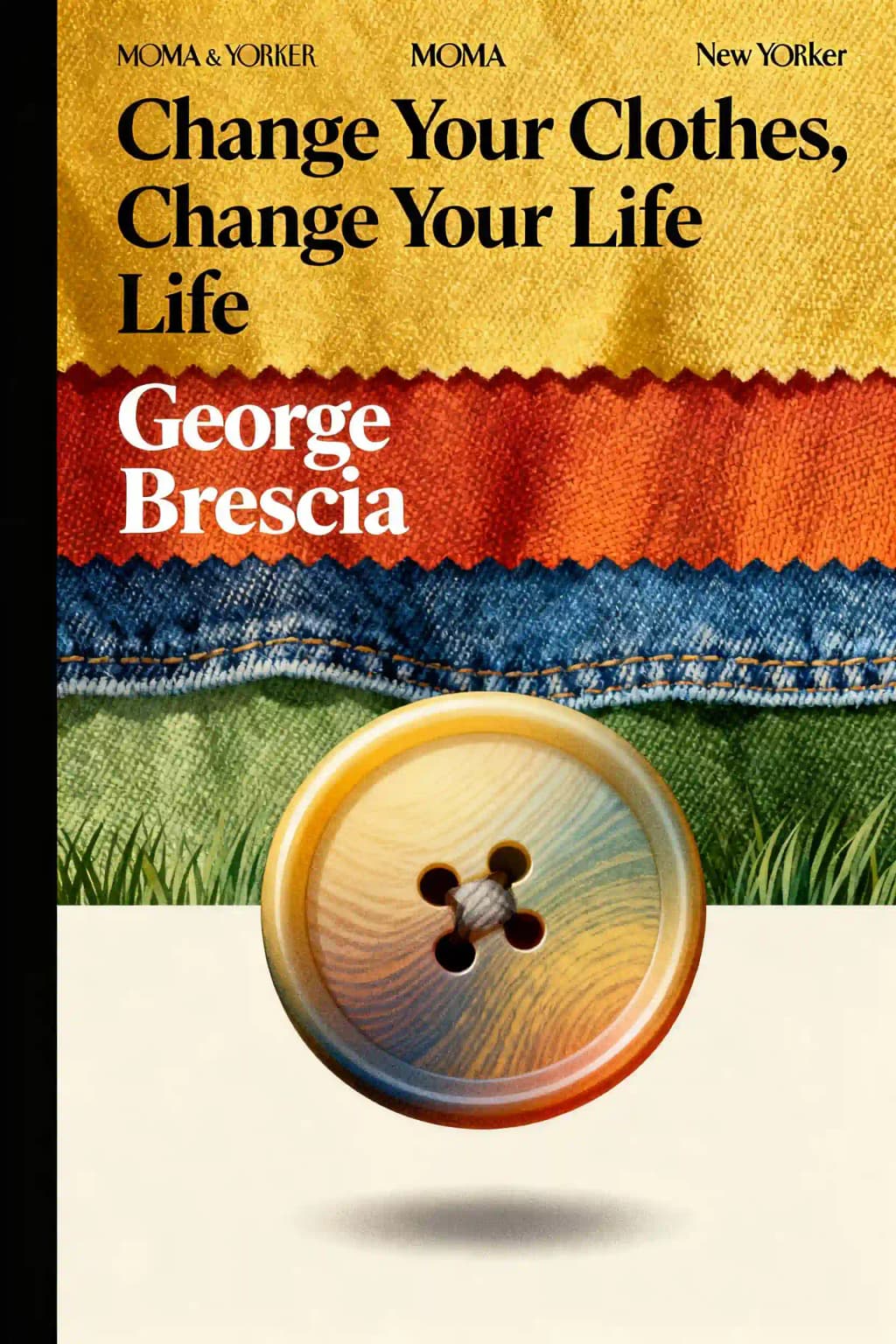
Ever noticed how a single outfit can completely alter your day? That's not coincidence-it's science. In "Change Your Clothes, Change Your Life," renowned stylist George Brescia reveals that clothing isn't merely fabric draped on our bodies but a powerful communication tool that shapes how others perceive us and, more importantly, how we perceive ourselves. This isn't just another fashion guide-it's a transformative approach to self-presentation that has made Brescia the secret weapon behind countless Broadway stars and television personalities. His philosophy has earned him devoted followers from Broadway to Wall Street, with clients reporting not just improved appearances but transformed careers, relationships, and self-confidence. What makes this book revolutionary is Brescia's psychological approach-he understands that our clothing problems often begin internally with limiting beliefs about our bodies and confusion about identity. By addressing both the internal and external aspects of style, he offers a holistic method that treats clothing as the bridge between our private and public selves.
第 2 章
The Mirror Between Your Inner and Outer Self
Style isn't merely about following trends or looking attractive-it's about the profound connection between our private and public selves. Our clothing serves as a second skin, making it deeply emotional and intrinsically connected to our self-worth. Many of us struggle with wardrobe challenges that stem from internal issues: limiting beliefs about our bodies, fear of being seen (or worse, ignored), and fundamental confusion about our identity. These internal battles often manifest in common behaviors like holding onto clothes that no longer fit, impulse buying during emotional times, or hiding behind shapeless, dark clothing.
The power to transform your style begins with consciousness-paying deliberate attention to what you wear and the message it sends. Think about how quickly you form impressions of strangers based on their clothing. Within seconds, you've made assumptions about their profession, personality, and even their mood. A well-tailored suit suggests authority and competence, while wrinkled, ill-fitting clothes might signal disorganization or lack of self-care. Now apply that same perceptiveness to your own reflection. Does your clothing communicate success and confidence, or does it broadcast insecurity and fear? Does it represent your current life stage, or is it clinging to a past identity? Are you dressing for the job you want, or the one you had five years ago?
This consciousness extends beyond individual garments to your entire approach to dressing. How you handle your wardrobe often reflects how you handle other aspects of your life. Are you ignoring your finances the same way you're ignoring those ill-fitting pants? Are you settling for mediocrity in relationships just as you're settling for "good enough" in your clothing choices? When fear rules our actions (or inaction), the results are never pretty-in our closets or our lives. The woman who can't let go of decade-old clothing might also struggle to release outdated relationships or career paths.
Consider the care and intention of Japanese tea ceremonies and kimono-wearing-rituals that cultivate a grace extending to all areas of life. Each fold of the kimono, each deliberate movement in securing the obi, represents mindfulness and respect for tradition and self. Similarly, conscious dressing can help you become more present, making thoughtful decisions about everything you wear, affecting everyone you meet, and ultimately shaping your fate in countless subtle ways. This mindfulness might start with selecting an outfit but can expand to influence how you carry yourself in meetings, approach new relationships, or handle challenging situations.
The relationship between inner confidence and outer appearance creates a powerful feedback loop. When you dress with intention and authenticity, you're more likely to act with purpose and self-assurance. This, in turn, affects how others perceive and respond to you, creating a cycle of positive reinforcement that can transform both your wardrobe and your life trajectory.
第 3 章
Creating Your Style Mission Statement
Before diving into closet purges or shopping sprees, you need to assess your current situation and visualize your goals. Start by asking yourself some fundamental questions: What image do you want to project professionally? How do you approach weekend dressing? What occasions cause you wardrobe stress? What are your biggest style struggles? When do you feel your absolute best? Consider also specific scenarios: How do you want to feel walking into an important meeting? What do you reach for when meeting friends for brunch? What outfits make you feel most authentically yourself?
These questions help you articulate what you already know deep down about your wardrobe's strengths and weaknesses. This self-knowledge becomes the foundation for your style mission statement-a powerful guide that connects your desire for change with the clothing you seek to acquire. Take time to journal about your responses, noting patterns in both your comfort zones and areas of aspiration.
Your mission statement might focus on elevating your professional presence, learning to stop hiding, loving your body, finding age-appropriate excitement, embracing femininity, exuding confidence, attracting a partner, or landing a dream job. For example, "I want my style to reflect my creative leadership while maintaining approachability" or "My wardrobe should help me embrace my curves while feeling polished and put-together." Whatever your goal, this statement becomes your touchstone when evaluating potential purchases and getting dressed each morning.
Alongside your mission statement, create two critical lists: your "fashion don'ts"-those safety-blanket garments you buy on autopilot that camouflage rather than highlight you (like oversized black sweaters or shapeless pants)-and your "fashion dares"-pieces that make you uncomfortable because they highlight previously hidden assets or stretch your style identity (such as fitted blazers, bold prints, or statement accessories). Challenge yourself to try something bold, like a mid-thigh skirt, bright colored blazer, or form-fitting dress, and commit to wearing it within two weeks. Though initially uncertain, if it fits correctly, flatters you, suits your color palette, feels age-appropriate, and sends the right message, you'll likely receive compliments that quickly build your confidence.
Remember: "Dress for the job you want, not the job you have" contains profound wisdom that extends beyond professional settings. Your clothing broadcasts messages in every space you inhabit-from the grocery store to social gatherings to family events-and these messages don't just travel outward-they boomerang back, affecting your deepest sense of self. Each outfit choice is an opportunity to align your external presentation with your internal goals and values. Consider documenting outfits that make you feel powerful, noting specific elements that contribute to that feeling, and use these insights to further refine your style mission.
When crafting your mission statement, be specific about your lifestyle needs, body appreciation goals, and the emotional response you want your clothing to evoke. This clarity will serve as a powerful filter for future wardrobe decisions and help you build a closet that truly serves your life's purpose and personal evolution.
第 4 章
The Perfect 10 Philosophy
Every single item in your closet should be a perfect 10-nothing less. Though this concept initially seems impossible to many women, fashion isn't actually that complicated. We carefully select furniture we love and plan memorable vacations within our budget, so why treat clothing differently? Just as you wouldn't furnish your living room with a damaged sofa or plan a vacation at a subpar hotel, your wardrobe deserves the same thoughtful consideration.
You already own these "10s"-they're what you pull out for job interviews, first dates, and important meetings. These are the pieces that make you stand taller, speak more confidently, and feel unstoppable. But by reserving them only for special occasions, you're closing yourself off to everyday opportunities. A perfect 10 can be formal or casual, but it always:
• Fits perfectly, with no pulling, gaping, or constant adjusting needed
• Includes colors that complement your features and make your skin glow
• Remains in excellent condition without pills, stains, or visible wear
• Makes you feel confident, attractive and powerful from the moment you put it on
• Works seamlessly with other items in your wardrobe
• Reflects your current lifestyle and personal brand
Many clients cling to outdated wardrobes that no longer match their current life stage, like the thirty-something professional still dressing like a twenty-something barista, or the new mom holding onto her corporate power suits when she now works remotely. Others accumulate never-worn mistakes with tags still attached, often due to impulse purchases or sale items bought without consideration. Most people only wear about 30% of their clothes, leaving 70% as deadweight that creates physical and mental clutter.
When purging your closet, sort everything into "Yes," "No," and "Maybe" piles using seven essential criteria:
1. It fits-not aspirationally, but right now, in this moment
2. It flatters your coloring and body type-enhancing your natural features
3. It's in good condition-not worn out, pilled, faded, or threadbare
4. It's not dated-you can be conservative yet current without looking trendy
5. You've worn it recently-if not in the last six months, ask yourself why
6. Wearing it makes you feel good-notice your posture, energy, and confidence level
7. It sends the right message-every piece should communicate something intentional about who you are
Be prepared to confront your inner hoarder's predictable excuses: "I just wear that when running around town" (as if town isn't a public space where you represent yourself); "My mom gave me that" (but she doesn't accompany you on dates or to work); "That's what I throw on when walking the dog" (prime socializing time in many neighborhoods); "But it was only ten dollars!" (cheap clutter is still clutter, and the real cost is to your image).
Remember that your wardrobe is a visual autobiography-every piece tells a story about who you are and who you want to be. Since we attract what we project, why settle for anything less than a perfect 10? When you dress like a 10, you're more likely to be treated like one in every aspect of your life.
第 5 章
The Color Revolution
I'm a self-proclaimed color fanatic! When I wake up feeling down, I reach for the brightest hues in my closet for an instant mood boost. Color is a complete vocabulary that's too often overlooked-it can spread positivity, calm, exuberance, competence, playfulness, drama, or sensuality.
Counterintuitively, being seen doesn't always mean wearing the brightest colors. Sometimes clients trapped in dark, muted hues need lighter creams, grays, and camels to let their features shine. Every woman should have flattering colors across light neutrals, soft cheerful hues, and vibrant "pop" colors that make bold statements.
I determine a client's best colors starting with their hair color-it's the most saturated hue on the body and makes an obvious benchmark. After hair, focus on eye color-we want to draw attention to these windows to the soul. You'll soon instinctively know when a color works-the right ones make you look healthier and more vital, while the wrong ones wash you out.
For blondes, navy is far more flattering as a dark neutral than black. It creates a subdued palette that's one degree warmer-crucial for blondes who risk being washed out by harsh black. Camel is another powerhouse color that brings out hair highlights and creates harmonious balance.
Brunettes need to overcome any fear of color-bright hues create harmony with your saturated strands where they might overwhelm a blonde. Beware of beige, which can create an unflattering nude effect unless you have dark skin. Better neutrals are gray, black, and stark white-they play off your natural contrasts.
Redheads must proceed with utmost care regarding color. Unlike blondes and brunettes, red hair never reads as neutral and must always be considered. Pale redheads should swap black for navy, which warms the skin and complements red hair. Your palette features chocolates, corals, peachy oranges, and blue-greens-a delicious mix of earth tones and bright hues.
Women with silver hair need increasingly attuned color awareness. The best colors are muted, slightly grayed-out iterations of the spectrum to match the diminished intensity of gray hair. Think slate blues, grays, silvers, sea-foam greens, lavenders, and taupes.
You don't need to drape yourself in neon to incorporate impactful color. Strategically applied, a little color goes a long way-this is my signature "pop of color" move. It's a dash of brightness on an otherwise neutral outfit-a fuchsia scarf over a slate-gray blouse or a black dress with bold red shoes and bracelets. Like a dapper gentleman's vibrant tie with a dark suit, this approach communicates thoughtfulness and sophistication.
第 6 章
Strategic Shopping and Closet Management
Shopping should be targeted and efficient, not haphazard. Before hitting stores, organize a fashion to-do list based on notes from your closet purge. Prioritize based on your top fashion needs-whether work-appropriate bottoms, properly fitting bras, or outfits for upcoming events.
For your first targeted shopping trip, select 2-3 stores including one department store (ideal for one-stop shopping across brands, footwear, makeup, accessories, and lingerie). Add 1-2 specialty stores that match your needs and perhaps one discount retailer (as your last stop to avoid blowing your budget on filler items). Beware of retail "safety blankets"-those stores where you shop on autopilot, acquiring mediocre 6s and 7s instead of perfect 10s.
Approach shopping with calm confidence-you are the judge of these clothes, not the other way around. When something doesn't fit, simply place it in the "No" pile and move on without self-criticism. If a store consistently doesn't fit your body type, leave and find one that does.
After shopping comes the crucial work of building your Look Book-whether it's a physical catalog or mental inventory of outfit combinations. Style each new purchase multiple ways, pairing it with existing items. Deconstruct that suit: can the blazer work with jeans? Can the pants pair with a slouchy sweater? This process transforms confusing mornings into seamless dressing routines perfectly cued to your mood and the day ahead.
A functional closet needn't be pristine, but should work like a toolbox with everything in its place. Organize by category then color-dresses together in a rainbow from dark to light, same for pants, blouses and folded sweaters. This color-organization creates an emotional shortcut to dressing for your mood, whether grabbing an orange tee for energy or to brighten a gray day.
Remember that our closets tell stories about our lives-but is it the right story? Treat your closet as a living organism that needs regular care. Conduct biannual closet sweeps as you switch seasons, assessing which pieces need refreshment, replacement, or disposal. You're not being wasteful by removing clothes that don't serve you-you're giving yourself a gift.
第 7 章
The Complete Look: Beyond Clothing
A truly transformative style approach extends beyond garments to include accessories, makeup, and hair-elements that can dramatically alter your overall presentation with minimal effort. These finishing touches often make the difference between looking merely dressed and looking genuinely styled.
Accessories are the most impactful way to alter an outfit's statement-they're the punctuation to your wardrobe that can elevate a mediocre outfit to fabulous. Many women overlook accessories, but jewelry especially catches light and draws attention to your best features. Strategic accessorizing can direct attention where you want it: long necklaces elongate the torso, statement earrings frame the face, and bracelets draw attention to graceful hands. Like clothing, accessories communicate messages and can transform an outfit's character through juxtaposition-a rugged belt can make a girly dress look edgy, while pearl earrings can add sophistication to a simple t-shirt and jeans combination.
Makeup is an intrinsic part of your wardrobe transformation, contributing colors, textures, and messages. Just as you'd never skip makeup on your wedding day, why settle for less in everyday life? Use makeup strategically: as a corrective (mascara for light lashes, warming blush for sallow skin, concealer for dark circles), as an intensifier for your best features (highlighting cheekbones, defining brows), and to complement your outfit's color story. Don't abandon makeup on weekends-it's especially key with casual outfits, where a polished face can elevate even the most basic ensemble. Consider developing both day and evening looks, and learn which products give you the most impact for your time investment.
Finding the perfect hairstyle requires an honest discussion with the right stylist-not just copying a celebrity photo. Research your stylist and colorist as carefully as you would a medical specialist, reading reviews and examining their portfolio of work. Consider what your hair is saying: curls can be friendly and approachable, while blowouts read as sexy and polished. Face shape, hair texture, and lifestyle should all influence your choice. As you age, adjust accordingly-perhaps lightening your color or choosing a shorter style if your hair thins. Regular maintenance, including trims every 6-8 weeks, keeps any style looking intentional rather than neglected.
Even with the perfect wardrobe foundations, how you put everything together daily makes the difference between good style and great style. Harmony is the key-our eyes naturally seek fluid, unbroken visual pictures where nothing jars or confuses. Many clients suffer from "Clown College syndrome"-wearing outfits where individual pieces make sense but the overall picture falls apart. This often happens when mixing too many statement pieces or failing to consider the overall proportion and scale of accessories.
An outfit with competing colors, patterns, and textures distracts viewers, drawing focus to incongruous elements rather than to your face. When we see confusing outfits, our brains register both the outfit and its owner as visual noise-and like cacophonous music, we tune it out. The solution is to establish a clear hierarchy in each outfit: one dominant pattern or color, supported by complementary elements that enhance rather than compete. Consider the rule of three: limit yourself to three key colors or patterns per outfit for maximum impact without chaos.
第 8 章
Essential Wardrobe Building Blocks
While every closet has different needs, certain essentials work for everyone. These classic items appear in most style guides because they simply work-representing streamlined, tailored silhouettes that serve as foundations for layering various styles. These timeless pieces should be your investment items, as their quality determines their longevity.
Your wardrobe foundation should include:
• The Classic Little Black Dress (LBD)-a versatile, simple piece that prevents panic when invited to impromptu events
• The Sexy, Pull-Out-All-The-Stops Dress-a statement piece in your best color that announces your arrival
• The Pencil Skirt-perfect in black or navy, pairable with everything from silk blouses to sparkly tanks
• Black Dress Pants-polished, tailored pants in serious fabric for when skirts aren't appropriate
• The Ultimate Pair of Jeans-worth investing in as today's designers create options for every body type
• The Silk Blouse-representing a commitment to quality tops that draw attention to your face
• Three Perfect Tees-upgrading casual basics makes an immediate impact
• The Cashmere Sweater-luxurious, long-lasting fabric that elevates simple outfits
• Two Perfect Cardigans-one fitted classic and one drapier weekend version
• A Fitted Blazer-instantly adds presence and tailoring
• A Classic Fitted Trench-a stylish alternative to sportswear for rainy days
• A Great Winter Coat-a fitted, classic silhouette that makes a first impression
Weekend style isn't easier than formal wear-it's actually the true test of a woman's fashion sense. Don't be stingy with weekend clothing budgets-your casual clothes deserve quality too. Stop saving "good" pieces for special occasions-wear those premium jeans and cashmere sweaters regularly. Repurpose work clothes by pairing blazers with jeans or tailored pants with casual tops.
Jeans can become an unconscious fallback basic, but with imagination, they create dramatic looks: pair with an expensive-looking suit jacket and slim tank; combine with a feminine silk blouse and statement earrings; top with cashmere and a statement necklace; dress up with evening pieces like sequined tops; create glamour with a tuxedo jacket and statement heel.
第 9 章
Embracing Your Style Transformation
This moment when you step into your bright new wardrobe is cathartic. Even small wardrobe tweaks will have immediate, life-altering effects. Prepare for attention and compliments-when you dress to be seen, you will be. People love giving compliments and noticing positive change, especially when they see a pattern of improvement.
Behind their praise lie questions: What's your secret? What's changed in your life? They're not just complimenting your clothes; they're noticing you look happier, more successful, and more self-assured. Though change can bring discomfort as you adjust to newfound attention, you'll also discover a lightness and joy in dressing.
As you become a style ninja who knows exactly what brands, fits, and colors work for you, adopt these expert mindsets: Keep an eye on your trouble spots; maintain a running list of items you need to replace; pay attention to fashion glitches that need solving; cultivate relationships with boutiques that fit your style perfectly; shop strategically with and against seasons; hone your eye by analyzing great style in public spaces.
Life inevitably throws curveballs, and you may experience style slumps. When this happens, remember these techniques: reach for mood-enhancing bright colors when feeling down; simplify with a bright lipstick and pulled-back hair when full makeup feels overwhelming; revisit your style mission statement; and challenge yourself to maintain standards even at your lowest. Dressing consciously when feeling low isn't punishment-it's self-care.
One of my biggest goals has been challenging the assumption that style is something you turn on and off at will. Like virtuosic violinists who practice daily rather than cramming before performances, you should make conscious dressing a daily habit. Be rigorous in interrogating your uniforms and unconscious style habits-it will be challenging at first but will become easier with time.
My final advice: have fun with your clothes! Regardless of whether you aim to look more powerful or increase sex appeal, adopt a lighthearted, playful spirit when shopping and dressing. Don't fear trying personas that don't feel 100% like you. Experiment! Make your closet a happy space, and that positive energy will radiate outward. Don't feel guilty about the time, money, or care you invest in clothing. You can't go naked-it's against the law. You might as well wear great clothes, just like you are great.