Yale professor Amy Chua's controversial memoir ignited global parenting debates, landing 15 weeks on NYT bestsellers. What price success? While critics called it "Gestapo parenting," others praised its challenge to Western permissiveness - sparking research studies and redefining the "Model Minority" narrative.
Amy Lynn Chua, bestselling author of Battle Hymn of the Tiger Mother and Yale Law School professor, is renowned for her provocative explorations of culture, parenting, and global power dynamics.
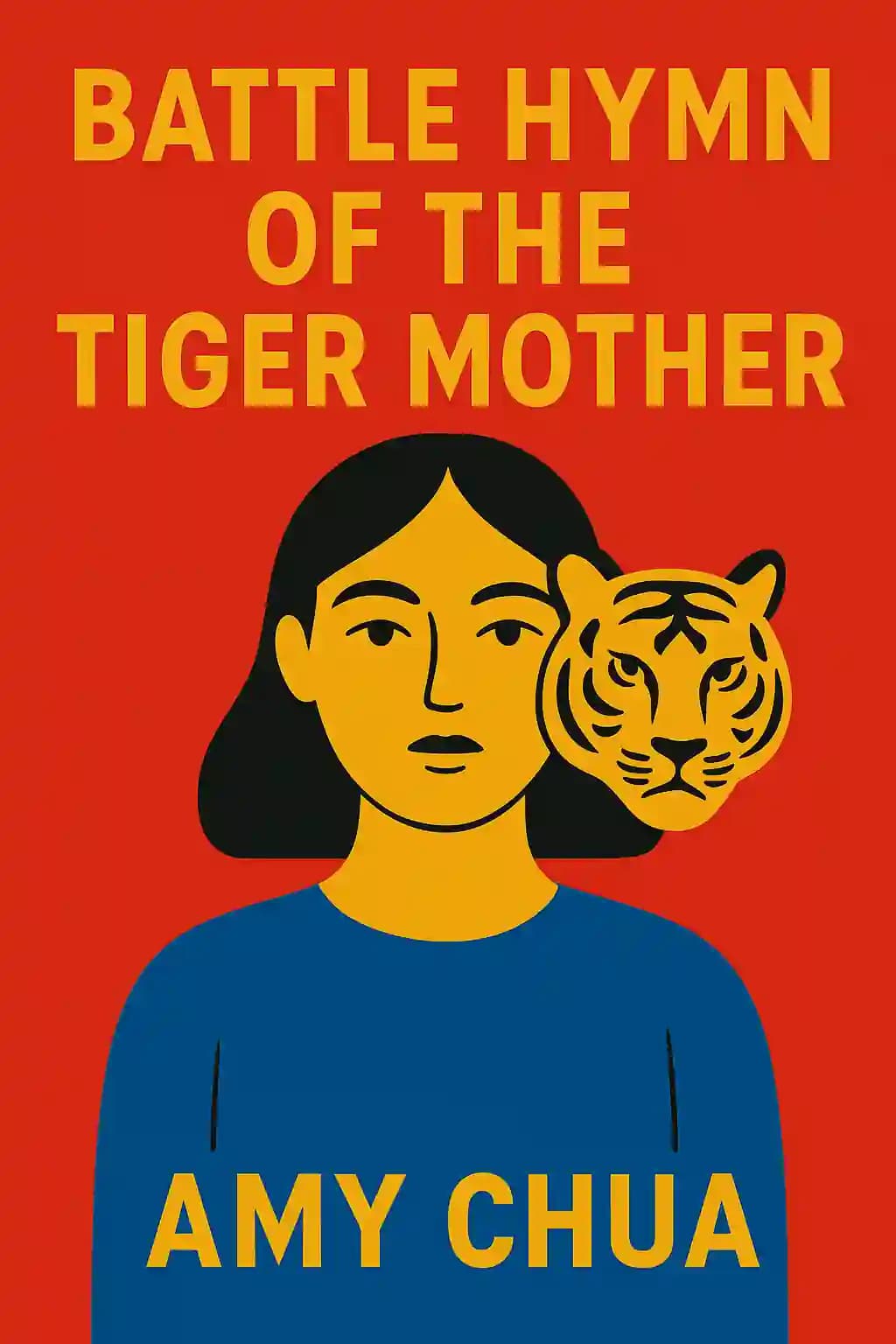
A memoir dissecting strict Confucianist child-rearing practices, Battle Hymn of the Tiger Mother ignited worldwide debate on the merits of Western versus Chinese parenting philosophies, drawing from Chua’s own experiences raising her daughters.
As a legal scholar and commentator on globalization, Chua’s expertise spans political science and sociology, reflected in her other works like World on Fire (a New York Times bestseller), Day of Empire, and Political Tribes, which examine ethnic conflict, hyperpowers, and tribal politics. Her writing has been featured in The Economist and The Guardian, and she frequently lectures on law and international relations.
Battle Hymn of the Tiger Mother became a cultural phenomenon, translated into 30 languages and sparking discourse on education and cultural identity. Chua’s blend of personal narrative and analytical rigor has solidified her status as a polarizing yet influential voice in contemporary literature.
Battle Hymn of the Tiger Mother is Amy Chua’s 2011 memoir exploring her experience raising two daughters using strict, high-expectation parenting methods rooted in her Chinese cultural heritage. It contrasts “Chinese” and “Western” parenting philosophies, detailing Chua’s emphasis on academic excellence, music mastery, and discipline—including controversial tactics like banning sleepovers and demanding hours of daily practice.
Parents interested in cultural parenting styles, readers exploring identity in multicultural families, and those seeking provocative memoirs on education and ambition. It resonates with anyone debating rigor vs. creativity in child-rearing or navigating cross-cultural expectations.
Yes, for its candid exploration of parental pressure and cultural values. While polarizing, it sparks reflection on success, autonomy, and familial bonds. Chua’s self-aware storytelling and humor make it a compelling read, though critics argue it oversimplifies cultural stereotypes.
A viral example of Chua’s extreme methods: she threatens to donate her daughter’s toys unless Lulu masters a complex piano piece, denying breaks for hours. The story symbolizes the book’s themes of perseverance and parenting extremes.
Critics argue Chua’s approach risks emotional harm, undermines child autonomy, and perpetuates reductive cultural binaries. Some view her anecdotes as glorifying authoritarianism, while others appreciate her honesty about the struggles of high-stakes parenting.
A parent who enforces rigorous academic/artistic standards, rejects mediocrity, and prioritizes lifelong resilience over short-term happiness. Chua links this to her belief that children thrive under high expectations.
Chua grapples with balancing her Chinese heritage with her daughters’ American upbringing, highlighting tensions between assimilation and tradition. The memoir reflects broader debates about immigrant parenting and cultural values in a globalized world.
She adapts her methods after clashes with her younger daughter, acknowledging that inflexibility can backfire. While still valuing discipline, she embraces allowing children to pursue their passions—a compromise between “Chinese” and “Western” approaches.
Chua portrays “Chinese” parenting as structured and sacrifice-driven, focusing on mastery, while “Western” styles prioritize individuality and emotional well-being. The book critiques permissiveness but also acknowledges the toll of relentless pressure.
Its provocative anecdotes (e.g., banning playdates, insulting children) and Chua’s claim that “Chinese mothers are superior” ignited discussions about cultural relativism, child psychology, and the ethics of parental ambition.
It popularized the term “tiger parenting” and influenced debates about academic pressure, resilience-building, and cultural norms. The book remains a reference point in discussions about achievement-oriented upbringing.
通过作者的声音感受这本书
将知识转化为引人入胜、富含实例的见解
快速捕捉核心观点,高效学习
以有趣互动的方式享受这本书
Here are some things I actually screamed, shouted, or threatened over: a perfect ribbon, a challenging math problem, a complex piano passage.
Chinese parents believe that their kids owe them everything.
Nothing is fun until you're good at it.
That's when I realized: Western parents worry a lot about their children's self-esteem. But as a parent, one of the worst things you can do for your child's self-esteem is to let them give up.
将《Battle Hymn of the Tiger Mother》的核心观点拆解为易于理解的要点,了解创新团队如何创造、协作和成长。
将《Battle Hymn of the Tiger Mother》提炼为快速记忆要点,突出坦诚、团队合作和创造力的关键原则。

通过生动的故事体验《Battle Hymn of the Tiger Mother》,将创新经验转化为令人难忘且可应用的精彩时刻。
随心提问,选择声音,共同创造真正与你产生共鸣的见解。

"Instead of endless scrolling, I just hit play on BeFreed. It saves me so much time."
"I never knew where to start with nonfiction—BeFreed’s book lists turned into podcasts gave me a clear path."
"Perfect balance between learning and entertainment. Finished ‘Thinking, Fast and Slow’ on my commute this week."
"Crazy how much I learned while walking the dog. BeFreed = small habits → big gains."
"Reading used to feel like a chore. Now it’s just part of my lifestyle."
"Feels effortless compared to reading. I’ve finished 6 books this month already."
"BeFreed turned my guilty doomscrolling into something that feels productive and inspiring."
"BeFreed turned my commute into learning time. 20-min podcasts are perfect for finishing books I never had time for."
"BeFreed replaced my podcast queue. Imagine Spotify for books — that’s it. 🙌"
"It is great for me to learn something from the book without reading it."
"The themed book list podcasts help me connect ideas across authors—like a guided audio journey."
"Makes me feel smarter every time before going to work"

免费获取《Battle Hymn of the Tiger Mother》摘要的 PDF 或 EPUB 版本。可打印或随时离线阅读。
When Amy Chua's memoir hit bookshelves in 2011, it ignited a firestorm. The Wall Street Journal's provocative excerpt "Why Chinese Mothers Are Superior" generated over 8,000 comments in days-the most in the publication's history. Within weeks, the book rocketed to #4 on the New York Times bestseller list and was translated into 30 languages. Why such intense reaction? At its core, "Battle Hymn of the Tiger Mother" exposes the raw nerve of modern parenting anxieties. It's a brutally honest account of one mother's determination to raise exceptional children through methods many Western parents find shocking-and others secretly admire. Chua's controversial approach forces us to confront uncomfortable questions: What does successful parenting truly look like? How much pressure is too much? And what price are we willing to pay for excellence? As we navigate an increasingly competitive global landscape, these questions have never felt more urgent.